Microsoft’s July Patch Tuesday Unleashes a Torrent of Over 570 Security Fixes, Fueled by AI-Driven Vulnerability Discovery

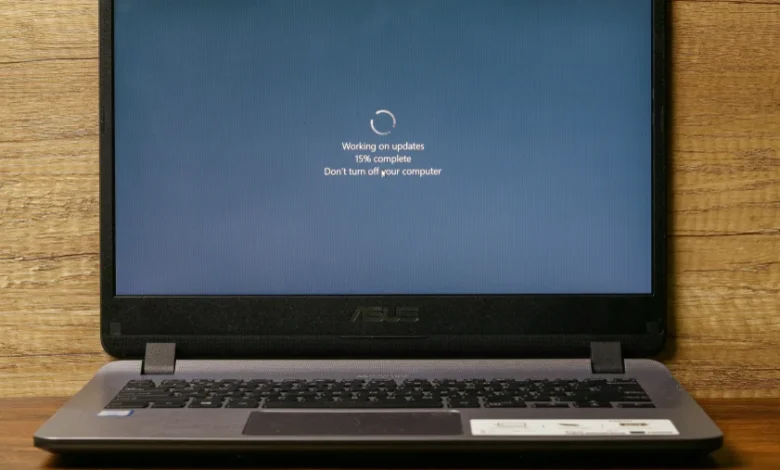
Microsoft Corp. today released software updates to plug at least 570 security holes in its Windows operating systems and other software, almost triple the number of vulnerabilities the software giant fixed in its record-smashing Patch Tuesday release last month. Microsoft attributed the burgeoning patch counts to vulnerability discoveries aided by artificial intelligence. This significant increase in patches marks a pivotal moment in cybersecurity, signaling a new era where artificial intelligence is not only accelerating the discovery of software vulnerabilities but also reshaping the strategies for their remediation and defense.
The Unprecedented Scale of Microsoft’s July Patch Tuesday
The sheer volume of vulnerabilities addressed in Microsoft’s July Patch Tuesday is staggering, dwarfing previous records. This release, which typically occurs on the second Tuesday of each month, has historically been a critical event for IT professionals and cybersecurity teams worldwide, as it represents Microsoft’s primary monthly effort to secure its vast ecosystem of products. This month, however, the scale of the operation has reached unprecedented levels, with over 570 security flaws being patched across Windows operating systems, applications, and services.
This surge is attributed by Microsoft itself to advancements in artificial intelligence. The company has publicly acknowledged that AI is playing an increasingly significant role in identifying security weaknesses at a pace previously unimaginable. This technological leap means that more vulnerabilities are being uncovered, analyzed, and subsequently patched in a shorter timeframe.
Critical Vulnerabilities and Active Exploitation
Among the 570+ fixes, nearly 60 vulnerabilities were classified with a "critical" severity rating. This designation means that these flaws could be exploited by malicious actors or malware to gain remote control over a Windows device with minimal or no user interaction. Such vulnerabilities are of paramount concern to cybersecurity professionals, as they represent immediate and significant threats to data security and system integrity.
Furthermore, Microsoft addressed three zero-day flaws in this release. Zero-day vulnerabilities are those that are unknown to the software vendor and for which no patch is available. The fact that two of these zero-day flaws are already being actively exploited in the wild underscores the urgency and critical nature of this month’s security update. Exploitation in the wild means that attackers have already identified and are leveraging these weaknesses to compromise systems, making the deployment of these patches an immediate priority.
A Closer Look at Key Vulnerabilities
Several specific vulnerabilities highlighted in this release warrant particular attention:
-
Elevation of Privilege Vulnerabilities: Two of the zero-day weaknesses, along with approximately 250 other elevation of privilege flaws patched this month, allow an attacker to gain higher levels of access and control on a compromised Windows system. Among these are:
- CVE-2026-56155: This vulnerability affects Active Directory Federation Services (AD FS), a critical component for identity and access management in enterprise environments. A successful exploit could allow an attacker to impersonate users or gain elevated administrative privileges within the network.
- CVE-2026-56164: This flaw resides within Microsoft SharePoint, a widely used collaboration and document management platform. Exploiting this vulnerability could lead to unauthorized access to sensitive information or the ability to execute malicious code within the SharePoint environment.
-
Windows BitLocker Security Feature Bypass (CVE-2026-50661): This vulnerability could allow attackers to gain access to encrypted data if they have physical access to the device. While Microsoft has stated that this bug has been publicly detailed, they are not aware of any active exploitation. However, the potential for data breaches, especially in scenarios involving lost or stolen devices, makes this a significant concern for organizations relying on BitLocker for data protection.
-
Microsoft Copilot Remote Code Execution (CVE-2026-48561): This vulnerability, with a high CVSS threat score of 9.6, allows an unauthorized attacker to execute code over the network. Jack Bicer, director of vulnerability research at Action1, drew particular attention to this flaw. According to Microsoft’s advisory, an attacker could exploit this bug by hosting a malicious website. When a user visits this site using Microsoft Edge for Android, the browser could automatically send crafted prompts to Microsoft Copilot, triggering the execution of malicious code. This highlights the emerging security challenges associated with integrated AI features.
The AI Revolution in Vulnerability Discovery
Microsoft Executive Vice President Pavan Davuluri, in a blog post on July 9th, explicitly linked the increased volume of security updates to the burgeoning role of AI in vulnerability discovery. He stated that "the pace of vulnerability discovery is changing with advances in AI making it possible to find more issues, faster, across more code, with new mechanisms that can accelerate both discovery and analysis."
This statement underscores a fundamental shift in the cybersecurity landscape. AI-powered tools can analyze vast amounts of code, identify complex patterns, and uncover subtle flaws that might elude human researchers. This accelerated discovery process, while beneficial for defenders in the long run, also presents immediate challenges as it leads to a higher influx of vulnerabilities requiring rapid patching.
The Double-Edged Sword of AI: Faster Discovery, Faster Exploitation
While AI is empowering Microsoft and other security vendors to identify vulnerabilities more efficiently, it is also enabling malicious actors to develop exploits for known flaws at an equally accelerated pace. This creates a continuous arms race in the cybersecurity domain.
Microsoft has traditionally used its "exploitability index" to assess the likelihood of a vulnerability being exploited by attackers. However, experts like Satnam Narang, senior staff research engineer at Tenable, argue that this index needs to adapt to the speed of AI-driven threat development. Narang pointed to a recent analysis by Anthropic’s Red Team, which found that their AI model, Mythos Preview, could generate proof-of-concept exploits for 13 out of 14 vulnerabilities rated as "Exploitation Less Likely" or "Exploitation Unlikely."
Narang’s observation highlights a critical point: "our way of looking at Patch Tuesday has changed, because the exploitability index is centered around humans, not AI tools, and as these tools continue to improve, defense needs to improve alongside it." This suggests that traditional methods of assessing exploitability might become less reliable as AI tools become more sophisticated in their ability to weaponize discovered vulnerabilities.
A Wider Industry Trend: Accelerating Patch Cadence
Microsoft’s surge in patch volume is not an isolated incident. Chris Goettl at Ivanti noted that several other major software vendors are also increasing their patch release frequencies. Adobe, for instance, announced a shift to twice-monthly security bulletins, published on the second and fourth Tuesdays of each month, also citing AI as a factor in accelerating their patch cycles. Cisco, Mozilla, and Oracle are also shipping updates more frequently. This broader industry trend indicates a collective response to the evolving threat landscape, where the speed of vulnerability discovery and exploitation necessitates a more agile approach to software security. Google’s patch batches in June 2026, totaling over 900 security fixes, further illustrate this accelerating trend.
Implications for End Users and IT Professionals
The massive volume of patches released today presents both an opportunity and a challenge for end users and IT professionals. While these updates are crucial for bolstering security, the sheer scale of the release raises concerns about potential system instability.
Microsoft’s advice to back up Windows systems and data before applying updates remains paramount. Given the enormous number of patches released, it may be prudent for end users to consider waiting a few days before installing these fixes. Security patches, especially those released in such large batches, can sometimes introduce unforeseen system stability issues. The increased complexity and volume of this month’s patches likely amplify this risk.
For IT departments, the challenge lies in efficiently testing, deploying, and managing such a large number of updates across their enterprise environments. Prioritization will be key, with critical vulnerabilities and those already exploited in the wild requiring immediate attention. The need for robust patch management systems and rapid response capabilities has never been more evident.
The Future of Cybersecurity in the Age of AI
Microsoft’s July Patch Tuesday serves as a stark reminder that the cybersecurity landscape is in constant flux. The integration of AI into both vulnerability discovery and exploit development is rapidly transforming the industry. This necessitates a proactive and adaptive approach from all stakeholders:
- Software Vendors: Must continue to invest in AI-powered security tools to accelerate vulnerability detection and remediation, while also re-evaluating and enhancing their exploitability assessment models to account for AI-driven attack capabilities.
- Cybersecurity Professionals: Need to adopt more agile patch management strategies, prioritize updates based on real-time threat intelligence, and continuously refine their incident response plans to counter faster-evolving threats.
- Researchers: Must continue to explore the capabilities and limitations of AI in cybersecurity, both for defensive and offensive purposes, to better understand and prepare for future challenges.
- End Users: Should remain vigilant, practice good cybersecurity hygiene, and stay informed about critical security updates, while also being aware of the potential for increased system instability with large patch releases.
The ongoing interplay between AI-driven vulnerability discovery and the accelerated pace of exploitation promises to keep the cybersecurity domain dynamic and challenging. Microsoft’s record-breaking July Patch Tuesday is not just a significant event in its own right, but a harbinger of the intensified security efforts required in the AI era.