Sophos Named a Leader in IDC MarketScape for Worldwide Managed Detection and Response Services for Midmarket 2026 Vendor Assessment

Security teams are currently facing an unprecedented surge in complex cyber threats, characterized by accelerating attack speeds and increasingly intricate IT environments. Many organizations are simultaneously tasked with enhancing their security posture while operating under constrained resources, a dual challenge that underscores the critical need for robust and efficient managed security services. In this demanding landscape, Sophos has been recognized as a Leader in the IDC MarketScape for Worldwide Managed Detection and Response (MDR) Services for Midmarket 2026 Vendor Assessment, a significant acknowledgment of its capabilities and strategic vision. This designation, published in July 2026, highlights Sophos’s commitment to delivering comprehensive security solutions tailored to the specific needs of midmarket businesses.
The IDC MarketScape report rigorously evaluates Managed Detection and Response providers by examining both their current technological capabilities and their strategic foresight. The assessment focuses on how effectively vendors can assist organizations in detecting, investigating, and responding to threats across a continuously evolving and complex digital infrastructure. For midmarket organizations, in particular, the report aims to provide a clear perspective on which providers can achieve strong security outcomes without imposing an undue operational burden.
This recognition is a testament to Sophos’s ongoing efforts to empower organizations by bolstering their defenses through intelligence-driven security operations, adaptable service delivery models, and open security architectures designed to integrate seamlessly with existing technology investments. The IDC MarketScape’s findings suggest that Sophos’s approach effectively addresses the modern security challenges faced by businesses of all sizes, particularly those within the midmarket segment.
IDC MarketScape’s Assessment of Sophos MDR
The IDC MarketScape report specifically commends Sophos’s Managed Detection and Response offering, stating: "Organizations of any size seeking a managed detection and response service with deep proprietary threat intelligence, flexible co-management engagement models, and a vendor-agnostic platform that accommodates existing security investments should evaluate Sophos’s MDR offering." This endorsement underscores Sophos’s ability to cater to diverse organizational needs, offering a compelling proposition for businesses looking to augment their in-house security capabilities.
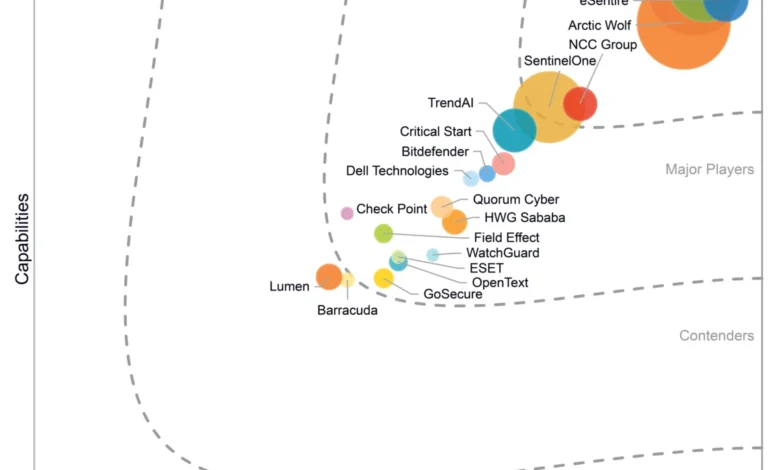
The evaluation criteria of the IDC MarketScape are crucial for understanding the significance of this leadership placement. The "Capabilities" score assesses a vendor’s current product, go-to-market strategy, and business execution in the short term. Simultaneously, the "Strategy" score evaluates how well a vendor’s future strategies align with evolving customer requirements over a three-to-five-year horizon. Vendor market share is visually represented by the size of the circles in the report’s graphic, while year-over-year growth is indicated by symbols denoting improvement, stability, or decline relative to the market. Sophos’s prominent position in the upper-right quadrant of the MarketScape graphic, typically denoting strength in both current capabilities and future strategy, signifies its robust standing in the MDR market for midmarket enterprises.
Security Operations Built for Today’s Threat Landscape
Sophos MDR provides protection to over 40,000 customers globally. Its operational model is underpinned by Sophos X-Ops, a unique, globally distributed security operations initiative that unifies threat intelligence, threat hunting, detection engineering, and managed service delivery. This integrated approach ensures that Sophos is at the forefront of understanding and combating emerging cyber threats.
The core philosophy of Sophos MDR is the synergistic combination of artificial intelligence (AI) and human expertise. The service leverages agentic AI to automate critical aspects of threat detection and investigation, including the analysis of suspicious activities and the execution of routine operational workflows. This automation frees up human security analysts to concentrate on high-stakes decision-making, the identification of novel and sophisticated threats, proactive threat hunting, and providing expert guidance to customers.
This model enables security operations that are both agile and scalable, while crucially retaining the essential human oversight and expertise that customers expect from a managed service. The effectiveness of this approach is demonstrated by the fact that 52% of MDR cases are currently resolved end-to-end by AI. Furthermore, fully automated responses, once authorized, can be initiated in as little as 89 seconds, significantly reducing the dwell time of threats and minimizing potential damage. This speed and efficiency are particularly vital in an era where attacks can unfold with alarming rapidity.
Open, Flexible, and Designed to Work with Your Environment
Recognizing that every organization’s IT infrastructure is unique, Sophos MDR is engineered to be highly adaptable. Its architecture supports the ingestion of telemetry data from a wide array of sources, including Sophos’s own security products as well as third-party solutions. This comprehensive data collection spans endpoints, networks, cloud environments, email systems, and identity platforms. The vendor-agnostic nature of Sophos’s architecture is a key differentiator, enabling organizations to maximize the value of their existing security investments rather than being compelled to undertake costly and disruptive replacements.
Customers have the flexibility to choose the level of engagement that best suits their operational requirements and risk appetite. Options range from notification-only support, where Sophos alerts clients to potential threats, to collaborative investigations involving joint analysis, and full response authorization, where Sophos is empowered to take immediate action. The platform also offers modular capabilities, such as exposure management, next-generation Security Information and Event Management (SIEM) integration, and identity threat detection and response (ITDR). These modules allow organizations to expand their security coverage and adapt to evolving needs without significant overhauls.
Intelligence That Gets Stronger with Every Threat Observed
The efficacy of Sophos MDR is fundamentally driven by its sophisticated threat intelligence capabilities. This intelligence directly informs the detection rules, threat hunting operations, and response actions implemented to protect customers worldwide. The Sophos X-Ops Counter Threat Unit (CTU) actively tracks the activities of malicious actors, including ransomware operators, initial access brokers, and nation-state sponsored groups. The insights gathered by the CTU are systematically fed into the detection engineering process, threat hunting playbooks, and incident response strategies.
This intelligence is further amplified by Sophos’s extensive visibility across its global customer base, which encompasses over 625,000 defended organizations. This broad perspective allows Sophos to rapidly identify emerging threats and translate them into effective protections, detections, and response actions for all its customers in near real-time, without the need for manual fine-tuning of security controls. This continuous learning loop ensures that Sophos MDR remains highly effective against an ever-changing threat landscape.
MDR as Part of a Broader Defense System
The IDC MarketScape recognition arrives at a pivotal moment for Sophos, coinciding with the launch of Sophos Fusion. This AI-native cybersecurity defense system represents a significant evolution in Sophos’s security offerings, aiming to consolidate endpoint, network, email, cloud, identity, security operations, and advisory services within a single, interconnected architecture.
Designed to address the challenges posed by an AI-transformed threat landscape, Sophos Fusion integrates shared contextual information, synchronized security operations, advanced agentic AI, and intelligence that compounds across all protected environments. As Sophos Fusion matures, it promises deeper integration across its MDR services, exposure management, identity protection, next-generation SIEM, executive guidance, and proactive risk reduction strategies. This holistic approach signifies Sophos’s commitment to providing a comprehensive and forward-looking cybersecurity ecosystem.
Broader Implications and Future Outlook
The recognition of Sophos as a Leader in the IDC MarketScape for MDR for Midmarket businesses carries significant implications for the sector. In an environment where cybersecurity talent shortages and budget constraints are prevalent, midmarket organizations often struggle to match the sophisticated security capabilities of larger enterprises. Managed Detection and Response services offer a viable solution, providing access to advanced technologies and expert personnel without the prohibitive costs of building and maintaining an in-house security operations center (SOC).
Sophos’s positioning as a leader suggests that its strategy of combining AI automation with human expertise, coupled with a flexible and open architecture, is resonating effectively with the needs of this critical market segment. The emphasis on vendor-agnostic integration is particularly important, as it acknowledges the reality that most midmarket businesses have already invested in various security tools and are seeking solutions that can enhance, rather than replace, these existing investments.
The continuous evolution of Sophos Fusion further solidifies the company’s strategic direction. By creating a unified platform that leverages AI and shared intelligence, Sophos is positioning itself to offer a more proactive and integrated approach to cybersecurity. This move towards a comprehensive defense system, rather than disparate point solutions, aligns with industry trends towards platform-based security strategies that aim to improve visibility, streamline operations, and enhance overall resilience against sophisticated cyberattacks.
The IDC MarketScape report serves as a valuable guide for midmarket organizations navigating the complex MDR landscape. Sophos’s inclusion as a leader provides a strong indication of its ability to deliver effective, scalable, and adaptable security solutions that can help businesses of all sizes combat the ever-growing threat of cybercrime. As the threat landscape continues to evolve, the importance of robust MDR services, backed by deep threat intelligence and intelligent automation, will only increase. Sophos’s current standing and future strategy suggest it is well-equipped to meet these escalating demands.
Organizations seeking to understand the current MDR market dynamics and identify vendors capable of delivering strong security outcomes, particularly within the midmarket, can find valuable insights in the full IDC MarketScape report. The continuous innovation and strategic vision demonstrated by Sophos, as evidenced by this latest recognition and the development of Sophos Fusion, position the company as a significant player in the ongoing battle against cyber threats.
Learn More
Organizations interested in delving deeper into the findings of the IDC MarketScape report can access an excerpt by visiting the provided link. For businesses actively seeking a managed detection and response service that harmonizes profound threat intelligence, adaptable engagement models, and an open platform philosophy, this latest IDC MarketScape recognition serves as a powerful endorsement of Sophos MDR’s capabilities.
IDC MarketScape: Worldwide Managed Detection and Response Services for Midmarket 2026. July 2026. IDC # US52992326.
SOURCE: "Worldwide Managed Detection and Response Service for Midmarket 2026 Vendor Assessment," July 2026, IDC # US52992326. The IDC MarketScape vendor analysis model is designed to provide an overview of the competitive fitness of technology and service suppliers in a given market. The research methodology utilizes a rigorous scoring methodology based on both qualitative and quantitative criteria that results in a single graphical illustration of each vendor’s position within a given market. The Capabilities score measures vendor product, go-to-market and business execution in the short-term. The Strategy score measures alignment of vendor strategies with customer requirements in a 3-5-year timeframe. Vendor market share is represented by the size of the circles. Vendor year-over-year growth rate relative to the given market is indicated by a plus, neutral or minus next to the vendor name.