AI Workflows Versus AI Agents: A Technical Framework for Strategic Implementation

In the rapidly evolving landscape of artificial intelligence, the distinction between structured workflows and autonomous agents has become the most critical architecture decision for software engineers and product managers. As enterprises race to integrate Large Language Models (LLMs) into their operational stacks, a fundamental misunderstanding of these two paradigms has led to bloated, unreliable, and cost-prohibitive systems. While the term "agent" has gained significant cachet in venture capital and developer circles, industry data suggests that over 70% of current enterprise AI use cases are better served by deterministic, LLM-augmented workflows rather than autonomous, loop-based agents.
The Evolution of AI Architectural Patterns
The industry’s fascination with agents stems from the promise of "General Intelligence"—systems capable of independent reasoning, tool usage, and iterative self-correction. However, the chronology of AI deployment reveals a different reality. In 2022 and early 2023, early adopters focused on prompt engineering and basic chatbot interfaces. By late 2023, the focus shifted toward "RAG" (Retrieval-Augmented Generation) pipelines, which are essentially static workflows. It was not until the widespread availability of function-calling models, such as GPT-4o and Claude 3.5, that the "agentic" pattern became technically viable for broader applications.
This progression has created a "hype-cycle" trap. Developers often attempt to solve linear problems—such as document classification or routine data extraction—using autonomous agents. This approach frequently introduces non-deterministic behavior, where the system may hallucinate the sequence of operations, leading to compliance failures and unpredictable operational costs.
Defining the Architectural Divide
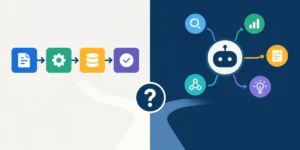
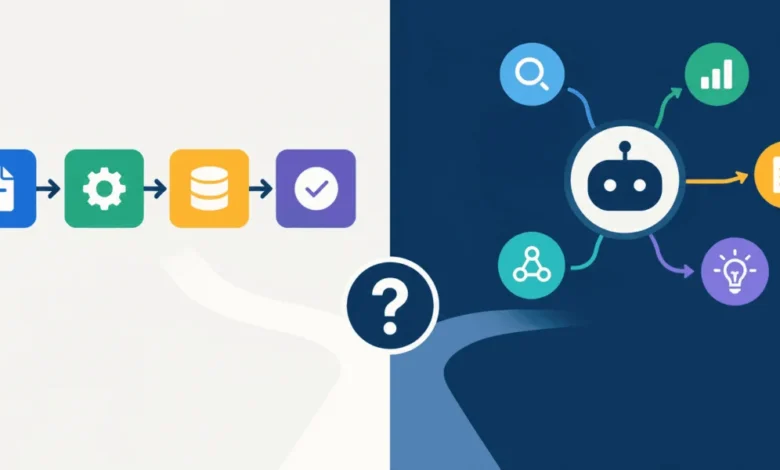
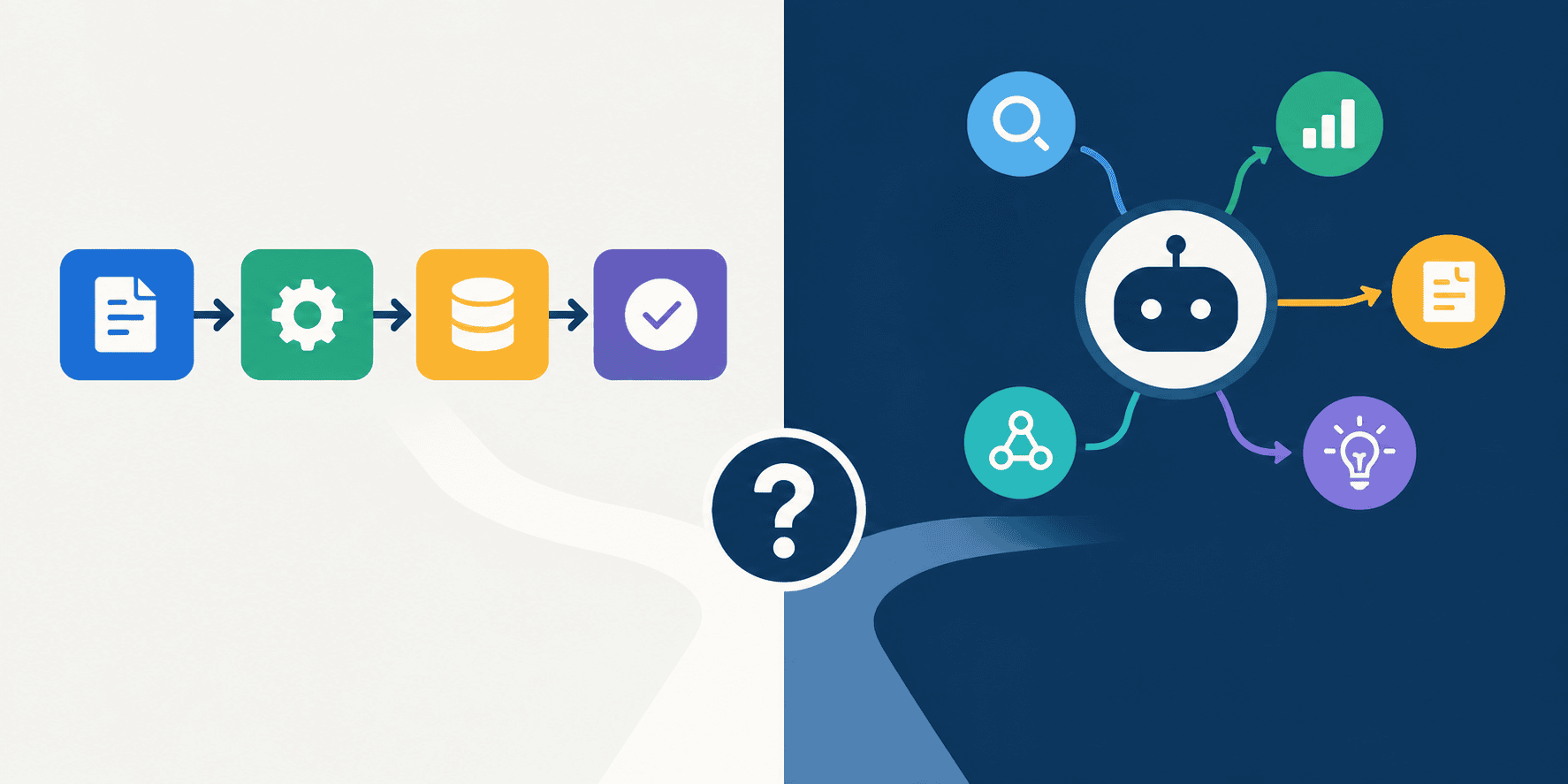
A workflow, historically referred to as a pipeline or a deterministic chain, operates on a "design-time" logic. The developer acts as the architect of the system’s decision tree. Even when LLMs are embedded within these workflows to perform judgment-heavy tasks, the "control plane"—the logic dictating what happens next—remains firmly in the hands of the human developer.
Conversely, an agentic system delegates the control plane to the model itself. The developer provides a goal and a set of tools (functions), but the model determines the "execution path" at runtime. This allows the system to operate in environments where the optimal sequence of actions is not known until the first step is executed.
Practical Implications and Operational Data
Recent benchmarking studies from major AI infrastructure providers have highlighted the trade-offs between these approaches. Data indicates that agentic workflows, due to their iterative loops, consume significantly more tokens than static workflows. Specifically, a task that takes 2,000 tokens in a linear pipeline can escalate to 15,000+ tokens when managed by an agentic loop due to repeated "thought-action-observation" cycles.
For a Fortune 500 company processing 10,000 customer service tickets daily, this discrepancy is not merely academic. It represents a potential 7x increase in API expenditure and a significant degradation in latency. Furthermore, auditing becomes a primary point of failure. In regulated industries such as banking or healthcare, compliance departments require a "frozen" execution path to verify that data privacy and security protocols are met at every juncture. An autonomous agent, by definition, changes its strategy based on the data it encounters, making it inherently difficult to map to a static compliance requirement.
The Whiteboard Test: A Decision-Making Heuristic
Before initiating a project, lead architects are increasingly utilizing the "Whiteboard Test." The premise is simple: If a senior engineer can sit down and draw a complete flowchart of the process, including conditional branches and error-handling, the system should be built as a workflow.
This heuristic serves to filter out the unnecessary complexity that agents bring to the table. A workflow that uses an LLM to "classify an issue" and then triggers a pre-defined database update is far more resilient than an agent that must "decide" whether to query a database or search a document store. The former is a predictable, testable, and version-controlled system; the latter is a dynamic system that requires advanced observability and "guardrails" to prevent runaway loops.
Evaluating Use Cases: A Comparative Checklist
When determining the appropriate architecture, stakeholders should assess their requirements against the following criteria:
1. Predictability and Auditability
If the application requires an identical, repeatable path for every input—such as an automated loan approval process—a workflow is the only professional choice. Agents, which may take different routes to arrive at a similar conclusion, introduce "black box" behavior that is often incompatible with corporate governance.
2. Input Variability
For tasks with low input variability, such as extracting invoice data into a CRM, a fixed pipeline is optimal. However, if the system is designed to handle ambiguous, open-ended requests—such as "research why our website traffic dropped in Europe last night"—the agent’s ability to pivot based on its observations of server logs and regional marketing data becomes an asset rather than a liability.
3. Economic and Latency Constraints
High-frequency, low-latency applications (e.g., real-time bidding or transactional notifications) favor workflows. The overhead of an LLM’s reasoning loop in an agentic setup creates a latency floor that is often unacceptable for user-facing, real-time interfaces.
4. The Hybrid Strategy
The most effective architectures often employ a hybrid approach. This involves building a robust, deterministic workflow where specific nodes within the pipeline are empowered to invoke agentic behavior for niche sub-tasks. For example, a customer refund workflow might be linear, but the final "investigative" step regarding a specific, complex transaction might trigger a small, bounded agent to gather context before returning to the main workflow.
Industry Outlook and Expert Sentiment
Leading AI research groups, including those at major cloud hyperscalers, have noted that the industry is entering a phase of "architectural maturity." The consensus among systems engineers is that the "agentic" label should be reserved for systems that possess genuine autonomy in their planning phases.
As noted by industry experts, "The most sophisticated systems are not the ones that use the most agents, but the ones that use agents only where they are strictly necessary." This sentiment reflects a shift toward reliability. Organizations are realizing that building an AI product is not about how "smart" the model is, but how robustly it is integrated into a business process.
Final Analysis: The Case for Constraint
The desire to build "AI agents" often stems from a misplaced belief that increased complexity equals increased capability. In reality, the most successful enterprise deployments—those that achieve production-grade stability—are characterized by extreme constraint.
Engineers are encouraged to begin by documenting the logic of their system as if the LLM were a human intern following a handbook. If the intern could perform the task by following that handbook, a workflow is the appropriate structure. If the task requires the intern to exercise judgment, observe results, and iterate on their own strategy, then, and only then, should an agentic approach be considered. By prioritizing deterministic workflows and treating agents as a specialized tool for high-uncertainty tasks, organizations can reduce development time, minimize technical debt, and ensure that their AI systems are not just clever, but consistently correct.