The Evolution of OpenAI’s Flagship Models and the Significance of GPT-5.6
The release of GPT-5.6 marks another significant milestone in the rapid advancement of artificial intelligence, building upon a lineage of models that have consistently pushed the boundaries of natural language understanding and generation. OpenAI, a leading force in AI research and deployment, has steadily evolved its GPT series, with each new version introducing enhanced capabilities and refined performance. From the groundbreaking GPT-3 to the more recent GPT-4 and GPT-5.5, these models have reshaped various industries, from content creation and customer service to software development and scientific research.
The anticipation surrounding GPT-5.6 stemmed largely from the impressive performance of its predecessor, GPT-5.5. The previous generation model had already established itself as a formidable contender in the LLM landscape, often matching or even surpassing rivals like Anthropic’s Opus 4.8 in specific tasks. Notably, in specialized domains such as code review, GPT-5.5 demonstrated superior analytical precision and recall, becoming a preferred tool for many software engineers and development teams. Given this strong foundation, the expectation for GPT-5.6 was naturally high: a model that, on paper, promised further refinements and expanded utility. Understanding these historical improvements provides crucial context for appreciating the incremental yet impactful advancements delivered by GPT-5.6. The continuous race for AI superiority necessitates that each new model not only improves but also addresses specific user pain points and expands the realm of what’s possible with AI.
Unpacking GPT-5.6: Model Sizes and Reasoning Levels
One of the most notable architectural innovations introduced with GPT-5.6 is its tiered offering, providing users with a selection of model sizes and distinct reasoning levels. This approach reflects a growing trend in the AI industry to offer more granular control over computational resources and performance outputs, catering to a diverse range of use cases and budgetary constraints.
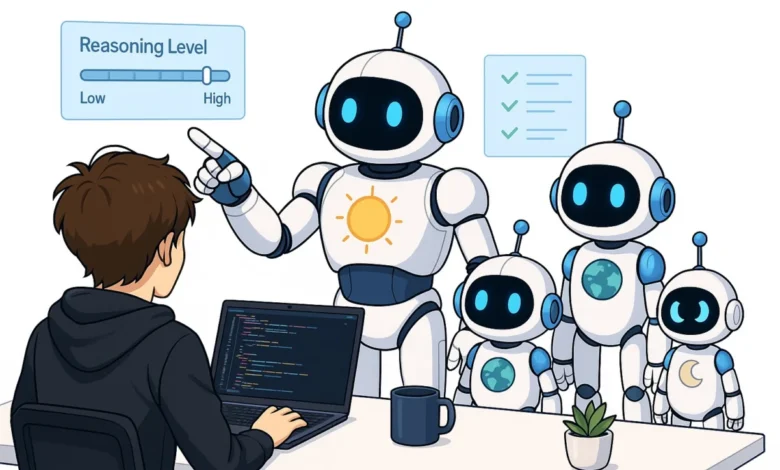
GPT-5.6 is available in three distinct sizes, metaphorically named after celestial bodies:
- Sol: Representing the Sun, Sol is positioned as the frontier model—the largest and most capable version. It is designed for tasks requiring maximum cognitive power, extensive context understanding, and the highest fidelity outputs. This model is typically targeted at complex problem-solving, advanced research, and critical enterprise applications where performance is paramount.
- Terra: Named after the Earth, Terra represents a mid-tier model. It aims to strike a balance between performance and efficiency, offering substantial capabilities for a broad array of general-purpose tasks without the extreme resource demands of Sol. Terra is likely to be a popular choice for many developers and businesses seeking robust performance for everyday operations.
- Luna: Referring to the Moon, Luna is the smallest of the three models. It is optimized for scenarios where speed and cost-effectiveness are crucial, such as simple queries, rapid prototyping, or applications with limited computational budgets. While smaller, Luna still benefits from the underlying architectural improvements of GPT-5.6, offering a more efficient baseline performance than earlier generations.
Beyond model size, OpenAI has also introduced varying "reasoning levels," allowing users to dictate the computational depth and time the model allocates to processing a query before generating a response. This feature directly impacts the quality of outputs and the speed of interaction. Higher reasoning levels instruct the model to "think" for longer, engaging in more elaborate internal processing, which typically leads to more accurate, comprehensive, and nuanced responses. Conversely, lower reasoning levels prioritize speed, delivering quicker but potentially less refined answers. This strategic trade-off between response quality and latency is a critical consideration for users, especially in real-time applications or high-throughput environments. The ability to dynamically adjust these settings allows users to tailor the model’s behavior to the specific demands of each task, optimizing for either maximum accuracy or rapid iteration. This level of control represents a significant step towards more flexible and user-centric AI deployment, enabling fine-tuning of resource allocation based on immediate operational needs.
Performance Analysis: Incremental Advancements in Key Domains
Initial comprehensive evaluations of GPT-5.6 reveal a consistent, albeit incremental, improvement across virtually all aspects compared to GPT-5.5. This pattern of steady enhancement is characteristic of mature AI development cycles, where each generation builds upon the strengths of its predecessor with targeted optimizations.
One area where GPT-5.6 particularly shines is in code reviews. Building on GPT-5.5’s already strong performance in this domain, the new model demonstrates a discernibly superior ability to identify issues within codebases. This improvement is quantified across two critical metrics:
- Recall: GPT-5.6 exhibits a higher recall rate, meaning it is better at detecting a larger proportion of existing bugs and vulnerabilities within the code. This is crucial for comprehensive quality assurance, ensuring fewer defects slip through the review process.
- Precision: Simultaneously, the model shows enhanced precision, indicating that when it reports an issue, the likelihood of that report being accurate and relevant is higher. This reduces the incidence of "false positives," saving developers time by minimizing the need to investigate non-existent problems.
The combined improvement in both precision and recall signifies a more reliable and efficient automated code review assistant. For development teams, this translates to faster iteration cycles, reduced manual overhead, and ultimately, higher-quality software. Industry data suggests that automated code analysis tools can reduce defect rates by up to 20-30% when effectively integrated into the CI/CD pipeline. GPT-5.6’s advancements in this area position it as a leading solution for maintaining robust code hygiene and accelerating development workflows.
Beyond code review, GPT-5.6 also shows subtle but meaningful improvements in actual code implementations. The model appears to possess an enhanced capacity for sustained effort on complex tasks, demonstrating greater thoroughness in its approach. While GPT-5.5 was already competent at completing coding assignments, GPT-5.6 exhibits a slight edge in its ability to work through more extensive problems, maintain context over longer interactions, and deliver more complete and robust solutions. This suggests improvements in its long-context understanding and multi-turn reasoning capabilities, allowing it to tackle more ambitious programming challenges.
However, it is crucial to temper expectations regarding the magnitude of these improvements. The consensus from early testers is that GPT-5.6 represents an "incremental" rather than "revolutionary" leap over GPT-5.5. While the advancements are real and measurable, they are not always dramatic enough to fundamentally alter existing workflows for all users. For many, the decision to upgrade or integrate GPT-5.6 will hinge on a careful evaluation of these marginal gains against associated costs and operational shifts. This reflects the current state of advanced LLM development, where exponential leaps are becoming less frequent, giving way to more refined, iterative enhancements that collectively contribute to a more powerful and reliable AI ecosystem.
The Cost-Performance Conundrum: Navigating Usage Limits and Latency
One of the most significant considerations for users of GPT-5.6, particularly those leveraging its advanced reasoning capabilities, revolves around the intricate balance between performance, usage limits, and operational speed. While the model’s higher reasoning levels—specifically "extra high" and "ultra thinking"—promise superior output quality, they introduce substantial challenges related to resource consumption and latency.
Utilizing GPT-5.6 with these elevated reasoning modes has been observed to rapidly deplete usage allowances. Even for users subscribed to higher-tier plans, such as the $200 monthly subscription, maintaining extended or parallel operations with these settings proves exceptionally difficult. This rapid consumption poses a significant barrier to continuous, high-intensity use, potentially limiting the model’s practical applicability in scenarios requiring sustained deep thought. The issue is further compounded by the observation that these high reasoning modes dramatically increase response times. While some latency is expected for more complex computations, the observed slowdown is often disproportionate, particularly for tasks that might otherwise be considered less demanding. This trade-off means that while the quality of output improves, the efficiency of interaction can suffer considerably, making it less suitable for time-sensitive applications or rapid prototyping.
In response to this challenge, many early adopters have devised strategic workarounds. A common approach involves segmenting tasks based on their cognitive demands. For instance, "extra high thinking" might be reserved exclusively for the initial planning phase of a project, where deep analysis and comprehensive strategizing are paramount. Once a robust plan is formulated, the model’s reasoning level is then adjusted down to "medium" for the subsequent implementation phase. This pragmatic approach acknowledges that while planning requires extensive cognitive effort, the execution of a pre-defined plan often benefits more from speed and efficiency, making a lower reasoning level more appropriate. This dynamic adjustment allows users to leverage the model’s high-quality reasoning where it matters most, while conserving usage limits and maintaining acceptable response times for less cognitively intensive stages.
A critical point of comparison arises when considering benchmarks and reported performance metrics. Often, these benchmarks are derived from evaluations conducted using the highest reasoning levels, showcasing the model’s peak potential. However, if practical usage dictates a reduction in reasoning levels to manage costs and speed, then the real-world performance experienced by users may fall short of these publicized benchmarks. This disparity highlights the importance of real-world testing and strategic configuration rather than relying solely on theoretical maximums.
OpenAI’s recent decision to temporarily remove the five-hour usage limit, retaining only the weekly limit, offers some reprieve. This change alleviates immediate pressure on short-term high-intensity tasks, providing more flexibility. However, the fundamental issue of rapid token consumption with high reasoning levels persists, meaning that the weekly limit can still be quickly exhausted. This necessitates ongoing vigilance and strategic usage to maximize the utility of GPT-5.6 within the constraints of its operational economics. The high cost of advanced reasoning represents a critical factor for adoption, particularly for smaller development teams or individual practitioners who must carefully manage their AI expenditure.
Strategic Application: Optimizing GPT-5.6 for Problem Solving
To harness the full potential of GPT-5.6, particularly within professional development environments, strategic application is paramount. The model excels in specific use cases and, when integrated thoughtfully into existing workflows, can significantly enhance productivity and output quality.
Code Reviews as a Primary Use Case:
The most compelling and immediate application for GPT-5.6, especially for teams utilizing tools like Claude Code, is automated code review. The model’s demonstrated improvements in both precision and recall for identifying code issues render it an exceptionally powerful tool in this domain. For a significant portion of codebases, GPT-5.6 can effectively replace or substantially augment human code reviews. While critical infrastructure or highly sensitive projects may still warrant human oversight, the model is increasingly capable of catching a vast majority of bugs and architectural inconsistencies, thereby preventing them from reaching production environments. This automation frees up valuable developer time, allowing human engineers to focus on more complex design challenges, innovation, and strategic problem-solving, rather than meticulous line-by-line code inspections. The efficiency gains from this alone could justify the integration of GPT-5.6 into modern software development pipelines.
Strategic Blending for Implementations:
While GPT-5.6 is capable of handling code implementations, some users have found greater success by adopting a hybrid approach that leverages the strengths of multiple models. A particularly effective setup involves a multi-stage process:
- Planning with Claude Fable: The initial planning phase, which often requires deep conceptual understanding, architectural foresight, and creative problem-solving, is delegated to Claude Fable. This model is recognized for its strong planning capabilities, excelling at breaking down complex problems into manageable steps and outlining robust implementation strategies.
- Execution with Claude Opus 4.8: Once the plan is meticulously crafted, the execution phase—the actual writing and structuring of code—is then transitioned to Claude Opus 4.8. This model is highly regarded for its code generation prowess, efficiently translating detailed plans into functional code.
This multi-model strategy is reported to yield superior results compared to using GPT-5.6 for both planning and implementation, even when attempting to optimize GPT-5.6 with varying reasoning levels for each phase. The specialized strengths of each model are leveraged optimally, creating a more efficient and effective development pipeline. This highlights a broader trend in AI integration: rather than seeking a single "master" model, sophisticated users are increasingly curating a toolkit of specialized AI agents, each contributing to different stages of a complex workflow.

Computer and Browser Interaction:
Another powerful use case for GPT-5.6 is its proficiency in computer and browser-based interactions. The model demonstrates remarkable aptitude and speed when navigating web interfaces, particularly when operating at a medium reasoning level. Its ability to accurately interpret visual cues, understand website layouts, and execute complex sequences of actions within a browser makes it invaluable for tasks such as:
- End-to-end code verification: Testing web applications by simulating user interactions.
- Automated data extraction: Gathering information from websites efficiently.
- Repetitive administrative tasks: Performing actions in web-based tools or dashboards.
The speed and accuracy with which GPT-5.6 performs these actions are critical, especially for validating code deployments or automating business processes. This capability positions GPT-5.6 as a strong contender for developing AI agents that can autonomously interact with digital environments, further extending the reach of automation beyond traditional programmatic interfaces. The integration of advanced browser interaction capabilities signifies a leap towards more general-purpose AI agents that can operate across diverse digital ecosystems.
Enhancing Workflow: Practical Techniques for GPT-5.6
Maximizing the utility of GPT-5.6 requires not just understanding its capabilities but also mastering specific techniques to navigate its nuances, particularly concerning reasoning levels, tool integration, and resource management.
Dynamic Reasoning Levels for Optimal Efficiency:
As previously discussed, the judicious application of reasoning levels is paramount. The strategy of using "extra high thinking" for planning and "medium reasoning" for implementation has emerged as a best practice. This approach is rooted in the understanding that the cognitive demands of planning (e.g., analyzing an entire repository, considering architectural implications, anticipating future challenges) are inherently different and often more complex than those of implementation (e.g., translating a well-defined plan into code). By reserving higher reasoning for the conceptual heavy lifting, users can achieve superior strategic outcomes without incurring excessive costs or latency during the more execution-focused stages. This dynamic switching allows for a highly optimized workflow, ensuring that computational resources are allocated precisely where they deliver the most value. It represents a sophisticated approach to managing AI resources, moving beyond a "one-size-fits-all" mentality.
Comprehensive Tool and API Access:
A critical, yet often overlooked, technique for enhancing GPT-5.6’s performance is providing it with extensive access to relevant tools and APIs. Many users accustomed to other models, such as Claude Code, might initially overlook the necessity of re-establishing these connections for GPT-5.6. However, for the model to operate at its full potential, it requires access to the same ecosystem of tools that facilitate complex workflows. This includes integration with:
- Communication platforms: Gmail, Slack for contextual awareness and task management.
- Productivity suites: Google Calendar for scheduling and context.
- Development tools: Playwright MCP for browser automation and testing.
OpenAI offers a broad array of connectors and API integrations that rival those available for models like Claude Code. There is no technical impediment to providing GPT-5.6 with the necessary permissions and access to these tools. Failing to do so can significantly degrade the model’s performance, as it will lack the contextual information and operational capabilities essential for many advanced tasks. Granting comprehensive tool access transforms GPT-5.6 from a mere language model into a highly capable AI agent, embedded within the user’s digital environment. This strategy aligns with the broader industry trend towards agentic AI, where models are increasingly designed to interact with and manipulate external tools to achieve complex goals.
Strategic Use of Banked Resets:
OpenAI’s approach to usage limits, particularly its provision of "banked resets," offers a unique mechanism for managing resource consumption that differs from some competitors like Claude Code. While Claude Code occasionally implements universal usage limit resets, OpenAI often provides users with individual banked resets that can be triggered at any point. This feature is invaluable for managing fluctuating workloads and unforeseen spikes in AI usage.
A banked reset allows a user to instantly reset their usage limits (e.g., from 90% back to 0%), effectively providing a fresh allocation of tokens. This is particularly beneficial for:
- High-intensity, short-duration projects: Where a significant amount of processing is required within a compressed timeframe.
- Recovering from accidental over-usage: Providing a safety net if tokens are depleted faster than anticipated.
However, a crucial caveat accompanies banked resets: activating one also resets the date of the next scheduled usage reset. For instance, if a weekly limit typically resets on Friday, triggering a banked reset on Wednesday will move the next weekly reset to the following Wednesday. This means while immediate capacity is restored, the overall cadence of future resets is shifted. Users must weigh this trade-off: immediate capacity versus a potential delay in the next automatic reset. Despite this, banked resets remain a highly valuable tool for active subscribers, offering a degree of flexibility and control over resource allocation that is not universally available across all LLM platforms. OpenAI has historically provided these banked resets periodically to subscribers, adding an additional layer of value to their service.
Broader Market Context and Competitive Landscape
The introduction of GPT-5.6 occurs within a fiercely competitive and rapidly evolving AI landscape. OpenAI’s continuous releases are closely watched by rivals such as Anthropic, Google, and Meta, each vying for market leadership in the burgeoning field of large language models and generative AI.
Anthropic, with its Claude series (Fable, Opus), has positioned itself as a strong competitor, particularly emphasizing safety and ethical AI development. The original article’s observation that Claude Fable excels in planning and Opus 4.8 in execution underscores the specialized strengths that different models bring to the table. This specialization is a key trend: instead of a single general-purpose AI dominating all tasks, the market is seeing a proliferation of models optimized for specific functions or industries.
Google’s Gemini series and Meta’s Llama models also represent significant investments in foundational AI. While OpenAI and Anthropic often lead in public perception for cutting-edge capabilities, Google and Meta leverage vast datasets and computational resources to develop powerful alternatives, often with an open-source or more developer-friendly approach in some instances. This competitive pressure drives innovation, leading to faster development cycles and a continuous improvement in model capabilities across the board.
The incremental nature of GPT-5.6’s improvements, rather than a revolutionary leap, reflects the current stage of LLM development. As models become increasingly sophisticated, the "low-hanging fruit" of dramatic performance gains becomes scarcer. Future advancements are likely to be characterized by refinements in specific areas (e.g., multimodal capabilities, reasoning under uncertainty, ethical alignment), greater efficiency in resource consumption, and enhanced integration with complex workflows. This iterative progress is vital for the long-term maturation of AI technology, ensuring that models become not only more powerful but also more reliable, scalable, and adaptable to real-world applications. The market will continue to reward models that can demonstrate tangible benefits in terms of efficiency, accuracy, and ease of integration, pushing developers to constantly evaluate the "best tool for the job" rather than blindly adopting the newest release.
Implications for Developers and Enterprises
The release of GPT-5.6 carries significant implications for both individual developers and large enterprises leveraging AI technologies.
For developers, the model offers a powerful new tool to enhance productivity, particularly in code-related tasks. The improved code review capabilities can dramatically reduce the time spent on manual inspections, allowing developers to focus on higher-value creative and problem-solving activities. The ability to dynamically adjust reasoning levels and integrate with a wide array of tools means that GPT-5.6 can be finely tuned to fit into existing development pipelines, accelerating iteration cycles and improving code quality. However, developers must also become adept at managing the cost-performance trade-offs, strategically allocating resources to avoid rapid depletion of usage limits. This necessitates a more sophisticated understanding of AI economics and resource management.
For enterprises, GPT-5.6 presents opportunities for enhanced automation and efficiency across various departments. Beyond software development, its advanced browser interaction capabilities could revolutionize customer service, data analysis, and back-office operations by automating complex web-based tasks. The tiered model sizes (Sol, Terra, Luna) allow enterprises to select models that align with their specific needs and budget constraints, enabling scalable deployment from critical high-performance applications to more cost-sensitive, general-purpose tasks. The strategic integration of GPT-5.6, potentially alongside other specialized models, can lead to more resilient and intelligent autonomous systems. However, enterprises will also face challenges related to integrating these advanced models into legacy systems, ensuring data privacy and security, and upskilling their workforce to effectively manage and utilize these powerful AI tools. The ongoing costs associated with high-tier usage will also be a critical factor in budget planning and ROI calculations.
The broader implication is a continued acceleration of AI adoption and integration into daily workflows. As models become more capable and versatile, the lines between human and AI-driven tasks will continue to blur, necessitating new approaches to collaboration, oversight, and skill development. The market for AI-powered developer tools, agentic systems, and automation platforms is poised for further growth, with models like GPT-5.6 serving as foundational components.
Conclusion
In summation, the debut of OpenAI’s GPT-5.6 represents a significant, albeit incremental, advancement in the landscape of large language models. This comprehensive review has delved into the model’s key features, including its innovative tiered sizing (Sol, Terra, Luna) and configurable reasoning levels, which empower users with unprecedented control over performance and resource allocation. The model’s primary strengths lie in its enhanced code review capabilities, demonstrating superior precision and recall in identifying issues, and its robust performance in computer and browser interactions.
While GPT-5.6 offers clear improvements over its predecessor, GPT-5.5, the difference in core functionalities for tasks like code implementations and general computer use, when compared to rivals such as Anthropic’s Opus 4.8, is not drastically pronounced. This underscores the current competitive parity among leading LLMs, where specialized strengths often dictate optimal application. Consequently, the established workflow of utilizing Claude Fable for meticulous planning, Opus 4.8 for efficient execution, and now GPT-5.6 for rigorous code review remains a highly effective strategy for many practitioners.
Effective utilization of GPT-5.6 hinges on mastering specific techniques: dynamically adjusting reasoning levels to balance performance with cost and speed, ensuring comprehensive tool and API access for enhanced contextual awareness, and strategically leveraging OpenAI’s unique banked resets for flexible resource management. As the AI landscape continues its rapid evolution, the imperative for developers and enterprises alike is to remain agile, continuously evaluating the latest models and integrating them judiciously into their workflows to identify the optimal tools for their specific use cases. This proactive approach ensures that innovation is not just observed but actively harnessed to drive efficiency, foster creativity, and solve complex problems in an increasingly AI-driven world.