AI Workflows versus AI Agents: A Comprehensive Guide to Choosing the Right Architecture for Enterprise Automation

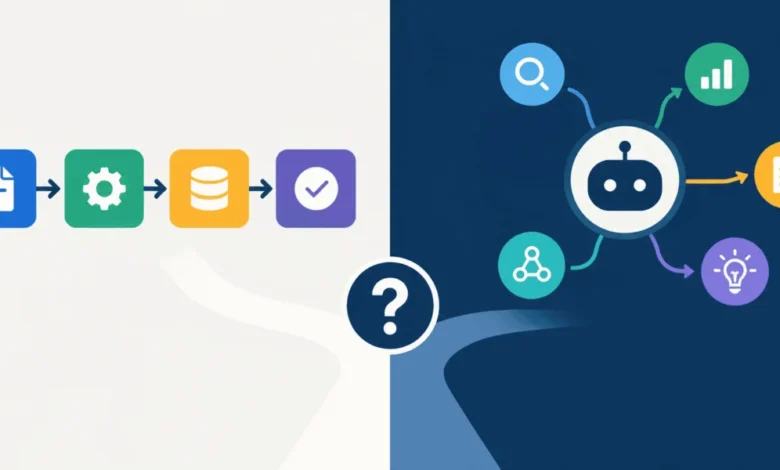
The current landscape of artificial intelligence development is characterized by a significant semantic crisis, particularly regarding the term "agent." As organizations race to integrate Large Language Models (LLMs) into their operational infrastructure, the distinction between simple automated pipelines and autonomous reasoning systems has become blurred. This ambiguity often leads to over-engineering, where businesses deploy complex, costly, and unpredictable autonomous agents for tasks that could be handled more efficiently by structured, deterministic workflows. Understanding the fundamental mechanics of these two paradigms is no longer just a technical preference; it is a critical business strategy for optimizing resource allocation, latency, and system reliability.
The Evolution of Automation: From Pipelines to Autonomy
To appreciate the current debate, one must look at the progression of AI-driven software development. In the early days of LLM integration, roughly 2022 to 2023, developers primarily utilized rigid API chains—systems where an LLM performed a specific task, and its output triggered a hard-coded function. These were the precursors to modern AI workflows. By 2024, the industry shifted toward "agentic" architectures, influenced by frameworks such as LangChain and AutoGPT, which allowed models to iterate on their own actions.
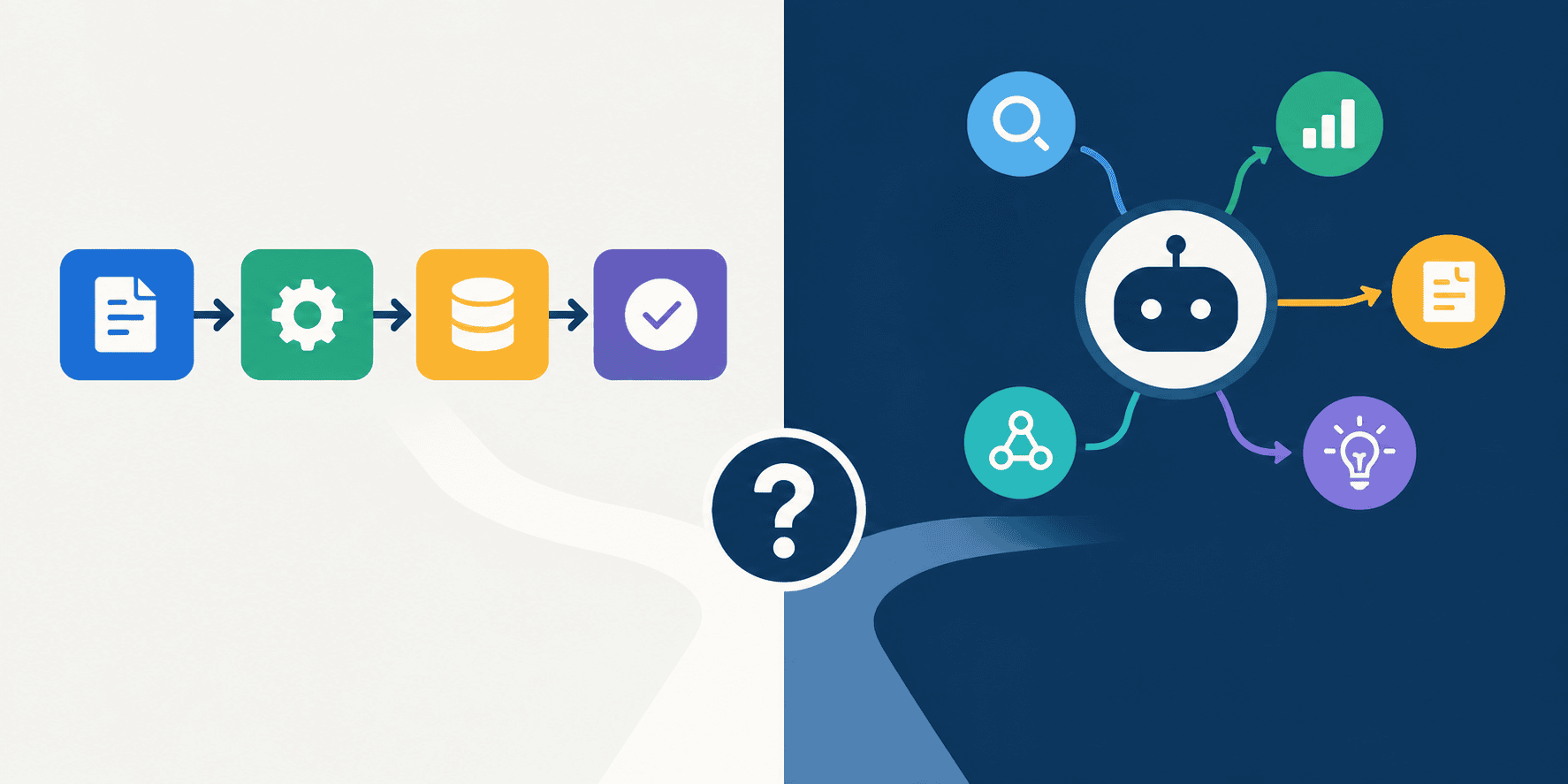
A workflow, in its most robust form, is a system defined by a predetermined control flow. Even when utilizing sophisticated LLMs to perform sentiment analysis, data extraction, or classification, the architectural path remains fixed. The developer explicitly defines the "if-then" logic, the retry mechanisms, and the sequence of tool execution. This is a deterministic approach: given the same input, a workflow will follow the same path every time.
Conversely, an agentic system is characterized by non-deterministic control flow. In these architectures, the LLM functions as the "brain" or the orchestrator. It is provided with a set of tools—such as a search engine, a database query interface, or a calculator—and a high-level objective. The model is then responsible for determining the sequence of operations required to achieve that goal. If an agent performs a database query and receives an unexpected error, it can theoretically adjust its strategy, attempt a different query, or consult a diagnostic log. The control resides with the model, not the developer’s predefined flowchart.
The Practical Test: Predictability vs. Discovery
The central challenge for engineering leads is determining which architecture fits the business requirement. The most effective diagnostic tool for this decision is the "Whiteboard Test." If a lead engineer can successfully sketch the entire process on a whiteboard—including every decision branch, error handling step, and input-output transformation—before the code is even written, the application is almost certainly a candidate for a workflow.
In contrast, if the process requires discovery—where the next step depends entirely on the outcome of the previous step in a way that cannot be predicted—the system requires the reasoning capabilities of an agent. For example, processing a standard tax form involves a rigid set of fields and validation rules, making it a classic workflow. Troubleshooting a complex, intermittent server outage, where the symptoms might lead to network, database, or software issues, requires the iterative investigation style of an agent.
Empirical Analysis of Performance and Cost
Data from current enterprise deployments suggests that the performance trade-offs between these two architectures are stark. According to industry benchmarking, agentic systems consistently incur higher "tax" on operational overhead. Because agents often require multiple "thought" cycles and redundant API calls to reach a conclusion, they consume significantly more tokens than a workflow performing the same task.
For instance, a standard customer service workflow designed to classify an inquiry and suggest a pre-approved template typically utilizes 1,000 to 2,000 tokens per request. An agent tasked with the same problem, which might search internal documentation, review user history, and draft a custom response, can easily consume 10,000 to 20,000 tokens, representing a tenfold increase in compute cost. Furthermore, latency is often higher in agentic systems because each step in the chain requires a round-trip to the LLM to decide the next action, whereas a workflow can execute many steps in parallel or through pre-compiled code.
The Case for Constraints: Reliability and Compliance
In highly regulated sectors, such as banking, insurance, and healthcare, the predictability of a workflow is not just a preference; it is a regulatory requirement. Auditors and compliance officers demand "explainability"—the ability to trace exactly why a system made a specific decision.
Workflows excel here because they are auditable. If a refund is denied, the developer can point to the specific line of code or the specific decision node in the workflow that triggered the rejection. In agentic systems, the reasoning process is often a "black box." If an agent denies a refund for an unconventional reason discovered during its reasoning loop, recreating that logic for an audit can be extraordinarily difficult. This "black box" nature is the primary reason why many enterprise-grade systems continue to favor deterministic pipelines over autonomous agents for high-stakes decisions.
Strategic Framework for Implementation
Organizations should consider a phased approach to building AI-enabled features. The following checklist serves as a guide for engineering teams:
- Defining the Scope: Can the process be mapped as a flowchart? If yes, prioritize a workflow architecture to ensure reliability.
- Input Variability: Is the input structured and consistent? Workflows thrive on structure, while agents are better suited for unstructured, highly variable inputs.
- Resource Efficiency: What are the constraints on latency and cost? For high-volume, low-margin applications, the efficiency of a workflow is superior.
- Audit Requirements: Does the application require a clear, traceable path for every decision? If compliance is paramount, maintain the control flow within the code, not the LLM.
- Iterative Refinement: Start by building a workflow with LLM-enhanced judgment points. Only transition to an agentic model if the workflow proves insufficient for handling the complexity of the task.
The Future of AI Orchestration
As the industry matures, the dichotomy between workflows and agents may begin to collapse into a hybrid model. Many developers are currently experimenting with "Agentic Workflows," where a workflow manages the high-level business logic, but specific nodes within that workflow utilize small, specialized agents to handle complex, non-deterministic sub-tasks.
This modularity allows for the best of both worlds: the reliability, speed, and auditability of a structured pipeline combined with the reasoning capabilities of an agent where they are truly needed. For example, an automated mortgage application system might be a strictly defined workflow, but it could trigger an "agent" sub-process only when it encounters an anomalous financial statement that requires human-like investigation.
Conclusion: A Disciplined Approach
The hype surrounding "agents" has obscured the fact that the most successful AI applications are rarely fully autonomous. They are, instead, well-architected systems that leverage LLMs as components within a broader, human-designed framework. By resisting the urge to default to agentic architectures and instead opting for the simplicity and control of a well-designed workflow, organizations can build systems that are faster, cheaper, and far more reliable. The mark of an expert engineer in the current AI era is not the ability to build a complex, self-directed agent, but the ability to identify the precise point where human-designed logic should end and machine reasoning should begin. Building with restraint remains the most effective path toward scalable and sustainable AI integration.