SpaceX Secures FCC Approval for Massive Orbital Data Center Constellation Starmind

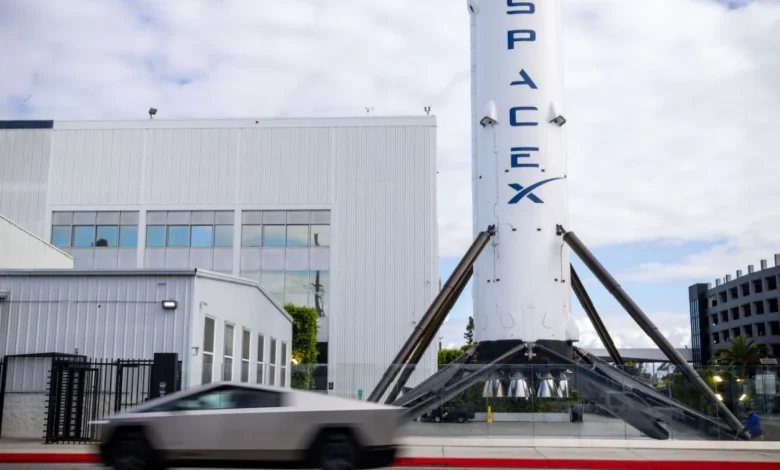
In a landmark decision that could fundamentally reshape the future of global computing infrastructure, the Federal Communications Commission (FCC) granted conditional approval this Wednesday to SpaceX to deploy and operate a massive constellation of up to 1 million satellites dedicated to orbital data processing. This regulatory milestone represents a significant victory for Elon Musk, whose vision of shifting the world’s most power-intensive AI workloads into the vacuum of space has moved from the realm of science fiction into the initial phases of bureaucratic reality.
The project, dubbed "Starmind," seeks to establish a high-performance computing network in orbit, leveraging the thermal efficiency of the space environment and the low-latency capabilities of laser-linked satellite arrays. While the FCC’s decision clears a major hurdle, it also ignites a fierce debate regarding the sustainability of low Earth orbit (LEO), the management of space debris, and the potential for radiofrequency interference in an increasingly crowded orbital plane.
The Regulatory Battleground
The path to this conditional authorization was far from smooth. SpaceX faced intense opposition from a consortium of industry titans and scientific bodies. Amazon, which is actively developing its own satellite internet network, Project Kuiper, served as a vocal critic during the public comment period. In a formal petition to deny the application, Amazon argued that the SpaceX proposal was characterized by "lofty ambition rather than a real plan," asserting that the application lacked the technical granularity required to ensure safe operations.
Viasat, another major player in the satellite communications sector, joined the American Astronomical Society (AAS) in raising red flags. The AAS specifically highlighted the risks to ground-based astronomical research, noting that a constellation of this magnitude—if not managed with extreme precision—could lead to increased sky brightness, interfering with long-exposure deep-space imaging. Furthermore, the sheer volume of 1 million satellites poses a statistical nightmare for orbital collision avoidance, a concern that industry regulators and international space agencies have been tracking with growing alarm.
Despite these objections, the FCC ultimately sided with the potential for technological innovation. FCC Chair Brendan Carr championed the decision in a public statement, framing the move as an essential step for national competitiveness. "This action opens a bold new frontier for the computing infrastructure needed to power America’s leadership and growth," Carr remarked. Elon Musk acknowledged the decision via his platform, X, stating, "Much appreciate. This will be a great asset to America and the world."
Chronology and Operational Roadmap
The approval granted by the FCC establishes a rigorous, albeit extended, timeline for development. SpaceX is currently bound by the following milestones:
- Initial Deployment: The company has a seven-year window to place its first operational Starmind satellite into orbit.
- Full Constellation: The total deployment of the 1-million-satellite network must be completed within 14 years.
- Orbital Management: SpaceX must continue to negotiate the regulatory framework for satellites operating above the 600-kilometer mark, specifically regarding their de-orbiting procedures.
Currently, existing FCC rules mandate that satellites operating below 2,000 kilometers must be designed to re-enter Earth’s atmosphere within five years of mission completion to prevent the accumulation of "space junk." SpaceX has requested a waiver to this rule, proposing that retired satellites be moved into alternative orbits, including "graveyard orbits" or even trajectories around the sun, to extend their utility or reduce atmospheric re-entry strain. The FCC has yet to finalize its stance on these alternative disposal methods.
Technical and Economic Hurdles
While the regulatory green light is a significant step, industry analysts emphasize that the technical and financial barriers to Starmind remain immense. Unlike the Starlink constellation, which serves as a communications relay, Starmind aims to host compute-heavy AI data centers. This presents three primary challenges:
- Thermal Management: Processors generate significant heat. In the vacuum of space, heat cannot be dissipated through convection. Developing advanced, lightweight radiators capable of shedding the thermal load of massive AI chips while operating in direct sunlight or the freezing shade of the Earth is a formidable engineering challenge.
- Launch and Manufacturing Economics: To make orbital computing cost-competitive with terrestrial data centers, SpaceX must achieve a radical reduction in the cost per kilogram to orbit. Even with the Starship launch system, the capital expenditure required to launch 1 million units is in the hundreds of billions of dollars.
- Capital Financing: Investors are currently wary of the long-term ROI for space-based infrastructure. Financing the development of radiation-hardened, high-performance chips that can survive the harsh environment of LEO while remaining fiscally viable is a significant hurdle that the company has yet to clear.
Implications for the Global AI Infrastructure
The shift toward orbital data centers is driven by the insatiable demand for AI compute. As power grids on Earth struggle to keep pace with the energy requirements of massive AI training clusters, space offers a unique, albeit challenging, solution. Solar energy is available in abundance in orbit, and the natural cooling potential of the cold-space environment could theoretically offset some of the cooling costs associated with terrestrial data centers.
However, the implications for the space environment are profound. The current orbital population of satellites is approximately 10,000 to 12,000. Authorizing a constellation of 1 million would increase the satellite count by nearly two orders of magnitude. This necessitates a transition to highly automated, AI-driven traffic management systems to prevent the "Kessler Syndrome"—a cascading scenario where collisions create a debris field that renders specific orbits unusable for generations.
The Role of Regulatory Authority
A pivotal aspect of the FCC’s decision was its dismissal of concerns regarding scientific research and atmospheric pollution, with the agency explicitly stating that such issues fell outside its current regulatory mandate. This creates a broader policy debate regarding the "siloed" nature of current space regulation. Critics argue that as private enterprise pushes into the orbital frontier, the U.S. government needs a more holistic regulatory framework that integrates environmental protection, scientific preservation, and aerospace safety under a single, unified agency.
For now, the FCC’s decision serves as a bellwether for the commercialization of space. By prioritizing economic growth and American leadership in the AI sector, the FCC has effectively invited the private sector to treat low Earth orbit as an extension of the terrestrial industrial base. Whether SpaceX can bridge the gap between regulatory approval and the reality of deploying 1 million data-processing satellites remains the defining question of the next decade in the aerospace industry.
As the industry watches, the focus will likely shift toward SpaceX’s next funding rounds and the specific design specifications of the Starmind satellites. With a 14-year runway, the company has the time to iterate on its technology, but the eyes of the global scientific and regulatory community will remain fixed on how Musk handles the delicate balance between rapid innovation and the long-term stewardship of the space environment.