How the Acceleration of AI Software Development is Reviving the Lost Art of Coding for Pure Curiosity and Play

The modern landscape of software engineering is experiencing a fundamental paradigm shift. With the rapid evolution of artificial intelligence and automated coding agents, code is now shipping faster than at any point in the history of the computing industry. According to recent data from GitHub’s Octoverse report, the velocity of software creation has reached historic highs, with automated agents initiating a staggering 40 percent of all pull requests by September 2026—a monumental leap from just 17 percent recorded in March of the same year. This unprecedented acceleration has drastically compressed project timelines, fundamentally changing how developers conceptualize, build, and deploy digital products.
Yet, beneath the surface of this efficiency-driven revolution lies a profound cultural transformation within the developer community. As artificial intelligence absorbs the heavy lifting of boilerplate generation, syntax checking, and routine debugging, software engineers are finding themselves with a rare and valuable commodity: time. This newly liberated bandwidth is prompting a nostalgic return to the roots of digital creation, encouraging developers to rediscover the pure, unadulterated joy of tinkering, experimenting, and building software simply for the fun of it. Far from being a mere distraction, this renaissance of play is proving to be a vital catalyst for innovation, skill acquisition, and creative problem-solving in an increasingly automated world.
The Evolution of Developer Play: From E-Ink Badges to Programmable Gaming Devices
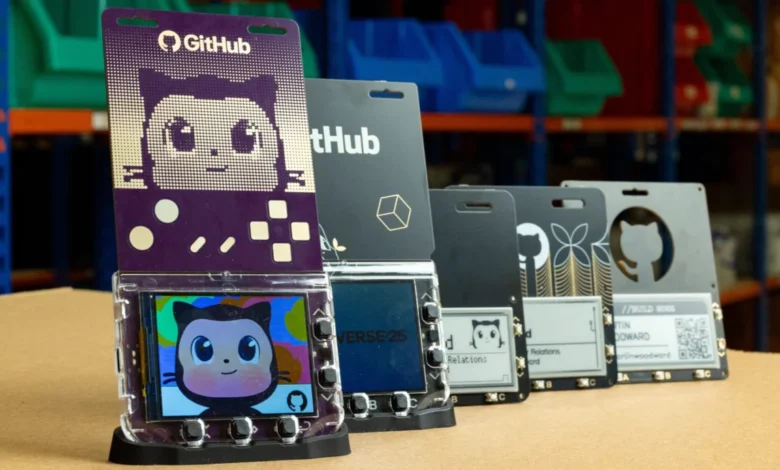
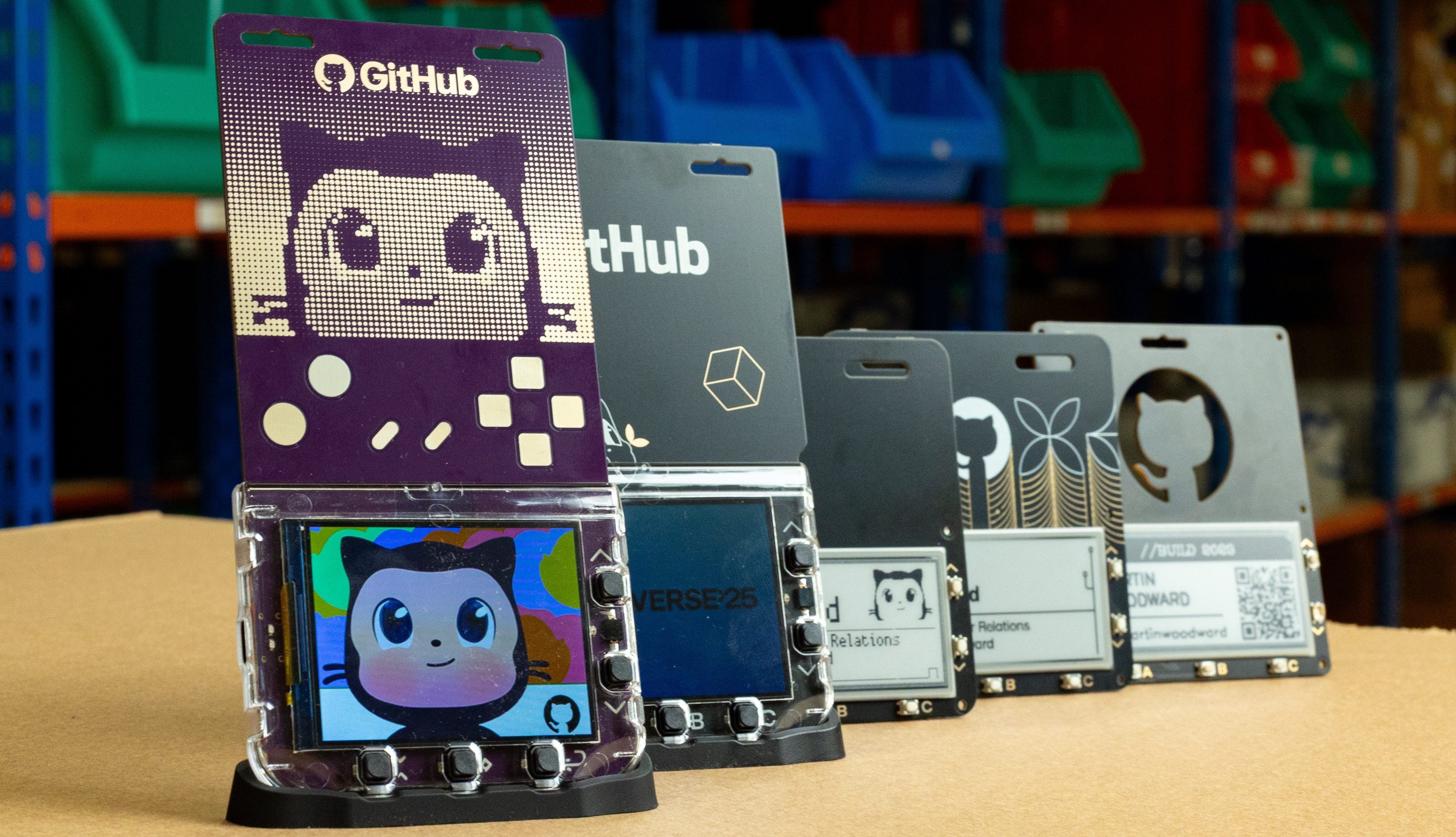
To understand how the industry is reconnecting with this spirit of experimentation, one need only look at the cultural milestones cultivated at major developer gatherings over the past several years. For the last four years at GitHub Universe, organizers have distributed hackable conference badges that have evolved from simple identification tags into sophisticated, programmable microcomputers. What began as a rudimentary e-ink display designed solely to exhibit a participant’s name and job title has transformed into a labor of love spearheaded by Martin Woodward, Vice President of Developer Relations.
The chronological progression of these conference badges mirrors the broader trajectory of consumer hardware and developer empowerment. In their earliest iterations, the badges served as static displays with minimal interactivity. By 2026, however, the device had matured into a robust piece of hardware featuring a vibrant color screen, a rechargeable battery, precision accelerometer sensors, and touch-sensitive gaming controls.
This hardware evolution unlocked an extraordinary wave of grassroots creativity among conference attendees. Developers immediately set to work reverse-engineering the device, writing custom applications, and sharing their creations across social media platforms. Attendees built bespoke mini-games—such as the popular driving simulator "Octo Drive"—and utility applications that pushed the hardware to its absolute limits. The ultimate validation of the badge’s capabilities arrived when developers inevitably answered the perennial engineering question of the digital age: "Can it run Doom?" By porting the classic first-person shooter to the virtual and physical iterations of the badge, the community demonstrated how low-barrier hardware, combined with modern software tooling, can turn an ordinary conference accessory into an expansive playground for technical ingenuity.
Coding Needs Room for Play: The Psychological Shift in Software Engineering
The rapid integration of AI into the software development lifecycle has undeniably introduced a sense of industry-wide anxiety. For decades, developers have honed specific, highly technical skill sets centered around syntax mastery, architectural planning, and meticulous line-by-line implementation. Witnessing autonomous agents draft complex codebases in fractions of a second can easily induce feelings of professional displacement.
However, industry leaders argue that this technological disruption offers a silver lining: unprecedented room for creativity. In traditional software development pipelines, the immense friction of bringing an idea to life often discouraged small-scale experimentation. Developers had to carefully weigh whether a pet project justified the hundreds of hours required for planning, scaffolding, and maintenance.
Artificial intelligence effectively removes this friction by democratizing execution. Ideas can be translated into working codebases almost instantaneously, allowing engineers to test hypotheses purely out of curiosity without the crushing burden of architectural perfectionism. This shifts the learning curve to entirely new phases of the building timeline. Rather than spending weeks wrestling with syntax, developers can focus on conceptual exploration, rapid prototyping, and empirical observation.
During discussions on the GitHub Podcast, Martin Woodward advocated for this mindset shift, advising developers to actively "give yourself permission to play, call it learning." Crucially, Woodward introduced a pragmatic caveat to this philosophy: time-boxing. To prevent exploratory projects from spiraling into endless quests for perfection, developers must establish strict temporal boundaries, recognizing the exact moment to stop tinkering, ship the project, and share the results with the broader community.
Lowering the Barrier to Entry: Small Ideas and Personal Use Cases
Historically, the scope of software projects was dictated by market viability or broad utility. Developers defaulted to building applications designed to scale for global audiences, addressing universal pain points rather than niche, individual needs. The proliferation of AI tooling has shattered this default mindset, enabling a hyper-personalized approach to software creation.
Today, developers no longer need a grand, venture-backed vision to justify writing code. Software can be built strictly for hyper-specific, localized use cases—artifacts that "just work on my machine" and are considered feature-complete in their isolation. This shift empowers engineers to dabble in advanced technical disciplines that were previously locked behind steep learning curves.
A prime illustration of this phenomenon occurred during the GitHub Universe closing keynote, when Woodward decided to teach himself the fundamentals of machine learning. Rather than enrolling in an extensive academic course or studying dense theoretical textbooks, Woodward leveraged GitHub Copilot to build a functional pedometer directly onto his conference badge. By utilizing the badge’s onboard accelerometer, he collected raw movement data, trained a lightweight machine-learning model directly within his web browser, and deployed the model to the physical hardware. Within a remarkably short timeframe, Woodward was walking the stage to test whether the device could autonomously differentiate between walking, standing still, and nervous fidgeting.
Just a few years ago, undertaking such a multidisciplinary project would have required specialized knowledge in data science, embedded systems, and machine learning frameworks—a daunting prospect for an average web or enterprise developer. By drastically lowering the barrier to entry for complex domains, modern AI tools enable professionals to cross traditional disciplinary boundaries, transforming specialized research into accessible, weekend hobbyist projects.
The Indispensable Role of Human Oversight in AI-Driven Development
Despite the awe-inspiring speed and capability of autonomous coding agents, industry experts emphasize that human agency remains the most critical component of the software development lifecycle. Scaling development velocity with artificial intelligence does not eliminate the need for human judgment; rather, it amplifies it.
Experienced developers can readily identify the distinct "tells" of AI-generated work, whether in written documentation, graphical design choices, or software codebases. For instance, AI-generated code often features verbose commenting blocks on trivial logic—a behavioral quirk virtually nonexistent in traditional human-written codebases of similar scale.

To maintain system integrity, developers must preserve rigorous feedback loops. The engineering community must actively inspect, debug, and test the outputs produced by automated agents, injecting personal craftsmanship and architectural oversight into the final product. AI functions as an exceptionally fast assistant, but the ultimate responsibility for software reliability, security, and intent rests squarely with the human engineer.
Navigating the Open Source Maintenance Crisis
While individual experimentation and personal hobby projects thrive in this new era, the intersection of AI-generated code and collaborative open-source ecosystems presents unique socio-technical challenges. Open-source maintainers are currently facing an unprecedented wave of contributions, bug reports, and pull requests generated largely through automated AI workflows.
This deluge of low-effort or poorly vetted contributions has severely exacerbated the maintenance burden on open-source project maintainers, many of whom volunteer their time to keep critical global infrastructure running. Addressing this crisis requires a collective cultural shift within the developer community.
In both keynote addresses and podcast discussions, GitHub leadership underscored the ethical boundaries of open-source participation. Woodward encapsulated the ethos of collaborative software development with a poignant distinction: "Open source is the freedom to inspect, to remix, and to share without asking for permission. But it’s not the freedom to impose your will on others."
Forking a repository provides an ideal sandbox for developers to explore radical ideas, test AI-generated architectures, and satisfy their personal curiosities without impacting the broader ecosystem. However, before pushing those experimental changes back to a main repository or imposing them on upstream maintainers, contributors are urged to exercise strict etiquette and responsibility. Key considerations include thoroughly testing changes, providing clear documentation, respecting project guidelines, and ensuring that contributions solve genuine, validated problems rather than creating unnecessary review overhead. Respecting the labor of open-source maintainers is vital to keeping collaborative software development sustainable, manageable, and enjoyable for everyone involved.
The Broader Implications for the Future of Technology
The convergence of high-velocity AI tools and a renewed culture of developer play signals a profound transformation in how society interacts with technology. As programming becomes less about rote syntax memorization and more about creative orchestration and high-level conceptual design, the demographic of people capable of building software will continue to broaden.
Institutions, enterprises, and independent developers alike must adapt to this accelerated timeline. By embracing the philosophy of structured play, organizations can foster environments where innovation is driven by curiosity rather than rigid compliance. The ability to prototype rapidly, learn dynamically, and fail safely will define the most successful engineering teams of the coming decade.
Ultimately, the resurgence of tinkering—symbolized by programmable conference badges, browser-based machine learning models, and micro-applications built over a weekend—demonstrates that the heart of software engineering has always been rooted in curiosity. As developers reclaim time through automation, they are rediscovering the pure joy that drew them to computers in the first place, ensuring that the future of technology remains deeply human, imaginative, and endlessly inventive.