Corporate Social Responsibility in Action: How Sophos Employees are Redefining Professional Engagement through Community Volunteering

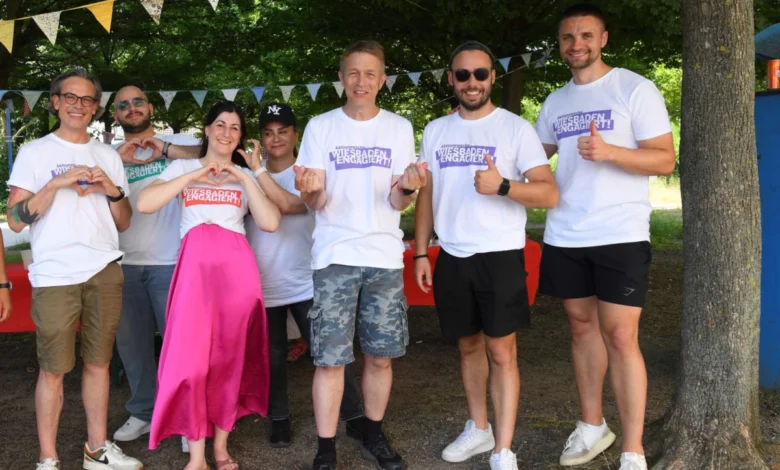
The modern corporate landscape is undergoing a profound shift as organizations increasingly integrate social responsibility into their core operational frameworks. At the forefront of this trend is Sophos, a global leader in cybersecurity, which has institutionalized community engagement through a robust volunteer leave policy. This initiative was recently highlighted during the annual Wiesbaden Engagiert! event in Germany, where employees from the company’s regional offices dedicated their time to the Biebrich Children, Youth, and Community Center. This case study of corporate altruism reflects a broader industry movement wherein companies leverage their human capital to address local social challenges, fostering a culture of purpose that transcends traditional profit-driven mandates.
The Wiesbaden Engagiert! Initiative: Context and Background
Wiesbaden Engagiert! is an annual week-long festival of social engagement organized by the city of Wiesbaden. Since its inception, the program has served as a bridge between the private sector and local non-profits, facilitating collaborations that address the specific needs of the Parkfeld neighborhood and beyond. The Biebrich Children, Youth, and Community Center serves as a vital hub for this region, offering a spectrum of services that range from educational tutoring and recreational programs to intergenerational community building.
For the 2024 iteration of the event, the focus was centered on fostering social cohesion among diverse local demographics. By integrating professional volunteers into the center’s infrastructure, the organizers aimed to relieve the burden on permanent staff while providing high-quality experiences for the residents. Sophos employees, operating within their paid volunteer leave framework, integrated themselves into the event’s logistics, managing everything from creative workshops to high-traffic recreational facilities.
Chronology of the Engagement
The engagement began in the early morning hours, as Sophos volunteers coordinated with center administrators to prepare the outdoor and indoor spaces for the influx of families. The day was structured into three distinct phases:
- Setup and Infrastructure Readiness: Volunteers assisted in the deployment of large-scale recreational equipment, including the installation and safety verification of the bouncy castle, a primary draw for the event’s youth participants.
- Interactive Community Programming: Throughout the mid-day session, the team facilitated workshops, including bracelet-making stations designed to encourage artistic expression and fine motor skill development among children. Simultaneously, the volunteers managed temporary tattoo stations, a high-engagement activity that helped maintain a festival atmosphere throughout the day.
- De-escalation and Cleanup: The concluding phase involved the systematic breakdown of equipment and the restoration of the center to its standard functional state, ensuring that the facility was prepared for its regular programming the following morning.
Data-Driven Insights on Corporate Volunteering
The effectiveness of such programs is supported by a growing body of data. According to recent research from the Association of Corporate Citizenship Professionals, companies that provide paid volunteer time off (VTO) see a marked increase in employee retention rates—often cited as being up to 30% higher than organizations without such policies.
Sophos’s policy, which provides up to 40 hours of paid leave per year for volunteering, positions the company in the top percentile of corporate social responsibility (CSR) initiatives within the technology sector. For a global workforce, 40 hours represents an entire work week of human capital investment. If applied across a substantial portion of their global headcount, this represents thousands of hours of donated professional labor, translating to significant economic value for the non-profit organizations supported.
From an organizational behavior perspective, these hours are not merely "time off." Studies have indicated that employees who participate in company-sponsored volunteerism report a 25% increase in job satisfaction and a stronger alignment with corporate values. This creates a feedback loop: employees feel more connected to their employer, which in turn reduces turnover costs and enhances the overall employer brand in a highly competitive cybersecurity talent market.
Official Perspectives and Organizational Philosophy
While individual employees emphasize the personal reward of such initiatives, the organizational perspective is grounded in the necessity of community integration. Leadership within organizations like Sophos views these programs as essential for long-term sustainability.
"The goal is to move beyond the traditional ‘checkbook philanthropy’ model," noted an internal spokesperson familiar with the company’s community outreach strategy. "By providing the infrastructure—namely the time and the logistical support—for employees to physically work in their communities, we create a genuine connection between our workforce and the public. This is not about public relations; it is about ensuring that our employees are active, conscious participants in the societies where they live and work."
The feedback from the Biebrich Children, Youth, and Community Center echoes this sentiment. Administrators have noted that the presence of corporate volunteers allows the center to offer programming that would otherwise be beyond their budgetary or staffing capacity. By utilizing Sophos employees to manage interactive stations, the center’s permanent staff were freed to handle complex social services, effectively doubling the center’s capacity for impact during the event.
Broader Impact and Industry Implications
The implications of this model are significant for the broader technology industry. As cyber threats evolve, the pressure on the cybersecurity workforce is immense, often leading to burnout and high turnover. Integrating volunteerism into the standard workflow serves as a form of "proactive well-being." Stepping away from the keyboard and into a collaborative, community-focused environment provides a cognitive shift that is essential for long-term professional resilience.
Furthermore, the "Wiesbaden Engagiert!" model serves as a blueprint for other multinational corporations with regional hubs. By identifying a local partner and committing to a structured, repeatable volunteer cycle, companies can create a legacy of support rather than a one-off charitable gesture. This systematic approach to community engagement also aids in local talent acquisition. Prospective employees, particularly those from Gen Z and Millennial demographics, increasingly evaluate potential employers based on the company’s social footprint.
Analyzing the Synergy of Team Dynamics
Beyond the immediate social benefit, the day at the Biebrich center provided an unintended but highly valuable outcome: the strengthening of internal team dynamics. In a corporate environment, especially one increasingly characterized by hybrid or remote work models, the opportunity for organic, face-to-face collaboration is limited.
The physical nature of the work—supervising recreational equipment and managing crowds—required team members to communicate in ways that are distinct from standard project management or software development tasks. This shared experience helps break down departmental silos. When a software developer, a marketing manager, and a technical support specialist work together to manage a volunteer station, they build a rapport that transcends job titles. This lateral connectivity is often the catalyst for improved communication and collaboration back in the office environment.
Future Trajectory of Sophos CSR Initiatives
As Sophos continues to expand, the scaling of this 40-hour volunteer leave policy will remain a key metric of its internal success. The company’s focus is expected to remain on localized impact, allowing regional teams to identify the specific needs of their respective communities, whether that be in Germany, the United Kingdom, or the United States.
The success of the Wiesbaden engagement serves as a pilot for this decentralized model of philanthropy. By empowering local managers to coordinate with community hubs, Sophos avoids the pitfalls of a "one-size-fits-all" CSR strategy. Instead, the company fosters a network of local initiatives that, when aggregated, create a significant global footprint.
Conclusion
The participation of Sophos employees in the Wiesbaden Engagiert! initiative is a testament to the evolving nature of the corporate employee contract. It is no longer sufficient to provide a competitive salary and benefits package; modern talent expects an employer to facilitate a broader sense of purpose. Through its commitment to paid volunteer leave and the active encouragement of community involvement, Sophos has effectively demonstrated that the success of a technology firm is inextricably linked to the well-being of the communities it serves.
As the lines between personal values and professional life continue to blur, the organizations that provide the space for their employees to make a tangible difference will be the ones that attract and retain the highest caliber of talent. For the residents of the Parkfeld neighborhood and the children at the Biebrich center, the impact was immediate and visible. For Sophos, the impact is structural, reinforcing a corporate culture built on the principles of service, collaboration, and social responsibility. As the company continues to recruit, these values serve as a cornerstone of its brand identity, positioning it not just as a leader in cybersecurity, but as a proactive stakeholder in the global community.