Beyond the app: Expanding buyer reach across new surfaces with Google Play | Android Developers’ Blog

The Strategic Pivot: Moving Beyond the In-App Paywall
The recent rollout of these cross-surface commerce capabilities represents a fundamental shift in how developers interact with their user base. By moving product catalogs into a unified merchandising framework, Google is effectively treating the Google Play ecosystem as a dynamic storefront that exists wherever the user happens to be. This initiative addresses a long-standing friction point in mobile commerce: the "drop-off" rate that occurs when a potential customer discovers a product via a web search but must then download, install, and navigate an app to complete a transaction.
The chronological progression of this transition began with standardizing in-app billing, followed by the gradual integration of Play Billing into external web environments. The current phase, however, focuses on "high-intent" discovery. By surfacing products directly within Google Play Store search results, cart abandonment reminders, and even AI-driven conversational interfaces, developers can now capture revenue at the precise moment of user interest, rather than waiting for the user to reach a specific screen inside the app.

Data-Driven Growth and Developer Adoption
The efficacy of this multi-surface approach is underscored by significant performance metrics. According to internal data provided by Google Play, more than 7,700 developers have already integrated these merchandising and optimization tools into their workflows. Notably, case studies—such as that of MYBO Games—have demonstrated that surfacing products outside the traditional game environment can lead to a 60% increase in user spending.
This growth is largely attributed to "additive revenue" streams. Rather than cannibalizing existing in-app sales, these channels provide an entry point for users who may have otherwise abandoned their purchase journey due to the complexity of navigating back to the app. For gaming developers, this means re-engaging lapsed players through strategic offers presented in the Play Store, while for app developers, it acts as a streamlined acquisition funnel that lowers the barrier to entry for first-time buyers.
Technical Implementation: A Unified Command Center
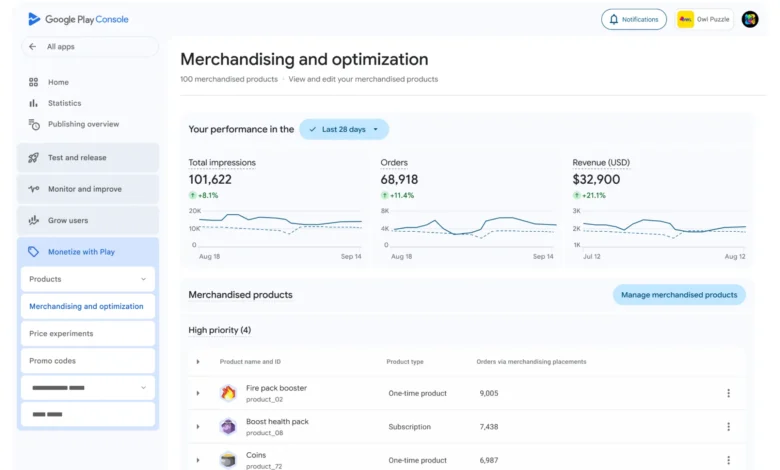
The core of this new infrastructure is the Merchandising and Optimization page within the Google Play Console. Historically, managing product placement across different surfaces required separate workflows, custom API integrations, and significant manual overhead. The new centralized dashboard allows developers to manage product selection, surface placement, and eligibility rules from a single interface.
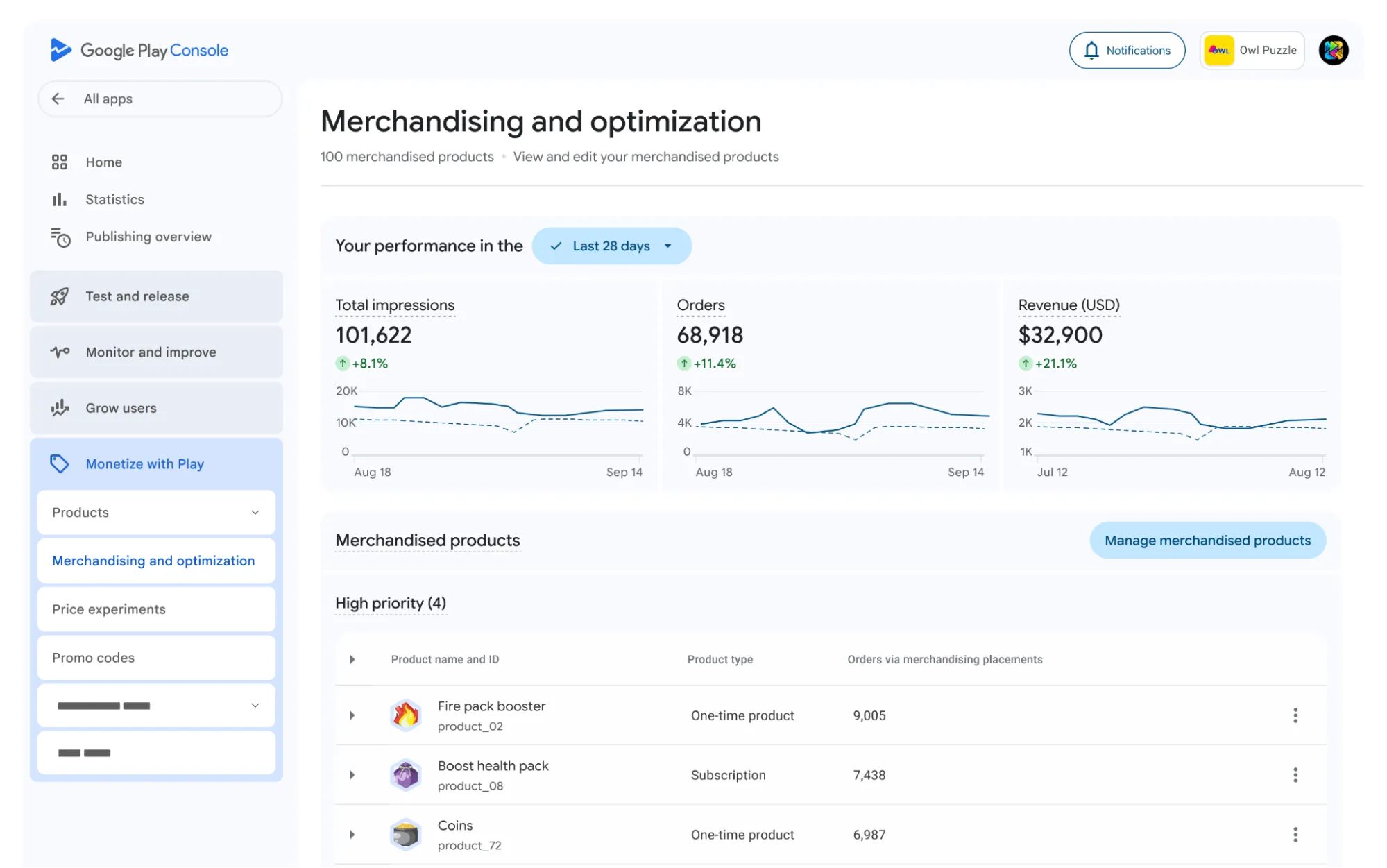
This unified control is critical for maintaining brand consistency and operational efficiency. Developers can test various offer strategies, configure bundled consumables, and set specific eligibility criteria for different user segments. By consolidating these operations, growth teams can iterate on their sales strategies in minutes rather than weeks, utilizing A/B testing and performance analytics to refine their approach to different audiences.
The Four Pillars of Modern Commerce Discovery
Google has identified four primary surfaces where this new commerce architecture is currently being deployed:
- Play Store Interventions: By leveraging the 2.5 billion active monthly users on the Play Store, developers can present products directly within search results and curated collections. This targets users who are in an active state of discovery, effectively shortening the path to purchase.
- Contextual Purchase Flow Recommendations: During the standard checkout process, the system now utilizes logic to suggest complementary items or bundles. By increasing the average revenue per paying user (ARPPU) through context-aware recommendations, developers can maximize the value of every transaction.
- External Web Commerce: The integration of Google Play Billing into web storefronts allows for a seamless transition between the web and the app. Users can initiate a purchase on a landing page and complete it using the secure, familiar 1-tap Google Play checkout, ensuring that developers retain the benefits of global payment coverage and centralized financial reporting.
- Agentic Commerce via Gemini: Perhaps the most significant frontier is the integration of digital goods into conversational AI. Through early access pilots, developers can allow users to query their products—such as asking for specific streaming plans or game boosts—and complete the transaction directly within a Gemini chat interface. This represents the next evolution of digital retail, where the purchase experience is embedded into the natural flow of human-computer interaction.
Governance, Security, and Brand Trust
As commerce expands across new surfaces, the risk of fraudulent activity and the erosion of user trust becomes a paramount concern. To mitigate these risks, Google has engineered platform-level guardrails into the architecture. These controls ensure that regardless of where the purchase originates, the transaction remains subject to the same stringent security standards as in-app purchases.
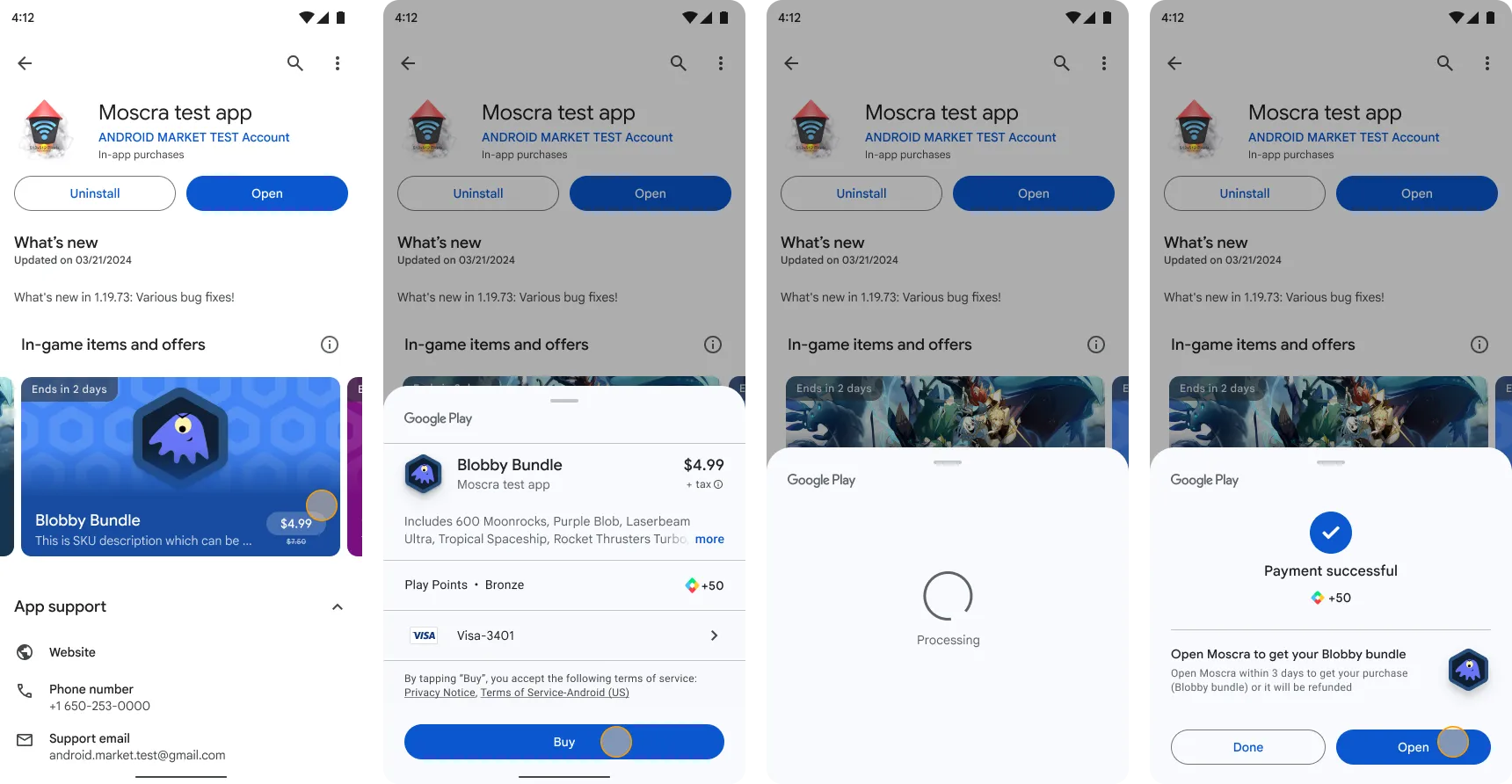
Furthermore, the "Play Billing Lab" serves as a critical testing environment for developers. By simulating user journeys and purchase flows before they go live, developers can identify potential friction points or errors in the checkout experience. This commitment to rigorous testing helps protect brand equity and ensures that the convenience of one-tap purchasing does not come at the cost of security.
Broader Implications for the Digital Marketplace
The implications of this shift are far-reaching. By commoditizing the checkout process and decoupling it from the application binary, Google is effectively democratizing access to high-conversion commerce tools. Smaller developers who previously lacked the resources to build complex, cross-platform payment infrastructure can now leverage Google’s enterprise-grade tools to compete on a more level playing field.
From an analytical perspective, this signals the end of the "siloed app" era. In the future, the success of a digital product will be measured not just by its in-app conversion rate, but by its ability to exist as a fluid, ubiquitous presence across the entire digital ecosystem. Developers who adapt to this new model will likely see higher retention rates, as the barrier between "finding" a product and "owning" it continues to collapse.

As the industry looks toward the remainder of the decade, the focus will likely remain on optimizing these placement strategies. The transition from active, manual discovery to proactive, context-aware commerce is not merely a feature update; it is a fundamental reconfiguration of the digital retail landscape. For developers, the message is clear: the most successful products will be those that meet the user in the right place, at the right time, with the right offer, facilitated by a seamless, unified commerce platform. As these tools continue to mature, the Google Play ecosystem is poised to set a new standard for how digital goods are discovered and consumed in an increasingly interconnected global economy.