JetBrains and Oracle Address Critical Java4Shell Memory Corruption Vulnerability in HotSpot JVM


On November 17, 2026, a significant security disclosure regarding the HotSpot Java Virtual Machine (JVM) sent ripples through the software development industry. Oracle, in coordination with the OpenJDK project, released emergency patches for a severe memory corruption vulnerability designated as CVE-2026-114938. Colloquially dubbed "Java4Shell" by the research team at Calif who initially discovered and reported the flaw, the vulnerability targets a specific optimization routine within the Base64 decoding process. Because this mechanism is deeply embedded in the performance architecture of modern Java runtimes, the discovery has necessitated a broad, coordinated response from major vendors, including JetBrains, which bundles its own runtime environments across its entire suite of professional development tools.
The Mechanics of the Vulnerability
At the heart of the issue is a performance-oriented intrinsic routine designed to accelerate Base64 decoding. Modern server-grade CPUs, particularly those utilizing the x86-64 architecture, often feature Advanced Vector Extensions (AVX), specifically the AVX-512 VBMI (Vector Bit Manipulation Instructions) set. To leverage these hardware capabilities, the HotSpot JVM includes highly optimized code paths for common operations like Base64 decoding.
The vulnerability arises when these optimized routines process malformed input. Under specific conditions, the routine fails to properly validate the bounds of the destination buffer, resulting in a "buffer overflow" scenario where data is written past the intended memory address. In the context of the JVM, this allows an attacker to corrupt neighboring memory regions. Security analysts have confirmed that if an attacker can control the input data—such as through a maliciously crafted network packet—they can trigger this memory corruption to achieve arbitrary code execution. This elevates the threat from a simple application crash to a full-scale system compromise, potentially granting an adversary control over the host server or development environment.
Chronology of the Disclosure
The timeline of this security event highlights the necessity of rapid response in modern software supply chains. The vulnerability was identified and reported by the security researchers at Calif, who demonstrated its exploitability in various server-side Java applications.
- Initial Discovery: Researchers identified the flaws in the AVX-512 VBMI intrinsic routines within the HotSpot JVM.
- Coordination: Following established responsible disclosure practices, the findings were shared with Oracle and the OpenJDK project to develop a robust fix.
- Public Release (November 17, 2026): Oracle and OpenJDK officially published the security advisory and released patches for the affected Java lines.
- JetBrains Response: Concurrently, JetBrains began rolling out mitigation strategies across their IDE portfolio, acknowledging that their JetBrains Runtime (JBR), which is derived from OpenJDK, was susceptible to the same underlying flaw.
Impact Across the Java Ecosystem
The scope of CVE-2026-114938 is extensive due to the ubiquity of Java in enterprise environments. The vulnerability affects OpenJDK 17.0.6 and later, as well as the 21, 25, and 27 release lines. Notably, Oracle’s Java SE 8 Performance Pack (8u511-perf and earlier) is also vulnerable, though standard builds of Java 8 and 11 remain unaffected, likely due to the absence of the specific, vulnerable AVX-512 optimized routines in those older or standard versions.
For JetBrains users, the risk is contingent upon the hardware environment. An IDE or tool is only exposed if two specific conditions are met simultaneously:
- Hardware Architecture: The application must be running on an x86-64 processor that supports AVX-512 VBMI. This includes many high-performance Intel Xeon chips (from the Ice Lake generation onwards), specific 10th and 11th Gen Intel Core processors, and AMD hardware based on the Zen 4 architecture or newer.
- Attack Vector: The IDE must be performing Base64 decoding on data originating from an untrusted source, such as external network peers or remote development connections.
While JetBrains has reported no evidence of active exploitation against its IDEs at the time of this writing, the potential for lateral movement in enterprise development environments makes this a high-priority remediation task for IT security teams.
Mitigation and Remediation Strategies
The primary fix involves disabling the vulnerable intrinsic routines. Oracle and the OpenJDK team have focused on long-term code-level fixes, while vendors like JetBrains have implemented an immediate workaround to ensure user safety.
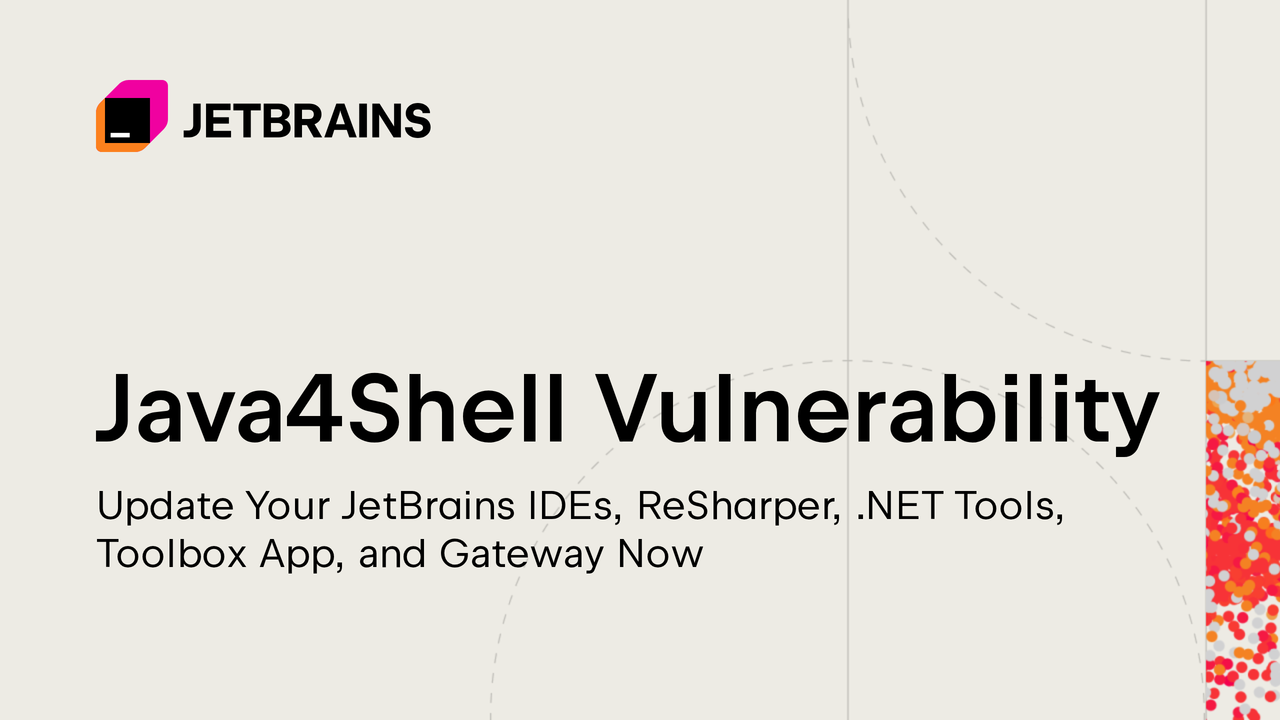
The workaround involves the JVM flag -XX:-UseBASE64Intrinsics. By adding this parameter to the IDE’s virtual machine options, developers can force the JVM to bypass the high-speed, vulnerable hardware-accelerated code path and revert to the standard Java implementation. While this may result in a negligible performance degradation for Base64-heavy operations, it effectively closes the security hole.
JetBrains has integrated this mitigation as a default setting in their latest product updates. Affected users are advised to update their IDEs to the latest versions, which include:
- IntelliJ IDEA: 2026.3.0.1 (or corresponding versions for older branches)
- PyCharm: 2026.3.0.2
- GoLand: 2026.3.0.1
- Rider: 2026.3.0.2
- RustRover: 2026.3.1.1
Users of the JetBrains Toolbox App should ensure their version is updated to at least 3.9.2, and those utilizing ReSharper must ensure their plugin version is updated to the security-hardened releases provided in the official advisory.
Broader Implications and Analysis
The "Java4Shell" event underscores the inherent risks associated with performance optimization. In the pursuit of faster execution, developers often push into hardware-specific code paths that are notoriously difficult to audit for memory safety. When these routines are written in languages like C++—which is often the case for JVM internals—they become susceptible to the same classes of memory corruption vulnerabilities that have plagued software for decades.
This incident also highlights the complexity of the "Software Bill of Materials" (SBOM) problem. Because JetBrains IDEs bundle the JetBrains Runtime, they effectively inherit the security posture of the underlying OpenJDK project. While this provides a cohesive, optimized experience for the user, it also creates a singular point of failure. If the underlying runtime is compromised, the vulnerability propagates to every application relying on that distribution.
Furthermore, the prevalence of cloud-based development and remote backends introduces new attack surfaces. Developers frequently use remote IDE backends running on high-end cloud instances—precisely the kind of hardware that supports AVX-512. Because these backends often handle network-based traffic, they are uniquely positioned to be targeted by an attacker who can inject malformed Base64 data into the communication stream.
Moving Forward
Industry experts suggest that this event will lead to a more rigorous vetting process for "intrinsic" and "native" optimizations in the Java ecosystem. The shift toward memory-safe languages is also expected to accelerate, as the cost of managing C++-based optimizations within the JVM becomes increasingly difficult to justify in the face of modern security threats.
For the immediate future, the priority for organizations is clear: audit your deployment environments for x86-64 hardware supporting AVX-512 VBMI and apply the necessary patches or the -XX:-UseBASE64Intrinsics workaround. JetBrains has emphasized that while manual entry of this flag is a temporary solution, it will remain harmless even after the permanent fix is integrated into future builds of the JetBrains Runtime.
Security teams are encouraged to subscribe to vendor-specific security mailing lists and monitor the official "Fixed security issues" pages maintained by providers. As the software supply chain continues to evolve, the ability to rapidly deploy such workarounds—rather than waiting for full-scale architectural refactors—will remain the most effective tool in the security practitioner’s arsenal. Those encountering difficulties with the update process or requiring clarification on their specific environment configuration are encouraged to contact the JetBrains support team directly, as the complexity of individual development environments may require tailored mitigation strategies.