The AIDEs Framework How We Built a Theory of Everything for AI Development Tools

The rapid proliferation of artificial intelligence in software engineering has shifted the industry from a state of experimental adoption to a new era of systemic integration. As new models, CLI-based agents, and automated workflows emerge on a nearly daily basis, the software development landscape is undergoing a fundamental transformation. For teams attempting to navigate this volatility, the primary challenge is no longer merely keeping pace with technological updates, but rather understanding the underlying mechanics of how these tools are altering the creation of digital products.
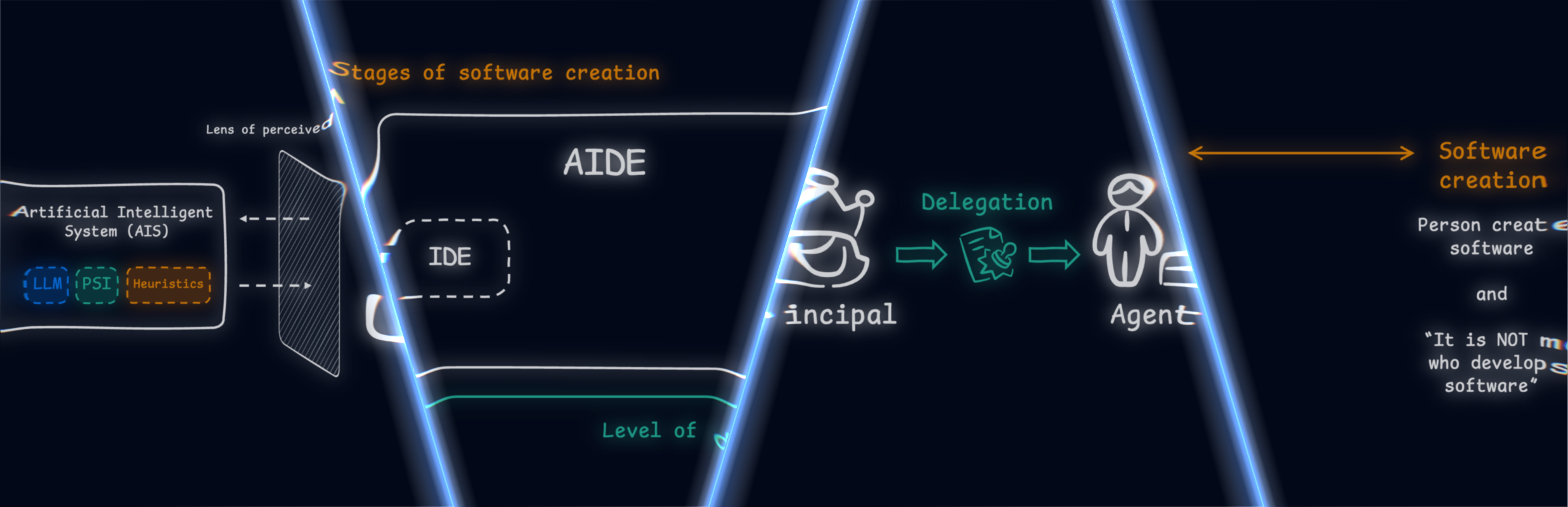
JetBrains, a long-standing leader in developer tools, has unveiled its Artificial Intelligent Development Environments (AIDEs) Framework, a structured model designed to provide a "theory of everything" for the current AI development market. By shifting the focus from individual feature sets to the core concepts of delegation and human-machine collaboration, the framework aims to provide a diagnostic lens through which both individual developers and enterprise leaders can filter market noise and identify long-term trends.
A Chronology of AI Integration in Development
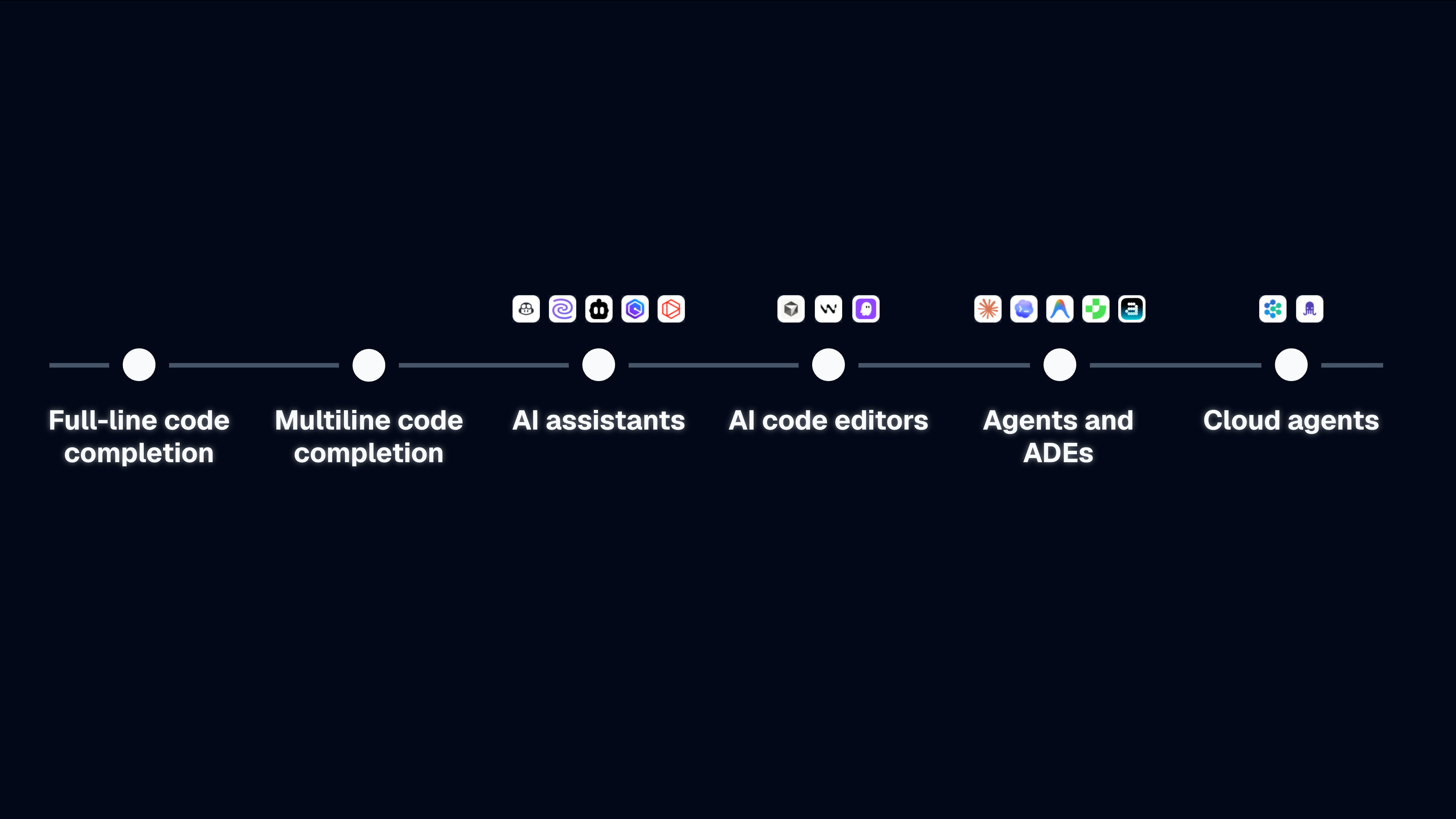
To understand where the industry is heading, one must first analyze the trajectory of AI integration over the past several years. The evolution of these tools has followed a distinct, predictable path, moving from simple assistance to more complex, agentic behaviors.
The initial phase was characterized by "autocomplete" functionality, where AI served as a passive extension of the developer’s intent, filling in boilerplate code or syntax. This was followed by the integration of chat-based assistants, which allowed for broader context-aware queries but remained confined to specific IDE environments. The current era represents the "agentic turn," where tools are no longer restricted to text generation but are instead capable of executing tasks—such as planning, testing, and deployment—across the entire software development lifecycle (SDLC).
Industry data suggests that this adoption is no longer limited to niche startups. Major enterprises, historically slow to adopt disruptive technologies, are now incorporating AI-driven workflows into their core infrastructure. This transition marks the end of the debate over whether AI is a viable component of production-grade software development; it is now an established operational necessity.
Defining the AIDEs Framework
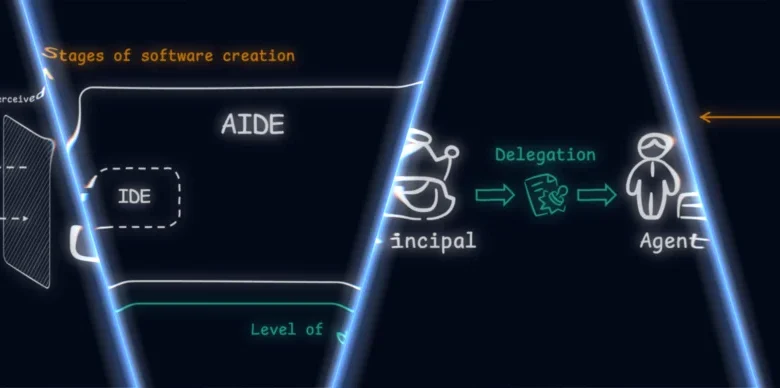
At the heart of the AIDEs Framework are three core dimensions that categorize the development process: the stages of the software creation lifecycle, the levels of delegation between human and machine, and the organizational context in which development occurs.
By formalizing these dimensions, JetBrains aims to move away from the nebulous marketing jargon that currently dominates the AI space. Central to this is the concept of the "Principal-Agent" relationship, borrowed from economic theory. In this model, the "principal" (the human developer or team) entrusts the "agent" (the AI system) to act on their behalf.

The framework defines five distinct levels of delegation:
- Tool (L1): Limited, scoped actions such as code completion.
- Assistant (L2): A well-defined sequence of actions, such as generating a unit test.
- General-purpose Executor (L3): Full delegation of execution where the agent handles complex tasks but requires human input on high-level goals.
- Supervised Executor (L4): An agent responsible for an entire functional area, such as backend implementation, requiring only periodic oversight.
- Competence Center (L5): An autonomous system where the agent is entrusted with strategic execution, leaving the human to focus exclusively on vision, high-level requirements, and performance metrics.
Analyzing the "Intelligence Resource" Paradigm
A critical component of the AIDEs Framework is the assertion that AI should not be viewed merely as a tool, but as a "variable intelligence resource." In this analogy, if software creation is a production process, intelligence is the raw material. Historically, this raw material was exclusively human. The emergence of Large Language Models (LLMs) has introduced a secondary, scalable source of intelligence that organizations can now integrate into their production workflows.
This shift has significant implications for how engineering teams are structured. As the level of delegation increases, the "immersion" of the individual developer into specific, low-level coding tasks decreases. This mirrors the historical evolution of software engineering, where developers moved from writing machine code to working with high-level languages and abstraction layers. Future developers will likely focus less on the mechanics of code generation and more on architecture, data flows, and business outcomes.
Market Realities and Data-Driven Insights
Recent data provided by JetBrains research indicates that while AI adoption is high, it is currently distributed unevenly across the SDLC. The most significant penetration of AI is currently observed in the "coding" and "brainstorming" phases. However, areas such as long-term maintenance, complex architectural design, and cross-functional feedback collection remain largely untapped.
The industry has seen a massive surge in the usage of tools like Anthropic’s Claude Code, which has become a benchmark for the L3 category of agents. Estimates suggest that such tools are now utilized by millions of professionals, contributing significantly to the productivity gains observed in organizations that have successfully integrated agentic workflows. These agents represent a shift toward "IDE-agnostic" development, where the CLI-based agent acts as the primary interface, potentially challenging the dominance of traditional integrated development environments.
Implications for Enterprise Strategy
For enterprise leaders, the implications of the AIDEs Framework are profound. The transition to an AI-augmented development model necessitates a total rethink of team composition and organizational hierarchy. If AI agents eventually reach the L5 level of capability, the role of the "junior developer" may be fundamentally redefined.
The framework suggests that the industry will likely see the rise of "junior architects"—roles that prioritize oversight, task specification, and the management of AI-driven agents rather than the manual writing of code. This shift poses a challenge for traditional computer science education and corporate training programs, which currently emphasize fundamental coding skills over the orchestration of intelligent systems.
Furthermore, the framework cautions that benchmark performance of an AI model does not always translate into effective real-world delegation. A model may score highly on standardized coding tests but fail to build the necessary "trust" required for a human principal to delegate a mission-critical task. Consequently, the success of future AI tools will depend as much on their reliability, context management, and transparency as on their raw computational capability.
Navigating the Future
As the industry moves forward, the ability to distinguish between signal and noise will be the primary competitive advantage. The AIDEs Framework provides a roadmap for this navigation. By analyzing development activities through the lens of delegation, organizations can identify where they are currently over-relying on human effort and where they are under-utilizing the potential of intelligent agents.
The consensus among researchers at JetBrains is that the fundamental goal of software creation—to provide value through digital solutions—will remain constant, even as the methods of achieving that goal undergo radical change. Whether the industry moves toward "Agentic Software Production Platforms" remains to be seen, but the trajectory of current technology suggests that the integration of AI into the very fabric of the development process is irreversible.
To prepare, the framework recommends a three-step approach for professionals and leaders:
- Examine core assumptions: Challenge the belief that current workflows are immutable.
- Build and commit to a model: Develop a consistent internal framework to evaluate new tools against specific organizational needs.
- Observe and validate: Continuously test these models against the shifting realities of the market, ensuring that internal processes evolve in tandem with the capabilities of emerging AI systems.
As this new era unfolds, the most successful organizations will be those that treat AI not as a transient trend or a disruptive threat, but as a fundamental, manageable resource that can be leveraged to enhance human ingenuity. The path forward involves moving beyond the "AI everywhere" mindset and toward a more deliberate, architected approach to machine-human collaboration.