React Native 0.85 Officially Released With a New Animation Backend and Enhanced Metro TLS Support

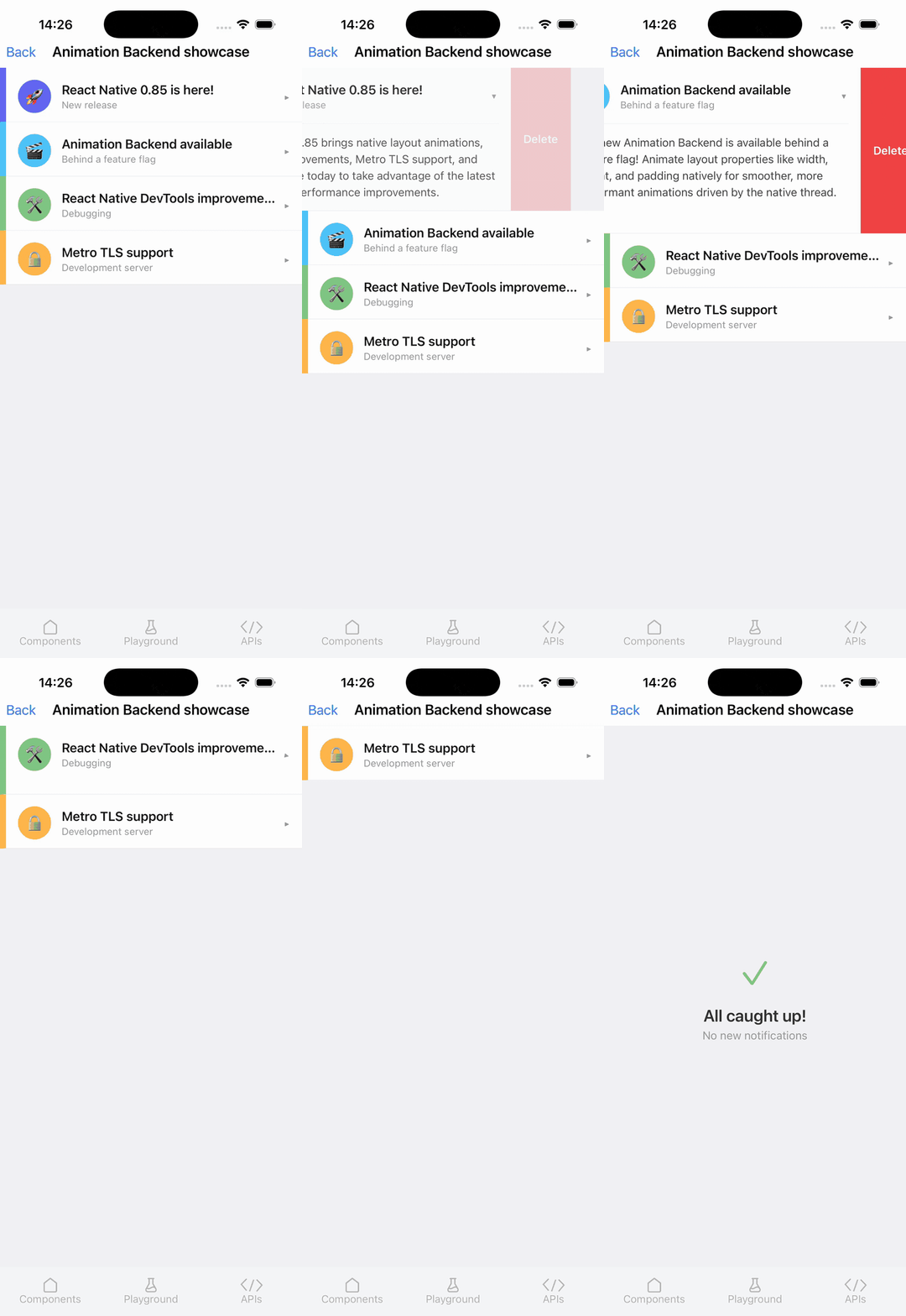
The open-source mobile development community received a major update today with the official release of React Native version 0.85. Developed and maintained by Meta alongside a vast ecosystem of global contributors, the framework continues to evolve as one of the premier choices for cross-platform application development across iOS and Android. This latest software iteration introduces several landmark features, chief among them being a collaborative Shared Animation Backend built alongside Software Mansion, native-level improvements to React Native DevTools, and long-awaited TLS support for the Metro development server.
At the same time, version 0.85 brings important housekeeping changes, including the migration of the Jest testing preset to a dedicated package, the dropping of support for end-of-life Node.js versions, and the removal of deprecated APIs like StyleSheet.absoluteFillObject. With over 604 individual commits contributed by 58 developers worldwide, this release underscores the ongoing maturity and robust collaborative momentum driving the React Native ecosystem forward.
Main Facts and Core Technical Highlights of Version 0.85
The release of React Native 0.85 marks a significant milestone in optimizing performance and bridging the gap between JavaScript-driven code and native rendering threads. The standout addition in this cycle is the Shared Animation Backend. Developed in close partnership with Software Mansion—a recognized leader in React Native tooling and animation libraries—this newly integrated internal engine fundamentally alters how animations are executed under the hood for both the legacy Animated API and Reanimated.
By migrating the core animation update logic directly into the React Native core, developers can now leverage performance enhancements that were previously impossible. Furthermore, this architectural shift ensures that update reconciliation processes are rigorously tested and guaranteed to remain stable through future framework updates. One of the most practical benefits for day-to-day developers using the standard Animated API is the removal of former restrictions preventing the native driver from animating layout properties. Flexbox and positioning properties can now be seamlessly animated via the native driver, vastly improving frame rates and reducing JavaScript thread congestion during layout shifts.
Alongside the animation engine overhaul, React Native DevTools has received a series of targeted refinements. Most notably, macOS developers will benefit from native tab integrations within DevTools, streamlining debugging workflows and unifying the inspection experience across desktop environments.
For developers working in enterprise or highly secure environments, the addition of native TLS support for the Metro development server represents a major workflow upgrade. The Metro server can now ingest a comprehensive TLS configuration object via metro.config.js. This enables native HTTPS protocols and Secure WebSockets (WSS) for Fast Refresh during local development cycles, allowing teams to accurately test APIs and services that strictly enforce secure connections before pushing code to staging or production environments.
Background Context and Chronology of the Release Cycle
The deployment of React Native 0.85 follows the predictable cadence of the framework’s strict release lifecycle. As newer versions push the boundaries of performance—particularly through the broader adoption of the New Architecture—older versions are systematically deprecated according to official support policies. With the arrival of version 0.85 as the new stable baseline, version 0.82.x has officially reached its end-of-life status and is no longer supported by core maintainers.
The collaborative development of the Shared Animation Backend represents a multi-month engineering effort. Software Mansion and Meta engineers identified architectural bottlenecks in how animation frames were synchronized across the JavaScript and native UI threads. By centralizing this logic in the core engine, the development team has laid the groundwork for future declarative animation paradigms.
Concurrently, the decision to extract the Jest preset into @react-native/jest-preset follows a broader industry trend toward modularization. By decoupling testing utilities from the primary react-native package, the core library shrinks in footprint while giving testing engineers granular control over their dependency trees and testing configurations.
Breaking Changes and Required Migration Steps
As with any major version bump in a foundational framework, React Native 0.85 introduces several breaking changes that development teams must address during the upgrade process. Ensuring a smooth transition requires careful attention to dependency configurations, runtime environments, and legacy code cleanups.

First and foremost, the framework has officially dropped support for all end-of-life (EOL) Node.js versions, specifically requiring runtime environments to operate on modern standards up to and beyond version v20.19.4. Developers attempting to build or run 0.85 projects on outdated Node installations will encounter fatal build errors.
Second, the extraction of the Jest testing framework preset necessitates a minor configuration update. Developers must modify their jest.config.js files, replacing the legacy preset declaration:
// jest.config.js
- preset: 'react-native',
+ preset: '@react-native/jest-preset',
Failing to update this reference will break automated test suites across continuous integration pipelines.
Third, the long-deprecated StyleSheet.absoluteFillObject API has been completely purged from the codebase. Developers are instructed to substitute this utility with StyleSheet.absoluteFill or declare custom absolute positioning styles explicitly within their stylesheets:
// Style adjustment example
- const styles = StyleSheet.absoluteFillObject;
+ const styles = StyleSheet.absoluteFill;
Additional targeted breaking changes span platform-specific layers across Android and iOS, requiring teams to review the official React Native Upgrade Helper before initiating production updates.
Official Community Responses and Ecosystem Impact
The response from the broader mobile engineering community has been overwhelmingly positive, particularly regarding the collaboration between Meta and Software Mansion. Performance-focused developers have long sought a unified animation pipeline that bridges the performance gap between imperative native animations and declarative JavaScript code.
Industry analysts and lead maintainers emphasize that the Shared Animation Backend is not merely a localized feature, but a structural evolution of the New Architecture’s vision. By optimizing thread communication and eliminating historical layout animation bottlenecks, React Native continues to close the performance gap traditionally held by fully native Swift and Kotlin applications.
Furthermore, enterprise development teams have expressed relief over the inclusion of native Metro TLS support. In sectors such as fintech, healthcare, and enterprise logistics, local development servers are frequently required to operate under strict corporate security policies. The ability to configure local HTTPS and WSS connections natively through standard configuration files removes cumbersome workarounds involving reverse proxies or insecure HTTP bypasses.
Broader Industry Implications and Future Outlook
The release of React Native 0.85 arrives at a time of intense competition within the cross-platform mobile development landscape. Frameworks must continually demonstrate superior developer ergonomics, runtime speed, and architectural modernism to retain adoption among high-growth startups and Fortune 500 engineering organizations alike.
By focusing on deep engine-level optimizations—such as the Shared Animation Backend—Meta is signaling that future React Native development will prioritize foundational runtime stability over superficial API additions. The ability to animate layout properties using the native driver without incurring JavaScript thread stuttering directly addresses one of the most persistent historical criticisms of cross-platform frameworks.
For projects integrated within the Expo ecosystem, the upcoming release of Expo SDK 56 will incorporate React Native 0.85, allowing managed workflow developers to take advantage of these technological leaps with minimal configuration overhead. For bare-workflow projects, maintainers recommend utilizing the official React Native Upgrade Helper alongside updated Node.js environments to ensure a seamless transition.
As the framework looks toward subsequent iterations—including the imminent rollout of version 0.85.1 to enable the experimental animation channels—the open-source community demonstrates that collaborative stewardship can continually reinvent a mature, enterprise-grade technology stack.