AWS CloudFormation StackSets adds deployment progress visibility to enhance multi-account infrastructure management

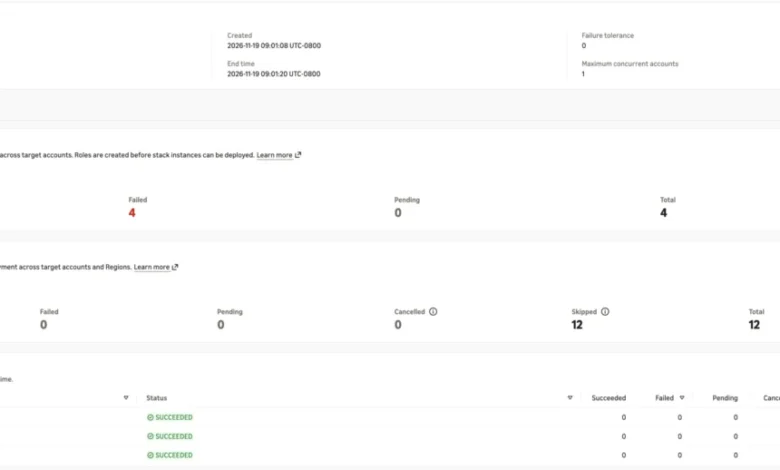
AWS CloudFormation StackSets has officially introduced a granular deployment progress visibility feature, marking a significant evolution in how platform engineers and DevOps teams monitor large-scale infrastructure rollouts across AWS organizations. This update provides a real-time, stage-by-stage breakdown of stack set operations, allowing users to track the status of deployments spanning thousands of accounts and multiple AWS Regions with unprecedented precision.
For years, organizations utilizing Infrastructure as Code (IaC) have relied on AWS CloudFormation to model and provision resources. While StackSets extended these capabilities to multi-account and multi-region environments—ideal for enforcing networking baselines or security guardrails—the visibility into the actual deployment pipeline was previously limited. Operators were often left waiting for an entire operation to conclude before assessing the success or failure of individual components. With this latest update, users can now identify bottlenecks, track percentage completion, and pinpoint problematic accounts while the deployment is still in motion.
The Evolution of Cloud Infrastructure Orchestration
The history of cloud infrastructure management is defined by the transition from manual configuration to automated, repeatable processes. AWS CloudFormation, launched in 2011, provided the initial mechanism for defining infrastructure as code. As cloud adoption matured, the need to replicate these templates across hundreds of accounts led to the development of StackSets.
However, as enterprise environments grew, the complexity of managing these operations increased. A deployment to 1,000 accounts involves complex orchestration, including the provisioning of IAM roles, the deployment of stack instances, and the validation of regional compliance. Previously, if an operation encountered a failure in a specific region or account, debugging often required extensive log analysis after the fact. By integrating stage-level progress metrics—specifically separating "Role Provisioning" from "Stack Deployment"—AWS is addressing the "black box" nature of massive-scale infrastructure updates.
Granular Visibility: How the New System Functions
The new visibility framework categorizes deployment operations into distinct, observable stages. When a user initiates a stack set operation, the system now surfaces detailed metadata through both the AWS CloudFormation console and the API.

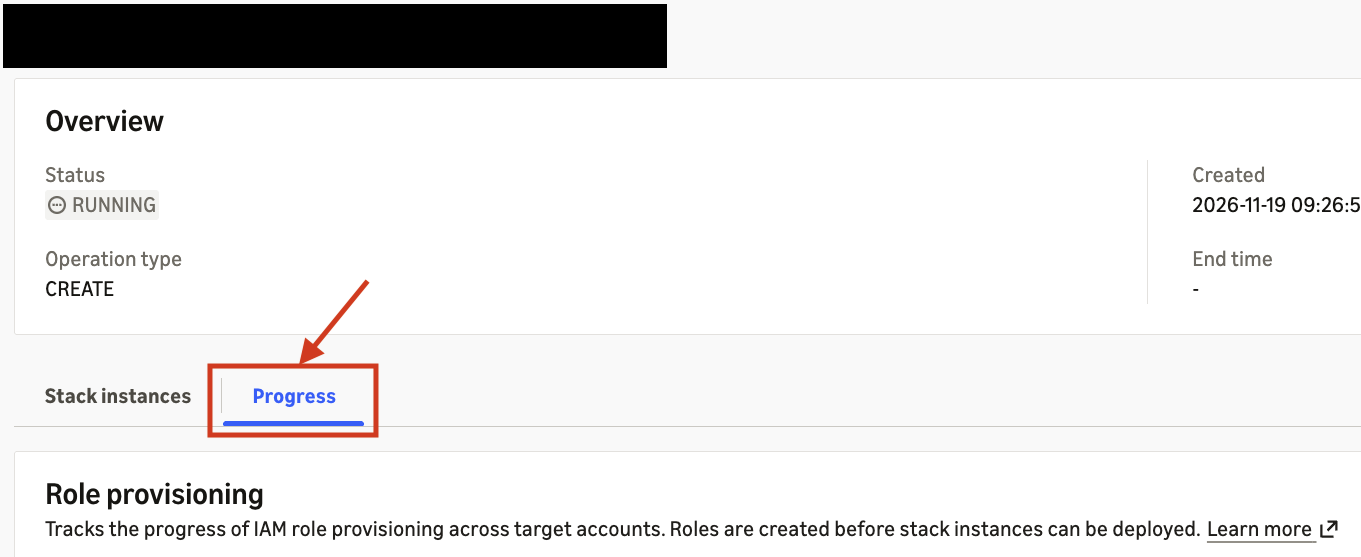
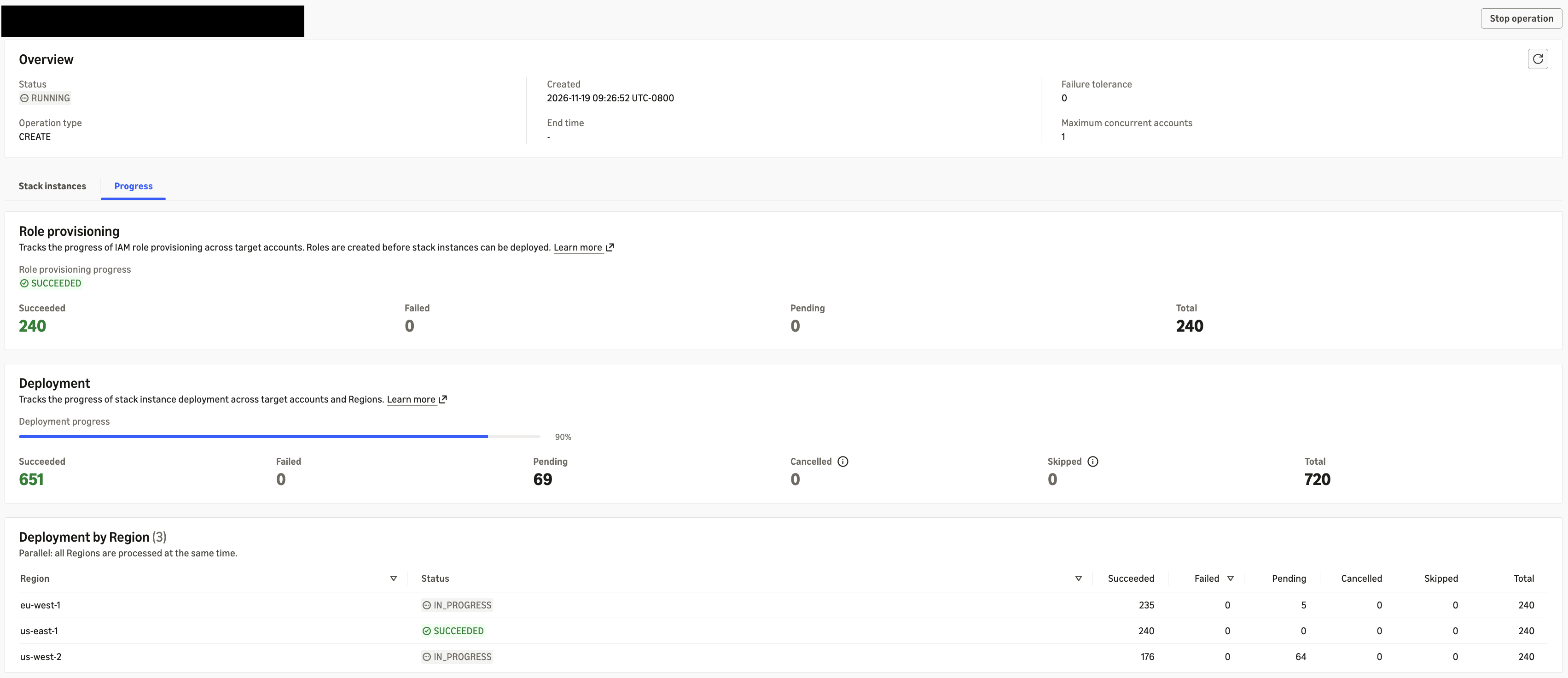
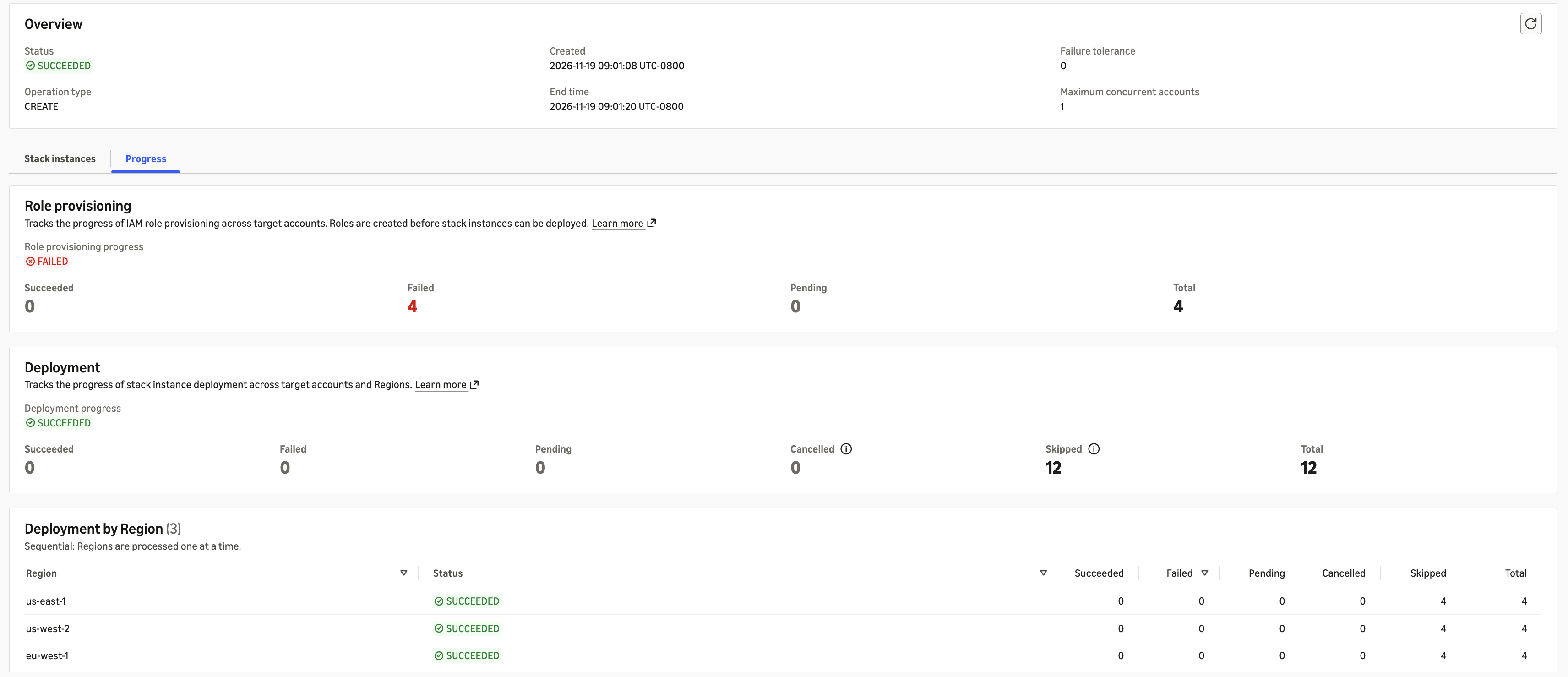
The console now features a dedicated "Progress" tab. This interface provides three primary visualization vectors:
- Role Provisioning: This phase monitors the preparation of access permissions within target accounts. For service-managed stack sets, this ensures that the necessary IAM roles are correctly configured before the template deployment begins.
- Stack Deployment: This provides a clear status of the actual resource provisioning, including counts of successful, failed, pending, cancelled, and skipped instances.
- Regional Breakdown: In multi-region deployments, the system provides a granular view of how each specific region is progressing, noting whether regions are being processed sequentially or in parallel.
This architectural change is not merely cosmetic. By exposing the StatusDetails.Stages object via the DescribeStackSetOperation API, AWS has enabled programmatic oversight. Developers can now build automated triggers or dashboarding tools that react to the status of these stages, rather than polling the entire operation for a binary "success" or "failure" outcome.
Operational Impact and Use Cases
The implications for large-scale operations are profound. Consider a platform engineering team tasked with rolling out a security patch to 500 accounts across three geographic regions. Under the previous model, an error in one region could delay the entire process without immediate clarity on the cause.
With the new visibility features, an engineer can see exactly where the deployment is stalled. If the "Role Provisioning" stage reports a failure, the team immediately knows that the issue lies in cross-account trust or IAM policy configurations—not in the stack template itself. This level of diagnosis allows for a "fail-fast" approach to infrastructure management. If 600 of 720 stack instances have succeeded, and the remaining 120 are stuck, the operator can determine if the delay is due to regional throttling or an underlying configuration error in the specific target environment.
Furthermore, the integration of these metrics into the AWS Command Line Interface (CLI) and SDKs enables seamless integration with existing CI/CD pipelines. Teams can now implement "gatekeeping" logic where a pipeline pauses if a certain percentage of deployments fail during the provisioning phase, preventing a faulty configuration from propagating further into the production environment.
Data-Driven Infrastructure Management
The technical implementation of these features relies on updated API responses. The inclusion of PercentageCompleted values and refined counts for skipped or cancelled instances provides a quantifiable metric for "deployment health."
For instance, the API now differentiates between a failure in the stack deployment versus a skipped instance—a distinction that is vital for auditing and compliance. If an account is suspended within an AWS Organization, the system will correctly report that stack instance as "skipped" rather than "failed." This allows for cleaner audit logs and more accurate reporting for compliance officers who must verify that security controls have been applied to every active account in the organization.
Expert Perspectives on Deployment Reliability
While official documentation details the mechanics of these changes, the broader industry reaction emphasizes the necessity of observability in the era of Cloud-Native development. Experts in the DevOps community have long argued that "observability" should extend beyond application performance into the infrastructure layer itself.
"The shift from ‘it’s running’ to ‘here is exactly where it is’ is a fundamental maturity step for CloudFormation," noted one industry analyst familiar with AWS’s roadmap. By allowing users to see the progress of role provisioning separately from stack deployment, AWS is acknowledging that failures in infrastructure orchestration are rarely monolithic. They are usually specific to a permission, a region, or a specific account constraint.
Best Practices for Implementation
AWS has outlined several best practices for teams looking to leverage this new capability:
- Programmatic Consumption: For automated environments, rely on the explicit status codes rather than inferring state from operation types. This ensures that future updates to the StackSets service will not break existing scripts.
- Proactive Monitoring: Use the
ListStackSetOperationsAPI to build custom dashboards that monitor thePercentageCompletedfield across all active operations. This is particularly useful for centralized Platform Operations teams that manage global infrastructure. - Audit Integration: Post-operation, the retained status data provides a permanent record of the deployment lifecycle. Teams should archive these results as part of their compliance documentation to prove that infrastructure baselines were pushed successfully.
Conclusion and Future Outlook
The introduction of deployment progress visibility in AWS CloudFormation StackSets represents a major step forward for large-scale cloud governance. By transforming the opaque, long-running processes of multi-account orchestration into a transparent, real-time feedback loop, AWS is significantly lowering the cognitive load on platform engineers.
As enterprises continue to expand their footprint, the ability to manage complexity through visibility will be a deciding factor in operational success. Whether it is a global security rollout or a routine regional update, the new tracking capabilities offer the granular control necessary to maintain stability in modern, distributed cloud environments. With this update, AWS has not only provided a tool for tracking progress but has also reinforced the importance of observability as a core pillar of modern infrastructure management. The features are available immediately across all supported regions, requiring no migration or reconfiguration of existing stack sets, and are fully compatible with current infrastructure-as-code workflows.
Related posts: