The Evolution of Kotlin in Competitive Programming
When Kotlin was first introduced by JetBrains, it was designed primarily to address the limitations of Java while maintaining full interoperability. Over the past 15 years, the language has transitioned from a niche alternative to a standard-bearer for modern, concise, and safe programming. Its adoption in competitive programming was a deliberate strategic move to demonstrate that a language optimized for enterprise application development could also perform efficiently under the rigorous time constraints of algorithmic problem-solving.
The Kotlin Heroes series was launched to provide a dedicated space for developers to stress-test the language’s standard library and performance in high-pressure environments. By partnering with Codeforces—the world’s premier destination for competitive programming—JetBrains effectively integrated Kotlin into the global community of elite coders. Since its inception, the series has facilitated a bridge between the pragmatic needs of professional software engineers and the theoretical rigor of computer science students.
Chronology of the Kotlin Heroes Series
The trajectory of Kotlin Heroes reflects the growth of the Kotlin language itself. The first episodes were experimental, aimed at attracting early adopters and providing feedback to the Kotlin team at JetBrains. As the language gained traction, particularly after Google announced it as a preferred language for Android development in 2017, the participation rates for these contests saw exponential growth.
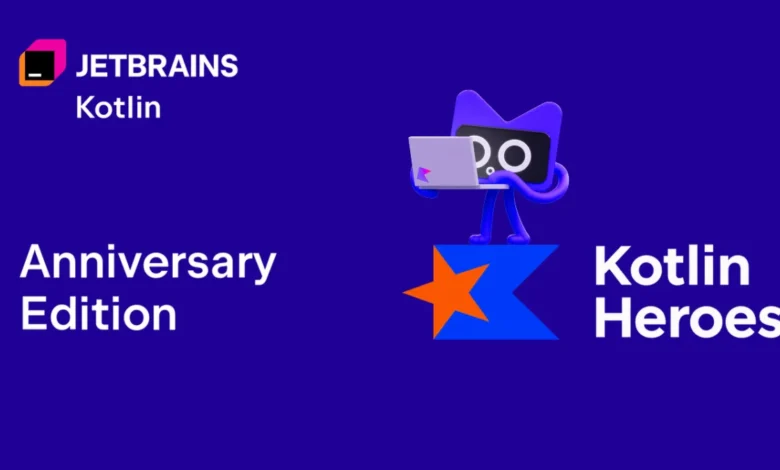
Over the course of 14 previous episodes, the series has accumulated nearly 190,000 registrations. This figure includes both seasoned competitive programmers who use Kotlin for its safety features—such as null-safety and expressive syntax—and newcomers who utilize the contests as a structured curriculum for mastering data structures and algorithms. The transition from early iterations to the 15th anniversary edition highlights a shift in focus: the competition has moved beyond simple language advocacy to fostering a deep-rooted culture of algorithmic excellence.
Event Logistics: The 2026 Anniversary Edition
The 15th episode is structured to accommodate a global audience, maintaining the accessibility that has become a hallmark of the series. The timeline for the event is as follows:
- December 1, 2026: Opening of the practice round, allowing participants to familiarize themselves with the contest environment, the problem-setting style, and the Kotlin compiler versions in use.
- December 8, 2026: The main competition day, featuring a series of algorithmic challenges curated by the Codeforces and JetBrains teams.
The inclusion of a practice round is a critical component of the event’s pedagogical design. It serves as a sandbox where participants can experiment with Kotlin’s multiplatform capabilities, ensuring that contestants are technically prepared before the formal competition begins.
Data-Driven Analysis of Participation
Statistical analysis of previous episodes reveals a diverse demographic of participants. While a significant portion of the registrant base comprises university students studying computer science, there is a marked presence of industry professionals. For these professionals, Kotlin Heroes serves as an "agile" training ground. The ability to write idiomatic, high-performance code in a time-constrained environment mirrors the challenges faced in real-world high-frequency trading, real-time data processing, and complex backend architecture development.
The data also suggests that the "anniversary" nature of this specific event will likely attract a record number of participants. Historically, anniversary editions in the tech sector correlate with higher engagement due to commemorative branding and increased visibility. The promise of exclusive anniversary merchandise, such as the event-specific T-shirts, provides a tangible reward for those who demonstrate excellence, adding a gamification element that enhances user retention.
The Integrity of Competitive Programming in the Age of AI
One of the most pressing topics in the current software engineering landscape is the role of Artificial Intelligence in code generation. The 15th episode of Kotlin Heroes arrives at a time when Large Language Models (LLMs) are capable of solving many standard algorithmic problems in seconds. Consequently, JetBrains and Codeforces have taken a proactive stance on the matter of academic and professional integrity.
For the upcoming contest, the organizers have strictly enforced the Codeforces AI usage policies. This decision is rooted in the belief that the primary value of Kotlin Heroes is not the final output of the code, but the cognitive process of problem-solving. By restricting the use of AI tools, the organizers ensure that the competition remains a genuine test of human intellect, logic, and mastery over the language’s features. This creates an environment where contestants must rely on their own understanding of algorithmic complexity, memory management, and edge-case handling—skills that are foundational to long-term success in software engineering.
Broader Impact on the Kotlin Ecosystem
The long-term impact of the Kotlin Heroes series on the Kotlin ecosystem cannot be overstated. By consistently exposing thousands of developers to the language, JetBrains has cultivated a robust community of advocates. Participants who excel in these contests often go on to become contributors to open-source Kotlin projects, library maintainers, or technical leads who advocate for the adoption of Kotlin within their respective organizations.
Furthermore, the feedback loop between the contest participants and the JetBrains developers has been instrumental in refining the Kotlin compiler. Performance bottlenecks identified during high-stakes competitive programming sessions have, in the past, directly influenced optimization patches in the compiler, leading to a faster and more reliable language for everyone.
Official Perspectives and Community Sentiment
While specific statements from JetBrains leadership regarding the 15th anniversary emphasize the "celebration of community," the implicit message is one of institutional stability. Kotlin has moved past the phase of proving its existence and is now in a phase of refinement and expansion.
The community sentiment, as reflected on forums and social media, is one of anticipation. Many long-time participants view the 15th episode as a "legacy event." The collaborative spirit fostered by these contests has led to the creation of unofficial study groups, discord channels, and repository-based tutorials that persist long after the contests conclude. This organic growth of educational infrastructure is a direct byproduct of the competitive environment created by the Kotlin Heroes series.
Conclusion: The Future of the Language
As the industry looks toward the next decade of software development, the importance of languages that balance human readability with machine performance remains paramount. Kotlin’s presence in this space, bolstered by the community-driven insights gained from events like Kotlin Heroes, positions it as a resilient tool for future technological challenges.
The 15th Anniversary Edition is more than a contest; it is a milestone that marks the evolution of a community dedicated to the craft of programming. Whether a participant walks away with an anniversary T-shirt or simply a deeper understanding of Kotlin’s nuances, the event provides a unique opportunity for growth. As the industry continues to grapple with the integration of AI and the increasing complexity of distributed systems, the fundamental skills practiced during these hours of competition remain the most reliable assets for any developer. The organizers invite all levels of programmers to participate on December 8, 2026, to contribute to the next chapter of the Kotlin legacy.