Sophos Firewall v23 Launches With AI-Powered Automation and Enhanced Architectural Security

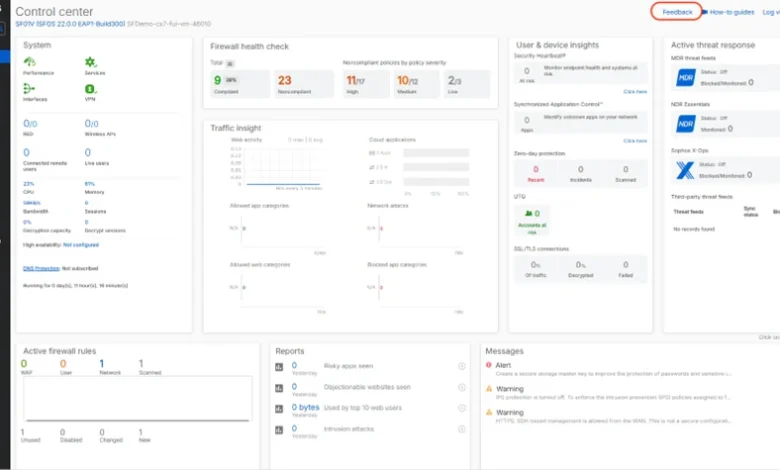
The cybersecurity landscape has undergone a radical transformation over the past twenty-four months, characterized by the rapid proliferation of artificial intelligence in both offensive and defensive operations. In response to this shifting paradigm, Sophos has officially unveiled Sophos Firewall v23, a significant platform update that integrates thirty of the most requested features from its global user base. This release focuses on addressing the operational complexities inherent in modern, distributed network environments while reinforcing the company’s "Secure by Design" philosophy.
The Evolution of the Sophos Firewall Ecosystem
The release of version 23 marks a pivotal milestone in a multi-year effort by Sophos to streamline firewall administration. Historically, firewall management was a labor-intensive process requiring deep technical expertise in command-line interfaces and complex manual rule configuration. Over the last decade, Sophos has pivoted toward a centralized, intuitive management model designed to reduce human error—a factor consistently cited by security researchers as the leading cause of misconfigured, and therefore vulnerable, network perimeters.
Chronologically, the development of v23 follows the successful deployment of the Sophos Firewall v20 and v21 series, which introduced significant performance gains for TLS inspection and deep packet inspection (DPI). With v23, the focus shifts toward "operational agility," providing IT administrators with the tools necessary to manage high-availability clusters and hybrid-cloud deployments without the traditional overhead associated with legacy hardware.
Integrating Artificial Intelligence into Defensive Operations
Perhaps the most notable addition in this release is the integration of Sophos AI Defense. As organizations struggle to manage the influx of AI-generated traffic and the rise of automated threat actors, the need for intelligent traffic classification has never been higher. Sophos Firewall v23 introduces an AI-powered assistant designed to aid administrators in the construction and refinement of firewall rules.
By utilizing machine learning models trained on vast datasets of global threat telemetry, the assistant helps identify redundant rules, suggests optimizations for security policies, and provides guidance on implementing Zero Trust Network Access (ZTNA) principles. This is not merely an automation feature; it represents a fundamental change in how security policies are drafted, shifting the responsibility from manual script-writing to intent-based policy management. Furthermore, the new REST API allows for the programmatic management of these policies, enabling DevOps teams to integrate firewall state changes directly into their CI/CD pipelines.
Redefining Resilience and Rule Management
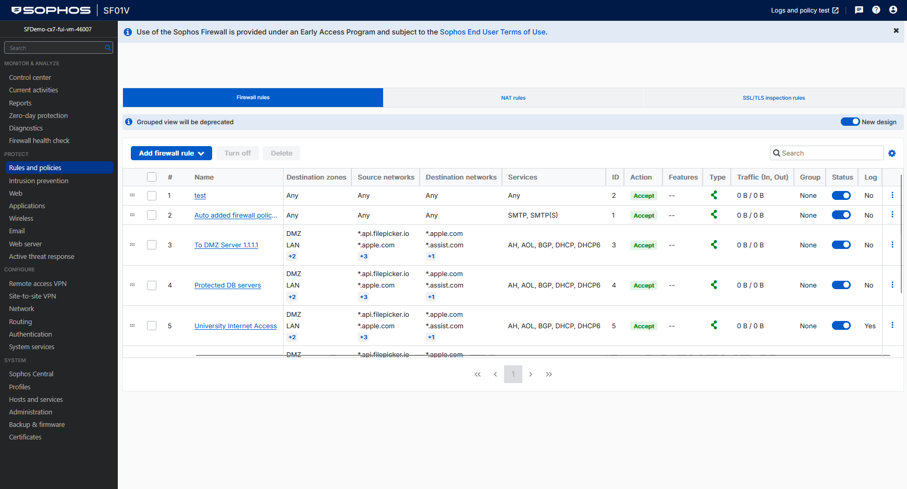
Modern network infrastructure is rarely static. With the proliferation of remote work, IoT devices, and cloud-native applications, firewall administrators are tasked with managing environments that scale horizontally across multiple geographic locations. Sophos has addressed this through a complete overhaul of the firewall rule management interface.
The new dashboard provides enhanced visibility, allowing administrators to filter, sort, and group rules with greater granularity. This update is designed to mitigate the "rule bloat" that often plagues long-standing firewalls, where outdated or overlapping policies create security gaps. Furthermore, high-availability (HA) capabilities have been significantly bolstered. The update improves the failover process, ensuring that session states are maintained with minimal latency, which is critical for voice-over-IP (VoIP), video conferencing, and mission-critical financial applications that require constant connectivity.
Secure by Design: A Strategic Security Mandate
The "Secure by Design" initiative, championed by regulatory bodies such as the Cybersecurity and Infrastructure Security Agency (CISA), emphasizes the importance of building security into the software development lifecycle rather than treating it as an additive layer. Sophos Firewall v23 adheres to this by expanding the transparency of security updates.
New capabilities within v23 include:
- Enhanced DNS Security: The firewall now offers deeper inspection and filtering of DNS traffic, which is frequently used by botnets for command-and-control (C2) communication.
- Automated Firmware Management: Greater transparency in the update process ensures that administrators are aware of the specific patches being applied, reducing the friction often associated with maintenance windows.
- Attack Surface Reduction: By simplifying the way services are exposed to the public internet, the firewall reduces the default exposure of internal network assets.
Modernizing Identity and Access Management
Identity is the new perimeter in a post-VPN world. With organizations increasingly relying on hybrid identity providers like Microsoft Entra ID (formerly Azure AD) and Okta, Sophos has expanded its integration suite in v23. The firewall now provides more robust support for Multi-Factor Authentication (MFA) onboarding, making it easier for organizations to enforce strict access controls across both local and cloud-based user accounts.
This improvement addresses the common challenge of disparate identity silos. By centralizing authentication at the firewall level, administrators can ensure that security policies are applied consistently, regardless of whether a user is accessing the network from a corporate office or a remote satellite branch.
Scalability and Networking Infrastructure
For larger enterprises and managed service providers (MSPs), the v23 update brings critical improvements to the underlying infrastructure. The Web Application Firewall (WAF) has received a significant performance upgrade, allowing for more efficient inspection of encrypted web traffic—a process that has historically been resource-intensive.
The redesigned DHCP service and expanded IPv6 support demonstrate Sophos’s commitment to supporting modern, large-scale network deployments. As organizations continue to migrate legacy services to the cloud, the ability to manage complex network topologies through a single, unified interface becomes a key competitive advantage for Sophos.
Broader Market Implications
The release of Sophos Firewall v23 arrives at a time when the cybersecurity industry is facing a massive skills gap. According to recent workforce reports, there is a global shortage of cybersecurity professionals, leaving many enterprises understaffed and unable to manage complex security stacks effectively. By simplifying management tasks and automating routine configuration, Sophos is effectively "scaling" the capabilities of existing IT teams.
Industry analysts observe that this trend toward "automated security administration" is likely to define the next generation of firewall technology. As the complexity of cyber threats increases, the human element becomes a potential bottleneck. Tools that provide AI-assisted decision-making and streamlined workflows are not just features; they are essential components of a modern defensive strategy.
Implementation and Transition
Sophos has made the transition process as frictionless as possible by providing access via an Early Access Program (EAP). This allows existing customers to test the new firmware in non-production environments before deploying it across their wider infrastructure. The company has also established a robust community support forum, where users can share feedback, report findings, and collaborate on best practices for the new features.
For those planning the upgrade, Sophos recommends a thorough review of the "What’s New Guide," which outlines the specific changes to rule syntax and API structures. As with any major version transition, the emphasis is on testing and validation, ensuring that existing security policies are compatible with the enhanced rule management framework.
Conclusion
Sophos Firewall v23 is a comprehensive response to the dual challenges of operational complexity and an evolving threat landscape. By synthesizing artificial intelligence, modernized identity integration, and improved architectural resilience, Sophos has provided a clear roadmap for organizations looking to strengthen their network perimeters. As the industry continues to move toward more autonomous security operations, this update serves as a foundation for organizations to manage, automate, and scale their security infrastructure in an increasingly digital world. The focus remains clear: providing the necessary tools to keep networks secure, while reducing the administrative burden that keeps IT professionals from focusing on higher-level strategic initiatives.