Professional Development and Integrated Tracking
A primary focus of the November update is the integration of professional visibility tools within the development ecosystem. The company has officially updated the LinkedIn Connected Apps plugin, a utility that allows developers to mirror their IDE activity onto their professional profiles. The latest iteration introduces a sophisticated four-level classification system for coding and AI-assisted workflows. By tracking granular data—such as time spent in specific IDEs and the intensity of AI utilization—developers can now provide a verified, transparent account of their technical skills to prospective employers.
This shift toward "verifiable skill tracking" reflects a broader trend in the tech industry, where traditional resumes are increasingly being supplemented by objective, platform-verified data. By standardizing the way IDE usage is reported, JetBrains aims to bridge the gap between internal development efforts and external career advancement. This tool provides a data-driven framework for engineers to showcase their adaptation to AI-centric coding practices, which is currently a high-demand skill set in the software labor market.
Economic Strategy and Accessibility in Education
In a move to capture a larger segment of the professional training market, JetBrains has launched a significant discount initiative for its Hyperskill platform. Effective through the end of November, users can secure an annual subscription for $159.60, representing a 60% reduction from the standard $399.00 retail price. Beyond the immediate cost benefit, the inclusion of the JetBrains All Products Pack starting in the second month of the subscription adds substantial value.

This pricing strategy serves a dual purpose: it lowers the barrier to entry for students and junior developers while simultaneously embedding the JetBrains ecosystem into the workflows of the next generation of engineers. By providing access to 70+ courses and over 400 hands-on projects at a reduced rate, the company is positioning its platform as an essential utility for ongoing professional development. Analysts suggest that such aggressive pricing models are designed to foster long-term loyalty, as developers who learn within the JetBrains environment are significantly more likely to utilize their proprietary IDEs and tools throughout their careers.
Adapting to the Age of Artificial Intelligence
The November digest also addresses the existential question facing many in the software industry: the role of the human programmer in the era of Large Language Models (LLMs). The release of the video "How to Prepare for the Future of Programming" signals an intentional shift in the company’s pedagogical approach. Rather than ignoring the displacement risks associated with AI, the curriculum now focuses on "delegation and orchestration."
The content emphasizes that the modern developer must evolve into an "architect of AI," learning how to prompt, supervise, and iterate upon the output generated by LLMs. This transition is further supported by the new course, "GenAI & AI Agents for Java Spring Boot Devs," taught by industry veteran Faisal Memon. The course covers prompt engineering, Model Context Protocol (MCP), and the lifecycle management of AI agents. By teaching developers how to run, monitor, and review code produced by agents within JetBrains Air, the company is effectively defining a new standard for AI-assisted development.
Practical Application: The Junie and JetBrains Air Workflow
To move beyond theoretical knowledge, the November update provides a hands-on tutorial titled "Building with Junie and JetBrains Air." This case study highlights the practical integration of autonomous agents into the standard development lifecycle. In the tutorial, developers are shown how to assign coding tasks to an AI agent, monitor the execution progress, provide real-time corrections, and conduct manual code reviews.

This workflow is illustrative of the "Human-in-the-Loop" (HITL) model, which is becoming the industry standard for safe AI deployment. By enabling developers to maintain control over the code generation process within their IDE, JetBrains is mitigating the common concerns regarding AI hallucinations and code quality. The ability to audit AI-written code directly within the familiar IDE interface is a critical feature for enterprises that prioritize security and maintainability in their software pipelines.
Fostering Future Talent: The ACTS 2027.1 Programming Camp
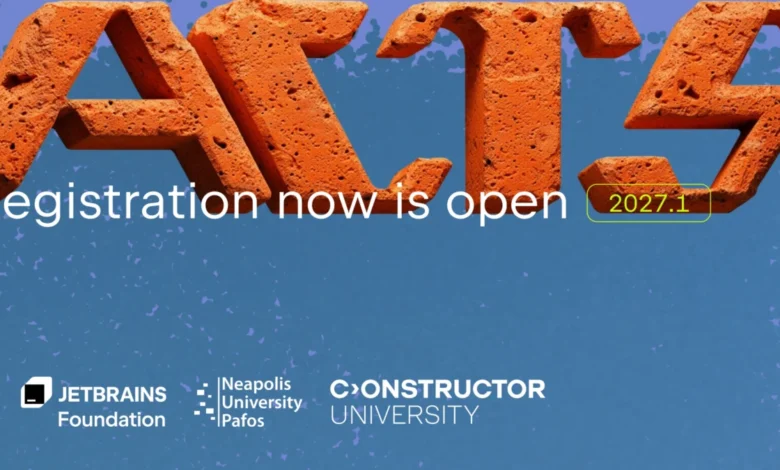
The November digest also underscores the importance of the pipeline of talent entering the industry. The announcement of the ACTS 2027.1 programming camp in Cyprus, open to high school students aged 16 to 19, reflects a commitment to nurturing competitive programming talent. The event, which involves training with International Collegiate Programming Contest (ICPC) champions, serves as a high-level incubator for the next generation of algorithmic experts.
The inclusion of youth-focused initiatives alongside professional development tools demonstrates a comprehensive strategy that spans the entire career trajectory of a developer. By engaging with students at the age of 16, JetBrains establishes brand familiarity early, while the high-intensity nature of the camp ensures that the company remains at the center of the elite programming community.
Industry Implications and Analysis
The cumulative effect of these updates suggests a strategic consolidation of the software development lifecycle. JetBrains is effectively integrating three distinct areas:
- Professional Validation: Using the LinkedIn plugin to create a verified record of expertise.
- Continuous Learning: Using the Hyperskill platform and new AI-focused curricula to keep developers updated with emerging technologies.
- Workflow Integration: Using JetBrains Air and AI agents to make the development process faster and more automated.
This consolidation provides a "walled garden" effect that is highly beneficial for the developer. By keeping the learning process, the toolset, and the career tracking within the same ecosystem, the friction of transitioning from a student to a professional is significantly reduced.
However, this also highlights a growing dependency on proprietary toolchains. As AI agents become more deeply integrated into specific IDEs, the "portability" of a developer’s workflow may become more constrained. For instance, proficiency in managing agents via JetBrains Air may not be perfectly transferable to other development environments. While this creates a high-quality, streamlined experience, it also creates a form of technological lock-in that will be an interesting dynamic to monitor in the coming years.

Conclusion
The JetBrains Academy November Digest is more than a list of course updates; it is a roadmap for how the company views the future of software engineering. By addressing the shift toward AI-agentic workflows, lowering the economic barriers to high-quality education, and providing tools for professional self-promotion, JetBrains is attempting to shape the next decade of development. As AI continues to commoditize basic coding tasks, the focus on supervision, architecture, and professional reputation—as emphasized by these latest initiatives—will likely become the defining characteristics of the successful software engineer. Whether these tools will remain the industry standard or face competition from more open, platform-agnostic solutions remains a subject of ongoing industry debate. For now, however, the strategy is clear: provide the tools, provide the training, and provide the validation required for the modern era of programming.
Related posts: