GitHub Redefines Software Development for the Agentic Era with Comprehensive End-to-End Delivery Ecosystem

The landscape of software engineering is undergoing its most profound structural shift since the advent of cloud computing, moving rapidly from manual coding to sophisticated orchestration of artificial intelligence agents. Unveiled at the flagship GitHub Universe conference, the company’s latest roadmap outlines an ambitious transformation: repositioning the platform not merely as a code repository, but as the world’s most comprehensive, end-to-end agentic software delivery system. This evolution arrives at a critical juncture for enterprise technology, where executive leadership across global organizations increasingly measures engineering output not by lines of code written, but by completed business value—features shipped, security vulnerabilities patched, and bugs resolved.
Industry analysts note that modern software development life cycles (SDLCs) have fundamentally broken away from the traditional, rigid linear paths of planning, coding, testing, and deployment. Today’s developers operate in fluid, asynchronous environments where a production telemetry alert, a security compliance report, or a direct request from a product manager can instantly trigger autonomous workflows anywhere in the pipeline. In this new paradigm, human engineers act as strategic directors and architects—defining goals, making high-level decisions, and retaining ultimate accountability—while fleets of specialized AI agents handle implementation, verification, and iterative testing.
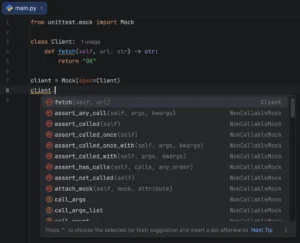
At the center of this paradigm shift is a suite of newly announced products designed to unify the developer experience. Among the most anticipated releases is the GitHub Copilot app, engineered specifically to support agentic workflows from initial issue creation to final merge. Rather than forcing developers to context-switch across dozens of specialized utilities, the Copilot app consolidates project management, technical specification writing, design discussions, and telemetry analysis into a single, cohesive, agent-first interface. This consolidation addresses a major pain point identified in recent developer productivity studies: the cognitive fatigue caused by fragmented toolchains.
To optimize performance and cost efficiency, GitHub also introduced Copilot Fusion, an advanced multi-model orchestration framework. Recognizing that complex coding operations require different cognitive strengths—ranging from deep logical reasoning and architecture design to rapid code generation and error debugging—Copilot Fusion autonomously evaluates each incoming task. It then dynamically selects and routes the execution across one or multiple underlying AI models without requiring manual intervention from the developer. Benchmark data from the Artificial Analysis Coding Agent Index highlights the potency of this approach, revealing that Fusion Max achieved scores within two points of industry-leading models like Opus 5.5 Max, while operating at roughly half the total cost and reducing per-task execution time by 40 percent.
Complementing multi-model orchestration is the introduction of Copilot projects, natively integrated into the GitHub Copilot app. This feature enables developers to assign macro-level objectives to autonomous agents capable of operating simultaneously across multiple repositories in fully managed, parallel cloud sessions. Developers retain centralized visibility through a dedicated dashboard to monitor progress, intervene when strategic decisions are required, and steer the overall direction of the initiative. Furthermore, to ensure seamless workflows across devices and locations, GitHub rolled out session continuity. This infrastructure allows engineers to initiate a complex cloud agent session on a mobile device during a morning standup, steer its progress from an Integrated Development Environment (IDE) at their office desk, and review final pull requests via a web browser over lunch without interrupting the underlying compute processes.
Operational automation and quality assurance have similarly received substantial upgrades through Copilot automations and Copilot code review Max. Copilot automations empower engineering teams to construct cloud-native, event-driven, or schedule-based workflows that handle routine repository operations, such as automated issue triage and dependency updates. Crucially, these automations incorporate a closed-loop learning mechanism, analyzing the outcomes of previous runs to propose continuous workflow refinements for human approval. Meanwhile, addressing the quality challenges posed by accelerated code generation, Copilot code review Max introduces state-of-the-art analysis for high-severity issues. According to internal ReviewBench metrics, the Max tier secured the highest F1 score for identifying complex architectural and security vulnerabilities, providing a rigorous safeguard against regressions in high-velocity release cycles.
In a strategic move to accelerate enterprise adoption, GitHub announced that all core Copilot capabilities—including the Copilot app, advanced code review tiers, and automations—will now be included directly within standard GitHub Enterprise agreements without requiring a separate, dedicated subscription. Enterprise clients will instead consume these services through a flexible AI credit model. This structural pricing adjustment is expected to significantly lower the barrier to entry for large organizations seeking to standardize on agentic development practices while maintaining interoperability with third-party extensions such as Cloudflare, Datadog, and Figma.
The realization of an agentic software delivery ecosystem demands a radical re-engineering of foundational cloud and version control infrastructure. Industry observers point out that the sheer volume and operational profile of autonomous AI agents generating and testing code at scale far exceed historical traffic patterns. To meet this unprecedented demand, GitHub has undertaken massive infrastructure investments throughout the year, highlighted by a comprehensive architectural migration of its core services to a multi-region Microsoft Azure deployment, slated for completion early next year.
Simultaneously, engineering teams have completely redesigned Git architecture for the agent-scale era. Moving away from traditional monolithic constraints, the new infrastructure is guided by three core principles: simplifying foundational primitives, cleanly decoupling storage from compute layers, and minimizing cross-region coordination overhead. These foundational enhancements ensure that the platform can scale throughput and reliability smoothly as global development activity transitions into automated paradigms.
Reflecting on the broader economic and societal implications of these advancements, executive leadership at GitHub and Microsoft emphasized that the rise of artificial intelligence does not diminish the value of human developers; rather, it exponentially amplifies their impact. Projections shared during the conference suggest that the cumulative volume of software written over the history of the industry will amount to less than one percent of the software produced over the next five years. This exponential expansion unlocks the capacity to solve complex computational, scientific, and enterprise challenges that were previously constrained by human resource limitations.
By bridging advanced multi-model orchestration, continuous agent automation, and resilient enterprise-grade infrastructure, GitHub’s latest announcements signal the definitive arrival of the agentic era. As organizations worldwide evaluate their technology stacks for the coming decade, the focus has shifted firmly from writing raw lines of code to orchestrating intelligent systems capable of translating human intent into finished, secure, and impactful software.