Automating Knowledge Graph Population: Extracting Entities and Triples from Unstructured Text with an LLM

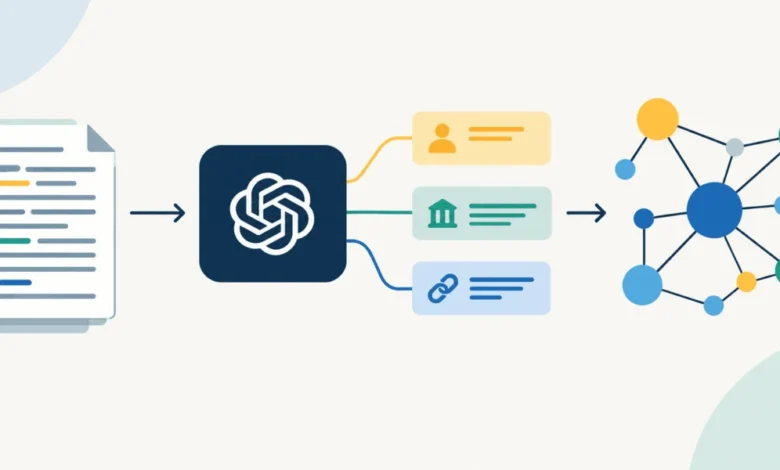
The modern era of artificial intelligence has shifted the focus from simple text generation to the reliable, deterministic management of information. As businesses and developers move beyond basic vector-based Retrieval-Augmented Generation (RAG) systems, they face a recurring obstacle: the inherent fluidity of Large Language Models (LLMs) often leads to hallucinations—fabricated facts presented as reality. To solve this, a new paradigm of 3-tiered Graph-RAG architectures is emerging. By moving from unstructured data to structured knowledge graphs using the SPOC (Subject-Predicate-Object-Context) quad model, developers can now ground LLM outputs in verified facts. This process, facilitated by local, open-source models like Llama 3.2 via Ollama, offers a robust, free, and fully automated pipeline for transforming raw text into a machine-readable knowledge base.
The Shift Toward Deterministic Knowledge Representation
Historically, knowledge graphs were built through painstaking manual curation or complex, rule-based natural language processing (NLP) pipelines. These methods were time-consuming and difficult to scale. However, the rise of powerful, locally hosted LLMs has democratized this capability. By leveraging models such as Llama 3.2, developers can now perform high-fidelity information extraction without the privacy concerns or costs associated with proprietary cloud-based APIs.
The SPOC quad model represents a significant evolution in data storage. While traditional Resource Description Framework (RDF) triples capture relationships as (Subject, Predicate, Object), they lack the nuance of provenance. By adding a fourth dimension—Context—organizations can track the source of a fact, its timestamp, or its reliability score. For instance, documenting that "LeBron James plays for the Lakers" is useful, but documenting that this fact was extracted from the "NBA 2023 Roster" provides the necessary metadata to handle conflicting information when a player changes teams.
Technical Implementation and Infrastructure
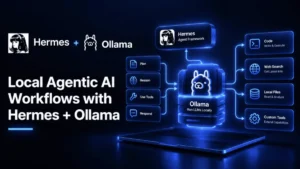
To construct a functional knowledge graph, the process begins with a local environment, such as a Python-based IDE or a cloud-hosted Jupyter notebook. The infrastructure relies on Ollama, a framework designed to run LLMs locally with minimal overhead. By utilizing the subprocess module in Python, developers can initialize the Ollama server as a background process, ensuring that the heavy lifting of model inference remains contained within the local ecosystem.
The technical workflow involves three primary phases: data acquisition, structured extraction, and database ingestion. Data is first retrieved from reliable sources, such as the Wikipedia API. By configuring the API to bypass auto-suggest features, developers ensure that the data retrieved corresponds precisely to the intended entities, preventing the "keyword drift" that often plagues automated systems.
Once the text is secured, the LLM acts as an expert data processor. By forcing the model to operate in a strict JSON output mode—a mandatory standard for reliable data extraction—the system ensures that the unstructured narrative is converted into a programmatic format. The extraction engine uses a custom prompt template, instructing the LLM to identify atomic facts and map them into the requested (Subject, Predicate, Object) structure. The final step involves appending the context—such as the document title or URI—to create the complete SPOC quad.
A Mock QuadStore: The Backbone of the Architecture
For developers building a prototype, a lightweight implementation of a QuadStore is essential. While production-grade systems might utilize dedicated graph databases like Neo4j or RDFLib, a custom Python class can serve as an effective proxy for demonstration purposes. This mock store should include methods for adding facts and querying the database based on any of the four dimensions of the quad.
This approach mirrors the architecture used in advanced Graph-RAG systems, where the graph serves as a deterministic source of truth. When the RAG system queries the database, it performs a structured lookup rather than a fuzzy vector similarity search. This ensures that the information retrieved is accurate, context-aware, and free from the non-deterministic influence of the generative model.
Analytical Implications: Reducing Hallucinations
The primary motivation for adopting this technology is the mitigation of hallucination. Standard RAG systems rely on vector embeddings, which convert text into numerical representations. While effective for semantic search, these systems often struggle to distinguish between nuanced facts or to resolve contradictions.
By integrating a structured knowledge graph, the system gains a secondary layer of validation. Before an LLM generates a response, it can cross-reference the retrieved context against the graph. If a document suggests a fact that contradicts the established knowledge in the graph, the system can prioritize the graph’s data. This creates a "deterministic floor" for the AI, ensuring that core factual claims are tethered to the knowledge graph.
Broader Industry Impact and Future Outlook
The ability to automatically populate knowledge graphs from unstructured data has profound implications for industries such as finance, healthcare, and legal services. In these sectors, factual accuracy is not merely a convenience but a requirement.
- Finance: Firms can extract corporate relationships, executive movements, and market data from news feeds to keep their internal databases updated in real-time.
- Healthcare: Clinical research papers can be processed into graphs of drug interactions, symptom correlations, and patient outcomes, facilitating faster discovery.
- Legal: Case law and regulatory documents can be transformed into interconnected webs of precedent, allowing attorneys to identify relevant statutes with greater precision.
The barrier to entry for this technology is lower than ever. As models like Llama 3.2 continue to improve in reasoning and efficiency, the "cost-per-fact" of building these knowledge bases will continue to decline. Furthermore, as the open-source community continues to iterate on tools like Quadstore and Ollama, the integration process will become increasingly modular, allowing developers to plug and play different LLM architectures depending on the specific requirements of their use case.
Conclusion
The journey from raw, unstructured text to a reliable, queryable knowledge graph is now a closed loop. By utilizing the SPOC quad methodology, developers can move beyond the limitations of standard generative AI. The combination of local LLM inference, structured extraction, and graph-based storage provides a blueprint for the next generation of enterprise AI applications.
As we have demonstrated, constructing this system involves a clear, reproducible series of steps: initializing the local server, fetching relevant source material, applying structured extraction prompts, and populating a knowledge base. The end result is a system that not only generates text but does so with the authority of verified, context-sensitive facts. As businesses continue to navigate the challenges of AI reliability, the adoption of graph-augmented architectures will likely become the standard for any organization seeking to combine the creative power of LLMs with the cold, hard certainty of structured data. By closing the loop between raw information and structured knowledge, we are not just building better chatbots—we are building the next generation of intelligent, reliable information systems.