Automating Database Migrations with AWS DevOps Agent and Model Context Protocol

Migrating a production database is a high-risk operational event that often pushes engineering teams to their limits, as the most critical failures frequently occur not during the data transfer itself, but in the volatile hours immediately following the cutover. While AWS Database Migration Service (DMS) reliably handles the movement of rows, the post-migration phase often introduces unforeseen bottlenecks. Common issues include query execution plans reverting to inefficient full scans, connection pool exhaustion due to mismatched configurations, or downstream microservices failing to recognize the new environment. These are operational challenges, not data integrity problems, yet they historically require engineers to spend hours correlating fragmented telemetry from AWS CloudWatch, RDS Performance Insights, and deployment logs under significant pressure.
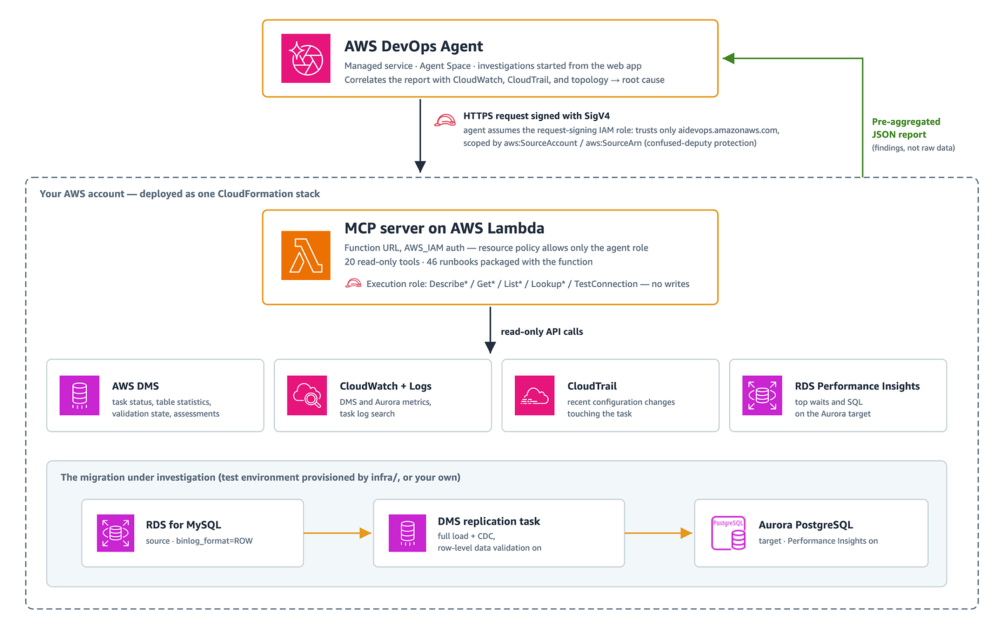
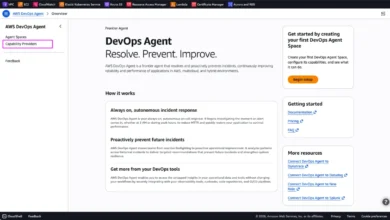
To address this, AWS has introduced a framework to extend the capabilities of the AWS DevOps Agent, an autonomous assistant designed to validate code deployments and maintain system health. By deploying a custom Model Context Protocol (MCP) server, organizations can now equip the agent with read-only, migration-specific tools and a library of expert-curated runbooks. This allows the agent to autonomously investigate, diagnose, and suggest remediations for complex migration scenarios in real-time, effectively functioning as an always-on migration specialist.
The Anatomy of Migration Failure
Modern cloud migrations involve a sophisticated dance between source environments, replication instances, and target databases. A typical migration lifecycle follows a rigid progression: initial schema conversion, full data load, ongoing Change Data Capture (CDC) replication, and finally, the cutover to the new engine.
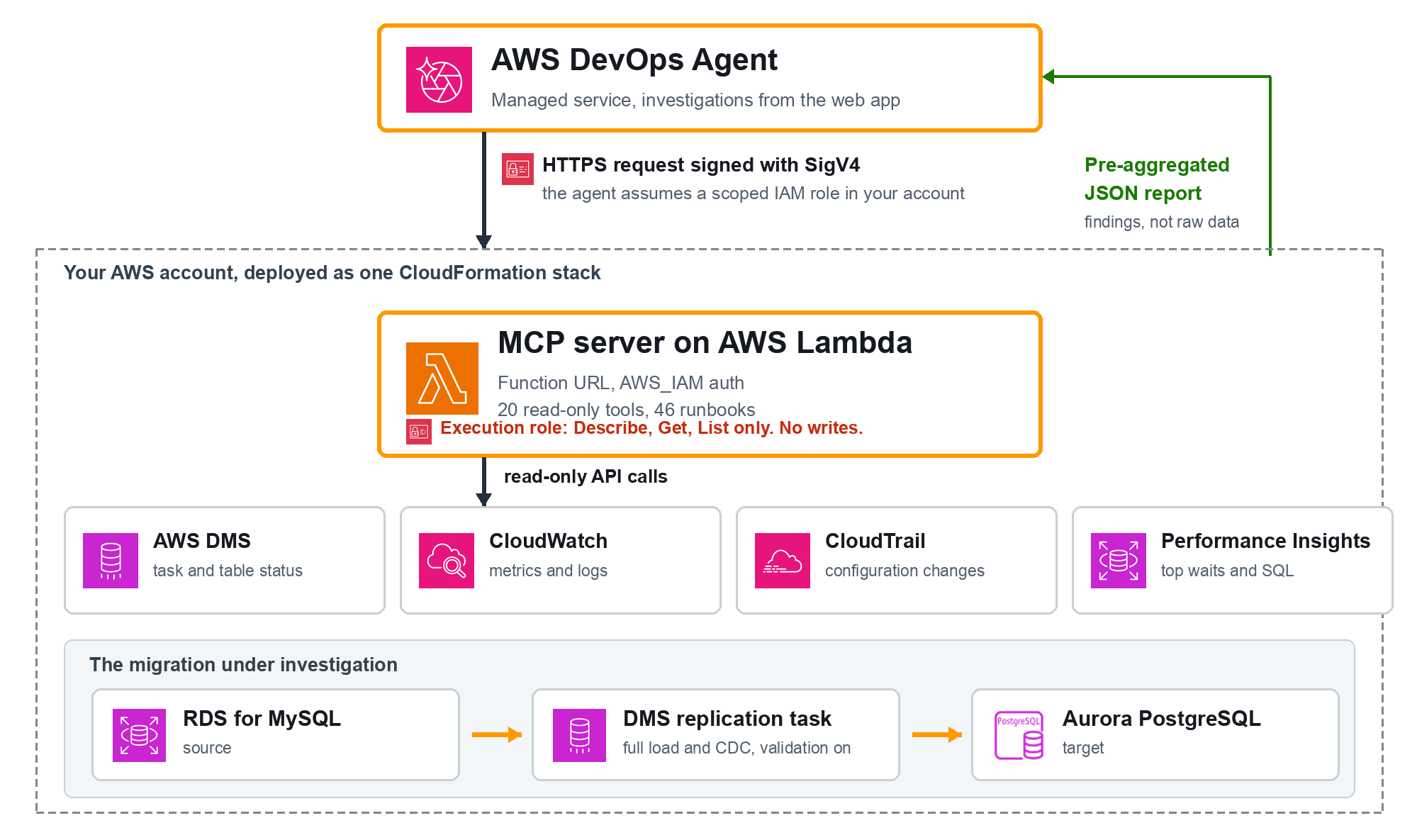
Operational data indicates that the highest volume of support tickets related to DMS migrations occur during the transition between the CDC phase and the final cutover. During this period, the divergence between legacy engine performance and modern target performance often creates "silent failures." For instance, an Aurora PostgreSQL target might handle a workload differently than a legacy MySQL source, leading to high latency that remains undetected until production traffic hits. The AWS DevOps Agent mitigates this by bridging the gap between raw metrics and actionable intelligence, allowing the agent to interpret the "why" behind a metric fluctuation rather than just reporting the spike itself.
Architecture and Security Framework
The integration relies on a secure, serverless architecture. The AWS DevOps Agent operates within the AWS ecosystem, interacting with the custom MCP server via HTTPS. All requests are authenticated using AWS Signature Version 4 (SigV4), the same robust IAM mechanism employed by core AWS APIs. This approach eliminates the need for shared secrets or long-lived credentials, as the MCP server—deployed as an AWS Lambda function—only accepts requests from authorized principals with the appropriate IAM roles.
The server itself exposes 20 distinct tools specifically tuned for the migration lifecycle. These tools perform strictly read-only operations—such as Describe, Get, and List—ensuring that the autonomous agent cannot inadvertently modify production infrastructure. By utilizing a CloudFormation stack, organizations can deploy this capability in minutes, registering the function URL with their Agent Space to instantly grant the agent the ability to query replication instance health, CDC latency, and data validation states.
Real-World Diagnostic Capabilities
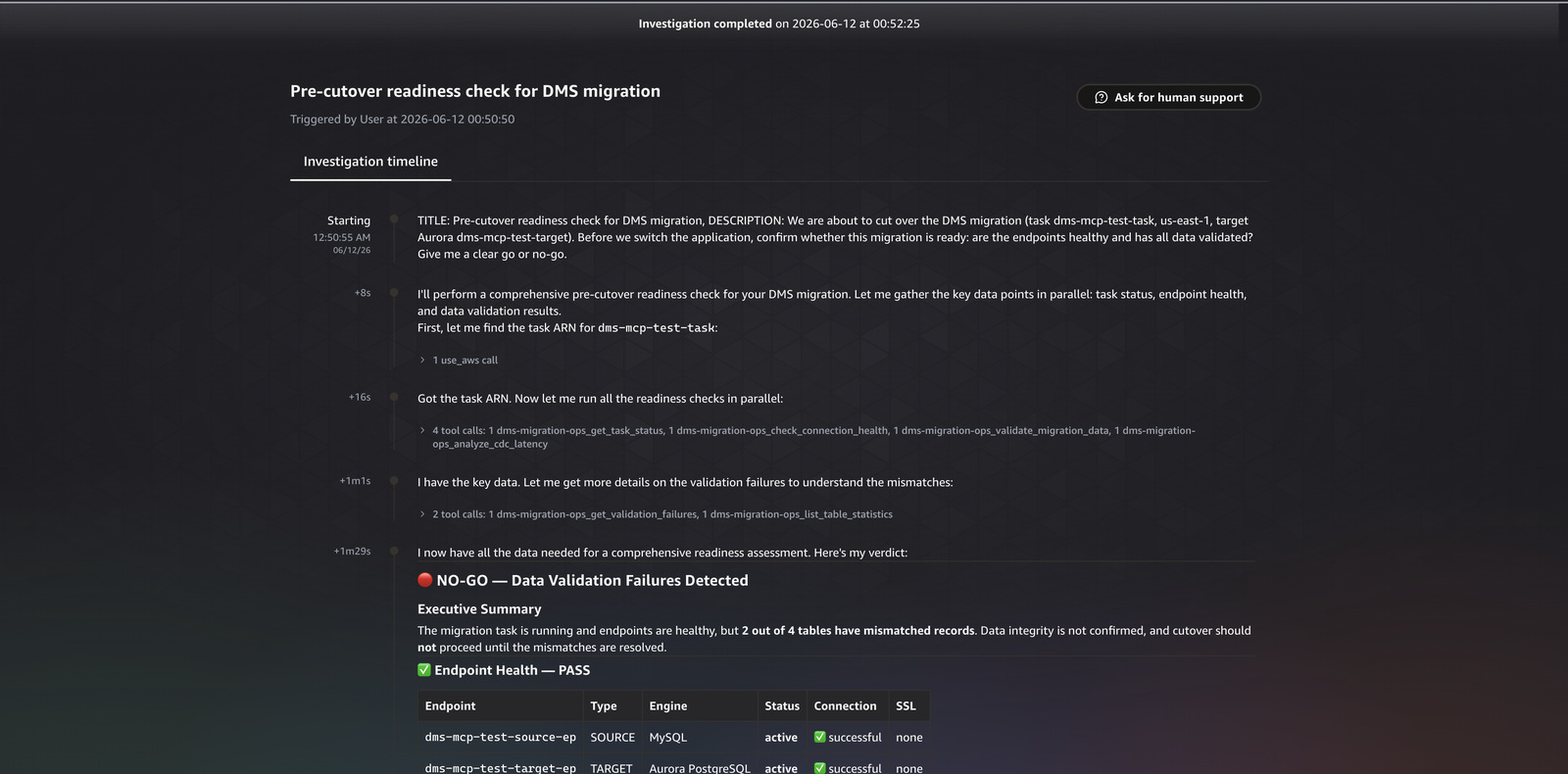
The efficacy of the agent is best illustrated through its performance in live migration environments. In recent testing, an Amazon RDS for MySQL source was replicated to Aurora PostgreSQL with data validation enabled. The agent demonstrated an ability to reason through complex scenarios that would typically require manual intervention from multiple engineers.
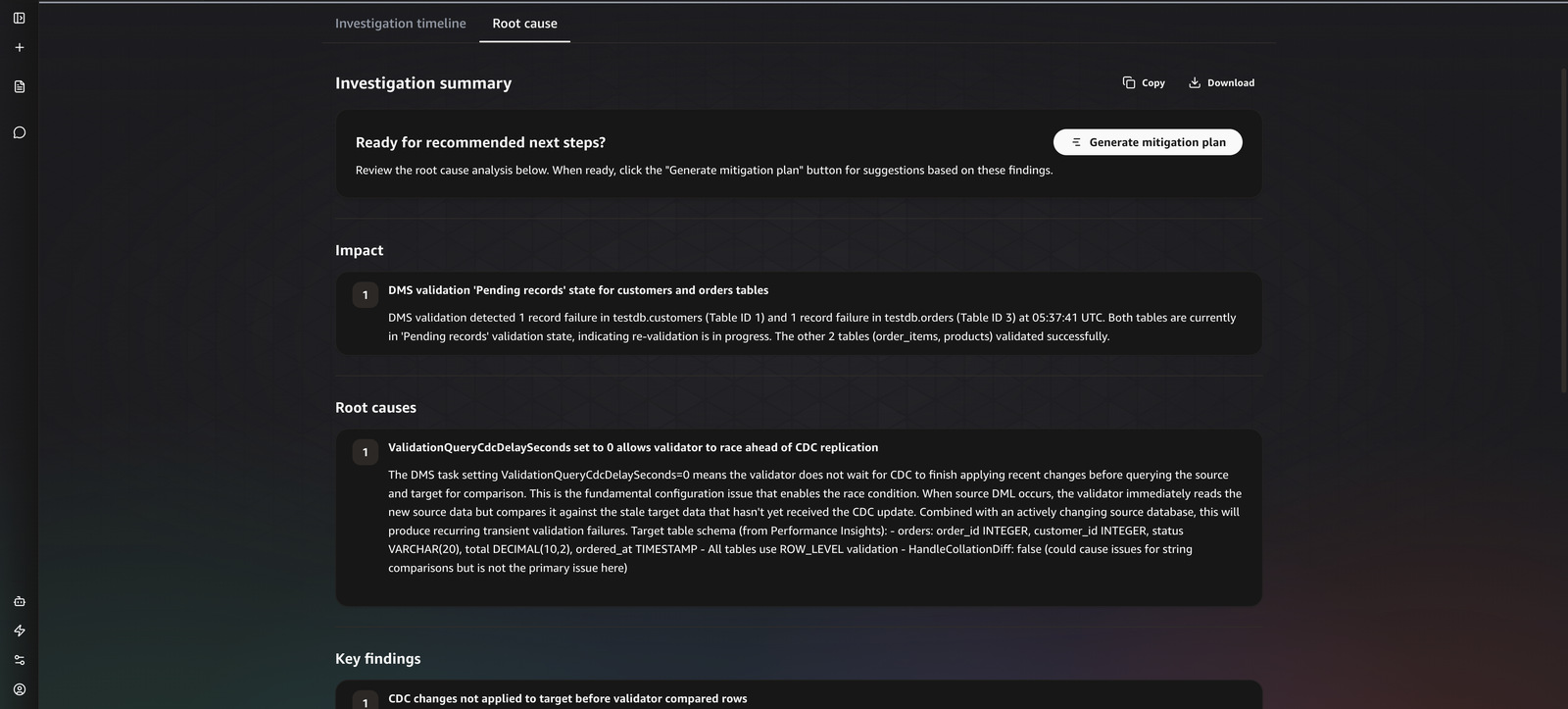
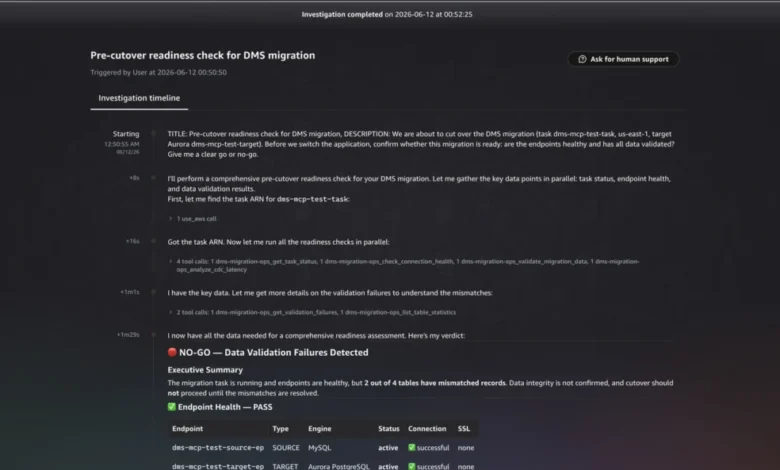
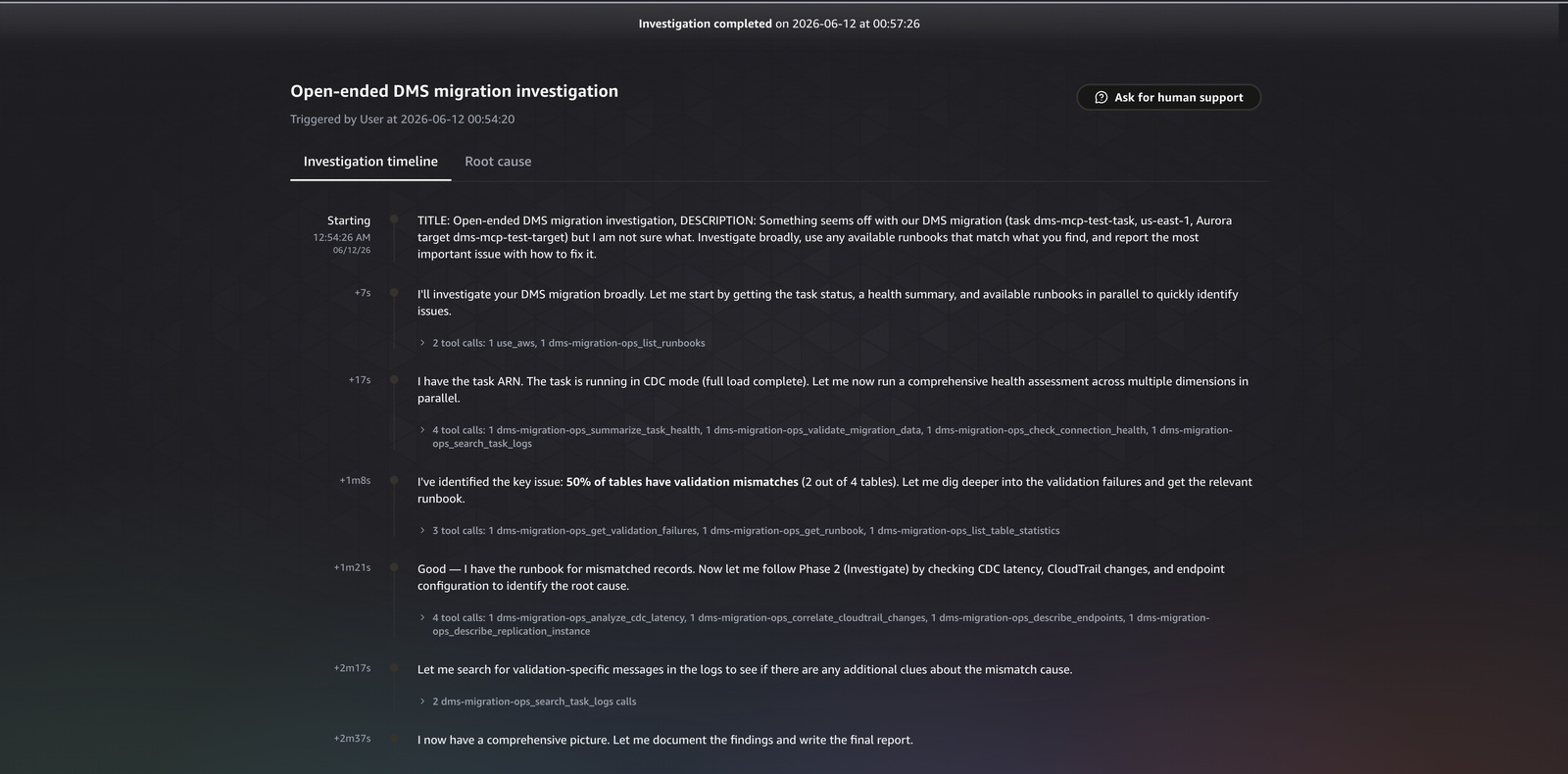
In one scenario involving validation failures, the agent analyzed 73 separate journal records and executed 33 tool calls to pinpoint the issue. It discovered that the ValidationQueryCdcDelaySeconds setting was causing the validator to race ahead of the actual data replication, creating a false-positive state of "mismatched records." The agent identified the specific configuration parameter responsible and provided a clear path to resolution. This process, which took the agent approximately three minutes, typically requires 30 minutes or more of manual cross-referencing across multiple consoles.
Chronology of an Investigation
The agent’s operational flow is designed to mimic the triage process of a senior database administrator:
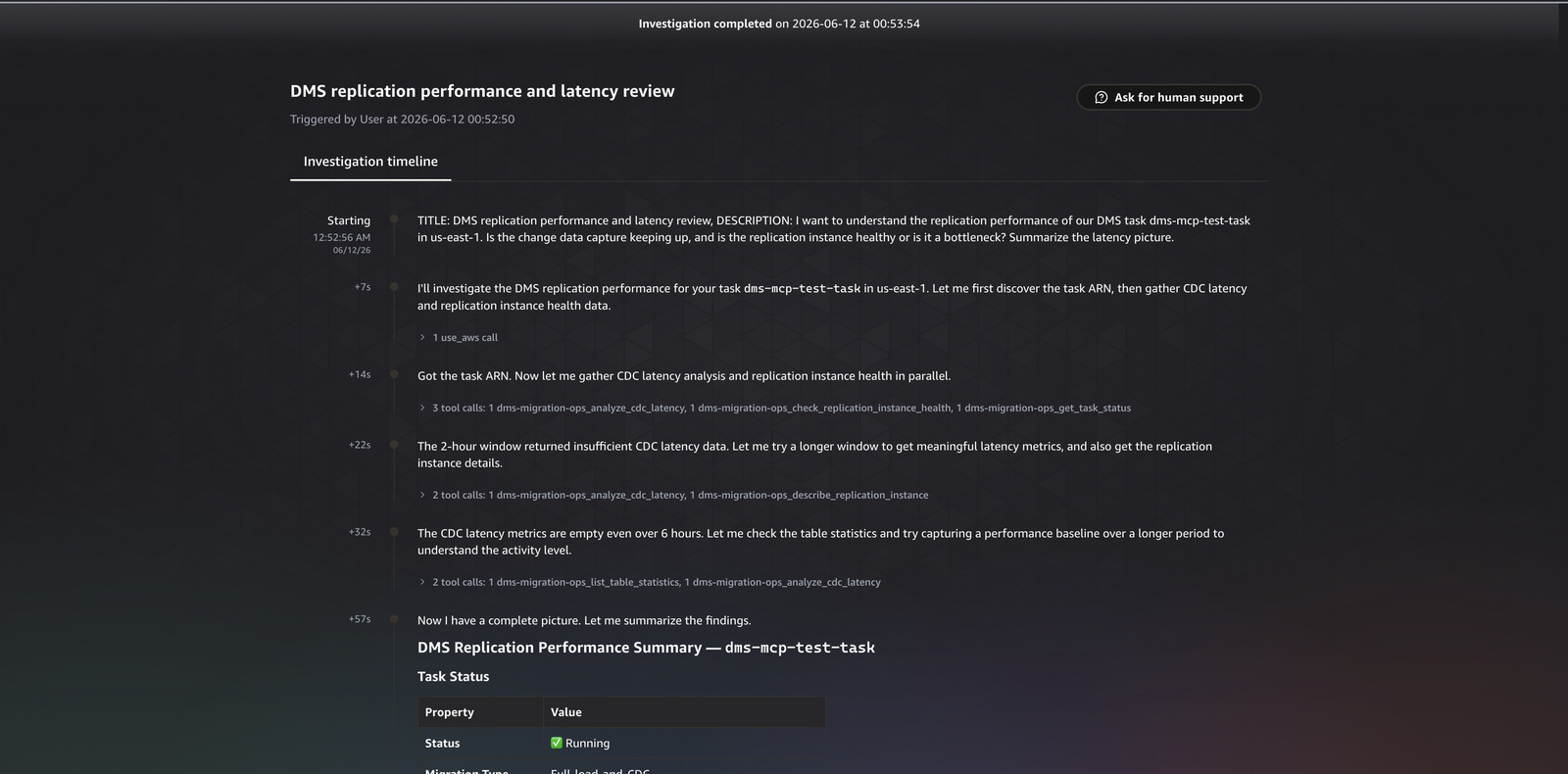
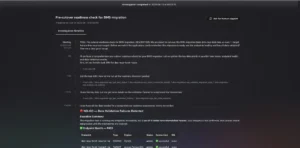
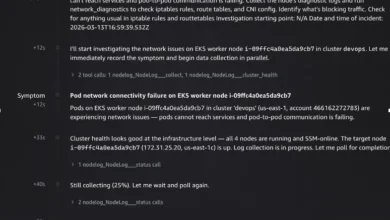
- Information Gathering: Upon receiving a prompt, the agent surveys the task status, current validation failures, and endpoint health.
- Contextual Correlation: The agent correlates logs from AWS CloudTrail and CloudWatch to determine if recent manual changes or deployment events contributed to the current state.
- Runbook Consultation: The agent accesses its internal library of 46 runbooks, identifying the procedure that matches the discovered symptoms—such as a data type precision mismatch or a connectivity bottleneck.
- Root Cause Synthesis: Rather than providing raw data, the agent constructs a narrative finding that cites specific metrics and recommends a concrete remediation step.
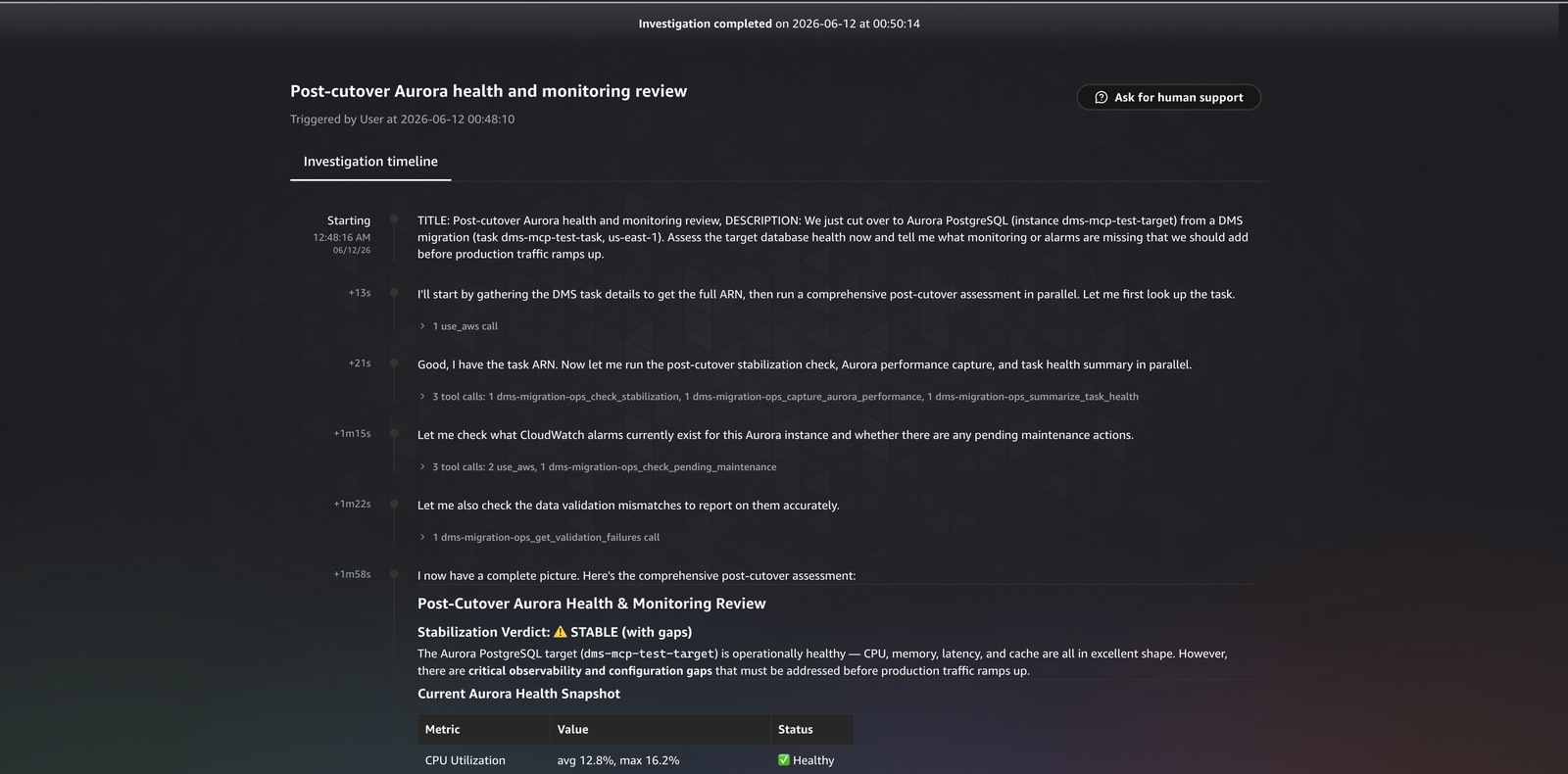
This structured approach is applied across the migration timeline, from pre-cutover readiness checks to post-migration stabilization reviews. During the stabilization phase, the agent assesses whether the new database is correctly monitored, checking for missing alarms on connection counts, query latency, and buffer cache hit ratios.
Broader Implications for DevOps
The introduction of this agent-based diagnostic model signals a significant shift in cloud operations. As systems grow in complexity, the "human-in-the-loop" model for troubleshooting becomes a bottleneck. By offloading the initial triage and correlation tasks to an AI agent, human engineers can focus on higher-level architectural decisions and strategic remediation.
Furthermore, the agent exhibits a "learning" behavior. Findings from each migration are folded back into the organization’s runbook library and skills repository. If the agent identifies a race condition or a specific performance regression, that knowledge is codified, ensuring that future migrations within the organization are preemptively shielded from the same class of failure. This creates a "flywheel" effect where the infrastructure becomes increasingly resilient over time.
Official Guidance and Best Practices
AWS emphasizes that this toolset is intended to complement, not replace, existing observability stacks. It is not a substitute for continuous monitoring or robust alerting systems. Instead, it serves as a high-fidelity diagnostic layer. Organizations are encouraged to treat the agent’s findings as authoritative guidance while maintaining standard change control and verification procedures.
The deployment of the MCP server is straightforward, requiring only the repository setup and the registration of the server in the Agent Space. Because the tools are limited to read-only access and the authentication is handled via least-privilege IAM policies, the risk of misconfiguration is minimized.
Conclusion
As enterprises accelerate their move to cloud-native databases, the ability to manage migration risk is becoming a competitive necessity. The integration of AWS DevOps Agent with specialized MCP tools provides a scalable solution to the operational friction that has historically plagued database transitions. By enabling autonomous, data-driven investigations, organizations can reduce the time spent in the "triage phase" of migrations, improve the stability of their new environments, and ensure that database cutovers are characterized by data integrity and performance rather than operational volatility. As this technology matures, it is expected that similar autonomous agents will become standard components in the modern SRE toolkit, fundamentally changing how infrastructure is validated and maintained at scale.