Automating Database Migrations with AWS DevOps Agent and the Model Context Protocol

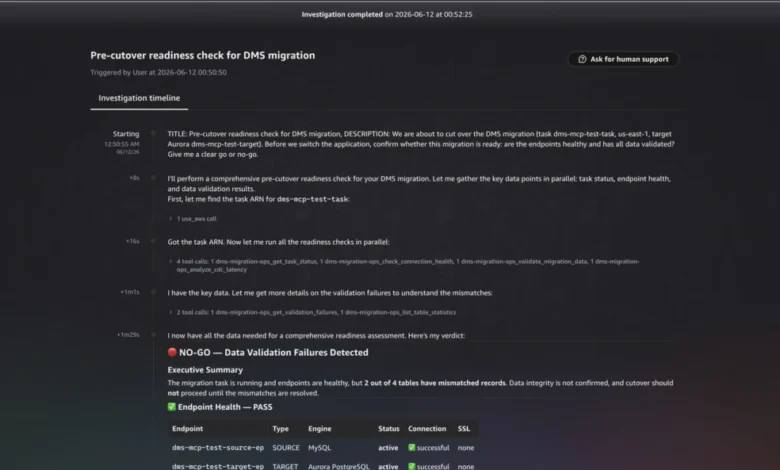
Migrating a production database remains one of the most high-risk operational maneuvers in modern enterprise computing. While tools like the AWS Database Migration Service (DMS) provide reliable mechanisms for moving data across relational engines and data warehouses, the most significant risks often emerge not during the initial transfer, but in the hours following cutover. Operational friction—ranging from query performance degradation due to suboptimal execution plans to connection pool exhaustion and downstream service timeouts—frequently triggers urgent, late-night escalations. Resolving these issues requires engineers to correlate disparate telemetry sources, including DMS task states, Amazon CloudWatch metrics, Amazon RDS Performance Insights, and deployment history, all while under significant time pressure.
To address these challenges, AWS has introduced a framework to extend the AWS DevOps Agent, allowing it to function as a specialized migration assistant. By utilizing the Model Context Protocol (MCP), engineers can now integrate read-only, migration-specific tools and standardized runbooks directly into their automated workflows. This allows the DevOps Agent to autonomously investigate and provide grounded root-cause analysis for migration-related failures, effectively shifting the burden of initial triage from on-call engineers to a machine-learning-driven assistant.
The Operational Challenge of Database Migration
The complexity of database migration typically stems from the divergence between legacy environments and cloud-native targets. When an organization migrates from an on-premises database to Amazon Aurora, for instance, the underlying hardware, storage architecture, and driver configurations change. These variables mean that a query executing in milliseconds on the legacy engine may trigger full table scans on the new infrastructure.
Historically, the resolution process has been manual and reactive. An engineer must manually inspect logs, verify DMS validation state distributions, and compare CDC (Change Data Capture) latency metrics across multiple consoles. This "swivel-chair" approach to monitoring is inherently prone to delays. In environments where uptime is critical, every minute spent manually correlating these data points increases the risk of cascading failures across dependent microservices.
Leveraging the Model Context Protocol
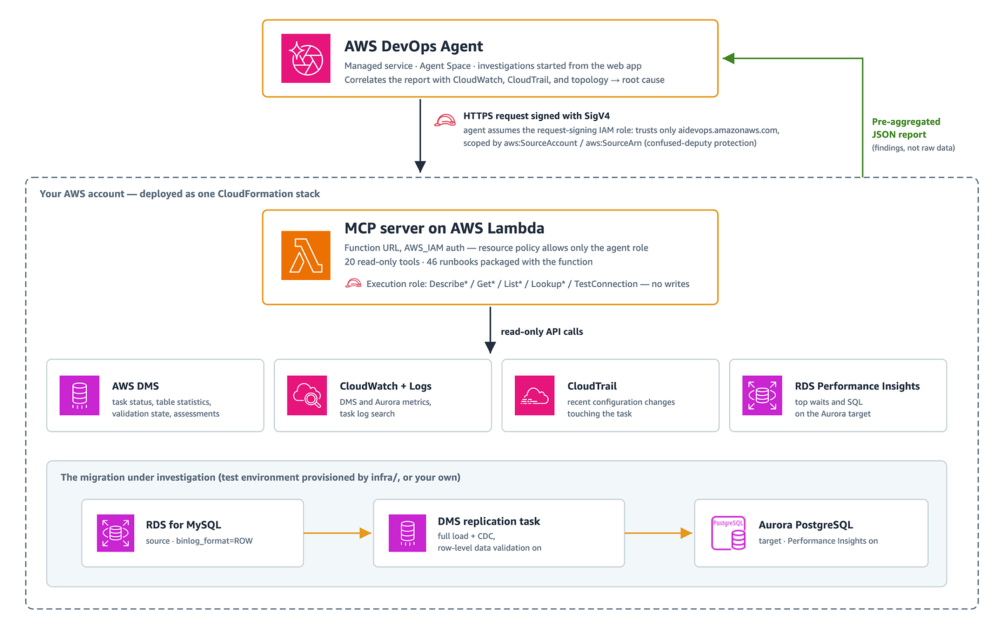
The integration of the Model Context Protocol into the AWS DevOps Agent marks a shift toward agentic operational management. The MCP serves as a standardized bridge, allowing the agent to interface with custom server-side tools without requiring complex, proprietary integrations. By deploying a sample MCP server on AWS Lambda, organizations can provide the DevOps Agent with a suite of read-only tools designed specifically for the DMS lifecycle.
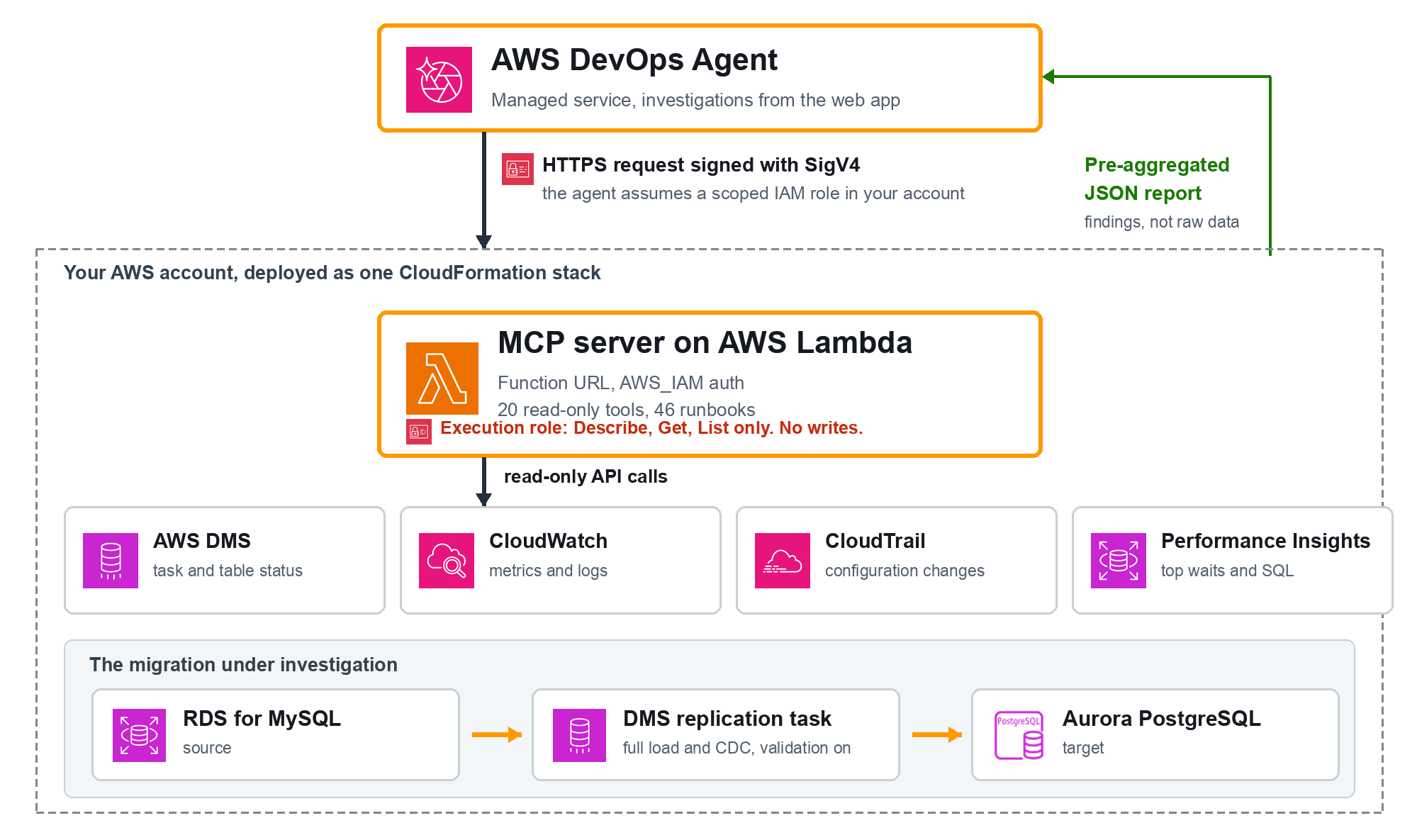
These tools, which include functions like analyze_cdc_latency and check_replication_instance_health, are governed by IAM policies that enforce the principle of least privilege. Because the tools are strictly limited to Describe, Get, List, and Lookup API calls, they eliminate the risk of accidental modification during the investigation process. The agent utilizes these tools to gather real-time data, which it then cross-references with a library of 46 pre-defined runbooks covering scenarios from full-load failures to post-cutover stabilization.
Chronology of an Investigation: A Practical Application
To validate the efficacy of this agentic approach, test environments were subjected to real-world failure scenarios. In one instance, researchers simulated a data mismatch by bypassing DMS and modifying records directly on the target Aurora PostgreSQL instance. The DevOps Agent was tasked with investigating the resulting "Mismatched records" state.
The investigation followed a systematic, multi-step chronology:
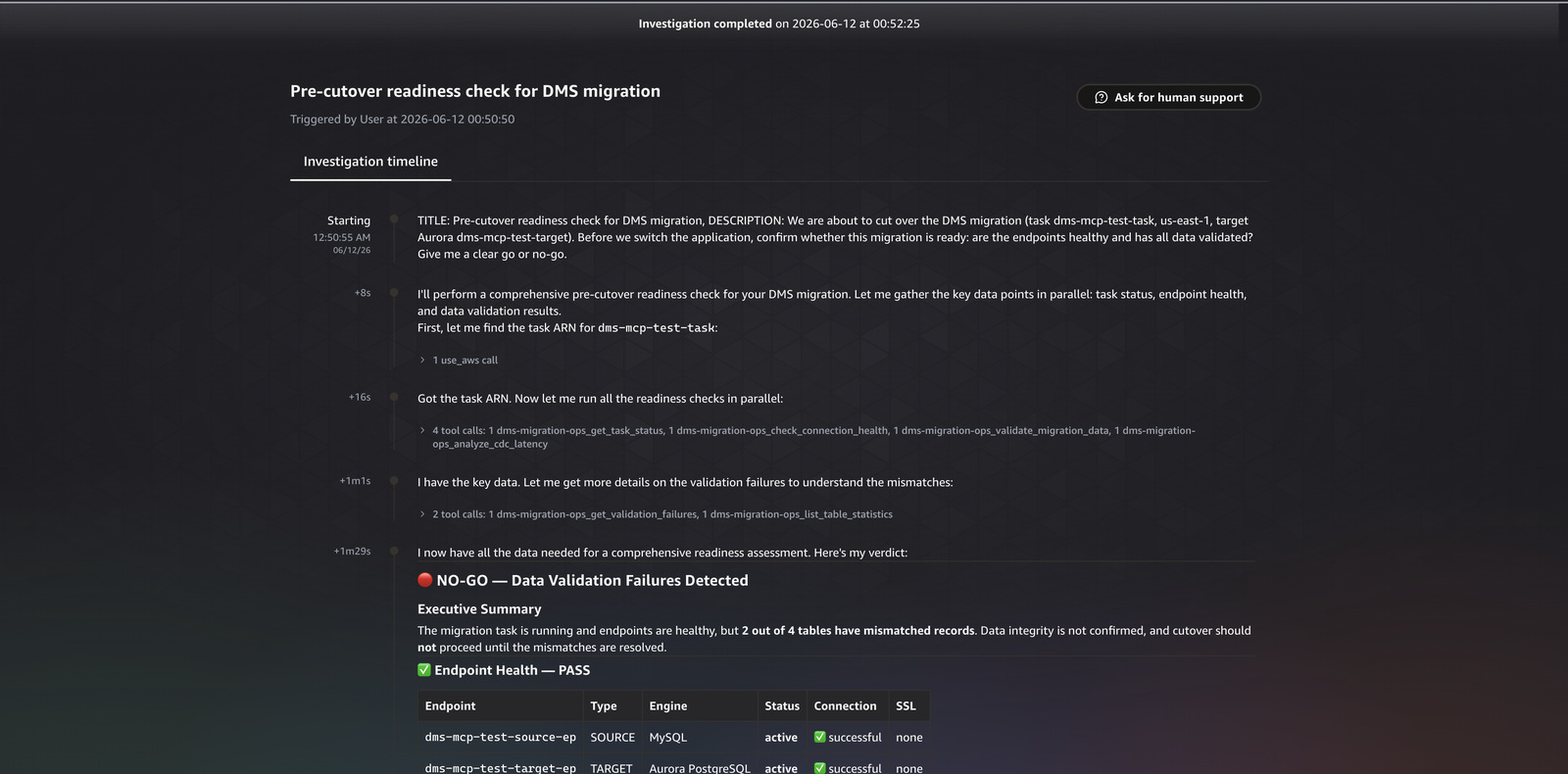
- Initial Assessment: The agent queried
get_task_statusandget_validation_failuresto identify the specific tables affected. - Telemetry Correlation: It then executed
search_task_logsandcorrelate_cloudtrail_changesto identify the timestamp of the manual intervention. - Deep Analysis: By calling
analyze_cdc_latencyandcapture_aurora_performance, the agent identified that the validator was racing ahead of the CDC replication process. - Root Cause Identification: The agent correctly identified that the
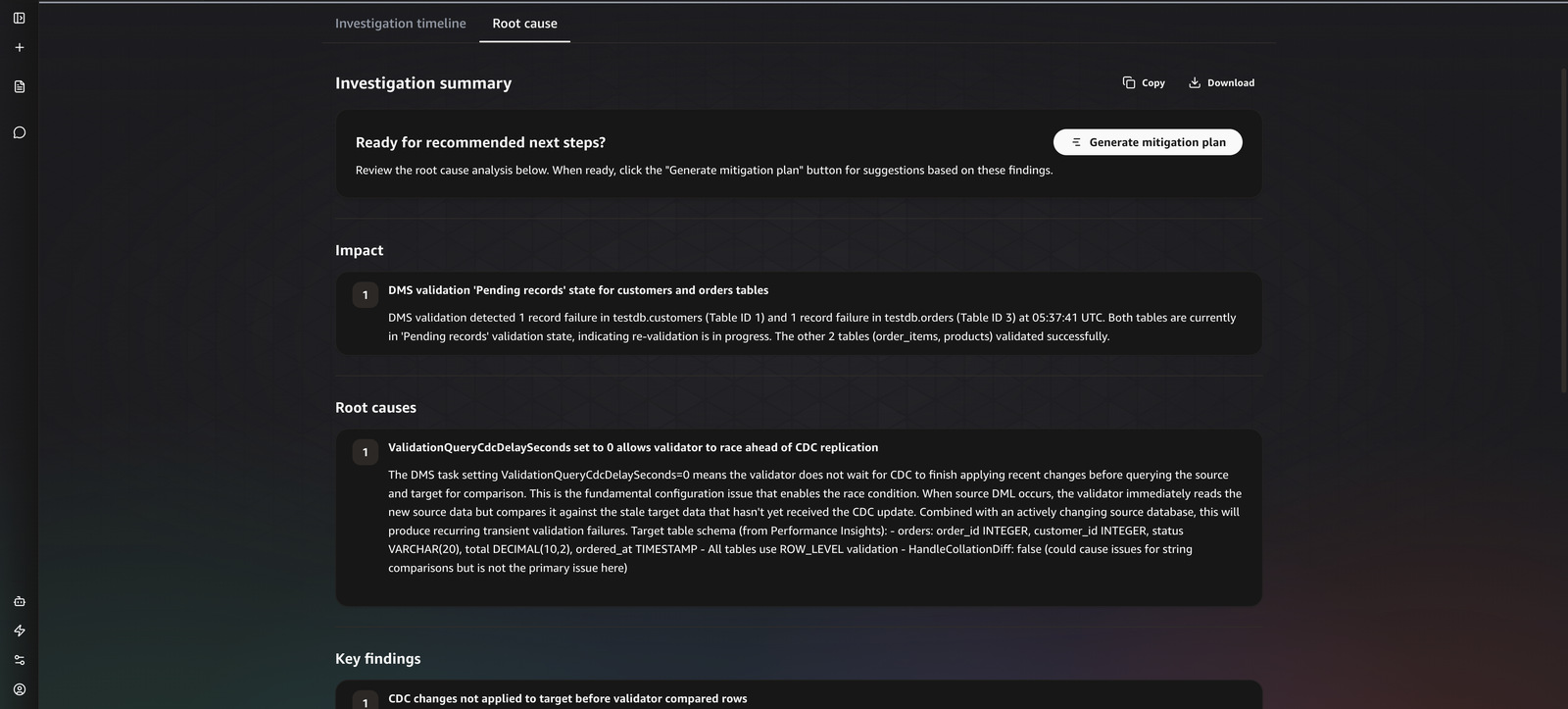
ValidationQueryCdcDelaySecondssetting was improperly configured for the workload, allowing it to recommend a specific, actionable configuration change.
In this scenario, the agent reached a grounded conclusion in approximately three minutes. In contrast, manual triage for such an issue typically consumes 30 minutes or more of senior engineering time.
Supporting Data and Performance Benchmarks
The effectiveness of this automation is reflected in the agent’s ability to handle diverse failure classes. During testing, the agent was presented with an "open-ended" investigation, where no specific symptom was provided other than a general sense that the migration was "off."
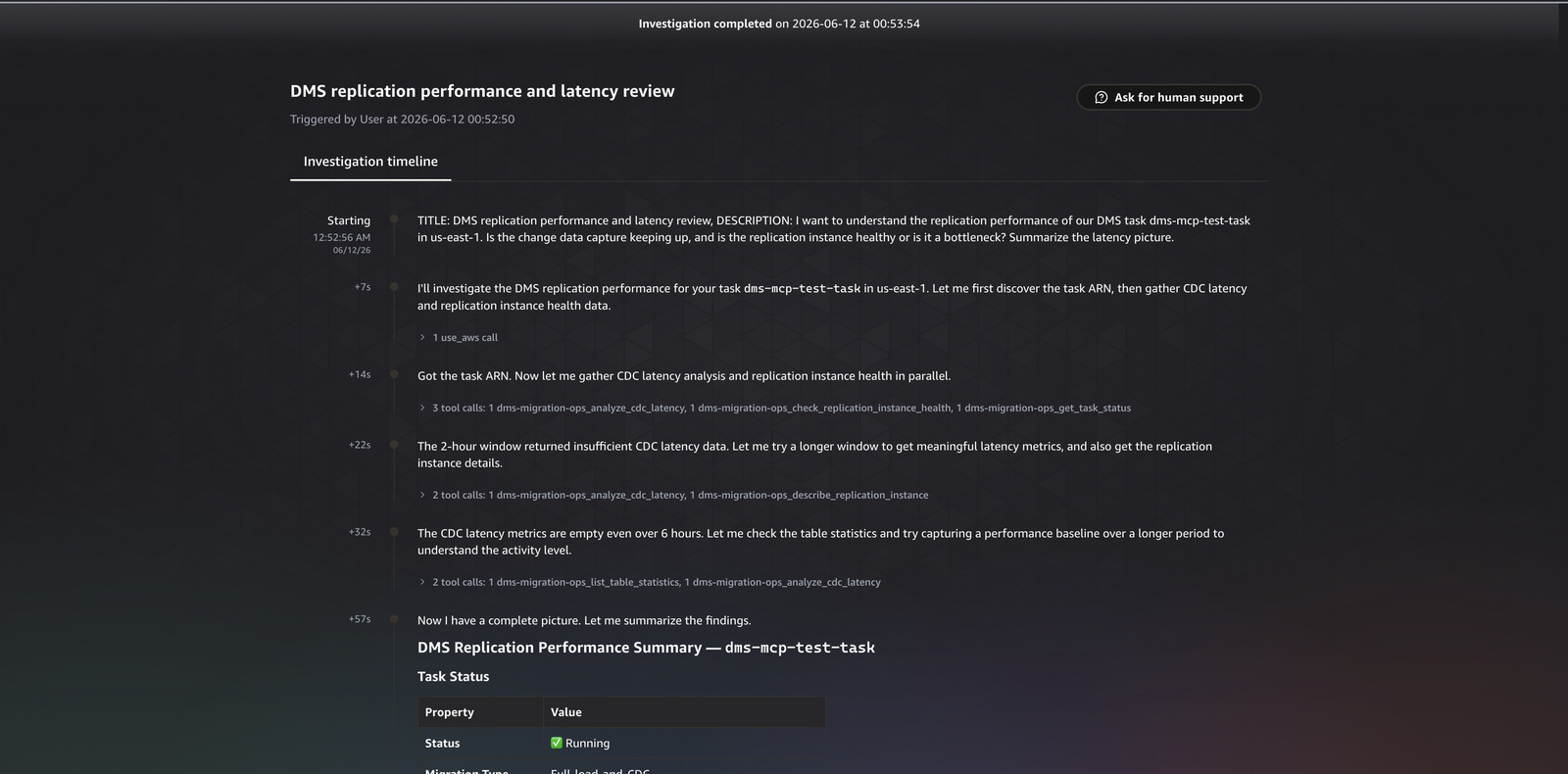
By browsing a catalog of 46 runbooks, the agent systematically swept across task health, connectivity, and performance metrics. It identified a data-type precision mismatch between the MySQL source and PostgreSQL target, pulled the relevant runbook, and mapped the failure to the correct remediation procedure.
The following table highlights the critical tools utilized during such investigations:
| Tool | Functionality |
|---|---|
validate_migration_data |
Reports distribution and table-level validation status. |
analyze_cdc_latency |
Evaluates source vs. target CDC backlog to pinpoint bottlenecks. |
check_replication_instance_health |
Monitors CPU, memory, and swap metrics for the replication instance. |
check_stabilization |
Assesses post-cutover regressions and identifies missing alarms. |
list_runbooks |
Retrieves standard operating procedures for known failure types. |
Institutional Implications and Strategy
For organizations managing large-scale cloud migrations, the implications of this technology are twofold. First, it reduces the "Mean Time to Recovery" (MTTR) by eliminating the manual search for data in disparate logs. Second, it creates a "flywheel" effect for operational knowledge. As the agent identifies root causes, these findings can be encoded into "DevOps Agent Skills"—Markdown-based instructions that allow the agent to learn from previous migrations.
For example, once a race condition related to ValidationQueryCdcDelaySeconds is identified and resolved, that knowledge is permanently integrated into the agent’s skill set. Future migrations will benefit from this accumulated wisdom, effectively immunizing the organization against recurring categories of errors.
Official Guidance and Security Protocols
AWS emphasizes that this approach is intended to augment, not replace, human oversight. The system is designed for use alongside existing monitoring solutions such as CloudWatch alarms and synthetic dashboards. Security is maintained through AWS Signature Version 4 (SigV4) authentication. By deploying the MCP server via AWS Lambda and utilizing function URLs with AWS_IAM auth types, organizations ensure that only authorized principals can trigger investigative actions.
This architecture avoids the use of long-lived API keys or shared secrets, aligning with the industry-standard "Zero Trust" security model. The deployment of these tools via AWS CloudFormation templates also ensures that the infrastructure remains auditable and easily reproducible across different development, staging, and production environments.
Broader Impact on Cloud Operations
The adoption of autonomous agents in database migrations represents a broader shift toward "Agentic AI" in IT operations. By formalizing the relationship between AI reasoning and cloud telemetry, enterprises can handle higher degrees of complexity without a linear increase in headcount.
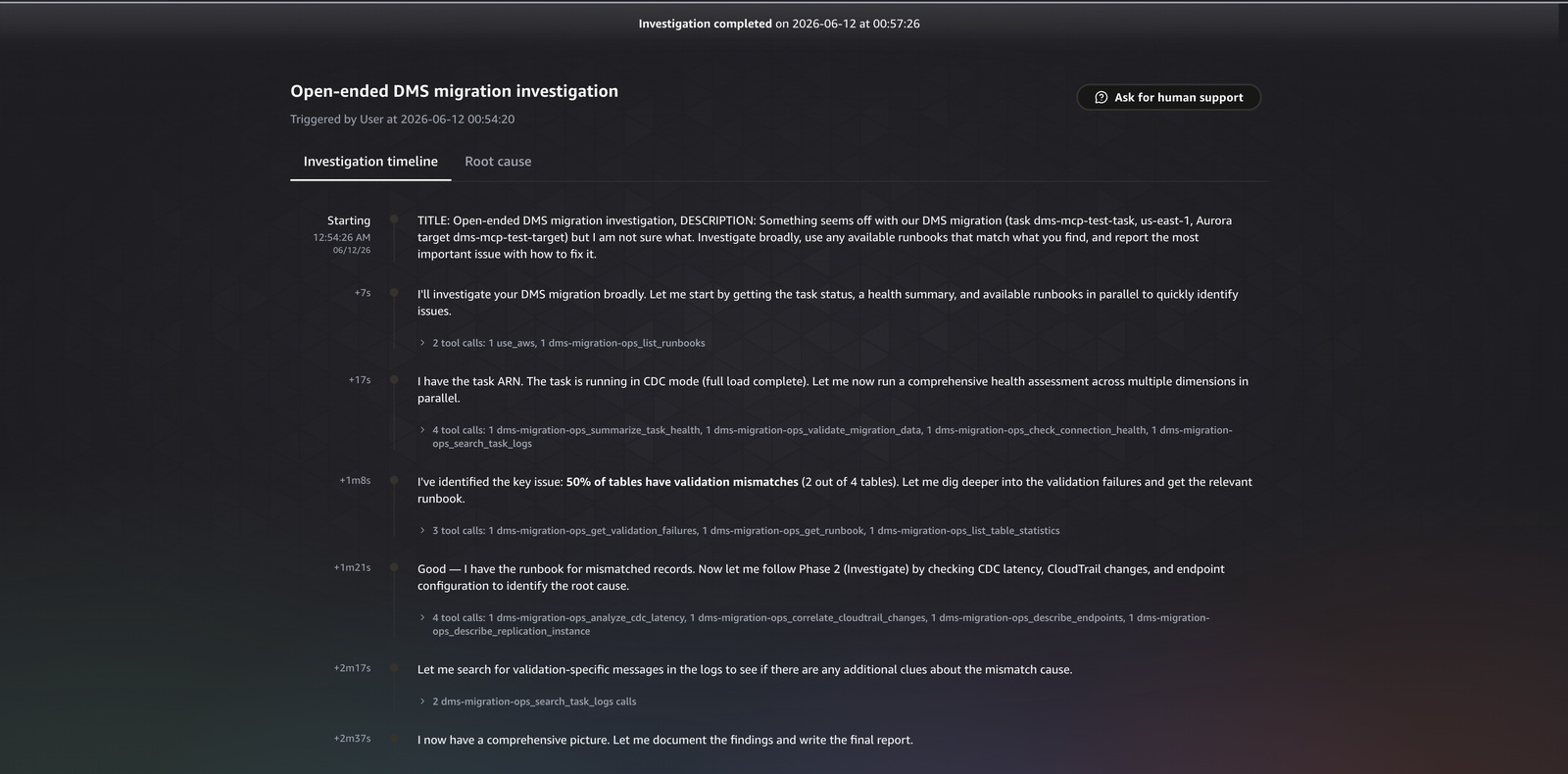
As migration projects grow in scale—often involving hundreds of tables and complex data types—the human capacity to track state becomes a bottleneck. The ability of the DevOps Agent to process 43 journal records and call 12 distinct tools in a single investigation demonstrates that AI can provide the depth of analysis required to manage these systems effectively.
Conclusion
The transition to automated, agent-driven troubleshooting for database migrations is a significant evolution in operational resilience. By leveraging the Model Context Protocol, engineers can effectively "teach" the AWS DevOps Agent to navigate the nuances of AWS DMS, from pre-migration readiness checks to post-cutover stabilization.
While the human element remains essential for final decision-making and remediation, the preliminary legwork of root-cause analysis is increasingly being handled by intelligent systems. For teams planning their next major database cutover, the implementation of these tools offers a path toward faster, more reliable, and more transparent migrations, ultimately minimizing the operational anxiety traditionally associated with moving critical data stores to the cloud. As organizations continue to refine their runbooks and skills, the reliability of these complex migrations will only continue to improve, setting a new standard for cloud-native operational excellence.
Related posts: