The scale of this operation, coordinated by state-backed threat actors, represents a significant escalation in the use of social engineering to infiltrate the global financial and technology sectors. According to a joint cybersecurity advisory issued by international intelligence agencies—including those from the United States, Japan, Australia, and Germany—the campaign has successfully breached systems across more than 100 countries. By masquerading as legitimate recruiters on professional networking sites like LinkedIn, the attackers have systematically harvested sensitive credentials, compromised cryptocurrency wallets, and gained unauthorized access to private corporate environments.
The Anatomy of the Contagious Interview Campaign
The Contagious Interview campaign is not a recent development but rather the evolution of a strategy that has been active since at least 2022. The operation relies on a sophisticated social engineering pipeline. Attackers, often adopting the personas of hiring managers or recruiters from reputable firms, approach developers, blockchain engineers, and Web3 specialists with offers of high-paying remote roles.
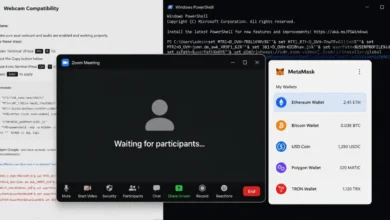
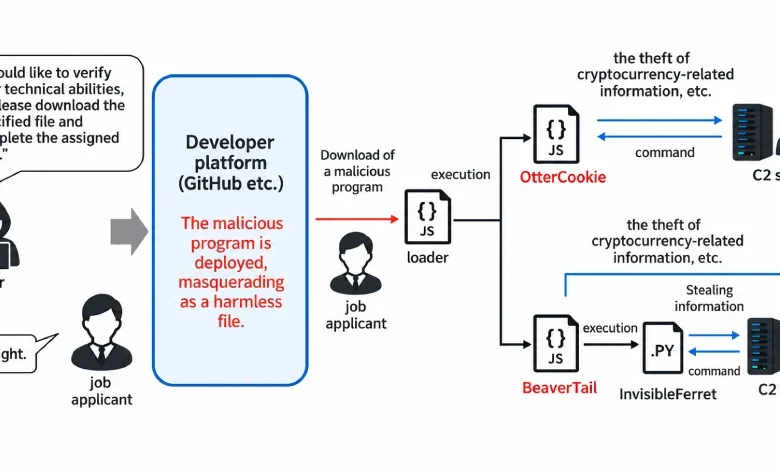
Once the target expresses interest, the rapport-building phase begins. The attackers eventually invite the candidate to complete a technical assessment or a "coding interview." This is the critical juncture of the infection chain. The victim is instructed to download a specific tool, repository, or communication client to conduct the interview or review the project requirements. These files, however, are weaponized. Once executed, they deploy a suite of modular malware designed to establish persistence, exfiltrate data, and provide remote access to the victim’s machine.
Security researchers have identified several malware families deployed during these attacks, including BeaverTail, InvisibleFerret, FlexibleFerret, GolangGhost, PylangGhost, OtterCookie, RATatouille, OtterCandy, and StoatWaffle. These tools are designed to remain dormant while harvesting browser cookies, crypto wallet keys, and system configuration data, effectively turning the victim’s computer into a bridgehead for further corporate espionage.

A Complex Web of Threat Clusters
The international intelligence community tracks these activities under a wide array of monikers, reflecting the decentralized yet interconnected nature of the North Korean cyber-intelligence apparatus. Among the most prominent labels are WaterPlum, PurpleBravo, DeceptiveDevelopment, and UNC5342.
Evidence suggests that these clusters operate under the direct oversight of the 313 General Bureau of the Munitions Industry Department. This organizational structure links the cyber-theft operations directly to the regime’s broader objective of generating hard currency to bypass international sanctions. Investigations have revealed that different clusters often share infrastructure, such as IP addresses used to manage "laptop farms"—clusters of devices configured to make it appear as though the attackers are logging in from legitimate geographic locations in the West or Japan.
Evolution of the IT Worker Scheme and Proxy Recruitment
Beyond direct hacking, the North Korean regime has aggressively expanded its "IT worker" program. This initiative, which traces its lineage to the labor-export practices of the 1960s and 70s, has shifted from physical manual labor to the digital white-collar sector. By placing North Korean nationals in remote roles at Western companies, the regime secures a consistent flow of foreign currency.
Recent intelligence indicates a disturbing pivot toward "proxy hiring." Recognizing that their own workers may face scrutiny during background checks, these groups are now actively recruiting Western or Latin American citizens to serve as "faces" for their employment applications.
A recent report by cybersecurity firm Silent Push highlighted the use of Discord servers, such as one titled "Mouse Review," to recruit these proxies. The scheme is marketed as a low-effort, high-reward opportunity: the proxy handles the face-to-face video interviews and communication, while the North Korean operator performs the actual technical work remotely. The financial incentive—often a split where the proxy keeps 35% of the salary and remits 65% to the regime—is designed to attract individuals facing economic hardship. This model allows the regime to bypass KYC (Know Your Customer) protocols, geographic restrictions, and corporate compliance audits.

Global Impact and Economic Implications
The financial impact of these operations is substantial, with confirmed losses exceeding $10.71 million in cryptocurrency. However, experts warn that the true cost is likely much higher, as many victims fail to report breaches due to professional stigma or the nature of decentralized digital assets.
The implications for the global tech industry are profound. First, the breach of individual developers often serves as a Trojan horse for larger organizations. Once an employee’s machine is compromised, the attackers can move laterally into the corporate network, leading to the theft of intellectual property, proprietary source code, and potentially the compromise of supply chain integrity.
Furthermore, the use of stolen identities for employment presents a legal and security nightmare for HR departments. Firms that unknowingly hire these proxies may inadvertently provide the North Korean state with access to internal systems, rendering them vulnerable to long-term espionage.
Response and Countermeasures
International agencies are urging a heightened state of vigilance among HR and IT departments. Key recommendations include:
- Verification of Identity: Implementing strict video-based identity verification that remains constant throughout the interview process.
- Hardware Security: Moving away from reliance on software-based identity verification and toward hardware-based multi-factor authentication (MFA).
- Infrastructure Auditing: Regularly auditing remote access logs to detect unusual patterns, such as multiple logins from geographically dispersed locations or the use of known VPN exit nodes.
- Supply Chain Security: Conducting thorough vetting of third-party contractors and temporary technical staff, particularly those sourced through non-traditional platforms.
The dismantling of a major laptop farm in Japan earlier this year serves as a successful template for international cooperation. By linking the digital footprints of these attacks across borders, intelligence agencies have begun to disrupt the infrastructure that allows these groups to operate with impunity.

The Future of North Korean Cyber-Espionage
As artificial intelligence becomes more accessible, the sophistication of these campaigns is expected to rise. Analysts note that threat actors are already leveraging AI to craft more convincing phishing lures, generate realistic fake resumes, and even simulate human voices during video calls to bypass biometric security checks.
The "Contagious Interview" campaign and the broader IT worker scheme represent a fundamental shift in how state-sponsored actors view the private sector. Instead of traditional "smash-and-grab" cyberattacks, the focus has moved toward long-term, high-value infiltration. As long as the financial rewards—fueled by the booming cryptocurrency market and the high demand for remote software talent—outweigh the risks, these groups will likely continue to evolve, forcing a radical rethink of corporate security and hiring practices in the digital age.
The international community remains focused on identifying the individuals behind these clusters and exposing the networks that facilitate their operations. As more data emerges, the primary goal for regulators and security experts remains clear: to strip away the anonymity that allows these operations to masquerade as legitimate career opportunities, thereby closing the door on one of the most prolific and dangerous cyber-threats facing the modern workforce.
Related posts: