Android Studio Embraces Flexibility with the Launch of Bring Your Own Agent Support for Developers

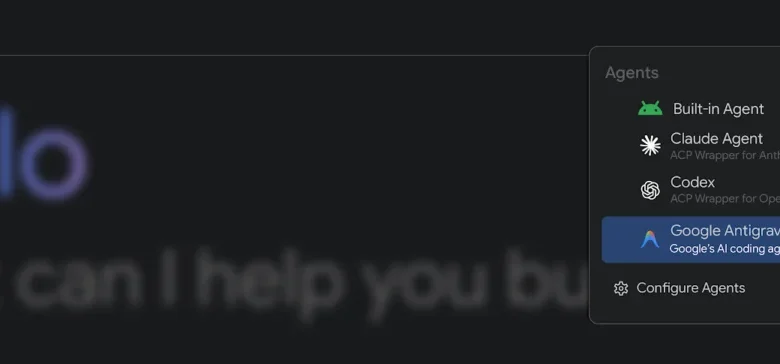
The landscape of mobile software engineering is undergoing a fundamental transformation as artificial intelligence shifts from a peripheral assistance tool to a core architectural component of the integrated development environment (IDE). In a significant expansion of its developer ecosystem, Android Studio has officially introduced the Bring Your Own Agent (BYOA) initiative. This development marks a departure from closed, single-model environments, allowing software engineers to integrate third-party coding agents—such as Anthropic’s Claude, OpenAI’s Codex, and Google’s own Antigravity agent—directly into the Android Studio workflow. By providing native infrastructure support for these external agents, the platform aims to provide a more modular, interoperable, and efficient development experience.
The Evolution of AI-Assisted Development
The integration of AI into the IDE is not a recent phenomenon, but the scope of these tools has evolved rapidly over the past twenty-four months. Initially, AI was limited to basic code completion suggestions and simple syntax checking. However, the rise of agentic workflows—where AI tools can autonomously navigate files, execute terminal commands, and perform multi-step refactoring—has necessitated a more open approach.
Last year, the Android developer team took the first step in this transition by enabling support for remote AI models. This allowed developers to connect to various backends, moving away from the limitation of strictly local, on-device processing. Today’s introduction of BYOA represents the logical conclusion of that strategy: granting developers the freedom to select the specific logic and reasoning engines that best suit their unique project requirements, team standards, and computational needs.

Chronology of AI Integration in Android Studio
The trajectory toward this open ecosystem can be traced through several key milestones in the Android Studio release cycle:
- Early 2023: Android Studio began integrating foundational AI features focused on basic query-response interactions, primarily leveraging internal Google models.
- Late 2023: The "Gemini in Android Studio" project was launched, establishing a more sophisticated, context-aware assistant capable of understanding project structure.
- Mid-2024: The platform expanded its API surface area, allowing for remote model integration, effectively de-coupling the IDE interface from the underlying AI provider.
- Current Phase (2025/2026): With the launch of Android Studio Rabbit 2 (Canary), the platform has officially transitioned to an "agent-agnostic" architecture, allowing third-party providers like Anthropic and OpenAI to operate within the native Android tooling environment.
Leveraging Specialized AI Infrastructure
The BYOA framework does not merely inject a chatbot into a side panel; it integrates these agents into the deep, AI-optimized infrastructure of the IDE. This means that when a developer uses an agent like Claude or Codex, the agent is granted access to the IDE’s "Android Knowledge Base" and specialized "Android Skills."
The Android Knowledge Base is a curated repository of best practices, architectural patterns, and API guidelines specific to the Android platform. By providing agents with this contextual data, the system ensures that the code generated—even by an external model—remains compliant with the latest security standards and performance requirements of the Android operating system. This synergy prevents the common pitfall where general-purpose coding models generate deprecated or non-performant code for niche mobile platforms.
The Role of Google Antigravity and Gemini
While the new initiative promotes diversity in AI providers, Google continues to position its own "Antigravity" agent as the primary choice for deep platform integration. The Antigravity agent provides native hooks into the latest versions of the Gemini model family, specifically Gemini Flash 3.8.

From an operational standpoint, the distinction between using a third-party agent and the Google Antigravity agent lies in the depth of integration. Users utilizing the Antigravity agent can leverage their existing Google AI Pro or Ultra subscription plans, allowing for higher usage quotas and more seamless authentication. Furthermore, for enterprise-level clients, the Antigravity agent maintains the strict security and privacy protocols required by Google Cloud, ensuring that proprietary source code is handled according to enterprise-grade compliance standards.
Data-Driven Performance and Benchmarking
A critical aspect of this rollout is the commitment to objective performance measurement. The engineering team has emphasized that the efficiency of these agents is measured against "Android Bench," a framework designed to evaluate long-horizon tasks. Long-horizon tasks involve complex, multi-step operations—such as migrating a legacy Java codebase to Kotlin or refactoring a modularized application—that require the AI to maintain context over thousands of lines of code.
Recent internal data suggests that when agents are integrated directly into the IDE rather than accessed via external web interfaces, the latency in task completion is reduced by approximately 40%. This is largely attributed to the "IDE-native intelligence" layer, which pre-processes project context and manages token consumption more effectively than standalone AI web portals.
Implications for the Developer Ecosystem
The transition to an open agent architecture has several profound implications for the software development industry:

- Reduced Vendor Lock-in: By enabling BYOA, Android Studio mitigates the risks associated with being tethered to a single AI provider. Teams can switch between models as their specific needs for reasoning speed, code quality, or cost-effectiveness change.
- Cost Optimization: Developers can now choose agents based on their billing structures. Whether a team prefers a per-token pricing model through an API key or a flat-rate enterprise subscription, the flexibility provided by Android Studio allows for more granular financial management of AI overhead.
- Specialization: As the agent market matures, it is expected that developers will choose different agents for different tasks. A developer might use a highly capable reasoning model like Claude for architectural design and high-level logic, while switching to a lighter, faster model like Gemini Flash for repetitive boilerplate generation or routine unit testing.
- Security and Compliance: For the enterprise sector, the ability to control which agent handles the codebase is paramount. The BYOA architecture allows organizations to whitelist specific agents, ensuring that data-sharing policies remain consistent with internal corporate security mandates.
Getting Started with the Canary Build
The BYOA feature is currently available in the Android Studio Rabbit 2 Canary release. The implementation process is designed to be straightforward:
- Registration: Developers must navigate to the Agent Registry within the IDE settings.
- Authentication: Depending on the provider, the developer will either input an API key or log in via an OAuth-based service (such as Google, Anthropic, or OpenAI).
- Configuration: Once the connection is verified, the developer can toggle between agents via a selector interface located in the primary coding workspace.
As the platform moves from the Canary phase to stable release, the developer community expects further integration of agent management tools, including the ability to create custom, domain-specific "skills" that can be shared across team members.
Conclusion and Future Outlook
The introduction of BYOA in Android Studio signifies the maturation of AI in the software development lifecycle. By treating AI agents as modular, interchangeable components, Google is acknowledging that no single model is currently optimal for every coding scenario. As the industry continues to iterate on these tools, the focus will likely shift from the raw capability of the models themselves to the quality of the integration between the IDE and the AI, ensuring that developers can focus on building high-quality applications rather than managing the tools they use to create them.
Developers are encouraged to engage with this new capability, test its limits, and contribute feedback through the official Android reporting channels. As the ecosystem expands, the collaborative nature of this development will be essential in defining the next standard for professional-grade AI-assisted software engineering.