Building Intelligent Agentic Experiences with the New Android Intelligence System and Developer Toolset

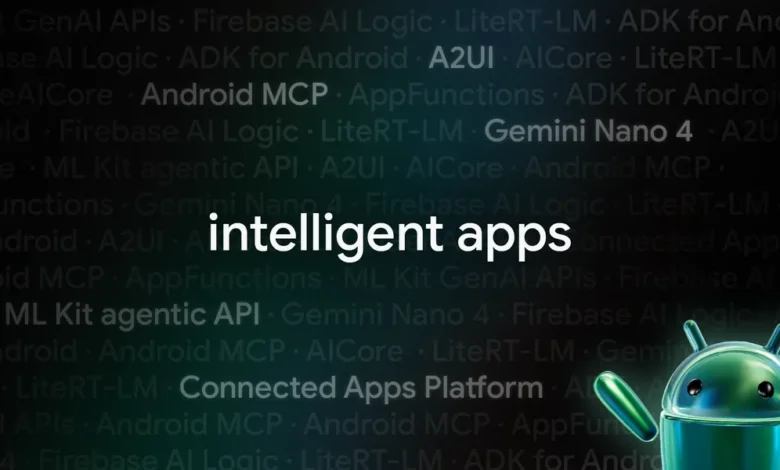
The evolution of mobile computing is currently undergoing a seismic shift as the industry transitions from a paradigm of manual application interaction to an era defined by autonomous, intent-driven AI agents. Users no longer wish to navigate through layers of menus or perform repetitive multi-step tasks; instead, they expect their devices to understand high-level goals and execute complex workflows across disparate applications. In response to this demand, Google has unveiled a comprehensive suite of APIs and developer frameworks designed to facilitate the creation of intelligent, agentic experiences within the Android ecosystem.
The Shift Toward Agentic Workflows
The traditional model of app interaction—characterized by direct user input and discrete task execution—is being augmented by the integration of large language models (LLMs) and on-device machine learning. During the recent Android Developer Summit, Google emphasized that the future of the platform lies in its ability to act as a cohesive intelligence system. This system is designed to provide both proactive and reactive assistance, bridging the gap between user intent and functional execution across diverse device form factors, including smartphones, wearables, XR glasses, televisions, and automotive infotainment systems.
The core of this strategy relies on the Model Context Protocol (MCP), a standard now being adapted for Android to provide a unified tool-calling framework. By leveraging the AppFunctions Jetpack library, developers can enable their applications to communicate with AI agents, whether those agents are running locally on-device or operating as part of the broader system-level intelligence.
Chronology and Development Roadmap
The roadmap for these capabilities has been accelerated throughout the current calendar year, culminating in the recent developer previews.
- Early 2026: Initial integration of Gemini Nano 4 capabilities into the Android platform, focusing on on-device function calling.
- Mid-2026: Introduction of the Model Context Protocol (MCP) standards for Android, providing a pathway for developers to expose app functionality to system-level agents.
- Late 2026: Launch of the Connected Apps Platform developer preview, allowing apps to interface with Google Search and Gemini directly.
- Present Day: The release of the A2UI Compose renderer in alpha, marking a shift toward AI-generated dynamic user interfaces.
This timeline reflects a strategic move to standardize how AI agents interact with local app data. The Android MCP serves as a native solution for scenarios where privacy and performance are paramount. Unlike remote server-based models, the Android native MCP allows for end-to-end encryption and ensures that sensitive local data never leaves the device. This is particularly crucial for apps that rely on hardware sensors or require low-latency execution, where a round-trip to a cloud server would be prohibitively slow or insecure.
The Role of ML Kit and On-Device Processing
To facilitate the shift toward agentic apps, Google has significantly expanded the ML Kit GenAI APIs. The latest update introduces the Agentic API, which manages the orchestration loop of an AI workflow. This API automatically executes functions, maintains conversation history, and includes built-in guardrails to ensure that the agent’s actions remain within defined parameters.
Supporting data from recent benchmarking tests suggests that on-device inference using Gemini Nano 4 provides significant performance gains for latency-sensitive tasks. By utilizing direct model access through the Prompt API, developers can build agents that operate in offline or restricted-connectivity environments. For developers requiring a hybrid approach—where simple tasks are handled locally and complex reasoning is offloaded to the cloud—Firebase AI Logic has emerged as the primary solution. This allows for a tiered architecture: Gemini Nano handles basic on-device processing, while Gemini 4 (cloud-based) manages more resource-intensive queries, with Firebase App Check and server-side prompt templates managing security and cost-efficiency.
The A2UI Compose Renderer: Rethinking User Interfaces
One of the most radical developments in this ecosystem is the A2UI (Agent-to-UI) Compose renderer. Historically, AI agents have been limited to text-based responses or simple buttons. The A2UI system changes this by allowing agents to "speak UI"—essentially, an agent can stream rich, interactive native Compose UIs directly from a JSON protocol.
This means an AI agent can dynamically assemble a reservation screen, a payment portal, or a flight tracking dashboard in real-time based on the user’s current intent. By utilizing Jetpack Compose, the system ensures that these generated interfaces maintain the look and feel of the native application, providing a seamless user experience that does not feel like an external "AI window."
Broader Implications and Industry Impact
The integration of these tools into the Android ecosystem has profound implications for the mobile software industry. By providing a standard interface for agents, Google is effectively creating an "intent economy." Applications that successfully integrate with the Connected Apps Platform will be able to surface their features directly in the Gemini interface or Google Search results.
However, this transition introduces significant technical and ethical challenges. The responsibility of "orchestration" now rests partly on the developer. When an agent is empowered to take actions on behalf of a user—such as booking a flight or updating a calendar entry—the security implications are non-trivial. Google’s reliance on the AppFunctions Jetpack library and strict permission-based architectures indicates an attempt to preempt these issues by keeping the agentic loop within a sandbox.
Official Responses and Future Outlook
While Google has positioned these tools as a boon for developer productivity, the industry response has been one of cautious experimentation. Early adopters, such as those participating in the Jetpacker pilot program, have reported that while the learning curve for integrating MCP is steep, the ability to reach users across multiple Google surfaces provides a substantial competitive advantage.
As of the current phase, the Connected Apps Platform is limited to a selection of production-ready applications, with a waitlist for broader access. This controlled rollout is intended to ensure that the quality of AI-driven interactions remains high during the early stages of adoption. The broader shift toward agentic AI is expected to continue through 2027, with the focus moving from "proof of concept" to "production reliability."
For developers, the mandate is clear: the era of the static app is drawing to a close. Success in the next generation of mobile computing will be defined by how effectively an application can expose its "skills" to the Android intelligence system. By utilizing the current suite of ML Kit APIs, Firebase AI Logic, and the A2UI Compose renderer, developers can begin the transition toward building autonomous, intent-driven experiences that meet users exactly where they are—whether in the app itself, within the Gemini interface, or across the broader Google search ecosystem. The tools are now in place; the next stage of mobile innovation will depend entirely on how these technologies are woven into the fabric of everyday digital life.