Amazon Web Services Expands Enterprise AI Portfolio with New OpenAI and Anthropic Frontier Models on Amazon Bedrock

The rapid evolution of enterprise artificial intelligence took a significant step forward as Amazon Web Services (AWS) announced the integration of several advanced frontier models onto its managed AI platform, Amazon Bedrock. The latest expansion introduces OpenAI’s GPT-6 Sol and GPT-6 Luna models alongside Anthropic’s Claude Opus 5.5, fundamentally reshaping how organizations select and deploy machine learning infrastructure. Rather than relying on a monolithic approach to artificial intelligence, enterprise architects and developers now have access to a more nuanced spectrum of intelligence, operational latency, and cost structures tailored to specific enterprise workflows.
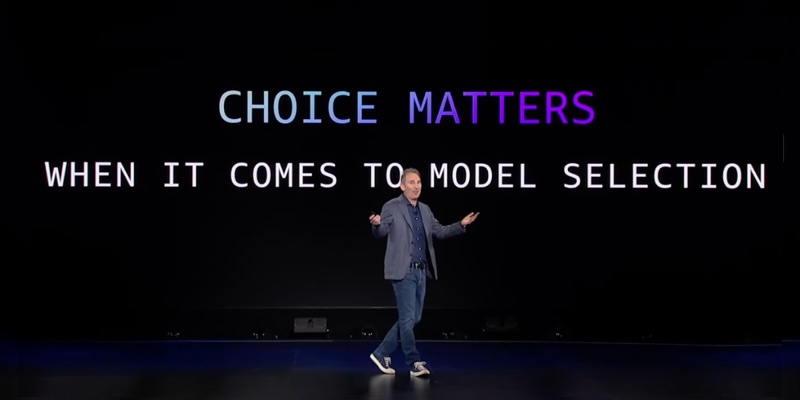
This strategic rollout addresses a growing challenge within corporate technology departments: optimizing the balance between computational performance and expenditure. As organizations scale generative AI from experimental pilots to core operational systems, the operational question has evolved. Decision-makers are no longer asking simply how intelligent a given model is, but rather which specific model architecture aligns most efficiently with a particular business task, at an acceptable cost profile and latency threshold.
Detailed Breakdown of the New Model Capabilities
The newly introduced models on Amazon Bedrock cater to distinct segments of software development, data processing, and enterprise automation. OpenAI’s GPT-6 Sol has been engineered specifically to handle the rigorous, recurring demands of software engineering and operational infrastructure management. It provides the deep reasoning and contextual understanding required for complex code generation, debugging, and continuous integration pipelines.
Conversely, GPT-6 Luna is optimized for high-volume, repetitive enterprise tasks that demand speed and cost-efficiency. By lowering the economic barrier for routine automated processes, Luna enables organizations to scale focused workloads—such as automated document classification, transactional data extraction, and routine customer query resolution—without incurring the substantial financial overhead typically associated with maximum-capability frontier models. Notably, both GPT-6 Sol and GPT-6 Luna are launching at price points significantly lower than their GPT-5.6 predecessors, reflecting a broader industry trend toward deflation in foundational compute costs.
Simultaneously, Anthropic’s Claude Opus 5.5 arrives as the flagship addition for advanced reasoning and long-running execution tasks. Tuned explicitly for agentic coding and complex, multi-step autonomous workflows, Claude Opus 5.5 delivers enhanced performance while utilizing fewer tokens than its predecessor, Opus 5. This token efficiency directly translates to reduced latency and lower inference expenses for applications requiring deep contextual memory and prolonged operational loops.
Strategic Evolution of Amazon Bedrock and Enterprise Architecture
The integration of these models into Amazon Bedrock underscores the platform’s core value proposition: providing secure, scalable access to diverse foundational models through a unified API. By decoupling applications from underlying model providers, AWS allows enterprises to swap or multi-source models dynamically as pricing and performance metrics evolve across the industry.
Enterprise adoption of generative AI has transitioned from initial exploration to rigorous fiscal scrutiny. Chief Information Officers and Chief Technology Officers are increasingly mandating cost-benefit analyses for AI deployments. The availability of tiered models like GPT-6 Sol and Luna allows engineering teams to implement tiered architectures. For instance, a complex system might route high-level strategic reasoning through Claude Opus 5.5, execute routine code maintenance with GPT-6 Sol, and handle millions of high-frequency data transformations using GPT-6 Luna.
This architectural flexibility mitigates vendor lock-in and protects organizations against sudden cost spikes or performance bottlenecks. Furthermore, because these models operate within the secure, compliant boundaries of Amazon Bedrock, enterprises retain sovereignty over their proprietary data, ensuring that corporate intellectual property is not utilized to train public foundational models.
The Broader Context: The Economics of Generative AI
The simultaneous release of these models highlights an ongoing deflationary cycle in artificial intelligence. As hardware accelerators become more efficient and algorithmic improvements optimize training and inference, foundation model providers are passing those savings on to enterprise consumers. This economic shift is critical for the widespread democratization of AI. In earlier phases of the generative AI boom, running advanced models at scale was cost-prohibitive for all but the largest technology enterprises.
With the introduction of models like GPT-6 Luna and token-optimized architectures like Claude Opus 5.5, mid-market enterprises and traditional industries—such as finance, healthcare, and logistics—can now justify the return on investment for automated agents and complex workflow orchestration. Industry analysts note that this reduction in inference cost is likely to trigger a surge in autonomous agent deployment, moving enterprises away from simple conversational interfaces toward proactive, software-driven execution layers.

Observability and Governance in the Age of Agentic AI
As artificial intelligence systems evolve from passive tools into autonomous agents capable of executing multi-step business logic, the demand for robust observability tools has intensified. Alongside the model releases, AWS and its ecosystem partners are rapidly expanding monitoring and governance capabilities within the cloud infrastructure. Tracking the behavior, latency, token consumption, and decision-making pathways of agentic models is now a critical operational requirement.
Enterprise engineering teams require granular visibility into AI operations to ensure compliance, security, and cost control. The synchronization of advanced model deployment with enhanced observability frameworks ensures that as systems become more autonomous, they remain fully transparent and auditable by corporate governance boards.
Outlook and Future Developments for AWS Developers
The expansion of the Amazon Bedrock ecosystem reflects the fast-paced nature of the modern AI landscape, where model lifecycles are measured in months rather than years. For AWS builders and developers, staying abreast of these rapid iterations requires continuous adaptation of integration patterns and cost optimization strategies.
AWS continues to support its developer community through educational resources, architectural blueprints, and collaborative forums such as the AWS Builder Center. As organizations evaluate the newly available OpenAI and Anthropic models, the emphasis moving forward will likely center on practical implementation, benchmark validation within specific vertical domains, and the refinement of agentic workflows designed to maximize enterprise productivity.
For ongoing updates regarding service availability, regional deployments, and technical documentation, developers and IT leaders are encouraged to monitor the official AWS News Blog and the What’s New with AWS portal. As the boundaries of machine learning capability continue to expand, the infrastructure supporting these technologies will remain central to the digital transformation strategies of global enterprises.
Related posts: