Software versatility has long been celebrated by developers who repurpose existing tools for unintended applications, much like using a flathead screwdriver to open a paint can instead of driving screws. Recently, this philosophy of innovative tool adaptation was demonstrated in the realm of educational technology, where advanced data management and artificial intelligence infrastructure were combined to build an automated homework tutoring system. By harnessing Neo4j’s Document Intelligence and graph database architecture alongside large language models, developers and parents can convert unstructured study materials into interactive, intelligent quiz platforms. This approach addresses a long-standing challenge in digital education: moving beyond simple, binary vocabulary testing into the complex, contextual evaluation of subjects like history, literature, and the social sciences.

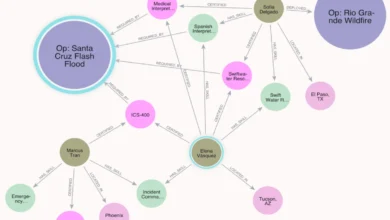
The technical foundation of this automated tutoring framework relies on transforming static documents into structured knowledge graphs. Unstructured study materials, such as historical essays or textbook chapters in PDF format, are ingested by Neo4j Document Intelligence. Rather than utilizing the automated model generation feature, administrators can define a precise custom schema consisting of specific node labels and relationships—such as Question nodes linked via an ANSWER relationship to Answer nodes, which in turn connect to document chunks and source files. This structured conversion enables the graph database to maintain deep contextual awareness of the source material, providing an underlying framework far more robust than feeding raw text files into a standard prompt window.

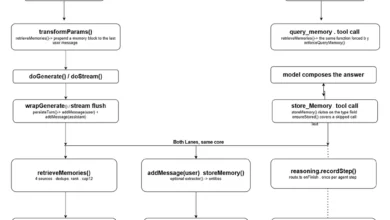
To evaluate a student’s mastery of the material, developers can implement either a zero-cost approach using native Aura agents or a more precise evaluation pipeline utilizing structured AI completions via external API keys. In the agent-based configuration, custom Cypher templates query the graph database to extract random question-and-answer pairs alongside contextual text chunks. The agent then assumes the persona of an automated tutor, presenting the question, waiting for the user response, and subsequently grading the answer based on completeness and accuracy. For more advanced implementations, programmatic routines track previously asked questions, prevent repetition, and calculate aggregate performance metrics across an entire study session.

Historical Context and Chronology of the Test Case

To demonstrate the efficacy of this graph-based tutoring engine, developers frequently test the system using historical case studies, such as the Swedish-Danish war of 1657 through 1658 and the famous military maneuver known as the March Across the Belts. This pivotal campaign in Northern European history involved King Charles X Gustav of Sweden leading his field army across the frozen Danish straits to compel Denmark-Norway into signing a humiliating peace treaty. Understanding the precise chronology and strategic imperatives of this conflict requires rigorous study, making it an ideal benchmark for automated knowledge evaluation.

The military campaign unfolded across several critical phases during the bitterly cold winter of 1657 and 1658:

- August 1657: Sweden initiates hostilities against Denmark-Norway, invading Jutland after a deteriorating diplomatic relationship and previous conflicts in Poland and Pomerania.
- December 1657: Unusually severe winter weather causes the waters of the Little Belt to freeze, creating an unprecedented opportunity for a land-based crossing over marine straits.
- 9 January 1658: King Charles X Gustav convenes a military council in Kiel to review detailed tactical plans prepared by military leaders such as Carl Gustaf Wrangel.
- 30 January to 1 February 1658: Swedish forces successfully execute the treacherous march across the frozen Little Belt, capturing strategic strongpoints including Odense and Nyborg.
- February 1658: The Swedish army advances toward Copenhagen, threatening the Danish capital and forcing King Frederick III to negotiate.
- 26 February 1658: The Treaty of Roskilde is signed, resulting in significant territorial cessions to Sweden, including Skåne, Halland, Blekinge, and parts of Norway, permanently altering the geopolitical balance of Scandinavia.
Supporting Data and Evaluation Metrics

Deploying automated assessment tools against complex historical narratives yields revealing quantitative and qualitative data regarding the current capabilities and limitations of large language models in educational settings. In empirical trials utilizing structured prompt completions—such as evaluating student responses against verified textbook answers and contextual data chunks—models assess submissions on a tiered scoring scale. Incorrect answers receive a score of zero, while correct answers range from one (addressing the bare minimum) to three (providing a comprehensive, well-developed explanation).

During test runs consisting of forty comprehensive questions concerning the Swedish-Danish campaign, automated evaluations exposed common pitfalls in student comprehension and AI grading precision. For instance, when queried about events occurring on 31 January, a student response noting that troops marched onto the ice of the Little Belt was marked incorrect because the specific historical question targeted the capture of Nyborg and the detainment of Danish officials. Conversely, when asked to identify the strategist behind the crossing plans, a shorthand response providing only the surname Wrangel was accepted and awarded partial credit due to contextual alignment within the knowledge graph.

Aggregate performance data from these testing phases often highlights the rigor required for advanced subjects. In sample academic simulations, users frequently score lower than expected, achieving correct responses on roughly eleven out of forty questions, with average quality scores hovering around 1.55 out of 3. These metrics indicate that while graph-backed AI tutors excel at enforcing factual accuracy and demanding precise historical details, they also impose high standards that reflect the rigorous nature of modern academic curricula.

Technical Implications and Future Outlook

The integration of graph databases with artificial intelligence for educational applications signals a broader shift in how unstructured enterprise and academic data can be operationalized. Traditionally, Large Language Models suffer from hallucination and a lack of deterministic grounding when queried about niche or specialized subjects. By utilizing Neo4j Document Intelligence to construct explicit entity relationships—tying specific questions to validated answers and broader thematic context chunks—developers establish a deterministic boundary that significantly reduces factual drift.

Furthermore, the dual-path implementation strategy—offering a zero-cost internal agent framework alongside advanced programmatic APIs capable of structured JSON output—lowers the barrier to entry for educators, parents, and students seeking personalized tutoring solutions. As data ingestion tools continue to mature, the ability to rapidly convert textbook chapters, lecture notes, and historical archives into interactive, queryable knowledge graphs will likely transform supplemental education. While automated tutors may not completely replace human educators or eliminate the need for diligent studying, they provide a powerful, scalable mechanism for reinforcing complex concepts through active recall and rigorous, data-backed evaluation.