European Space Sector Gains Momentum as Isar Aerospace Successfully Reaches Orbit with Spectrum Rocket

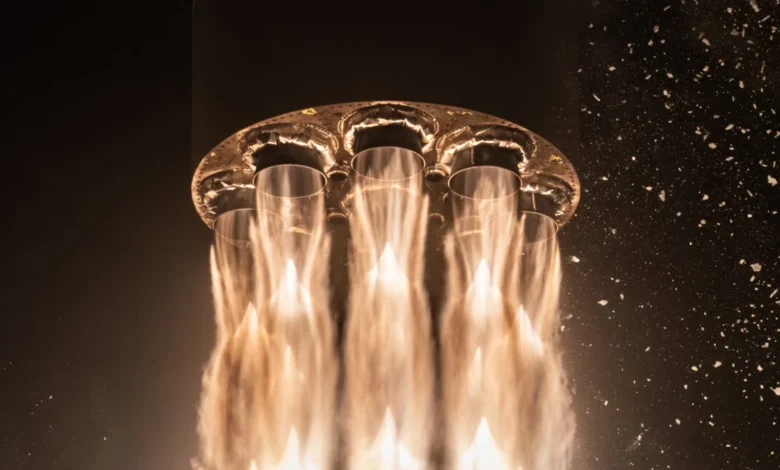
The European space industry has officially entered a new era of capability and independence as German launch provider Isar Aerospace successfully deployed a batch of CubeSats into low-Earth orbit using its Spectrum rocket. The launch, conducted from a remote spaceport in northern Norway, marks the first time a fully commercial European orbital rocket has reached space, signaling a potential shift in the continent’s reliance on incumbent players like Arianespace and international partners. For years, the European space sector has struggled to maintain pace with the rapid innovation and cost-efficiency demonstrated by the American private sector, most notably SpaceX. The successful flight of Spectrum serves as a vital proof-of-concept, providing a long-awaited alternative for satellite operators who have faced severe capacity constraints in the global launch market.
The achievement is particularly significant given the backdrop of the "launch crunch" currently affecting the global space economy. While the SpaceX Falcon 9 has dominated the market, recent shifts in the company’s internal priorities—including a scaled-back commercial launch cadence and the developmental uncertainties surrounding the next-generation Starship vehicle—have left many satellite operators scrambling for reliable access to space. Isar Aerospace’s success provides a timely, if modest, relief valve for the industry, particularly for small-to-medium-sized payloads that require specific orbital injections.

A Chronology of Progress and Resilience
The path to this orbital milestone was far from straightforward for the Munich-based startup. Founded in 2018, Isar Aerospace spent years developing the Spectrum rocket, a two-stage vehicle powered by nine propane-fueled engines. The company’s journey faced a major setback last year when its maiden test flight ended in failure, preventing the rocket from reaching the intended orbital trajectory.
The successful mission in September 2026 was the result of exhaustive post-failure analysis and rigorous ground testing. By successfully clearing the launchpad in Norway and performing a nominal ascent, Isar has transitioned from a development-stage startup to a functional launch provider. This achievement places Isar ahead of several other European competitors, including Rocket Factory Augsburg (RFA) and Spain’s PLD Space, both of which are currently refining their own launch systems to capture a slice of the growing European market.
Market Demand and the Need for Dedicated Rides
The appetite for dedicated launch services is driven by a specialized segment of the satellite industry: satellite servicing and space debris mitigation. Unlike large constellations of communication satellites that can be launched in batches of dozens, servicing missions often require a "dedicated ride"—a launch profile that places a spacecraft into a highly specific orbital plane or altitude to rendezvous with a target object.

Astroscale, a global leader in satellite servicing and debris removal, has emerged as one of the most prominent early adopters of Isar’s services. Executives at the Japanese-headquartered company, which maintains operations in the UK and elsewhere, were among the first to signal confidence in the unproven Spectrum rocket. Astroscale has signed two separate launch contracts with Isar, intending to use the vehicle to carry out critical missions, including the ELSA-M end-of-life servicing demonstration and the ADRAS-J2 debris removal mission.
The decision to choose a nascent provider over established alternatives like Rocket Lab’s Electron or the upcoming Neutron rocket highlights the current scarcity of options for the 500-to-1,000-kilogram payload class. As Chris Blackerby, Chief Operating Officer of Astroscale, noted in a recent interview, the "Venn diagram" of requirements—budget, capacity, and the need for a dedicated orbit—left the company with very few viable paths. For mission profiles involving complex proximity operations, a dedicated flight is not a luxury; it is a technical necessity.
The Rise of the Servicing Economy
Astroscale’s business model provides a lens through which to view the broader implications of this new launch capability. The company’s focus on Rendezvous and Proximity Operations (RPO) is a critical piece of the future space infrastructure. By demonstrating the ability to approach, inspect, and eventually capture uncooperative objects—such as defunct rocket bodies or aging satellites—Astroscale is laying the groundwork for a circular space economy.

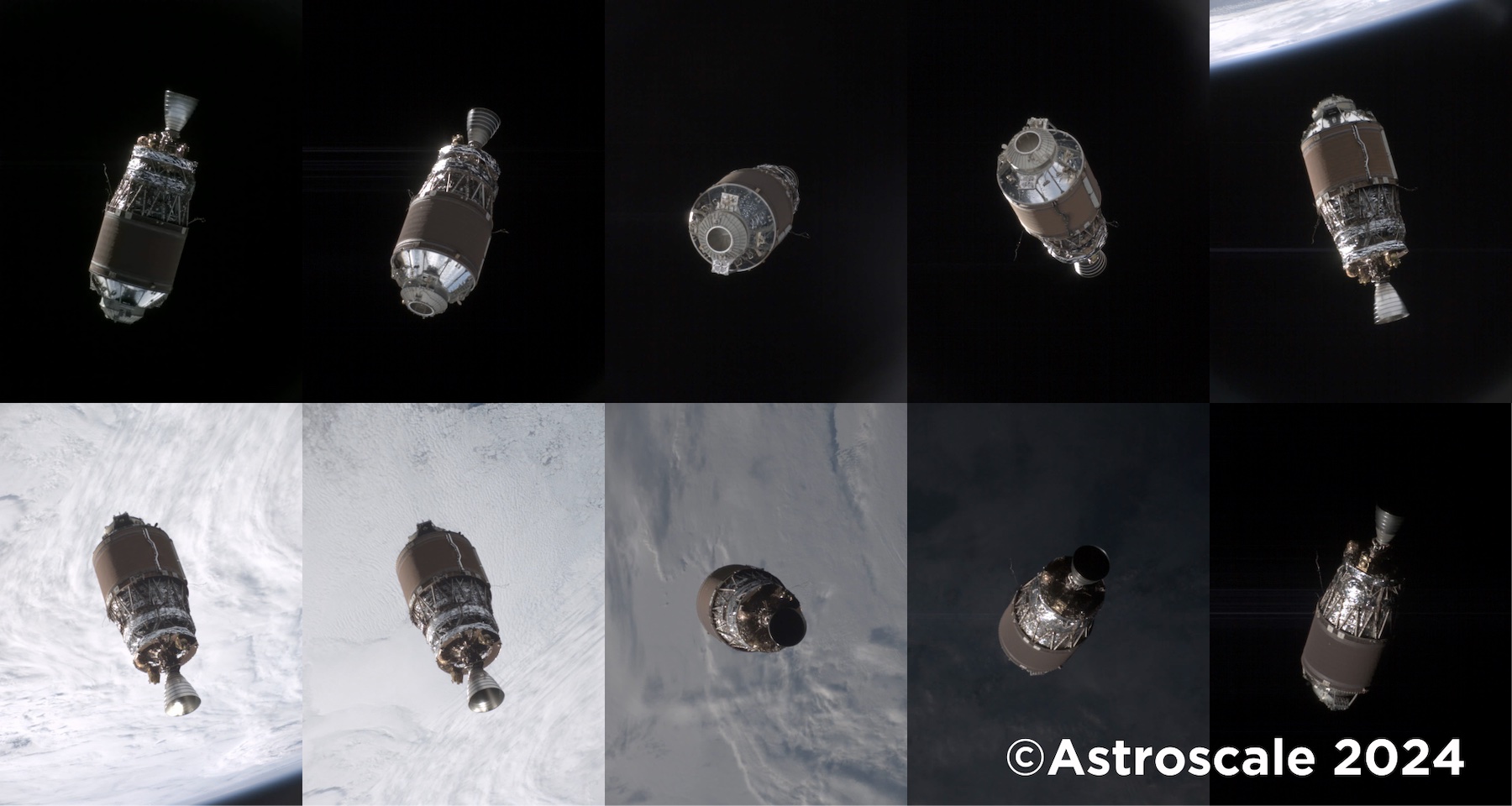
The success of the ADRAS-J mission in 2024, which provided high-resolution imagery of a Japanese rocket upper stage, validated the technical feasibility of these operations. The upcoming ADRAS-J2 mission will build on this by attempting to capture the same object, an operation that requires precise guidance, navigation, and control systems. These missions are supported by a diverse array of stakeholders, including the Japan Aerospace Exploration Agency (JAXA), the European Space Agency (ESA), and the UK Space Agency.
Financial sustainability for these firms is transitioning from equity-funded research to revenue-generating contracts. As Blackerby highlighted, while the company is not yet at the stage of fully repeatable commercial servicing, it is rapidly moving toward that goal. By the early 2030s, the goal is to see a consistent, commercially viable ecosystem where satellite life extension and debris removal become standard operational procedures rather than one-off demonstrations.
Broader Implications for European Space Policy
The emergence of Isar Aerospace and its counterparts has significant implications for European space sovereignty. For decades, Europe has relied heavily on the Ariane family of rockets, which are designed primarily for large, heavy-lift missions. The rise of "boutique" launch providers like Isar fills the "small-lift" gap, allowing European companies to launch satellites without relying on foreign launch providers.
This trend is mirrored in the United States, where the Defense Innovation Unit (DIU) and the U.S. Space Force are increasingly interested in rapid, responsive, and dedicated launch capabilities. The interest in refueling and close-in inspection missions—as seen with projects like Astroscale’s "Provisioner"—indicates that military and intelligence agencies are prioritizing the ability to protect and maintain their orbital assets.
The competitive landscape remains intense. While Isar has achieved orbit, the challenge of maintaining a consistent and affordable flight cadence remains. The market is littered with the remains of companies that failed to scale their operations, and Isar will need to prove that its launch costs can remain competitive in a market where pricing pressure is intense.
Looking Ahead
As the dust settles on the successful Norwegian launch, the focus for Isar Aerospace will shift to reliability and scaling. The company has a significant backlog, including missions for government entities like the European Union and the German government, which have a vested interest in the firm’s long-term stability.

For the satellite industry, the lesson of the last few years is clear: the promise of a "ubiquitous" and "cheap" launch market has yet to fully materialize. While SpaceX has revolutionized access to space, the demand for specialized, dedicated, and rapid orbital insertion remains high. Companies that can bridge this gap—providing reliable service to the 500-to-1,000-kilogram segment—will find themselves in an enviable position.
The successful flight of Spectrum is a milestone, but it is also a reminder of the fragility of space operations. Every successful mission adds to a growing dataset of knowledge, helping to refine the technology required for more complex tasks like docking, refueling, and autonomous repair. As the industry looks toward the 2030s, the integration of new, agile launch providers into the global space ecosystem will likely be the defining factor in determining the future of orbital sustainability and commercial expansion. For now, European space stakeholders have reason to celebrate, having secured a vital, independent path to the stars.