Streamlining Markdown Publishing with Docsify-This for Seamless Content Integration and Collaboration

The rapid evolution of web development has seen a significant shift toward "Docs-as-Code" workflows, where documentation and content are treated with the same rigor as software source code. At the heart of this movement is Markdown, a lightweight markup language that allows authors to write using an easy-to-read, easy-to-write plain text format. However, the traditional path from a Markdown file to a polished, hosted web page often involves complex static site generators, build pipelines, or specialized content management systems. The open-source project Docsify-This, built upon the powerful Docsify.js framework, has emerged as a transformative solution that eliminates these barriers, allowing users to instantly publish, share, and reuse Markdown content without any setup or build processes.
The Landscape of Modern Web Publishing
In the current digital ecosystem, the demand for agile documentation is at an all-time high. Organizations, educators, and developers require tools that allow for the rapid dissemination of information across diverse platforms, including Learning Management Systems (LMS) like Moodle and Canvas, and traditional Content Management Systems (CMS). Historically, this required either manual conversion of Markdown to HTML or the deployment of a full website infrastructure.

Docsify-This addresses this friction by providing a "no-build" alternative. By leveraging the client-side rendering capabilities of Docsify.js, Docsify-This turns any publicly available Markdown file into a responsive, standalone web page on the fly. This approach represents a departure from static site generators like Jekyll or Hugo, which require a compilation step before the content can be viewed. Instead, Docsify-This fetches the Markdown file directly from a repository—such as those hosted on GitHub or Codeberg—and renders it in the user’s browser, ensuring that updates to the source file are reflected immediately upon a page refresh.
Technical Foundations and the Web Page Builder
The architecture of Docsify-This is designed for accessibility and flexibility. Users interact with the platform primarily through a point-and-click Web Page Builder or via structured URL parameters. To transform a file, a user simply inputs the URL of a Markdown file located in a public repository. The system then generates a unique URL that serves as a rendered version of that content.
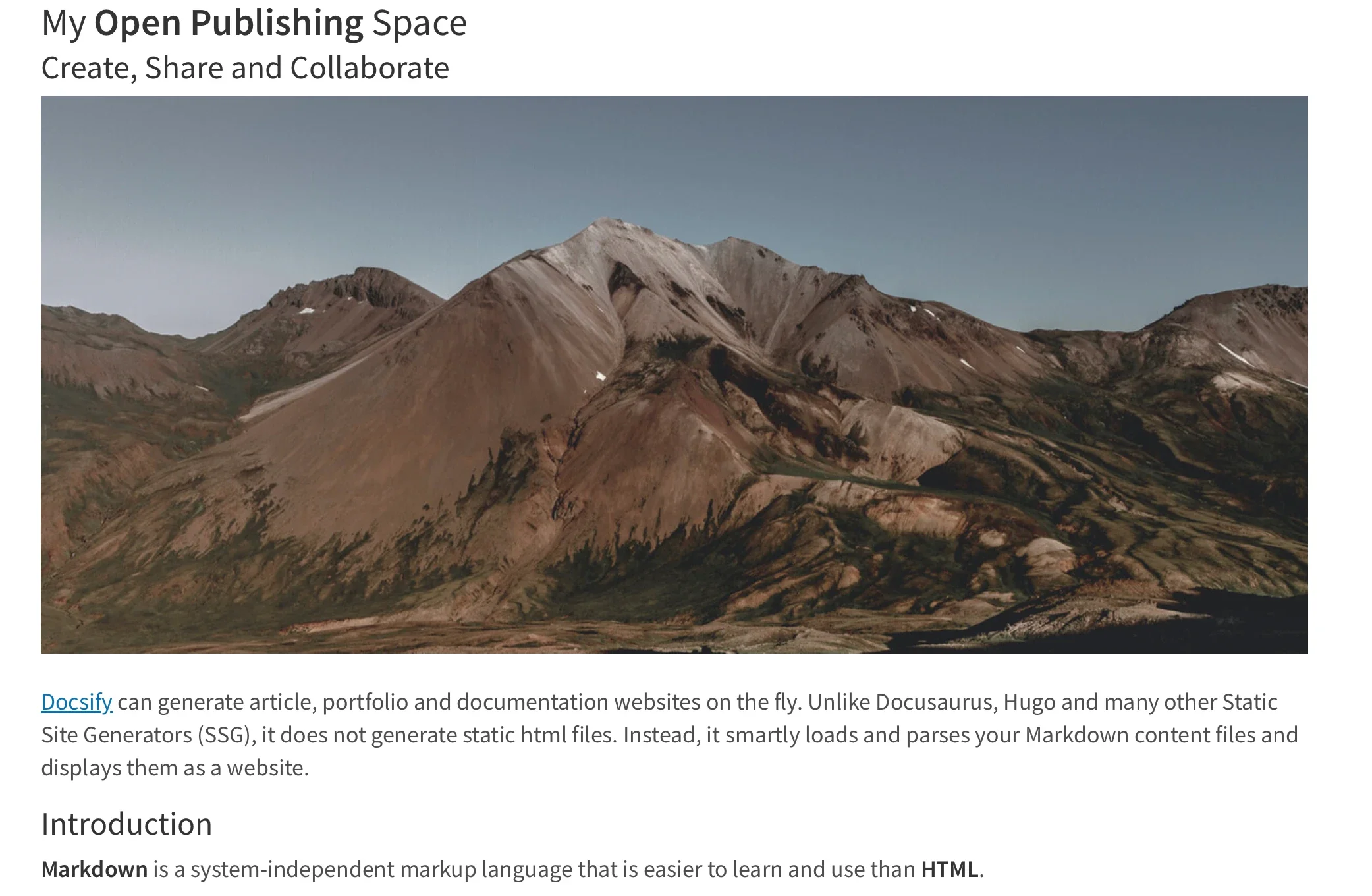
For example, a repository containing a file named home.md can be rendered by appending the file’s raw path to the Docsify-This base URL. The resulting page is not just a raw text dump but a fully styled, responsive interface. This functionality extends beyond single pages; by linking multiple Markdown files within the same repository, users can create cohesive, multi-page websites without ever configuring a server.
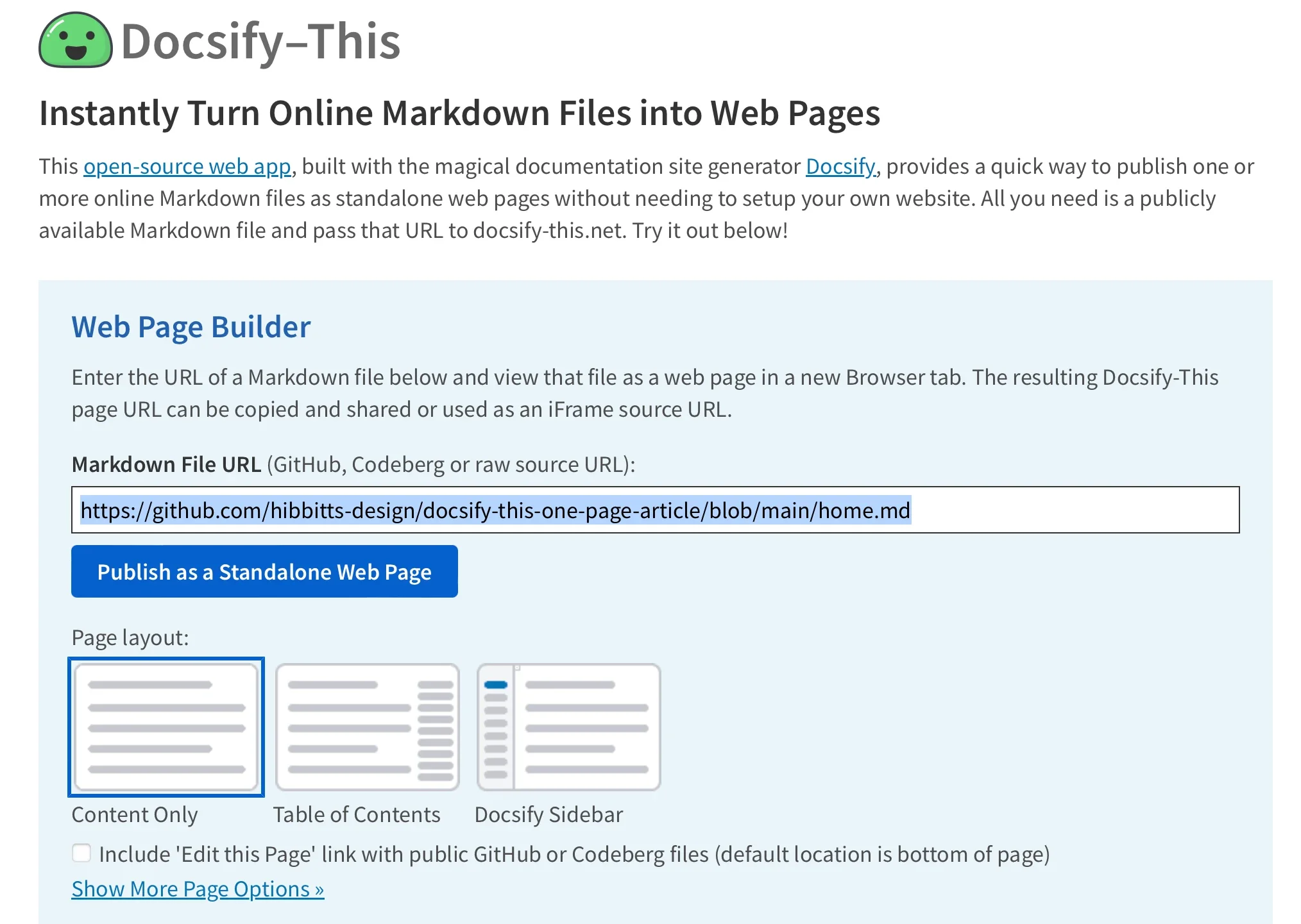
The inclusion of the Web Page Builder interface lowers the technical floor for entry. Designers and non-technical content creators can alter the visual appearance of their pages through the interface, which then encodes these choices into URL parameters. This "state-in-the-URL" philosophy ensures that the styling is portable and persistent, requiring no database to store configuration settings.
Chronology of Markdown Integration and Development
The development of Docsify-This follows a decade of increasing Markdown adoption.
- 2004: John Gruber and Aaron Swartz create Markdown, aiming for a format that is "readable as-is, without looking like it’s been marked up with tags or formatting instructions."
- 2016: Docsify.js is released, popularizing the concept of a "smart" documentation generator that does not generate static HTML files but rather loads and renders Markdown files on the fly.
- 2020-2022: The rise of remote learning and decentralized work increases the need for tools that can bridge the gap between Git-based repositories and user-facing platforms like Canvas and Moodle.
- 2023: Docsify-This gains traction as a specialized tool for "embedding" and "instantly publishing," providing a bridge for educators and developers who need to host content across multiple silos without duplicating effort.
This timeline reflects a broader industry trend toward decoupling content from its presentation layer, a concept known as "Headless" architecture. Docsify-This acts as the presentation layer for content stored in Git, which serves as the version-controlled "Headless" backend.
Customization and Design Flexibility
One of the primary critiques of automated renderers is the lack of aesthetic control. Docsify-This mitigates this by supporting an extensive array of URL parameters that map directly to CSS attributes. Users can define font-family, font-size, link-color, and line-height directly within the URL. This is particularly useful when embedding content into an existing site; by matching the URL parameters to the host site’s CSS, the embedded Markdown content appears as a native part of the page rather than an external intrusion.
Furthermore, Docsify-This introduces specialized Markdown CSS classes. Authors can enhance their content by adding classes directly to Markdown links or elements. For instance, a standard Markdown link can be transformed into a stylized button by appending :class=button to the link syntax. This allows for the creation of interactive elements like "Required Reading" or "Submit Assignment" buttons that are visually distinct and improve user engagement.
For advanced users, the tool supports the inclusion of HTML snippets and custom CSS blocks within the Markdown file itself. This enables complex layouts, such as multi-column grids or custom-branded components, while still maintaining the simplicity of the underlying Markdown structure.

Collaborative Authoring and Version Control
A significant advantage of using Docsify-This is its native integration with Git ecosystems. By hosting Markdown files on platforms like GitHub or Codeberg, content creators inherit the full power of version control. Every change to the document is tracked, and previous versions can be restored at any time.
To facilitate collaboration, Docsify-This can automatically generate an "Edit this Page" link. When a reader clicks this link, they are directed to the source file in its original repository, where they can suggest edits via a Pull Request or directly edit the file if they have permissions. This creates a feedback loop that is invaluable for open-source documentation, community-driven projects, and educational resources.
The project also encourages the use of graphical Git clients to further lower the barrier to entry. Tools such as GitHub Desktop, Git-Cola, and SparkleShare allow users to manage their content repositories without mastering the command line. Integrated development environments (IDEs) like VSCode and Pulsar Edit (the successor to Atom) also offer seamless Git integration, providing a robust environment for authoring content that is instantly published via Docsify-This.

Integration with Learning Management Systems (LMS)
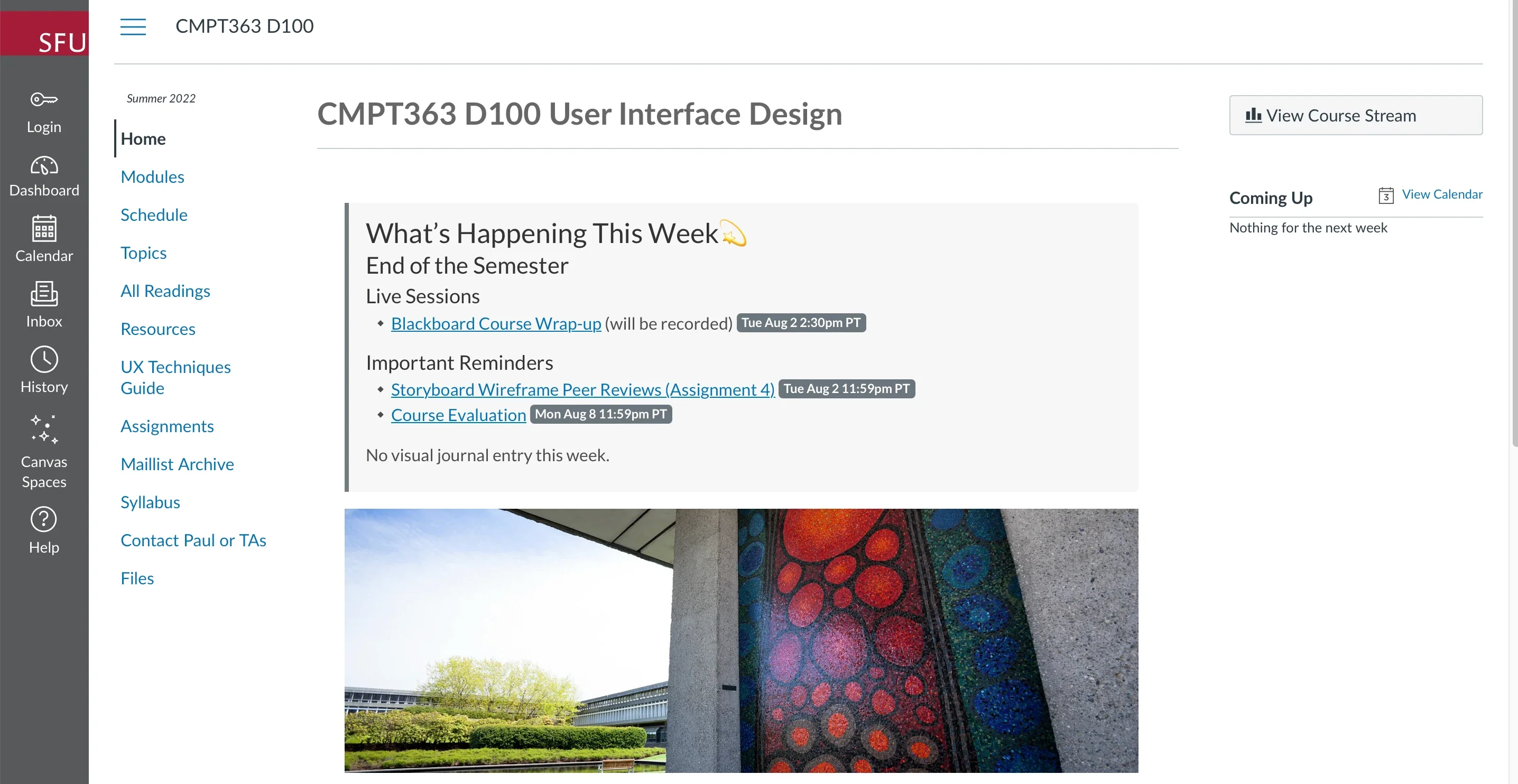
The education sector has emerged as a primary use case for Docsify-This. Platforms like Canvas and Moodle are often criticized for their rigid content editors and the difficulty of sharing content across different course shells. Docsify-This solves this by allowing instructors to host their course materials in a single GitHub repository and embed them into multiple LMS environments using iFrames or the "Redirect Tool."
By using an iFrame, an instructor can display a beautifully formatted, responsive syllabus or module guide directly within the LMS. Because the content is pulled from Git, any updates made to the syllabus are instantly reflected across every course where that iFrame is embedded. This "single source of truth" approach reduces administrative overhead and ensures that students always have access to the most current information.
Data and Implications for the Open Web
The growth of projects like Docsify-This signals a maturing of the Open Web. According to industry surveys, Markdown has become the preferred format for technical documentation, with over 80% of developers utilizing it in their workflows. By providing a way to publish this content without relying on proprietary, closed-source platforms, Docsify-This promotes digital sovereignty.
The implications are twofold:
- Reduction of Vendor Lock-in: Because the content is stored as plain text Markdown in a standard Git repository, users can move their content to any other system at any time. They are not beholden to the database structures of a specific CMS.
- Performance and Scalability: Client-side rendering shifts the processing load to the user’s browser, reducing the server resources required to host the content. This allows for high-performance content delivery even under heavy traffic.
Conclusion: A New Standard for Documentation
Docsify-This represents a significant step forward in making web publishing accessible to everyone. By removing the "build" step from the publishing process, it empowers educators, designers, and developers to focus on what matters most: the content itself. Its ability to bridge the gap between professional developer tools like Git and user-friendly platforms like LMS and CMS makes it a versatile asset in the modern digital toolkit.
As the "Docs-as-Code" philosophy continues to expand beyond the realm of software engineering and into general business and education, tools that prioritize open standards and ease of use will be essential. Docsify-This not only simplifies the act of publishing but also reinforces the principles of the open web by ensuring that content remains portable, collaborative, and easy to maintain. For those looking to leverage the power of Markdown without the overhead of traditional web hosting, Docsify-This provides a robust, elegant, and entirely open-source solution.
Related posts: