CPython ABI Evolution and the Dawn of a Stable Future, Alongside AI-Driven Coding Tools and Data Science Advancements

The Python programming language, a cornerstone of modern software development, is undergoing significant internal evolution with a keen eye on future compatibility and developer experience. Recent developments highlight a focus on the CPython Application Binary Interface (ABI), the release of new Python versions, and the integration of advanced tools for AI-assisted coding and data science. This comprehensive overview delves into these critical updates, exploring their technical underpinnings, potential implications, and the broader landscape of the Python ecosystem.
Understanding the CPython ABI: A Foundation for Compatibility
At the heart of Python’s interoperability and performance lies the CPython Application Binary Interface (ABI). Nathan Goldbaum’s insightful article, "What Every Dev Should Know About the CPython ABI," provides a crucial primer on this often-overlooked aspect of Python development. The ABI dictates how compiled Python code interacts with the underlying C libraries and the Python interpreter itself. Essentially, it defines the rules for how functions are called, how data is passed between them, and how memory is managed at a low level.
Historically, CPython has maintained several ABIs. These variations have often presented challenges for library developers, particularly when aiming for broad compatibility across different Python versions and operating systems. A library compiled against one ABI might not function correctly or efficiently when used with an interpreter built against a different ABI. This can lead to runtime errors, performance degradation, or the need for developers to recompile their libraries for each specific Python environment.
The introduction of the abi3t stable ABI in Python 3.15 represents a significant stride towards resolving these long-standing compatibility issues. This new stable ABI aims to provide a consistent interface that remains backward-compatible across future Python releases. The implications of a truly stable ABI are profound. For library developers, it means a reduced burden of maintaining multiple versions of their code or providing extensive build configurations. For end-users, it translates to greater reliability and a smoother experience when installing and using third-party packages. This stability is particularly critical for the vast ecosystem of scientific computing, machine learning, and web development libraries that form the backbone of many Python applications. The ability to guarantee that a compiled extension module will continue to work across minor and even major Python upgrades without modification is a developer’s dream, fostering a more robust and predictable environment.
The Rise of AI in Code Development: Claude Code and CLAUDE.md
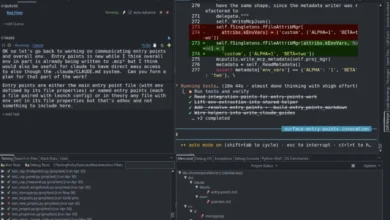
The landscape of software development is being rapidly reshaped by artificial intelligence, and Python is at the forefront of this transformation. Real Python’s series of articles and quizzes on "How to Write a CLAUDE.md File for Claude Code" introduces a novel approach to integrating AI assistance directly into the development workflow. Claude Code, an AI designed to understand and generate code, utilizes CLAUDE.md files to capture and convey Python commands and conventions.
These CLAUDE.md files serve as a sophisticated form of instruction and context for the AI. They can be defined at various scopes: globally, for an entire project, or even locally for specific modules or tasks. This allows developers to guide Claude Code with precision, ensuring that generated code adheres to project-specific standards, architectural patterns, and preferred methodologies. The ability to define these conventions in a structured markdown format makes the AI’s behavior predictable and customizable.
The practical implications of this technology are far-reaching. Developers can leverage Claude Code to accelerate common tasks, such as scaffolding new projects, writing boilerplate code, generating unit tests, and even debugging. The "Learn Agentic Coding With Claude Code" live course further emphasizes the power of this tool, positioning it not just as a code generator but as an active participant in the development process. By working directly within a project, running tests, and managing Git history, Claude Code promises to move beyond simple autocompletion to a more collaborative and intelligent form of software creation. This shift towards "agentic coding" could significantly reduce development cycles, improve code quality through automated testing and adherence to best practices, and empower developers to focus on more complex and creative problem-solving.
Advancements in Data Science and Vector Databases
The burgeoning field of data science continues to be a major driver of Python’s popularity. Several recent announcements underscore the ongoing innovation in this domain.
Vector Databases for AI Agents: The integration of AI agents with persistent memory is a critical step in building more sophisticated and context-aware applications. Actian VectorAI DB’s sponsorship highlights their offering, which allows Python AI agents to have persistent vector memory directly on their own hardware. This approach bypasses cloud dependencies and per-query billing, offering a more cost-effective and private solution for storing and retrieving vector embeddings. The native support for LangChain and LlamaIndex, two prominent frameworks in the AI development space, further enhances its appeal. This development is particularly relevant for edge computing scenarios, air-gapped environments, and projects where data privacy and control are paramount. The ability to deploy sophisticated AI models without relying on external cloud infrastructure opens up new possibilities for real-time analysis, personalized recommendations, and intelligent automation in a wide range of industries.
Polars Benchmarking and Distributed Computing: Chiel Peters’ article, "Polars: Benchmarking Single Node vs Distributed," delves into the performance characteristics of the Polars DataFrame library, a high-performance alternative to Pandas. Polars has recently introduced capabilities for distributed calculations, and this piece examines how these features translate to speed-ups. The analysis emphasizes that the efficacy of distributed computing is highly situational, underscoring the importance of careful benchmarking for specific use cases. As datasets grow in size, the ability to efficiently process them across multiple nodes becomes crucial. Polars’ advancements in this area are poised to make large-scale data manipulation more accessible and performant for data scientists and engineers.
NASA’s Artemis II Mission Data Analysis: Mark Litwintschik’s article, "12K+ JPEGs From NASA’s Artemis II Mission," showcases a practical application of data analysis skills using publicly available imagery. This piece provides step-by-step instructions for working with a large dataset of images from a significant space exploration event. Such tutorials are invaluable for data scientists looking to hone their skills in image processing, data wrangling, and storytelling with data, demonstrating how Python can be used to extract insights and narratives from real-world information.
Git for Data Scientists: Khuyen Tran’s article, "Git for Data Scientists," addresses a critical but often overlooked aspect of the data science workflow: version control. The article provides a practical guide to using Git for common data science tasks, including managing experimental branches, reverting mistakes, and maintaining a clean project history. It also touches upon the nuances of merge versus rebase and the importance of configuring .gitignore for data-heavy projects. Effective version control is fundamental to reproducible research and collaborative data science projects, ensuring that experiments can be revisited, shared, and built upon reliably.
Python 3.15 and PEP Updates: Shaping the Language’s Future
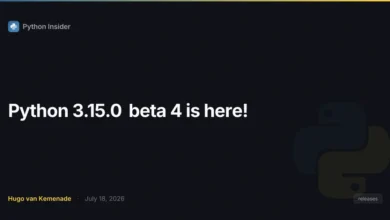
The Python community is also actively engaged in shaping the future of the language itself. The release of "Python 3.15.0 Beta 4" signifies ongoing development and refinement of the next major version of Python. While specific details of new features are often revealed incrementally, beta releases provide early access for testing and feedback.
Parallel to these releases, several Python Enhancement Proposals (PEPs) are progressing, indicating key areas of language development:
- PEP 838: Adding
python-versiontopyvenv.cfg: This PEP aims to enhance the functionality of virtual environments by allowing the explicit specification of the Python version used to create them within thepyvenv.cfgfile. This can improve clarity and potentially simplify dependency management and environment recreation. - PEP 840: Name Resolution in Class Namespaces: This proposal addresses how names are resolved within class namespaces. Enhancements in this area can lead to more predictable and consistent behavior when dealing with complex class hierarchies and attribute access, contributing to code clarity and reducing potential ambiguities.
These PEPs, alongside the continuous development of new Python versions, demonstrate a commitment to refining the language’s core features, improving its usability, and ensuring its continued relevance in an ever-evolving technological landscape.
Exploring Python’s Rich Ecosystem: Libraries, Tools, and Best Practices
Beyond the core language and its infrastructure, the Python ecosystem is brimming with innovative libraries and practical guides that empower developers.
Itertools Cheatsheet: Rodrigo Girão Serrão’s "Itertools Cheatsheet" offers a visually-driven resource for understanding the powerful iterator-based functions in Python’s itertools module. This module is a treasure trove for efficient data manipulation and sequence generation, and a clear cheatsheet can significantly accelerate a developer’s ability to leverage its full potential.
Django and Web Development: Aidas Bendoraits’ article on "Browser Push Notifications for a Django Website" provides a practical guide to implementing real-time notifications in web applications. By combining service workers and background task queues like Huey, developers can create more engaging user experiences. Additionally, Adam Johnson’s introduction to "django-orjson" highlights the integration of orjson, a high-performance Rust-based JSON library, into the Django framework, promising faster serialization and deserialization for web APIs.
Code Design and Structure: Kanwal Mehreen’s piece, "Stop Using if-else Chains," advocates for more extensible and maintainable code by suggesting the use of dictionaries and function pointers for dispatching logic. This common refactoring technique can lead to cleaner, more scalable codebases. Furthermore, Real Python’s "Understanding Mixin Classes in Python" and accompanying quiz offer a deep dive into a powerful object-oriented programming pattern for code reuse, distinguishing it from abstract base classes and outlining best practices to avoid common pitfalls.
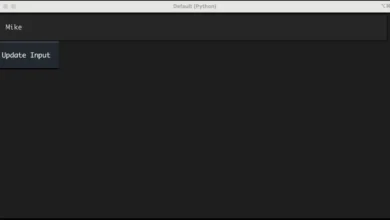
Terminal-Based Presentations: Mike Driscoll’s "Creating Presentations in Your Terminal" introduces "Spiel," a Python tool that leverages the Rich package to generate visually appealing presentations directly within the command-line interface. This offers a unique and efficient way to share information and code demos in a terminal-centric environment.
Open Source Projects and Frameworks
The "Projects & Code" section of recent Python news highlights several notable open-source contributions:
- kademlia-dynamic: A Python implementation of the Kademlia Distributed Hash Table, a peer-to-peer network protocol.
- userharbor: A framework-agnostic user management solution, aiming for broad compatibility across different web frameworks.
- balance: A tool developed by Facebook Research designed to address challenges with biased data samples in machine learning.
- fstache: A fast, typed Mustache renderer, offering efficient templating capabilities.
- bounty-check: A utility to determine the claimability of GitHub bounty issues, useful for developers participating in bug bounty programs.
These projects, along with the continued sponsorship of Real Python’s online training resources, underscore the vibrant and collaborative nature of the Python open-source community, consistently providing developers with new tools and solutions. The availability of free community editions for products like Actian VectorAI DB further democratizes access to advanced technologies.
In conclusion, the Python ecosystem is experiencing a period of robust growth and innovation. From the fundamental improvements to the CPython ABI promising greater stability, to the AI-driven coding tools that are redefining development workflows, and the continuous advancements in data science and language features, Python remains a dynamic and powerful force in the world of technology. Developers who stay abreast of these developments will be well-positioned to leverage the full potential of this versatile programming language.
Related posts: