Gritt Exits Stealth with 26 Million Series A to Scale AI Driven Solar Installation Robotics

The global transition toward renewable energy has reached a critical juncture where the primary obstacles are no longer just the cost of hardware or the efficiency of photovoltaic cells, but the physical labor required to deploy them at scale. As countries race to meet decarbonization targets and secure energy independence, the solar industry is facing a massive labor shortage that threatens to derail progress. Into this gap steps Gritt, a Pittsburgh-based startup founded by Carnegie Mellon-trained roboticists, which announced its exit from stealth on Tuesday with a $26 million Series A funding round. The company’s mission is to leverage the latest advancements in artificial intelligence to automate the construction of large-scale solar farms, transforming "dirty, dull, and dangerous" jobs into high-efficiency robotic operations.
Led by Obvious Ventures, the Series A round also saw participation from Union Square Ventures and Active Impact Investment. This latest infusion of capital brings Gritt’s total funding to $34 million, following an earlier seed round supported by First Round Capital, Climactic, Congruent Ventures, and VSC Ventures. The funding marks a significant vote of confidence in Gritt’s unique approach to robotics, which prioritizes sophisticated AI software over proprietary hardware, allowing the company to deploy its systems rapidly using existing industrial machinery.
Addressing the Global Infrastructure Bottleneck
The solar energy build-out is currently one of the most capital-intensive and labor-intensive endeavors on Earth. According to the International Energy Agency (IEA), global renewable capacity is expected to grow by 2.5 times by 2030, with solar PV accounting for the lion’s share of that expansion. In the United States, the Inflation Reduction Act (IRA) has funneled billions of dollars into the sector, creating a massive pipeline of utility-scale projects. However, the construction industry is struggling to keep pace. The Associated General Contractors of America recently reported that nearly 90% of construction firms are having difficulty finding qualified workers.
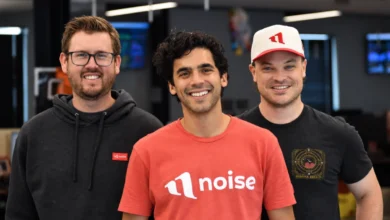
Gritt CEO Puneet Puri and CTO Vishal Dugar, who met during their time at Carnegie Mellon’s prestigious robotics program, recognized that traditional industrial robots were ill-suited for this challenge. Historically, robots have thrived in highly controlled environments like automotive assembly lines, where every movement is pre-programmed and every part is in a fixed location. Construction sites, by contrast, are "unstructured" and "chaotic"—they are outdoor environments subject to shifting terrain, varying weather conditions, and unpredictable human activity.
“Our thesis is that if we truly want to speed up construction, you need an intelligence which can work in the outdoor, chaotic environments of these construction sites,” Puri explained. “It has to be generalizable enough that it can work in these varied environments.”
The Gritt Solution: Physical AI on Off-the-Shelf Hardware
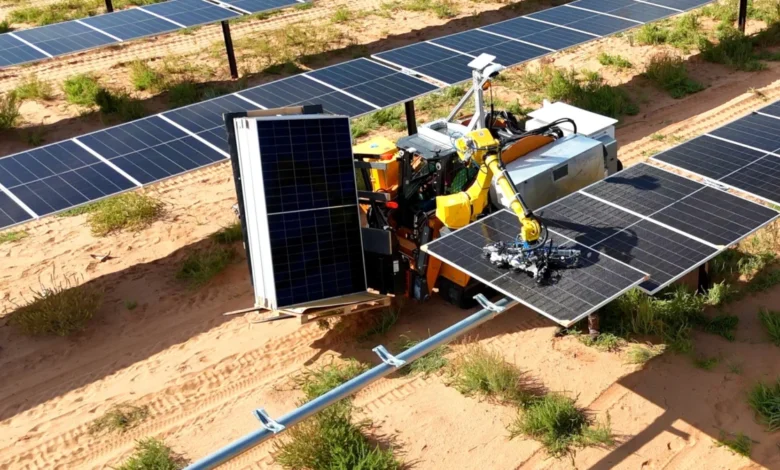
Unlike many of its competitors who are designing bespoke robots from the ground up, Gritt has adopted a hardware-agnostic strategy. The company utilizes off-the-shelf industrial equipment, such as rented skidders and robotic arms from manufacturers like Kawasaki, and integrates them with its proprietary AI "brain." This system utilizes a suite of sensors and advanced machine vision to navigate the worksite and perform complex manipulation tasks.
The system’s primary task currently involves the logistics and placement of solar panels. Gritt’s robots unload large, fragile glass solar panels from shipping containers, transport them across the uneven terrain of a construction site, and position them onto metal racking frames with sub-millimeter accuracy. Once the panel is perfectly aligned, human workers perform the final fastening. This collaborative approach—often referred to as "cobotics"—allows the machine to handle the heavy lifting and precision alignment while humans focus on the final assembly and quality control.
The results from early field deployments are staggering. In a traditional setup, a typical eight-person crew can install approximately 800 panels in a single day. When that same crew is augmented by Gritt’s AI-driven systems, productivity surges to between 3,000 and 4,000 panels per day. This four-to-five-fold increase in efficiency could be the difference between a project meeting its deadline or falling months behind.
Investment Logic and Market Positioning
The decision by Obvious Ventures to lead the Series A was driven by Gritt’s pragmatic approach to scaling. Andrew Beebe, a partner at Obvious Ventures, noted that the founders possess a rare combination of high-level technical expertise and a grounded understanding of the construction industry’s realities.
“There are people who used to build rockets that went into space and had infinite budget for the smallest little part, and then there are people who know what it means to get into dirty, dull, and dangerous jobs and scale them like mad,” Beebe said. “These guys are in the second camp.”
By using off-the-shelf hardware, Gritt avoids the massive capital expenditures and long lead times associated with manufacturing custom vehicles. This allows the company to scale its fleet much faster than competitors like Luminous Robotics, Cosmic, or China’s Trinabot, who are developing proprietary hardware platforms. Gritt’s model is essentially "Software as a Service" (SaaS) for heavy machinery, providing the intelligence layer that makes existing hardware autonomous.
The company is already seeing significant commercial traction. Gritt is currently contracted to assist in the installation of 2.8 gigawatts of solar capacity over the next 18 months. Its client list includes three of the top ten power construction companies in the United States. To meet this demand, Gritt plans to have 48 of its systems operational in the field within the next six months.
Enhancing Worker Safety and Site Management
Beyond raw productivity, the adoption of Gritt’s technology addresses a critical safety concern in the construction industry. Solar panels used in utility-scale projects can weigh upwards of 100 pounds. Manually lifting these panels, often in extreme heat and on uneven ground, leads to high rates of musculoskeletal injuries and fatigue.
One Gritt customer, a construction executive who requested anonymity to maintain a competitive advantage, highlighted the safety benefits as a primary driver for adoption. He noted that at remote sites—where attracting a workforce is already difficult—the ability to reduce the physical strain on workers is invaluable. By having a robot perform the heavy lifting and overhead positioning, the risk of acute injury and long-term physical wear on the human crew is significantly mitigated.
Furthermore, Gritt’s founders envision their AI system as more than just a tool for panel installation. Because the robots are equipped with advanced sensors and are constantly "watching" the worksite, they can serve as a real-time data layer for project managers.
Puri envisions the system identifying potential hazards or logistical errors before they become costly problems. For instance, the AI could detect if a trench has been left open during an approaching storm and alert workers to cover it, or it could track inventory levels of clips and bolts across a multi-mile site. “Gritt becomes now this layer of physical AI, which is doing this dextrous, labor-intensive task, plus it can help you take decisions on the site,” Puri said.
A Vision for the Future of Construction
The underlying technology that powers Gritt is part of a broader shift in the field of robotics enabled by "Foundation Models"—large-scale AI models trained on vast amounts of data that can generalize across different tasks. Puri noted that five years ago, building a robotic solution for a single task was a monumental effort. Today, the same underlying software pipeline can be adapted to new tasks with remarkable speed.
To illustrate this, Puri shared that while it originally took weeks to train the system to stack cinder blocks, a recent demonstration of tying rebar—a notoriously difficult and repetitive construction task—took only a single day to program using the existing software framework. This generalizability is key to Gritt’s long-term strategy. The company plans to expand its capabilities to include fastening solar panels, drilling posts, and even assembling the metal racks. Eventually, Gritt aims to move into other labor-intensive construction sectors, such as reinforced concrete work and general site preparation.
As the world pivots toward a more sustainable infrastructure, the "labor gap" remains the most significant threat to the speed of the energy transition. Gritt’s emergence from stealth marks a pivot point where AI moves from the digital world of chatbots and image generators into the physical world of heavy industry. By providing the "intelligence" to automate the foundational tasks of the green economy, Gritt is positioning itself as a central player in the global effort to build a faster, safer, and more sustainable future.
Related posts: