White House Network Security Compromised by Residential Proxy Services Linked to Russian Infrastructure

In a significant breach of digital operational security, security researchers have identified that multiple devices connected to the Executive Office of the President’s dedicated internet network (AS2650) have been functioning as nodes for residential proxy services. These services allow third-party users to route their internet traffic through the White House network, effectively masking their digital footprint and potentially providing unauthorized actors with a trusted gateway into the U.S. government’s infrastructure.
The discovery, first reported by the cybersecurity firm Layer3 Intel, highlights a growing, systemic vulnerability where employee-managed mobile and desktop devices—often running seemingly innocuous "free" software—accidentally transform high-security government networks into exit nodes for commercial proxy providers. Most alarming is the revelation that among the services operating within the White House network is Infatica, a proxy provider founded by Vladimir Fomenko. Fomenko’s previous venture, King Servers, was directly implicated in the 2016 cyberattacks against election databases in Arizona and Illinois, operations that were attributed by intelligence officials to Russian state security services.
A Persistent Pattern of Exposure
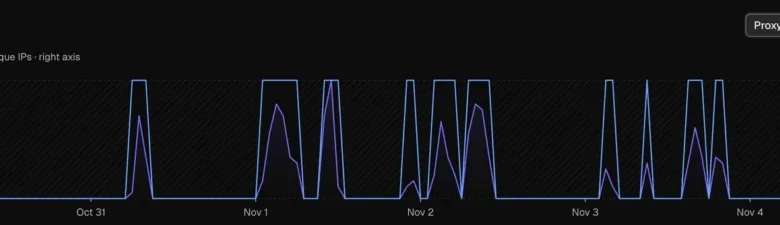
Layer3 Intel’s investigation spanned from October 5 to November 3, revealing a persistent pattern of unauthorized egress traffic. During this 30-day window, the firm detected 236 instances where traffic originating from within the White House network exited through these proxy nodes. The activity was not sporadic; rather, it occurred on 26 of the 30 days analyzed, with a distinct temporal pattern showing that most of the connections were established in the evening hours, specifically between 5:00 p.m. and midnight.
This suggests that the proxy nodes are likely tethered to personal or work-issued devices that remain connected to the White House Wi-Fi or local area network (LAN) after standard business hours. Ben Brundage, founder of the proxy tracking firm Synthient, confirmed that the traffic was linked to Windows 11 installations of the Infatica service. Infatica, like many similar providers, operates by embedding software development kits (SDKs) into free applications. Users who download these apps, often unaware of the underlying terms of service, effectively grant the proxy provider permission to monetize their device’s bandwidth.
The Mechanics of the Proxy Ecosystem
Residential proxy services are designed to provide a layer of anonymity by routing traffic through legitimate residential internet service provider (ISP) addresses. While they have legitimate use cases—such as market research, ad verification, and regional content testing—they have become a primary tool for cybercriminals. By paying a relatively small fee—sometimes as low as 60 cents per gigabyte—malicious actors can rent access to these "clean" IP addresses.
Because this traffic originates from a trusted network like that of the Executive Office of the President, it is rarely flagged by standard web-filtering tools. To a target website or server, the incoming connection appears to be a legitimate user within the White House, rather than a cybercriminal in a different jurisdiction.
The scope of the issue appears far broader than a single provider. Layer3 Intel discovered that at least 28 separate residential proxy services were capable of exiting through the White House network during the observation period. "This is public access," the Layer3 Intel team noted in their technical assessment. "Anybody can obtain it by signing up to a public residential proxy service, paying a few dollars and sending requests through it. We did not selectively target this network… We caught this by chance."
Chronology of Escalating Risks
The threat posed by these services has evolved from a privacy nuisance to a critical security vector over the past two years:
- 2016: Vladimir Fomenko’s King Servers provides the infrastructure for cyberattacks on Illinois and Arizona election systems, marking a foundational moment in the use of commercial hosting for state-sponsored operations.
- Late 2025: Security researchers identify a widespread vulnerability in residential proxy services that allows attackers to pivot from the proxy node into the host device’s local network.
- January 2026: Synthient releases findings on the "Kimwolf" botnet, demonstrating how criminals exploit proxy vulnerabilities to seize control of local devices. Major proxy providers are forced to initiate emergency patches.
- October–November 2026: Layer3 Intel detects consistent proxy activity within the Executive Office of the President’s network, indicating that despite industry-wide patching efforts, the prevalence of these services remains a critical internal risk.
Broader Implications for National Security
The presence of these proxies within the White House network is symptomatic of a larger issue facing both the public and private sectors. The "bring your own device" (BYOD) culture, combined with the ubiquity of software that monetizes user bandwidth, has created a massive, porous surface for potential infiltration.
Data from the security firm Spur, shared during a January 2026 industry webinar, painted a sobering picture: residential proxies were detected in nearly 300 government-owned networks, 318 utility companies, 166 healthcare organizations, and over 140 financial institutions. This suggests that the White House is not an outlier, but rather a high-profile participant in a systemic failure to police the "digital perimeter."
Furthermore, the security firm Infoblox reported that 65% of its customer base was querying domains associated with residential proxy services, indicating that these connections are frequently occurring in corporate environments without the knowledge of IT departments.
The Threat to Confidentiality
The risks inherent in this setup are twofold. First, there is the risk of data exfiltration; if a device is acting as an exit node, there is a technical possibility that it could also be used to facilitate "lateral movement," where an attacker probes the local network for other vulnerable systems, printers, or servers. Second, the reputational and forensic risk is profound. If an attack were to be launched from an IP address assigned to the White House, it could trigger a diplomatic incident or a complex, unnecessary investigation into government personnel.
Brundage notes that the "reseller ecosystem" is particularly difficult to police because many of these services operate without rigorous "Know Your Customer" (KYC) requirements. "For less than a dollar, you can gain access into some of the most confidential and trusted networks," he warned.
The Need for Hardened Network Policies
In response to these findings, cybersecurity analysts are calling for stricter endpoint management. Traditional firewalls and antivirus software are often insufficient for detecting residential proxy SDKs, which are technically "authorized" by the user—however inadvertently—during the installation of third-party apps.
Experts recommend that organizations operating within the defense and executive sectors implement aggressive application whitelisting and network-level blocking of known residential proxy exit node domains. Furthermore, the incident serves as a stark reminder of the security dangers inherent in allowing personal devices to connect to sensitive government networks.
As of the time of publication, the White House has not issued a formal response regarding the discovery of these proxy nodes. The absence of a statement leaves open questions about whether administrative measures have been taken to purge these applications from devices operating on the AS2650 network, or if the government intends to update its security protocols to account for the commercialization of residential internet bandwidth.
The situation remains fluid, as the ease with which these services can be deployed means that even if the current nodes are deactivated, new ones could appear if the underlying policy on employee device usage is not fundamentally reformed. For now, the Executive Office of the President remains part of a vast, global network of compromised residential IPs, highlighting a glaring weakness in the digital armor of the most secure office in the world.
Related posts: