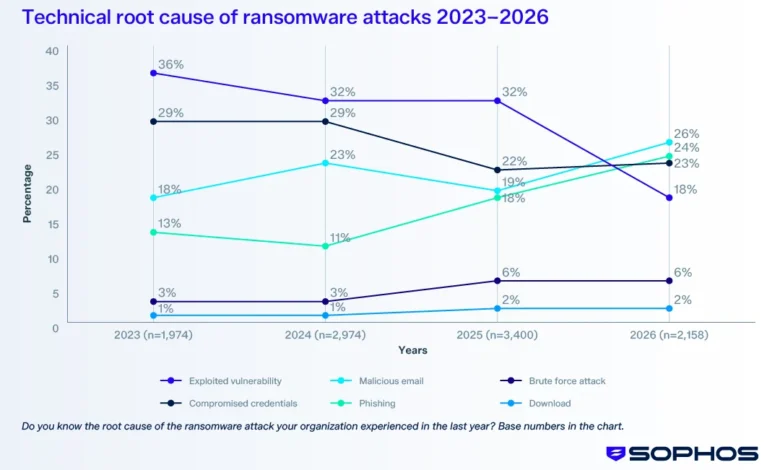
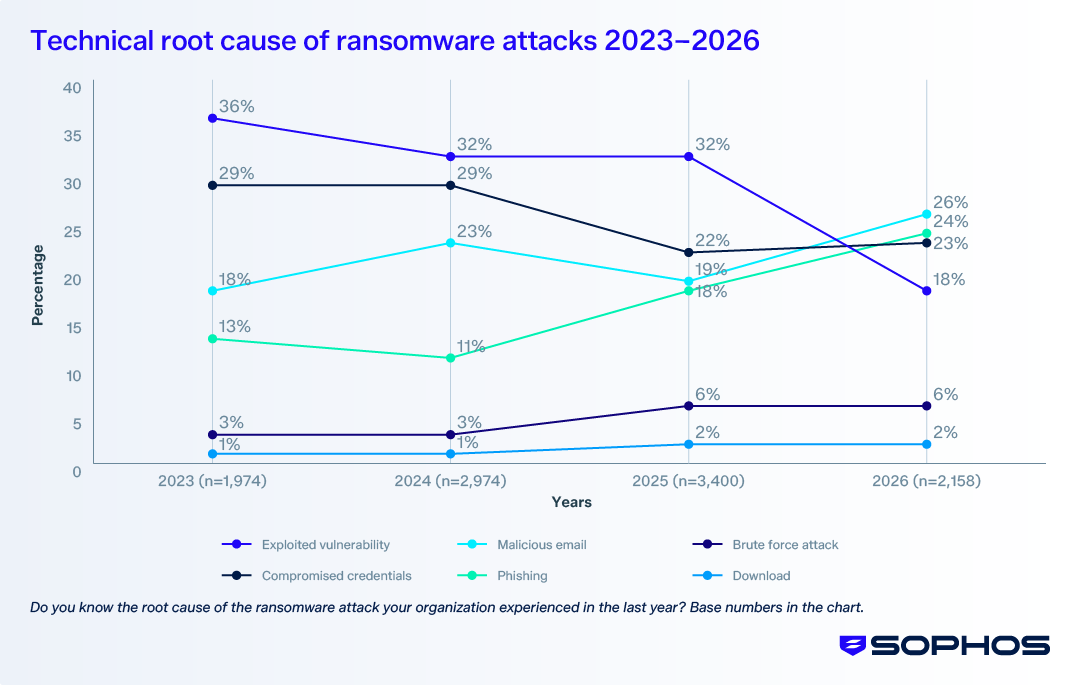
The latest findings from Sophos’s seventh annual "State of Ransomware" report present a starkly different landscape for cybersecurity professionals, signaling a pivotal moment in the ongoing battle against cyber threats. This year’s data reveals several significant departures from established patterns, most notably the dethroning of exploited vulnerabilities as the primary entry point for ransomware attacks. For the first time in four years, this long-standing threat has been supplanted by identity-based attacks, a trend that underscores the evolving tactics of cybercriminals and demands a recalibration of defensive strategies.
The report, which surveyed 2,158 IT and security leaders from organizations that experienced ransomware attacks in the past 12 months, indicates a complex and often contradictory environment. While median ransom demands and payments have seen a decrease, the average cost of recovery has continued its upward trajectory. Furthermore, a concerning disparity has emerged between large and small organizations, with businesses employing between 100 and 250 individuals falling further behind their larger counterparts in their ability to prevent data encryption, the ultimate objective of most ransomware campaigns.
This comprehensive analysis, which can be accessed in its entirety by clicking here, provides critical insights for organizations looking to bolster their defenses against an increasingly sophisticated threat landscape. The implications of these findings are far-reaching, necessitating a proactive and adaptive approach to cybersecurity in the coming years.
The Rise of Identity-Based Attacks: A New Frontline in Cybersecurity
For the past three years, exploited vulnerabilities have consistently held the unenviable position of the leading root cause for ransomware incidents. However, the 2026 report marks a decisive shift, with identity-based attacks now dominating the attack vector landscape. This change signifies a move by threat actors away from solely relying on technical exploits and towards leveraging human elements and credential weaknesses as their primary entry point.
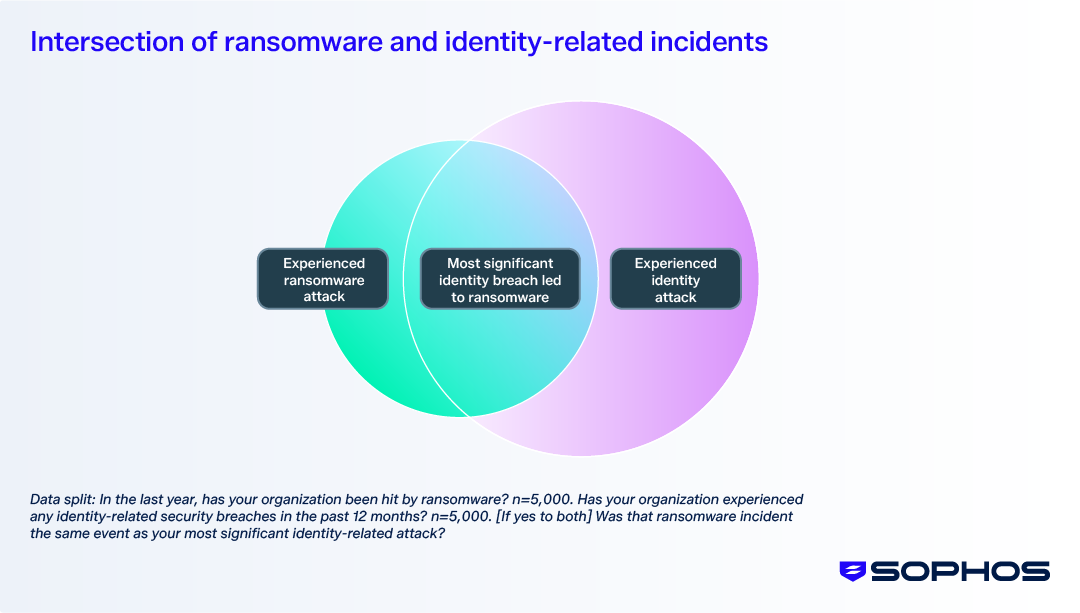
The report’s findings are unequivocal: 79% of ransomware attacks initiated with an identity-based approach. More alarmingly, 67% of victims confirmed that their ransomware incident was directly linked to their most significant identity attack. This crucial insight was also a focal point of Sophos’s earlier "State of Identity Security 2026" report, reinforcing the interconnectedness of these two critical cybersecurity domains.
The implications of this shift are profound. For cybersecurity teams, it means that robust patching strategies alone are insufficient to secure their environments. The report strongly suggests that investment priorities for 2026 must include advanced email protection solutions, the implementation of strong email authentication protocols such as DMARC, DKIM, and SPF, and a renewed emphasis on comprehensive user awareness training programs. These measures are essential to fortify the human element, often the weakest link in the security chain, against sophisticated phishing and social engineering tactics that often accompany identity-based attacks.
The Critical Role of Multi-Factor Authentication (MFA) Amidst Coverage Gaps
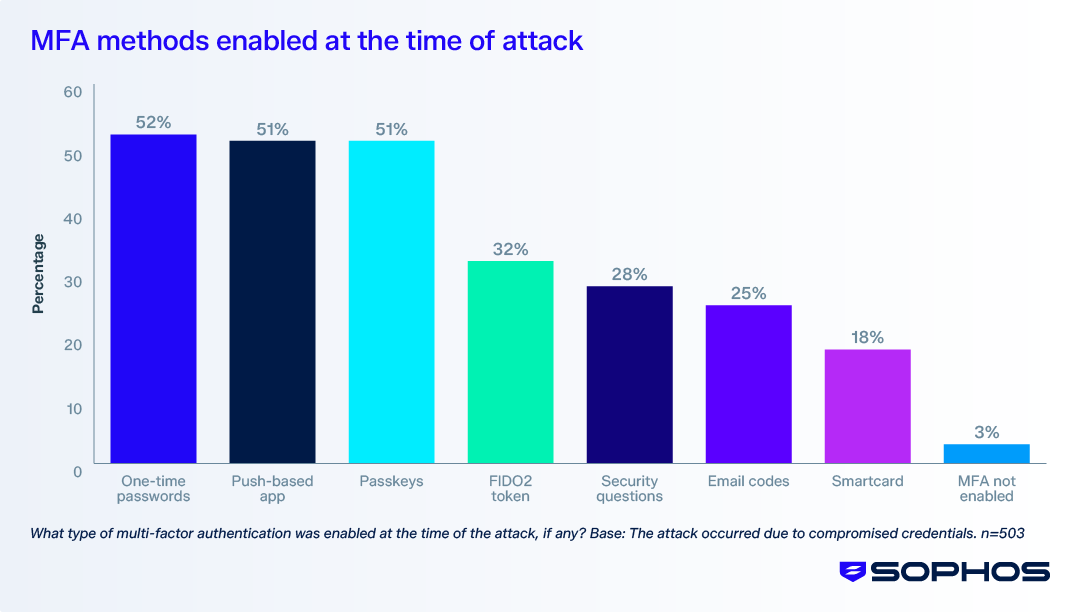
The report highlights a critical paradox concerning Multi-Factor Authentication (MFA). While a staggering 97% of victims whose ransomware attacks originated from compromised credentials had some form of MFA enabled at the time of the incident, this did not prevent the breach. The underlying issue, as identified by the report, lies in coverage gaps. Threat actors are adept at exploiting areas where MFA is not consistently applied.
Sophos’s "2026 Sophos Active Adversary Report," which analyzes real-world incident response and managed detection and response cases, corroborates this finding. In 661 such cases, 67% of the root causes were identity-related, and a significant 59% of these incidents occurred where MFA was notably absent or improperly configured.
The pattern is clear: while organizations are increasingly deploying MFA, its implementation is often inconsistent across different platforms and services. Common scenarios include MFA being effectively deployed for SaaS applications but conspicuously missing for critical infrastructure access points such as VPNs, firewall administrative consoles, and legacy applications. This creates fertile ground for attackers who can compromise less-protected entry points to gain initial access and then move laterally within the network, potentially bypassing MFA on more secure systems.
Where Ransomware Attacks Begin: The Vulnerable Peripheries
For the first time, the Sophos report offers a detailed mapping of where initial compromises occur within IT environments. Across attacks initiated by exploited vulnerabilities, compromised credentials, or brute-force methods, respondents identified specific locations within their infrastructure where these attacks typically commenced.
While the specific ranked list of attack locations is not detailed in the provided excerpt, the report emphasizes the disproportionate financial impact of firewall compromises. Given their privileged position within an organization’s network architecture, a successful exploitation of a firewall vulnerability can grant attackers extensive access, leading to significantly higher ransom demands.
The data illustrates this impact vividly: when ransomware attacks originate from the exploitation of a firewall vulnerability, 59% of resulting ransom demands are for $1 million or more. This figure significantly outpaces the baseline of 48% for $1-million-plus demands across all ransomware attack types. This underscores the critical importance of maintaining the security posture of network perimeter devices, as a breach at this level can have cascading and financially devastating consequences.
A Mixed Bag: Progress and Persistent Devastation
While some economic indicators within the cybersecurity landscape have shifted in favor of defenders this year, the overall picture remains complex and challenging. The encryption of data in a ransomware attack continues to be a severe event with significant ramifications.
The encouraging developments include:
- Decreased Median Ransom Demands and Payments: The report indicates a reduction in the typical financial figures associated with ransom demands and payments. This could be attributed to various factors, including increased law enforcement efforts, a growing reluctance among some organizations to pay, or the diversification of criminal monetization strategies.
- Improved Recovery Times for Some: While not universally applicable, some organizations may be experiencing quicker recovery times. This could be a result of enhanced incident response capabilities, better backup strategies, or more efficient remediation processes.
However, the persistent challenges paint a more sobering picture:
- Escalating Average Recovery Costs: Despite a drop in median demands, the average bill for recovering from a ransomware attack has continued to climb. This suggests that even if ransoms are lower, the overall cost of incident response, data recovery, business disruption, and potential reputational damage is on the rise. This could be due to more sophisticated attacks that require more extensive and costly remediation efforts.
- Persistent Encryption Rates: The report indicates that a significant proportion of organizations still fall victim to data encryption, the primary objective of many ransomware attacks. This means that even if attacks are stopped before encryption in some cases, the threat of data loss remains a significant concern.
- Growing Disparity for Small Businesses: The gap between large and small organizations in preventing ransomware attacks before data encryption is widening alarmingly. Only 34% of small organizations (100-250 employees) managed to stop attacks before encryption or extortion, a stark contrast to the 46% success rate reported by larger organizations (3,001-5,000 employees). This indicates that scale is providing a tangible defensive advantage, leaving smaller businesses disproportionately exposed to the full impact of ransomware.
The Interconnectedness of Defense: A Call for Integrated Security
The overarching theme emerging from the 2026 Sophos data is the critical need for integrated cybersecurity defenses. The report strongly suggests that disparate tools operating in isolation are no longer sufficient to combat the sophisticated, AI-powered attacks of today. Instead, outcomes improve significantly when identity, email, endpoint, and network defenses are orchestrated to function as a unified system.
Closing the gap against AI-era attacks will depend less on the acquisition of new, disparate tools and more on the intelligent integration and utilization of existing security solutions. This means fostering better communication and data sharing between different security platforms, enabling a more holistic and proactive approach to threat detection and response.
Organizations are encouraged to download the full report to gain access to comprehensive findings, detailed industry breakdowns, and actionable recommendations. By understanding the evolving threat landscape and adopting a more integrated and adaptive cybersecurity strategy, businesses can better protect themselves from the persistent and devastating threat of ransomware. The journey towards a secure digital future requires a collaborative and interconnected approach, where every layer of defense works in concert to safeguard critical data and operations.