The AIDEs Framework How We Built a Theory of Everything for AI Development Tools

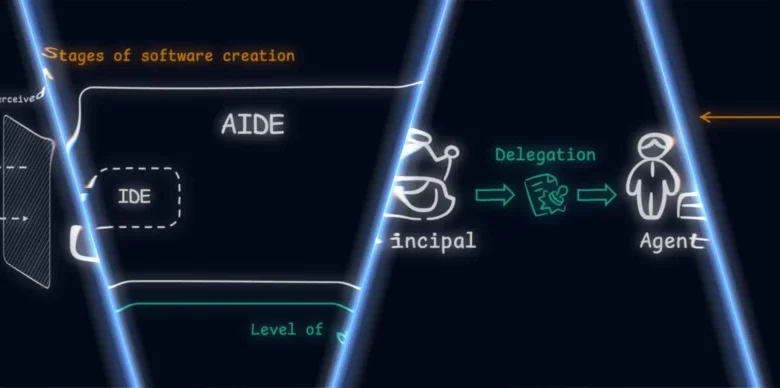
The rapid evolution of artificial intelligence in software engineering has moved beyond the hype cycle, settling into a phase of structural transformation. For organizations and developers, the challenge is no longer merely keeping pace with daily updates in model capabilities, but understanding the underlying mechanics of how these tools are fundamentally shifting the software development lifecycle. JetBrains, a leader in developer tool ecosystems, has spent the last two years conducting deep-market and product research to synthesize these changes into a cohesive model: the Artificial Intelligent Development Environments (AIDEs) Framework.
The emergence of this framework comes at a time when the software industry is grappling with the paradox of widespread AI adoption versus inconsistent application. While AI is now ubiquitous in brainstorming and coding tasks, large swaths of the software development lifecycle remain untouched by automated intelligence. JetBrains’ research suggests that the industry is currently transitioning from viewing AI as a mere productivity "tool" to recognizing it as an "intelligence resource," a shift that necessitates a more formal approach to how work is delegated between human creators and artificial systems.
A Chronology of AI Integration in Development
To understand where the industry is heading, one must first analyze the trajectory of the past decade. The evolution of AI in software development has not been a random assortment of features, but a clear, step-by-step march toward higher levels of autonomy.
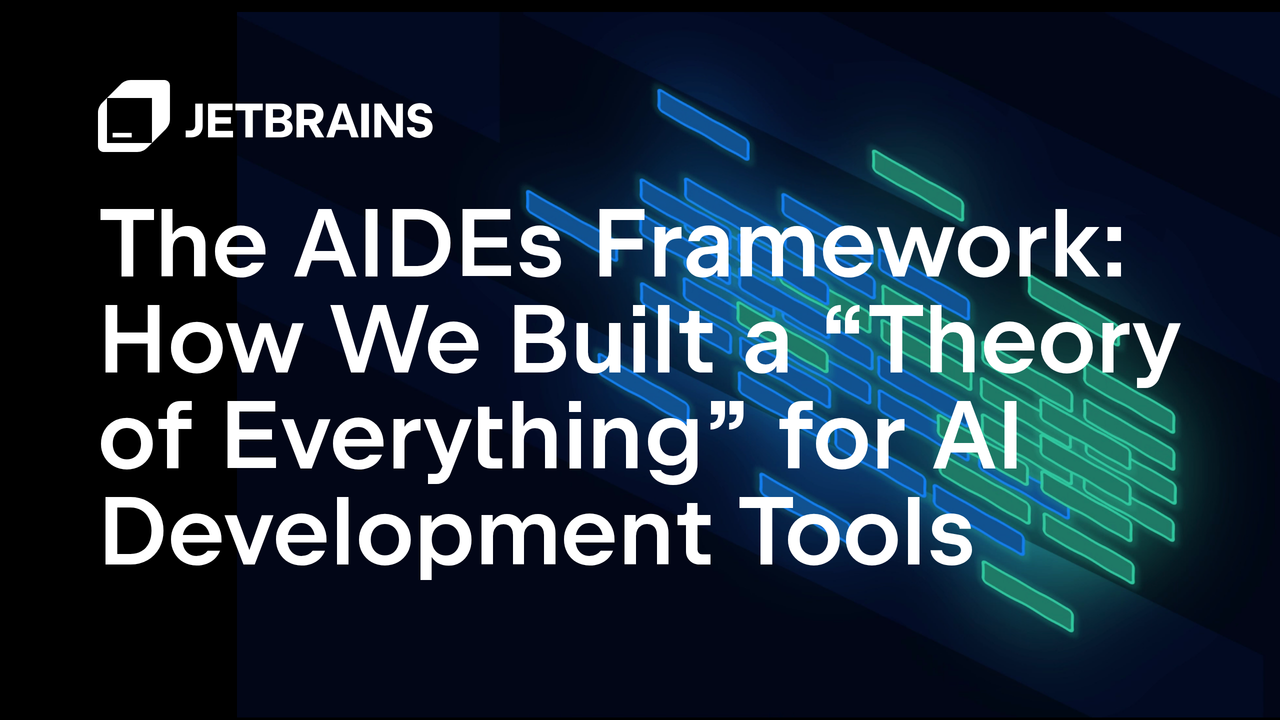
The progression began with basic code completion—deterministic heuristics that offered small snippets of syntax. This was followed by the integration of Large Language Models (LLMs), which enabled generative code suggestions. The third phase involved the transition to chat-based interfaces, where developers could engage in a dialogue with AI about their code. Currently, the industry is in the "Agentic Era," characterized by AI agents capable of planning and executing tasks, such as Anthropic’s Claude Code. By current estimates, advanced coding agents have seen significant adoption, with millions of professionals integrating them into their daily workflows, generating billions in estimated annual economic impact.
This trajectory reveals a fundamental trend: the progressive delegation of work from human hands to artificial systems. This is not merely a technical upgrade; it is a fundamental reconfiguration of the labor division within engineering teams.
The Three Dimensions of the AIDEs Framework
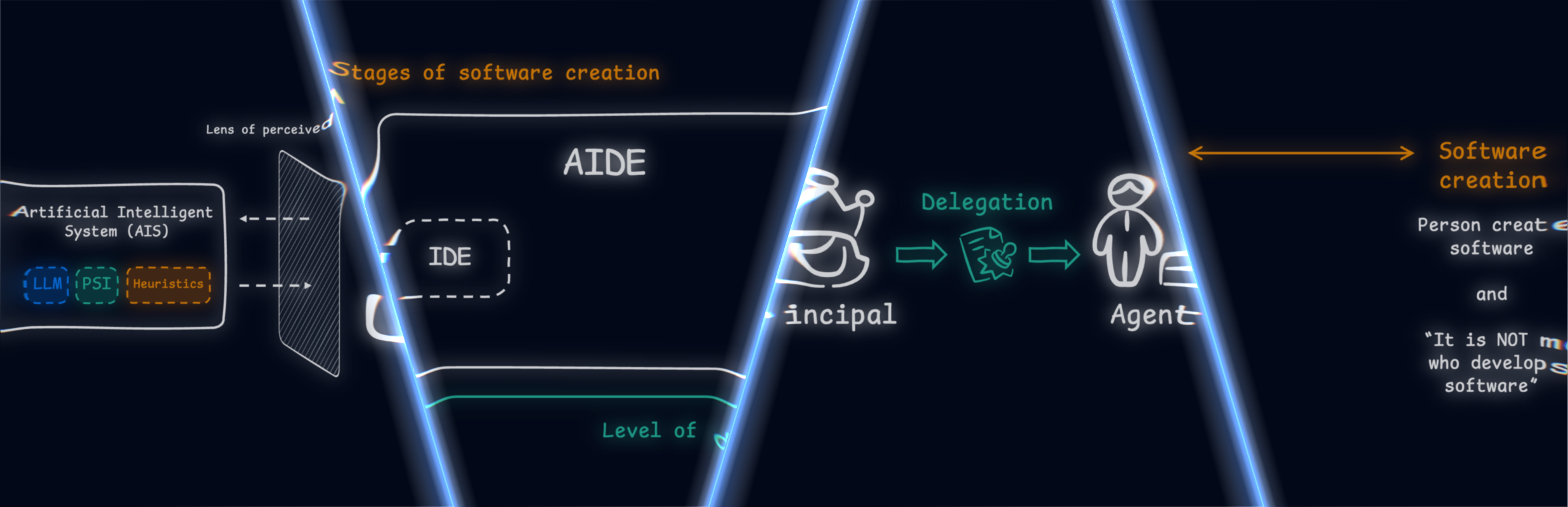
The AIDEs Framework provides a structural "prism" through which stakeholders can evaluate their AI strategy. It operates on three distinct dimensions: the stages of the software creation process, the levels of delegation, and the organizational context.
The first dimension categorizes the software development lifecycle into five primary activity groups: Ideation and Conceptualization; Planning, Design, and Architecture; Implementation; Testing, Validation, and Quality Assurance; and Delivery, Maintenance, and Feedback Collection. By mapping these, the framework identifies where AI has successfully penetrated and where it faces technical or trust-based barriers.

The second dimension—and the core of the framework—is the "Level of Delegation." JetBrains defines five distinct tiers of engagement between a human "principal" and an AI "agent":
- L1 (Tool): Limited, scoped actions such as standard code completion.
- L2 (Assistant): Delegation of specific tasks with clear boundaries, such as generating unit tests.
- L3 (General-purpose Executor): Full delegation of task execution, where the AI writes code and engineers the solution, while the human acts as a consultant or reviewer.
- L4 (Supervised Executor): Responsibility for an entire functional area, such as backend implementation, where the agent makes most decisions and the human approves high-level milestones.
- L5 (Competence Center): The highest level, where the AI acts as a strategic partner, managing complex stacks and infrastructure decisions based on high-level goals set by the human leadership.
The third dimension addresses the organizational context. The complexities of deploying AI vary significantly between solo developers, small teams, and large enterprises. Large organizations face unique challenges regarding compliance, security, and the integration of legacy systems, all of which act as constraints on the speed and depth of AI delegation.
Challenging the "Intelligence" Benchmark
A critical finding in the research is that "benchmark performance"—the raw intelligence of a model—is not the primary driver of market success. Instead, the framework emphasizes the quality of the "agentic contract" between the principal and the agent.
JetBrains posits that developers are inherently selective about trust. An AI model might be technically capable of performing at an L3 level, but a developer may choose to treat it as an L2 agent for critical production code to maintain control. Consequently, the level of delegation is a human-led decision based on risk tolerance and context, rather than a fixed attribute of the AI model itself. This distinction is vital for product developers, as it suggests that user experience and the ability to manage uncertainty are as important as the model’s reasoning capabilities.
Economic and Organizational Implications
The shift toward "Agentic Software Production Platforms" implies a future where software is created in a way that treats intelligence as a variable resource, similar to raw materials in manufacturing. In this model, the human developer’s role transitions from "coder" to "architect of delegation."
Industry analysts observe that this will likely lead to the rise of new roles, such as "junior architects," who focus on task specification and oversight. As routine code writing is delegated to AI, the premium on high-level skills—system design, requirements formulation, and business impact analysis—will increase.
For engineering leaders, the implication is clear: the structure of the development process must evolve. If AI is treated as an "intelligence resource," organizational structures must adapt to manage the flow of this resource. This involves not only selecting the right agents but also ensuring that the human team possesses the managerial capabilities to oversee complex, semi-autonomous agentic workflows.
Navigating the Future
As the industry moves toward higher levels of delegation, the challenge of "loss of immersion" becomes a primary concern. When a human delegates a task, they inherently lose the deep context that comes from doing the work themselves. Solving this requires new paradigms in context abstraction and uncertainty management.
The AIDEs Framework serves as a foundational tool for navigating this transition. By examining the core assumptions of the framework—namely, that the demand for software will continue to rise, that delegation is an inevitable outcome of efficiency, and that human oversight remains a non-negotiable constant—organizations can better prepare for the long-term shifts in the labor market.
The consensus among industry researchers is that while the future remains fluid, the forces driving it are predictable. The transition toward AI-native development environments is no longer a matter of "if" but "how." By adopting a systematic, framework-based approach, companies can move away from reactive feature-chasing and toward a proactive strategy that integrates AI as a core component of the software creation value chain.
Ultimately, the goal of such frameworks is to provide clarity in a volatile market. As JetBrains continues to collect and analyze data through its research initiatives, the focus will remain on refining these models to ensure that both the tools and the human teams utilizing them are aligned for the next phase of the digital era. Whether the industry reaches the L5 "Competence Center" level in the coming years remains to be seen, but the map for the journey has been firmly established.