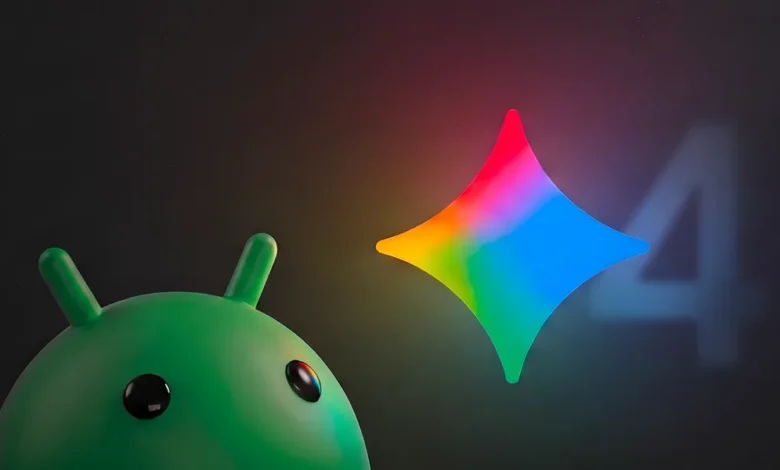
Gemini 4 Argon Represents a Paradigm Shift in Android Agentic Development and Autonomous Engineering

The landscape of mobile software engineering is currently undergoing a fundamental transformation, moving away from the era of simple assistive code completion toward a future defined by autonomous agents capable of executing end-to-end development tasks. Google has officially launched Gemini 4 Argon, a highly capable artificial intelligence model designed to navigate complex, multi-domain environments including software architecture, legal compliance, financial modeling, and cybersecurity. This release marks a significant milestone in the evolution of the Android development ecosystem, providing developers with unprecedented autonomy in how they integrate AI agents into their local workflows.
The Evolution of AI in Android Development
The integration of artificial intelligence into Android Studio has been a gradual, multi-year process. Historically, AI assistance in the Integrated Development Environment (IDE) was limited to "autocomplete" functionality, where models suggested small snippets of code based on immediate context. However, the industry has hit a wall with static assistance. Developers require more than just code suggestions; they require agents that can reason, plan, and execute multi-step workflows across entire projects.
The development of Gemini 4 Argon follows a rapid acceleration in agentic research. While previous iterations of Gemini focused on broad-spectrum utility, Argon is specifically optimized for "deep work." This involves the ability to manage long-horizon tasks, such as refactoring legacy codebases, managing dependency graphs, and performing unit testing cycles without constant human intervention. The transition toward agentic development signifies that the role of the developer is shifting from a "writer of code" to an "architect of systems," where the human provides the intent and the AI provides the implementation.
Technical Capabilities and Closed-Loop Self-Correction
The primary technical advantage of Gemini 4 Argon is its "closed-loop" build self-correction mechanism. In traditional AI-assisted coding, if a model generated an error, the developer would have to manually identify the issue and prompt the model again. Argon alters this cycle by integrating directly with the build environment. If a build fails, the model can interpret the logs, diagnose the specific failure—whether it is a syntax error, a missing dependency, or a configuration mismatch—and autonomously propose a fix.
This capability is particularly vital for the modern Android stack, which has become increasingly complex due to the shift toward Jetpack Compose. Argon excels at generating production-ready, shader-backed UI components. By leveraging advanced spatial reasoning and an understanding of modern design patterns, the model can translate high-level design requirements into fluid, performant UI code. This reduces the time-to-market for new features, as the "boilerplate" phase of UI construction is effectively handled by the model.
Strategic Implementation and Deployment Surfaces
Google has adopted a flexible, multi-platform strategy for the rollout of Gemini 4 Argon. Recognizing that developers have highly specific workflows, the company has made the model available across three distinct surfaces: the Google Antigravity desktop application, Android Studio Canary, and the broader Google AI Studio environment.
For developers seeking a dedicated agentic workspace, the Antigravity desktop application provides a standalone environment for managing agents. This is augmented by the new Android Command Line Interface (CLI) plugin. The CLI serves as the engine connecting the agent to local Android tools, allowing it to execute programmatic commands directly from the terminal. This is a critical development for DevOps-heavy teams who prefer the speed of the terminal over graphical interfaces. By running simple commands like android init, developers can configure their workspace to allow the model to interact with local repositories, build systems, and version control tools securely.
Market Context and Availability
The rollout of Gemini 4 Argon began today, with global availability across all supported regions. Access is structured through the Google AI Ultra subscription tier, which covers the standalone Antigravity application and advanced features within Android Studio. Furthermore, the model is available via the paid tier of the Gemini API for enterprise developers looking to integrate these agentic capabilities into their own proprietary tooling.
A notable addition to this release is the integration of Firebase AI Logic. This allows developers to use Gemini 4 Argon on the client side, enabling the creation of intelligent, adaptive features within mobile and web applications. By shifting some of the intelligence directly to the client, developers can build applications that respond to user needs in real-time, without relying solely on cloud-based round trips.
Industry Implications and Future Outlook
The introduction of Argon comes at a time when the developer productivity gap is a major concern for the tech industry. According to industry analysis, the complexity of modern mobile development has increased by nearly 40% over the last five years, driven by the fragmentation of hardware, the evolution of security requirements, and the adoption of more complex UI frameworks.
The shift toward autonomous agents is seen as a primary solution to this complexity. By offloading repetitive and highly logical tasks to models like Argon, developers can theoretically focus on higher-level problem solving. However, this shift is not without its challenges. The introduction of autonomous agents raises questions regarding code provenance, security, and the necessity of human oversight. Google has addressed these concerns by positioning the agent as a tool that works "under your direction," ensuring that the human remains the final arbiter of all code submitted to production.
Chronology of Recent Developments
The path to this release can be mapped across the last eighteen months of intense R&D within Google’s AI and Android divisions:
- September 2026: Initial preview of "Build Your Way," a framework allowing for the integration of third-party AI agents within Android Studio.
- December 2026: Launch of the early-access phase for Google AI Ultra, targeting enterprise developers interested in long-horizon autonomous agents.
- February 2027: Integration of the Android CLI plugin into the core developer toolchain, facilitating deeper terminal-based agent control.
- Current Date: Global launch of Gemini 4 Argon, providing full integration across Antigravity, Android Studio, and Firebase AI Logic.
Analysis of the "Agentic" Shift
The "Agentic" shift represents a move from passive tools to active participants. In a passive model, the tool waits for a prompt. In an agentic model, the tool understands the goal and initiates the necessary sub-tasks to achieve it. For an Android developer, this might mean stating, "Create a login screen with biometric authentication and error handling," and having the model not only write the Compose code but also update the AndroidManifest.xml, configure the BiometricPrompt API, and write the corresponding unit tests.
The efficiency gains are likely to be measured in the reduction of "context switching." Currently, developers spend significant time moving between the code editor, the terminal, the browser for documentation, and the emulator for testing. By consolidating these functions under a single agentic umbrella, the developer’s focus remains on the product logic rather than the environment overhead.
Looking Ahead
As Gemini 4 Argon becomes a permanent fixture in the Android development toolkit, the industry will likely observe a rapid increase in the adoption of AI-native development workflows. Google has signaled that this is only the beginning, with further updates planned for the Android CLI to include support for more complex cross-platform tasks and deeper integration with cloud-native deployment pipelines.
Developers are encouraged to participate in the ecosystem by contributing feedback via platforms like X and LinkedIn, and by exploring the official samples provided in the GitHub repository. The transition to agentic development is still in its infancy, and the collaborative nature of the Android developer community will be essential in refining these tools to meet the diverse and rigorous demands of the global app marketplace. As the frontier of Android engineering continues to expand, the synergy between human creativity and autonomous agentic performance will define the next generation of mobile applications.