Linux Kernel Ends Support for Russian Baikal CPUs Amid Geopolitical Shifts and Maintenance Challenges

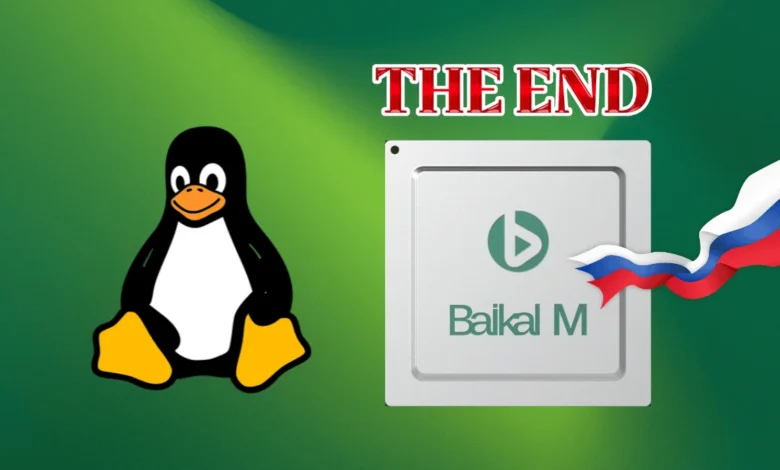
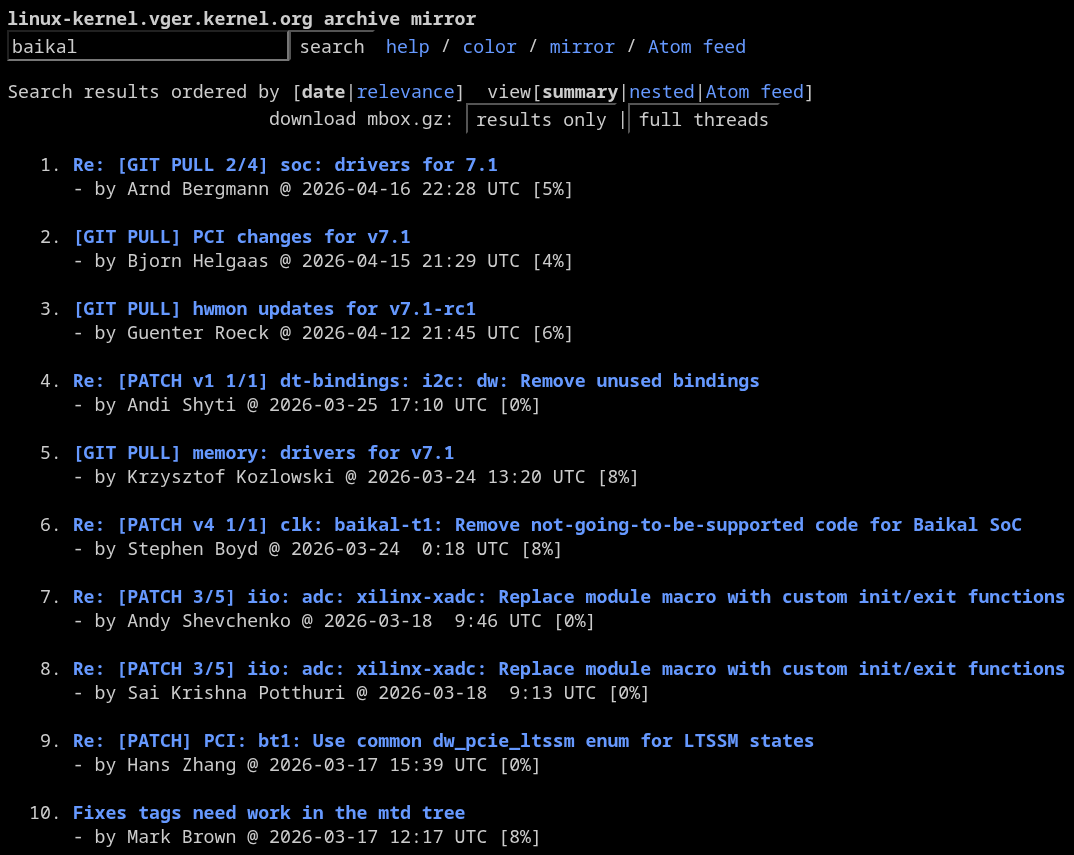
The Linux kernel has officially begun the process of removing support for the Baikal line of Russian-designed processors, marking a significant turning point in the relationship between the global open-source community and Russian hardware initiatives. This decision, manifesting in the Linux 7.1 development cycle, involves the systematic stripping of driver code and device tree bindings specifically tailored for Baikal System-on-Chip (SoC) hardware. The removal process was initiated during the ATA pull for Linux 7.1-rc1, which was merged by Linus Torvalds on April 15. This initial action focused on dropping the Baikal bt1-ahci Device Tree (DT) binding and removing Baikal-specific logic from the ahci_dwc driver. Niklas Cassel, the ATA maintainer, explicitly stated that the upstreaming process for this SoC is no longer intended to reach finalization, signaling a permanent departure from the main kernel tree.
The Decline of Maintenance and the 2024 Maintainer Purge
The primary technical justification for the removal of Baikal support centers on the lack of active maintenance. In the world of the Linux kernel, code that is not actively maintained by a designated individual or organization is often viewed as "dead weight," posing potential security risks and increasing the burden on core maintainers to ensure compatibility with evolving kernel subsystems. For several years, the bulk of Baikal’s kernel support was contributed by Serge Semin, a prolific developer who served as the primary link between Baikal Electronics and the upstream Linux community.
However, the maintenance landscape shifted dramatically in late 2024. Following a series of policy adjustments regarding compliance and international sanctions, approximately a dozen Russian developers, including Serge Semin, were removed from the official Linux kernel MAINTAINERS file. This move was described by senior kernel maintainers, including Greg Kroah-Hartman and Linus Torvalds, as a necessary step to comply with various legal requirements and "compliance rules." Without Semin or a sanctioned alternative to oversee the Baikal code, the drivers became stagnant.
The Linux kernel community operates on a "use it or lose it" philosophy. Because Baikal hardware is exceptionally rare outside of specific Russian state sectors and is virtually impossible to acquire in the West due to trade restrictions, there is no community of developers available to take over maintenance. Consequently, the decision to purge the code reflects a pragmatic approach to kernel hygiene, removing thousands of lines of code that serve an increasingly narrow and unreachable user base.
A History of Baikal Electronics: Ambition and Obstacles
To understand the weight of this removal, one must examine the history of Baikal Electronics. Founded in January 2012, Baikal Electronics emerged as a spinoff of T-Platforms, a Russian firm renowned for its work in the supercomputing sector. The company was envisioned as a cornerstone of Russia’s "import substitution" strategy, an effort to reduce the nation’s reliance on Western technology from giants like Intel and AMD.

The company’s technical journey was diverse:
- The MIPS Era: Early efforts focused on the Baikal-T1, a dual-core processor based on the MIPS P5600 architecture. It was designed primarily for networking equipment, industrial automation, and embedded systems.
- The ARM Transition: Seeking higher performance and a broader ecosystem, Baikal pivoted to ARM architecture. The Baikal-M (Cortex-A57) was intended for workstations and thin clients, while the Baikal-S (Cortex-A75) was designed for server-grade applications.
- Manufacturing Realities: Despite being Russian-designed, the chips relied on global supply chains. The processors were manufactured using advanced process nodes at TSMC (Taiwan Semiconductor Manufacturing Company).
The strategy appeared successful for a time, with Baikal processors finding homes in domestic PC brands and government infrastructure. However, the geopolitical events of 2022 fundamentally altered the company’s trajectory.
The Impact of Geopolitical Tensions and Sanctions
The 2022 Russian invasion of Ukraine triggered a cascade of international sanctions that crippled the Russian semiconductor industry. For Baikal Electronics, the consequences were immediate and devastating. TSMC, adhering to international trade restrictions, ceased all manufacturing for Russian entities. This move effectively orphaned the Baikal-M and Baikal-S designs, as Russia lacks domestic foundries capable of producing chips at the 28nm or 16nm nodes required for these processors.
Furthermore, approximately 150,000 Baikal-M units that had already been manufactured were reportedly seized or blocked in Taiwan. The loss of access to ARM’s intellectual property licenses further complicated the development of future iterations. These pressures led Baikal Electronics to file for bankruptcy in August 2023. Although the company underwent restructuring and attempted to pivot toward RISC-V—an open-standard instruction set architecture—the damage to its mainstream ARM-based lineup was irreversible.
While Baikal claimed to have shipped a total of 85,000 processors since its inception and recently announced the serial production of the Baikal-U1000 RISC-V microcontroller in late 2025, these numbers are marginal compared to the global semiconductor market. The shift to RISC-V represents a "reset" for the company, but it does nothing to save the legacy ARM and MIPS code currently being purged from the Linux kernel.
Technical Implications for Existing Users
The removal of Baikal support from the mainline Linux kernel creates a "version ceiling" for users currently operating Baikal-based hardware. Because the code is being stripped in the Linux 7.1 cycle, any future security patches, performance optimizations, or new features introduced in subsequent kernel versions will be unavailable to these systems unless the owners maintain their own out-of-tree kernel patches.

Industry analysts suggest that users of Baikal-T, Baikal-M, and Baikal-S hardware will be forced to remain on Linux 6.18 Long-Term Support (LTS) or earlier versions. While LTS kernels receive maintenance for several years, they eventually reach end-of-life (EOL). For Russian state enterprises that deployed these CPUs as a security measure to ensure "sovereign" computing, the loss of mainline Linux support creates a paradox: the hardware intended to provide independence now requires a fragmented and isolated software stack to remain functional.
Timeline of Baikal’s Integration and Exit
The rise and fall of Baikal support in the Linux kernel can be traced through several key milestones:
- 2012: Baikal Electronics is founded.
- 2014-2015: Initial MIPS-based Baikal-T1 support is mainlined into the Linux kernel.
- 2019-2021: Expansion of support for Baikal-M (ARM) begins, with significant contributions to the Device Tree and subsystem drivers.
- February 2022: Global sanctions halt TSMC production and ARM licensing for Baikal.
- August 2023: Baikal Electronics files for bankruptcy amid supply chain collapse.
- October 2024: Major purge of Russian maintainers from the Linux kernel, including primary Baikal contributor Serge Semin.
- April 2026: Linus Torvalds merges the removal of Baikal-specific ATA and SoC code in the Linux 7.1-rc1 release.
Broader Implications for Open Source Neutrality
The removal of Baikal support is more than a technical cleanup; it is a reflection of the fracturing of the global technology landscape. For decades, the Linux kernel was viewed as a neutral territory where developers from all nations could collaborate regardless of the political climate. The 2024 maintainer removals and the subsequent code purges suggest that this era of perceived neutrality is evolving into one of regulatory compliance.
From a development perspective, the Linux kernel community is increasingly prioritizing "sustainable maintenance." If a hardware platform cannot guarantee a long-term maintainer who can participate in the community without legal or logistical hurdles, that platform becomes a liability. The Baikal case serves as a warning for other regional hardware projects: without a diverse, international base of contributors and a stable manufacturing chain, mainline support is never guaranteed.
Conclusion and Future Outlook
The removal of Baikal CPU support from the Linux kernel marks the end of an ambitious chapter in Russian domestic computing. What began as a mission to create a self-sufficient hardware ecosystem has succumbed to the pressures of international sanctions and the rigorous maintenance standards of the open-source community. While Baikal Electronics continues to explore the RISC-V architecture as a path forward, any future support for such chips in the Linux kernel will likely face extreme scrutiny and must navigate a complex landscape of international compliance.
For the broader tech industry, the "de-Baikalization" of the kernel underscores the importance of supply chain resilience and the deep interconnectedness of hardware and software. As the Linux kernel moves forward into the 7.x series, it does so with a leaner codebase, having shed the remnants of a project that, while technically sound in its design, could not survive the geopolitical storms of the 2020s.
Related posts: