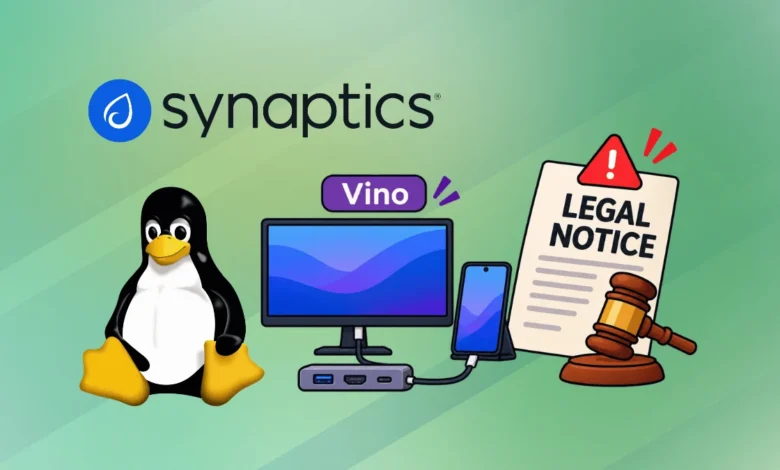
DisplayLink technology has long served as the industry standard for transporting high-resolution graphics over universal serial bus (USB) connections, enabling docking stations and adapters to extend a host computer’s display capabilities to multiple monitors. By compressing display data on the source device and transmitting it to a specialized chip—which then decodes the signal for HDMI or DisplayPort output—Synaptics has established a proprietary ecosystem that is deeply integrated into enterprise and consumer hardware. However, the intersection of this proprietary technology and the Linux open-source community has recently become a focal point of intense legal scrutiny. Mike Lothian, an independent developer known in the community as "FireBurn," has found himself at the center of a escalating legal confrontation with Synaptics after attempting to develop an open-source driver for the Linux kernel known as Vino.
The project, which aimed to provide a functional alternative to existing closed-source drivers and the established EVDI (Extensible Virtual Display Interface) kernel module, has now been shuttered following a series of aggressive legal communications from Synaptics. The case highlights the friction between the principles of open-source reverse engineering and the enforcement of intellectual property rights within the hardware ecosystem.
The Evolution of Vino and the Development Process
Vino was conceived as a direct driver for the Linux kernel, intended to facilitate communication between host operating systems and DisplayLink hardware. Development of the driver was significantly accelerated through the use of modern AI-assisted coding tools, specifically Claude Code, which Lothian utilized to navigate the complexities of the protocol. In June 2026, Lothian initiated contact with the Linux kernel development community, submitting an unfinished iteration of Vino to the dri-devel mailing list to solicit technical assistance regarding synchronization issues between the hardware dock and the kernel module.
The development methodology employed by Lothian relied on reverse engineering—a process of analyzing captured USB traffic and vendor-provided software to understand the underlying proprietary logic. Lothian asserted that the project adhered to a "clean-room" design approach, a legal strategy where developers attempt to replicate the functionality of a proprietary system without accessing the original source code or violating copyright, theoretically insulating the project from claims of copyright infringement. However, the legal reality of patent law differs significantly from copyright law; even independently developed or "clean-room" software can be found to infringe upon existing patents if the underlying logic or process mirrors a protected invention.
Chronology of the Legal Conflict
The dispute between Lothian and Synaptics evolved rapidly over the summer and autumn of 2026. The initial contact between the parties was ostensibly collaborative. In early July, Lothian reached out to a Synaptics employee to request technical guidance regarding his Rust-based rewrite of the EVDI module. The response, arriving approximately two weeks later, clarified that while the rewrite itself was not the primary concern for the corporation, the broader implementation of the DisplayLink protocol and codec potentially infringed upon specific patent claims held by Synaptics.

On August 17, 2026, the situation transitioned from informal dialogue to formal legal action. Synaptics issued a cease-and-desist letter, demanding that Lothian immediately halt all development on Vino and retract any code already submitted to maintainers or public hosting platforms. The company set a strict deadline of August 28 for a signed confirmation of compliance.
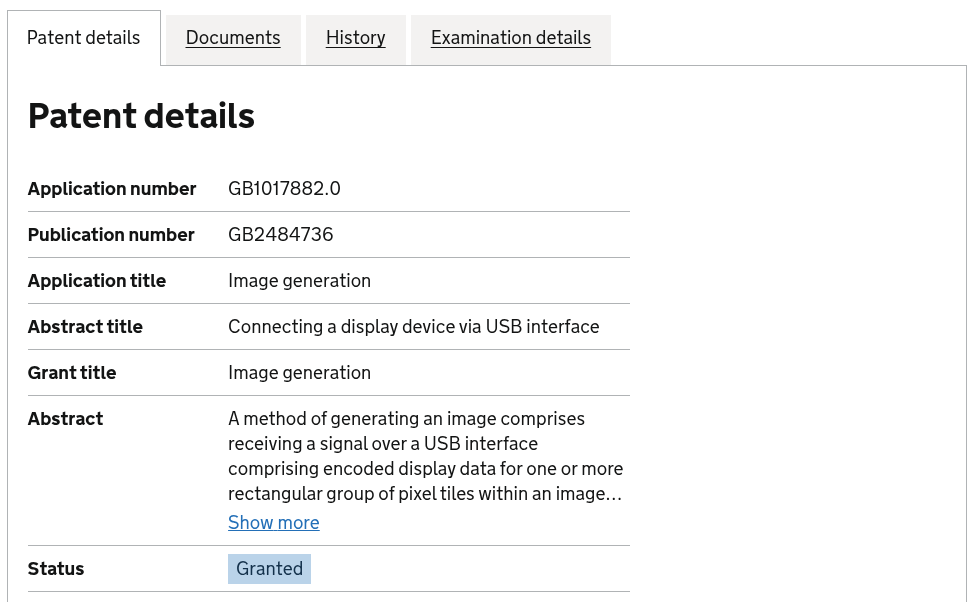
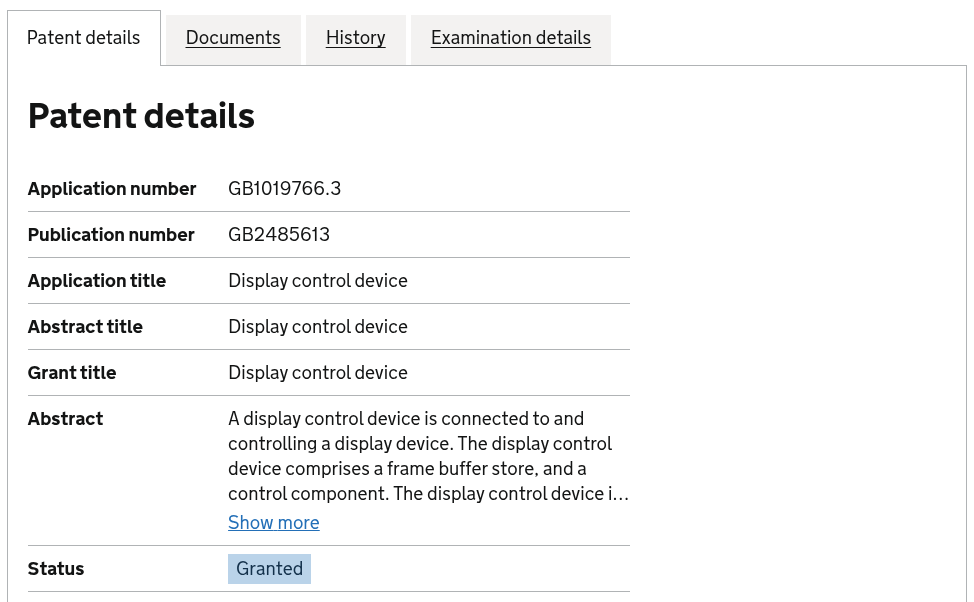
Despite the legal pressure, Lothian published a third version of the Vino driver on August 26, 2026, and requested specific documentation identifying which of the 125 patents listed in the appendix of the initial letter were purportedly being violated. In October, Synaptics provided "claim charts," which are legal documents used in patent litigation to demonstrate how specific elements of a product or code map to individual claims within a patent. The charts specifically cited patents GB2484736 and GB2485613.
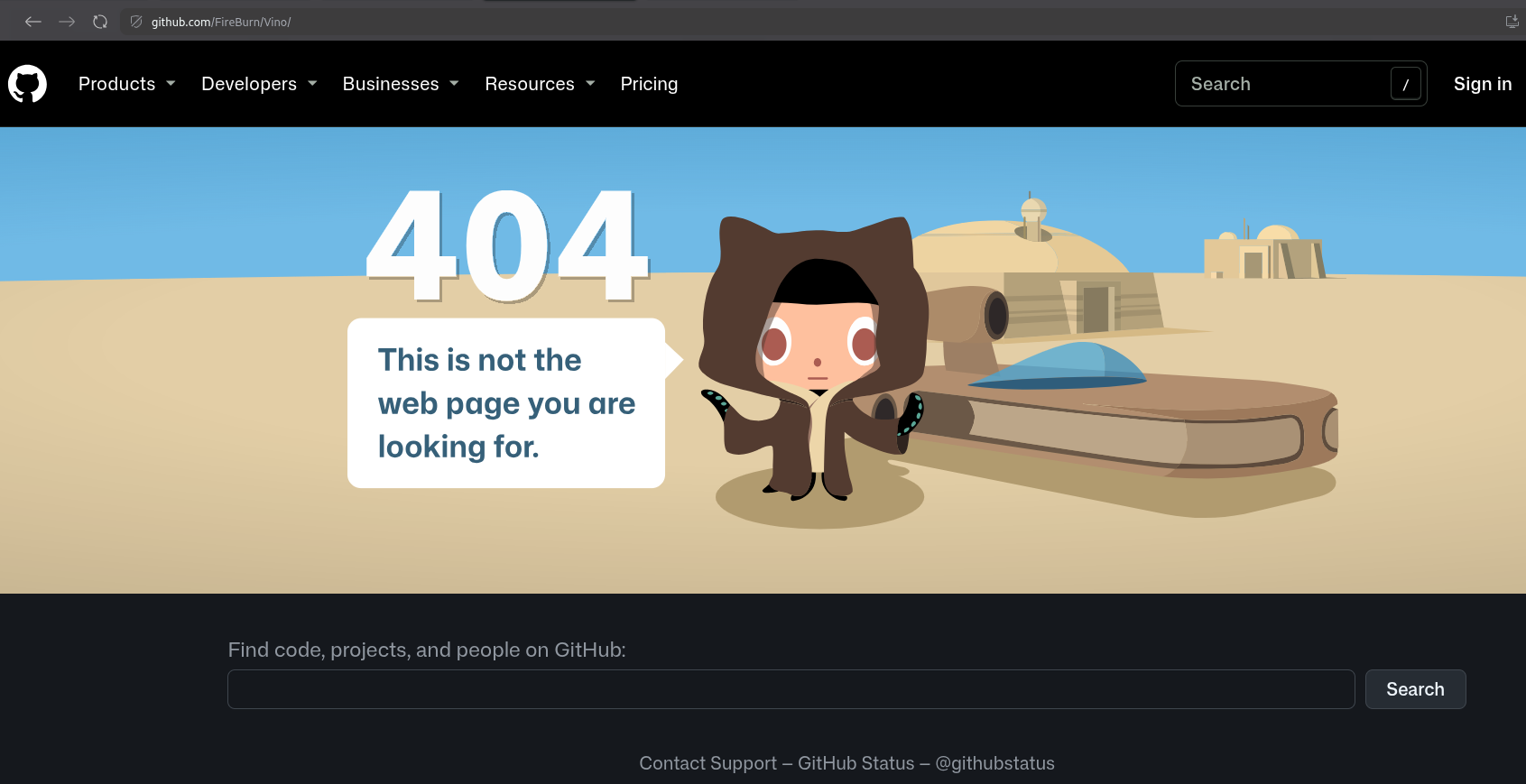
The October 5 correspondence escalated the financial stakes significantly. Synaptics informed Lothian that he would be held liable for $25,000 in costs associated with the preparation of the claim charts if he failed to comply by October 11. Furthermore, the company indicated that this demand would increase by an additional $25,000 for each subsequent week of non-compliance. Lothian attempted a last-ditch negotiation on October 6, offering to pause public development of the specific encoding sections identified in the claim charts in exchange for a stay on the financial demands and a discussion regarding non-commercial licensing. Synaptics rejected these overtures on October 7, stating that they would not grant any license or covenant not to sue, and established a final deadline of October 18. Following this, Lothian removed the Vino repository.
Technical and Legal Context of the Patents
The patents cited by Synaptics, GB2484736 and GB2485613, are fundamental to the way DisplayLink handles video compression and data transport. GB2484736 generally relates to the transmission of compressed video data over limited-bandwidth interfaces, while GB2485613 focuses on the synchronization and decoding processes necessary to maintain fluid video playback across multiple monitors.
In the eyes of intellectual property law, these patents cover the "how" of the technology—the algorithmic processes that allow for the conversion of high-bandwidth video streams into USB-compatible packets. Because these processes are embedded in the proprietary chips manufactured by Synaptics, the company maintains that any driver software capable of interacting with that hardware must necessarily utilize the protected methods covered by their patent portfolio. This places developers of open-source drivers in a precarious position: they are forced to either secure a commercial license—which is rarely available for individual open-source developers—or risk significant financial litigation.
The Broader Implications for Open Source
The case of Vino underscores a growing trend in the technology industry where legal frameworks are increasingly being leveraged to curb the proliferation of reverse-engineered, open-source alternatives. This is not an isolated incident; as AI-assisted reverse engineering becomes more accessible, the barrier to entry for duplicating proprietary protocols has lowered, prompting corporations to adopt more aggressive defensive legal strategies.
From a policy perspective, the conflict raises questions regarding the sustainability of open-source interoperability. Without the ability to reverse engineer hardware to write drivers, the Linux ecosystem risks becoming increasingly dependent on "binary blobs"—proprietary, opaque drivers provided by hardware manufacturers. These blobs are often poorly maintained, lack transparency, and can create security vulnerabilities that the community is unable to patch or audit.
The financial threat posed to individual developers—in this case, the prospect of compounding $25,000 weekly penalties—acts as a powerful deterrent, effectively chilling the development of community-driven hardware support. While Synaptics has the right to protect its intellectual property, the use of such significant financial pressure against a single developer has sparked debate regarding the fairness of current patent enforcement mechanisms.
Conclusion and Future Outlook
As of the current date, the Vino repository remains offline, and Synaptics has refrained from issuing public statements regarding the matter. The broader community is now left to evaluate the long-term impact of this outcome. While the specific code developed by Lothian has been withdrawn, the underlying desire for an open-source DisplayLink alternative remains unaddressed.
The incident serves as a stark reminder of the limitations of "clean-room" engineering in the modern patent landscape. While it remains a robust defense against copyright claims, it provides little protection against patent infringement suits. For the Linux community, the challenge remains to find a balance between the pursuit of universal hardware compatibility and the legal realities of proprietary hardware architectures. Future projects may need to adopt different strategies, potentially focusing on hardware that is explicitly open-source or seeking formal industry partnerships rather than attempting to navigate the complex patent landscape through independent development alone. For now, the Vino project stands as a cautionary tale of the high costs associated with challenging established proprietary technologies.