Svelte Ecosystem Expands with Major Feature Updates and Sustained Leadership in Developer Satisfaction Surveys

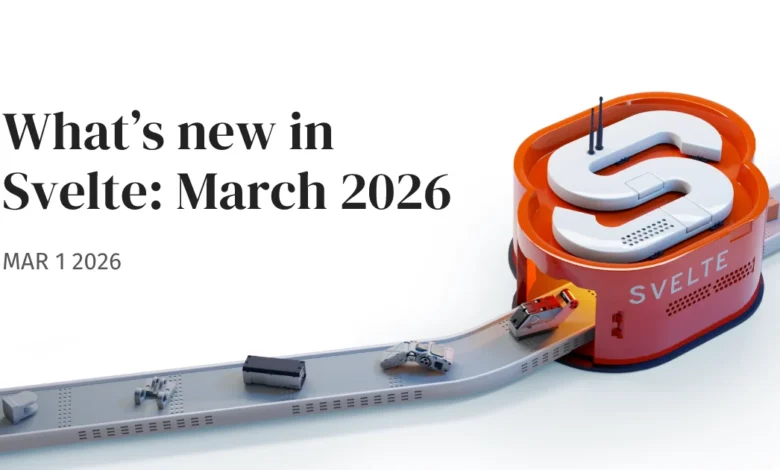
The Svelte development team and its broader community have announced a comprehensive suite of updates across the Svelte framework, the SvelteKit meta-framework, and the Svelte Command Line Interface (CLI), marking a significant milestone in the ecosystem’s growth. These technical advancements coincide with the release of the State of JS 2025 survey results, which confirm that Svelte maintains its position as the leading reactive framework in terms of positive developer sentiment. This dual achievement of technical iteration and community validation underscores the framework’s increasing influence in the modern web development landscape.
Analysis of the State of JS 2025 Results
The State of JS 2025 survey, a definitive annual census of the JavaScript ecosystem, has once again highlighted Svelte’s unique position among front-end tools. While larger competitors such as React and Vue maintain higher total usage numbers due to their established presence in legacy enterprise systems, Svelte has secured the top spot for developer satisfaction and positive sentiment for several consecutive years.
Data from the report indicates that developers who migrate to Svelte frequently cite the framework’s "shorthand" syntax and the absence of a Virtual DOM as primary drivers for their satisfaction. The 2025 metrics show a "Retention" rate—the percentage of users who have used the framework and would use it again—that exceeds 90%, outperforming its primary rivals. This high retention rate is a critical metric for long-term ecosystem health, suggesting that Svelte’s architectural decisions, particularly the shift toward the "Runes" system in version 5, have been well-received by the professional community.
Furthermore, the "Interest" category in the survey reveals that a growing cohort of developers currently using other frameworks expressed a strong desire to learn Svelte. This latent demand suggests a potential shift in market share over the coming fiscal years as new projects are initiated using Svelte’s compiler-based approach rather than traditional runtime-heavy frameworks.
Technological Milestones in Svelte and SvelteKit
The most recent update cycle has introduced a "ton of new features," according to the core maintenance team. These updates primarily target the developer experience (DX) and the performance of the Svelte compiler.
Svelte Core Enhancements
The Svelte compiler has seen rigorous optimization intended to reduce the size of the generated JavaScript bundles. Unlike traditional frameworks that ship a heavy runtime library to the browser, Svelte’s compiler-first philosophy means that the "framework" essentially disappears during the build process, leaving behind highly optimized, vanilla JavaScript. The latest releases have focused on refining the reactivity engine, ensuring that state changes result in the minimum possible number of DOM updates. This "surgical" precision is a hallmark of the Svelte 5 architecture, which utilizes signals-based reactivity to track dependencies at a granular level.
SvelteKit and the Meta-Framework Layer
SvelteKit, the official framework for building applications with Svelte, has also received substantial updates. Key improvements involve the routing system and the handling of server-side rendering (SSR). The integration of new features within SvelteKit adapters—the plugins that allow SvelteKit apps to run on various platforms like Vercel, Netlify, and Cloudflare—has simplified the deployment pipeline for full-stack applications.
The maintenance team highlighted that these updates are not merely additive but also corrective. The latest changelogs reveal a focus on "important bugfixes" that address edge cases in edge computing environments and hydration mismatches. Hydration, the process by which a client-side JavaScript framework takes over a static HTML page served by the server, remains a complex challenge in web development; SvelteKit’s latest iterations have aimed to make this process more resilient and faster for end-users.
The Evolution of the Svelte Command Line Interface
A notable portion of this month’s updates was dedicated to the Svelte CLI. In modern web development, the CLI is the primary gateway for developers, handling everything from project initialization to testing and deployment. The new CLI features are designed to streamline the "scaffolding" process.
The updated CLI now provides more robust templates for TypeScript integration, unit testing with Vitest, and end-to-end testing with Playwright. By automating the configuration of these essential tools, the Svelte team is lowering the barrier to entry for enterprise-grade development. This focus on tooling reflects a broader industry trend where the "Developer Experience" is treated with the same importance as the end-user experience.
Chronology of Recent Development Cycles
The current state of the Svelte ecosystem is the result of a deliberate, multi-year roadmap. To understand the significance of this month’s updates, it is necessary to examine the timeline of Svelte’s evolution:
- Late 2023 – The Announcement of Svelte 5: The team introduced the concept of "Runes," a significant departure from the Svelte 3 and 4 reactivity models. This was designed to handle the complexity of large-scale applications more effectively.
- Early 2024 – Public Beta Phase: A period of intense community testing followed, during which the core team gathered feedback on the new syntax and performance characteristics.
- Mid 2024 – Stabilization of SvelteKit: SvelteKit underwent a series of updates to ensure full compatibility with the Svelte 5 compiler, focusing on backward compatibility for existing Svelte 4 projects.
- Late 2024 – CLI Overhaul: The team began the process of rebuilding the CLI to support a more modular plugin system.
- January 2025 – State of JS Results and Feature Rollout: The current month marks the culmination of these efforts, with the framework reaching a new peak in both technological capability and community approval.
The Strategic Importance of Developer Sentiment
In the competitive landscape of software engineering, "positive sentiment" is often viewed as a leading indicator of future adoption. For Svelte to maintain the top spot in the State of JS 2025 survey is a strategic victory. When developers enjoy the tools they use, they are more likely to advocate for their adoption within their organizations.
The positive sentiment toward Svelte is frequently attributed to its "HTML-first" approach. While React requires developers to learn JSX and a complex set of hooks, Svelte allows developers to write code that closely resembles standard HTML, CSS, and JavaScript. This reduces the cognitive load and allows for a faster development velocity. From a business perspective, this translates to lower training costs and quicker time-to-market for digital products.
Community Contributions and Ecosystem Support
The Svelte project is famously supported by a dedicated group of "Contributors and Ambassadors." These individuals play a vital role in maintaining the documentation, providing support on platforms like Reddit and Discord, and creating educational content.
The "This Week in Svelte" initiative has become a cornerstone of the community, providing weekly digests of changes, community-made plugins, and showcase projects. This decentralized support network is crucial for an open-source project, as it ensures that developers have access to resources and troubleshooting help outside of official channels. The core team acknowledged this by inviting feedback on social platforms, emphasizing that the framework’s development is a collaborative process between the maintainers and the global user base.
Broader Impact and Industry Implications
The continued success of Svelte has broader implications for the web development industry. It represents a move away from the "Virtual DOM" paradigm that has dominated the last decade. By proving that a compiler-based approach can be both performant and developer-friendly, Svelte is influencing the direction of other frameworks. Even established players like React and Vue have begun exploring compiler-assisted optimizations, a move that many analysts credit to the pressure exerted by Svelte’s innovation.
Furthermore, Svelte’s dominance in satisfaction surveys suggests that the industry may be reaching a point of "framework fatigue" with overly complex solutions. The desire for simpler, more intuitive tools is evident. As companies look to build more performant web applications that rank better in search engine results (due to faster load times), the lean nature of Svelte becomes an increasingly attractive proposition for Chief Technology Officers (CTOs) and lead architects.
Conclusion and Future Outlook
As the Svelte ecosystem moves forward into 2025, the focus appears to be on stability and enterprise readiness. The "ton of new features" released this month, combined with the validation of the State of JS 2025 survey, positions Svelte as a mature, viable alternative to the industry giants.
The development team has signaled that they will continue to prioritize bugfixes and performance optimizations, as evidenced by their recommendation for developers to monitor the GitHub CHANGELOGs for granular updates. With a robust CLI, a powerful meta-framework in SvelteKit, and a community that is more satisfied than any other in the JavaScript world, Svelte enters the mid-point of the decade with significant momentum. The transition from a "niche" enthusiast tool to a mainstream industry standard appears to be nearing completion.