React Native 0.86 Ushers in Enhanced Android Edge-to-Edge Support and DevTools Advancements with a Seamless Upgrade Path

React Native 0.86 has been officially released, bringing significant improvements to the cross-platform development framework. This latest iteration focuses on delivering a more robust and intuitive development experience, with a particular emphasis on comprehensive edge-to-edge display support for Android devices running version 15 and above, alongside notable enhancements to the React Native DevTools. Underscoring a commitment to developer productivity and a streamlined upgrade process, this release marks the second consecutive major version update without any user-facing breaking changes, following the precedent set by React Native 0.83.
A New Chapter for React Native: Relocation to the React Foundation
A significant organizational shift accompanies the release of React Native 0.86. The core React Native repository, along with its associated projects including React, Metro, Yoga, and the React Native Website, has transitioned from the facebook GitHub organization to the newly established react organization. This strategic move signifies the maturation of React and React Native as integral components of the broader React ecosystem, now under the stewardship of the React Foundation. This independent foundation is dedicated to the long-term health, evolution, and governance of all React-related technologies.
The relocation to the react organization is a testament to the growing independence and community-driven nature of the React ecosystem. While the move is primarily symbolic and administrative, it reinforces the foundation’s role in ensuring the sustained development and accessibility of these critical tools. Importantly, GitHub has implemented automatic redirects for all existing URLs, issues, and pull requests, ensuring a seamless transition for developers and maintaining continuity in ongoing development efforts. No immediate action is required from the community to adapt to this change.
Embracing the Full Screen: Edge-to-Edge Support on Android
React Native 0.86 introduces comprehensive support for Android’s edge-to-edge display mode, a feature that allows applications to extend their content to the very edges of the screen, including areas traditionally occupied by system UI elements like the status bar and navigation bar. This enhancement is particularly impactful for Android 15 and subsequent versions, where edge-to-edge can be enforced by the operating system even if not explicitly configured by the developer via the edgeToEdgeEnabled Gradle property.
The release addresses critical fixes that ensure applications behave correctly and predictably when operating in this immersive mode. Previously, developers might have encountered display inconsistencies or layout issues when the OS mandated edge-to-edge rendering without explicit app-level configuration. This update provides a more unified and reliable experience, allowing developers to leverage the full screen real estate for a more engaging user interface. The implications of this are substantial for user experience design, enabling richer visual presentations and more intuitive interactions by removing the visual clutter of system bars. This aligns with a broader industry trend towards immersive interfaces across mobile platforms.
Enhanced Developer Workflow: React Native DevTools Improvements
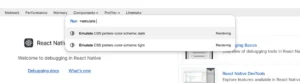
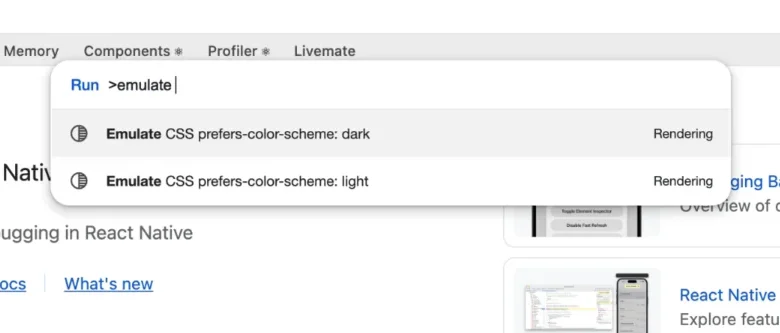
The development process for React Native applications has been further refined with significant enhancements to the React Native DevTools. A standout feature in this release is the introduction of light/dark mode emulation directly within the DevTools. Developers can now simulate different appearance modes using the Emulation.setEmulatedMedia API, allowing for direct testing of an app’s theme handling without the need to manually alter device settings. This capability can be accessed via the Command Palette, typically by pressing cmd or ctrl + shift + P.
This new emulation feature streamlines the testing of dark mode and other appearance-related functionalities. Previously, developers would have to switch between device settings or even restart applications to preview how their UI would render in different themes. The ability to perform temporary, on-the-fly simulations within DevTools dramatically accelerates the iteration cycle for UI developers. The temporary nature of these emulations, resetting upon disconnection from DevTools, ensures that developers are always working with a clean slate and avoid unintended persistent changes to their debugging environment. This addition brings React Native DevTools closer to the sophisticated emulation capabilities found in web browser developer tools, further leveling the playing field for cross-platform development.
A Commitment to Stability: No User-Facing Breaking Changes
Continuing a trend that began with React Native 0.83, version 0.86 arrives with absolutely no user-facing breaking changes. This deliberate approach underscores a strong commitment from the React Native core team and community to prioritize developer experience and predictability. For developers currently on React Native 0.85, upgrading to 0.86 is expected to be a straightforward process, requiring no modifications to existing application code. This strategy significantly reduces the friction associated with staying up-to-date with the latest framework advancements, allowing teams to adopt new features and bug fixes with greater confidence and less risk of introducing regressions.
The concept of a "breaking change" in software development typically refers to an update that requires developers to alter their existing code to function with the new version. By eliminating these from major releases, React Native is fostering an environment where developers can adopt new versions more readily, thereby benefiting from performance improvements, security patches, and new features without the usual overhead of extensive refactoring. This policy is a crucial factor in maintaining the long-term viability and adoption of the framework, especially for large-scale applications and enterprise-level projects where upgrade inertia can be a significant barrier.

Deprecations and Future Considerations
While React Native 0.86 focuses on stability and new features, the release also includes a list of deprecated APIs. These deprecations signal APIs that are slated for removal in future versions, providing developers with advance notice to migrate their code. Adhering to these deprecation notices is crucial for ensuring future compatibility and maintaining a healthy codebase. The specific APIs marked for deprecation are detailed in the official release notes and documentation, enabling developers to proactively update their projects.
Runtime and Web Spec Alignment
Beyond the headline features, React Native 0.86 incorporates several refinements aimed at aligning its runtime behavior more closely with web specifications. This ongoing effort to bridge the gap between web and native development paradigms simplifies the transition for web developers learning React Native and allows for greater code sharing between web and mobile applications. Such alignment not only enhances developer familiarity but also fosters a more cohesive and interoperable ecosystem across different platforms.
Rendering, Layout, and Animation Enhancements
The 0.86 release also brings under-the-hood improvements to the core rendering, layout, and animation systems. These optimizations can translate into tangible performance gains, leading to smoother animations, faster rendering of complex UIs, and a more responsive user experience. While often not directly visible to the end-user, these foundational improvements are critical for building high-performance, visually rich applications that can compete with native counterparts.
Accessibility and Infrastructure Updates
In line with a commitment to inclusive design, React Native 0.86 includes updates related to accessibility. These enhancements aim to make applications built with React Native more usable for individuals with disabilities, ensuring that a broader audience can engage with mobile experiences. Furthermore, the release addresses various infrastructure and dependency updates, which are essential for maintaining the security, performance, and maintainability of the React Native framework itself. These background updates ensure that React Native remains a modern and robust platform for building applications.
Advancements in JSI and Android-Specific Improvements
The JavaScript Interface (JSI), a key component for enabling direct communication between JavaScript and native code, has seen new API additions in React Native 0.86. These enhancements make the C++ interface between native modules and the JavaScript engine more versatile and capable, opening up new possibilities for performance optimization and custom native integrations.
On the Android platform, specific improvements have been made to input handling, navigation, and image processing. These include updates to text input components, refinements in how navigation events are handled, and optimizations for image loading and display. Additionally, networking capabilities on Android have been enhanced, potentially leading to more efficient and reliable data transfer for applications.
Acknowledgements and Community Contributions
React Native 0.86 is the product of extensive collaboration, featuring over 596 commits from 97 contributors. The release acknowledges the significant contributions from various members of the React Native community, highlighting the collaborative spirit that drives the framework’s evolution. Special thanks are extended to individuals who played a pivotal role in shaping this release, underscoring the vital role of community involvement in the success of open-source projects.
Upgrading to React Native 0.86
React Native 0.86 is now the latest stable version available, marking version 0.83.x as unsupported. Developers are strongly encouraged to upgrade to benefit from the latest features, performance improvements, and security patches. The React Native community provides the Upgrade Helper tool, a valuable resource that allows developers to view detailed code changes between versions for their existing projects. This tool, in conjunction with the comprehensive Upgrading documentation, facilitates a smooth and informed upgrade process.
For developers looking to start new projects with the latest version, the command npx @react-native-community/cli@latest init MyProject --version latest can be used to scaffold a new project with React Native 0.86. For users of the Expo platform, React Native 0.86 will be accessible through the expo@canary releases, offering an early glimpse into the latest advancements within the Expo ecosystem. This phased rollout ensures that both bare React Native projects and Expo-managed projects can leverage the new capabilities of version 0.86.