
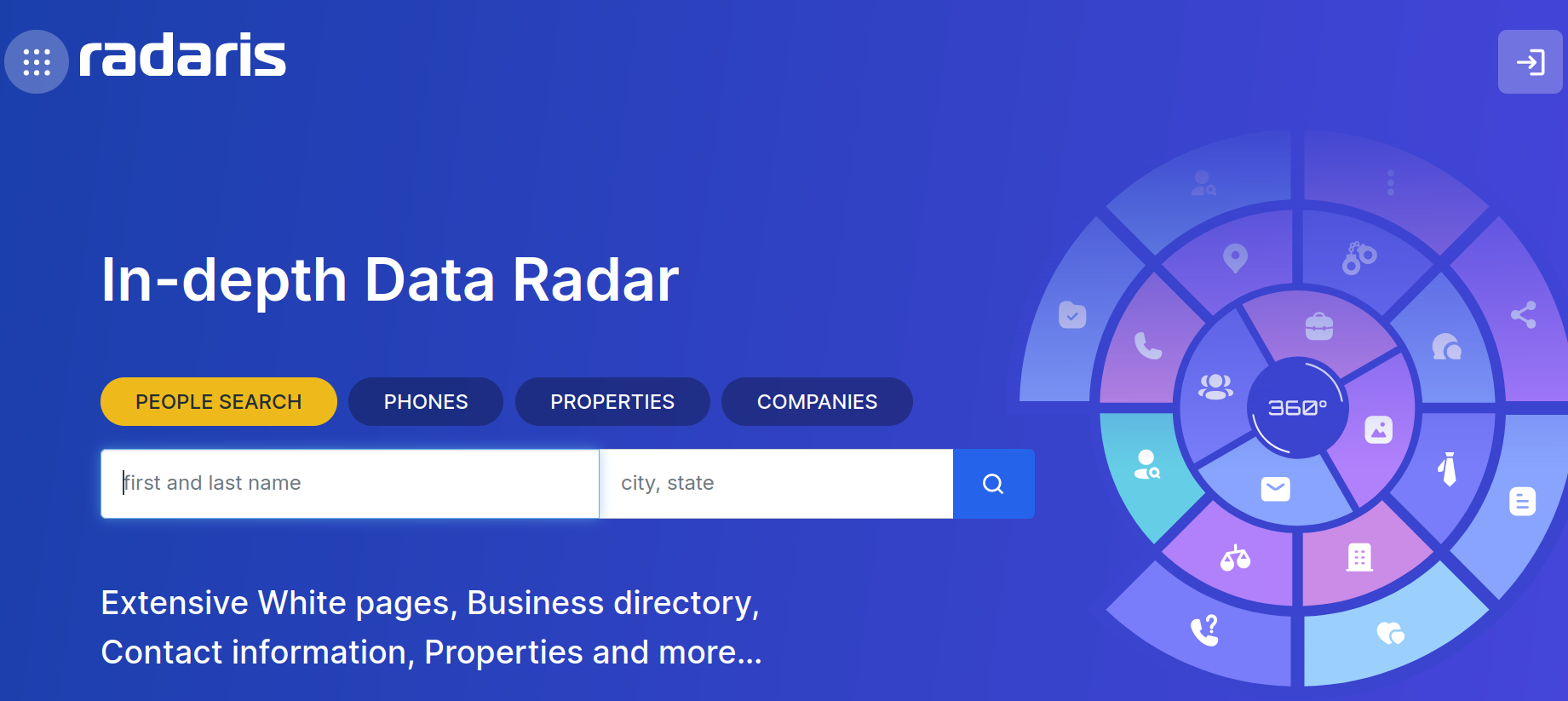
The consumer data broker Radaris.com has long maintained a notorious reputation for systematically ignoring requests to purge sensitive personal information from its expansive network of people-search services. This disregard for privacy mandates recently culminated in a landmark legal defeat, as a New Jersey judge ordered the transfer of Radaris.com and more than a dozen associated domains to the plaintiffs. The ruling follows a protracted legal battle brought by Atlas Data Privacy Corp, which alleges that the broker’s operations flagrantly violate state privacy protections, specifically the statute known as Daniel’s Law. This legal precedent, designed to safeguard law enforcement officials, judges, and their families, has now emerged as a potent weapon against a sector that has historically operated with near-total impunity.
The Genesis of a Legal Conflict
The litigation began in earnest in February 2024, when Atlas Data Privacy Corp initiated a lawsuit against Radaris, citing the New Jersey statute named after Daniel Anderl, the son of U.S. District Judge Esther Salas. The legislation was enacted following the tragic 2020 murder of the younger Anderl by an individual who had easily located the family’s home address through online people-search databases. Daniel’s Law mandates that commercial data brokers must scrub the personal data of protected government personnel upon request and imposes civil penalties of $1,000 per violation for non-compliance.
Radaris, however, proved to be a formidable and evasive defendant. From the onset, the company’s legal representatives employed a strategy characterized by what plaintiffs described as "stonewalling and prevarication." By delaying court appearances until the final possible moment and utilizing a complex web of corporate shells, the operators of Radaris sought to exhaust the resources of those attempting to hold them accountable.
A History of Evasion and Shell Games
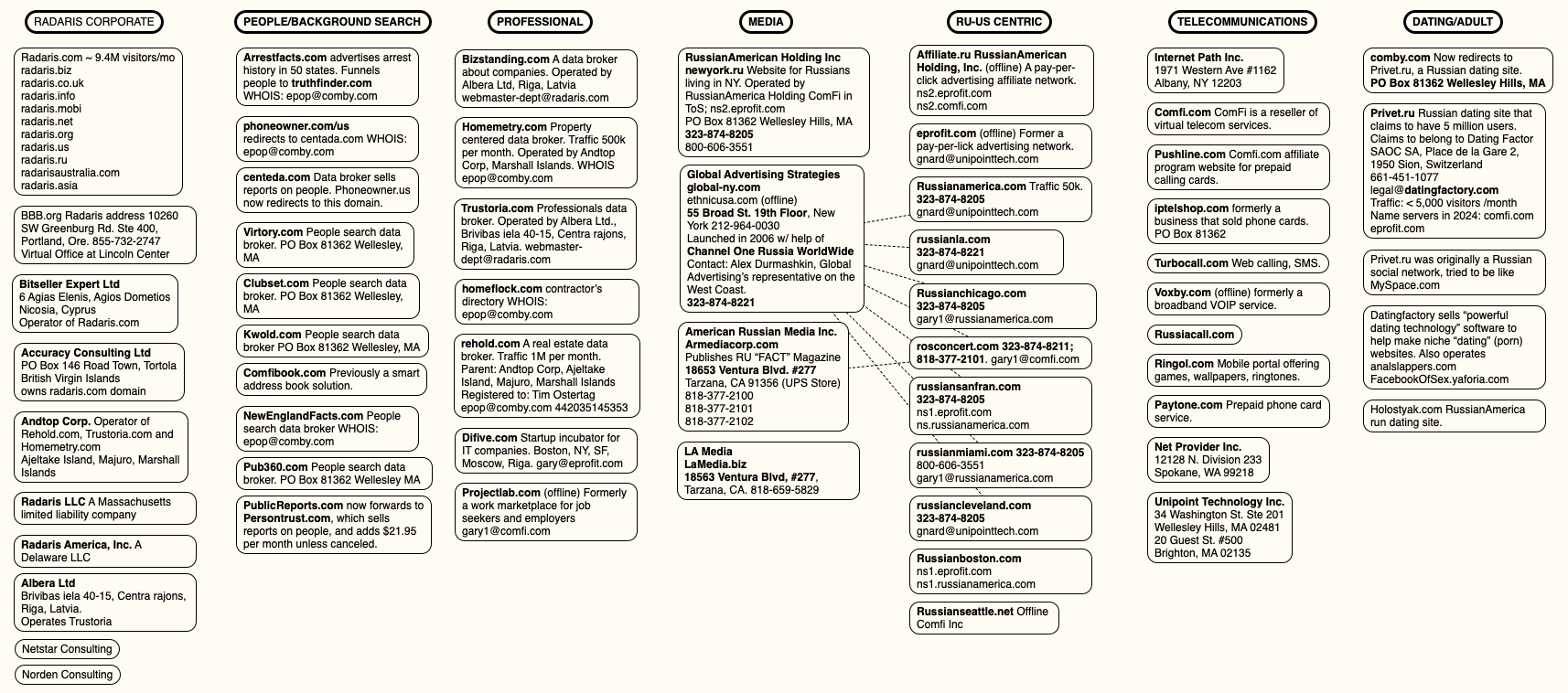
The true architecture behind Radaris was uncovered through extensive investigative reporting, which linked the platform to Russian-born brothers Igor and Dmitry Lubarsky, who reside in Massachusetts. Despite their central role in the operation, the brothers attempted to insulate themselves from legal liability by creating a dizzying array of corporate entities. These entities, including Bitseller Expert Limited, Andtop Company, and various Marshall Islands-registered firms, were designed to create a jurisdictional labyrinth that would baffle even the most diligent legal teams.
The strategy of "island-hopping"—frequently updating terms of service to reflect new management companies in offshore tax havens like the Seychelles or the British Virgin Islands—served as the core of their defensive playbook. When Atlas hired private investigators to verify the legitimacy of these entities, they discovered that some of the newly minted management firms did not even exist as functional businesses. This pattern of obfuscation was further evidenced by the invention of "Gary Norden," a fictitious CEO whose name was used in press releases to solicit investor funding and provide a veneer of corporate legitimacy to an otherwise opaque operation.
Chronology of the Legal Siege
The legal battle against Radaris spans nearly a decade, starting with a 2017 class-action lawsuit that the company lost by default. At that time, a $7.5 million judgment was ordered, but the plaintiffs struggled to collect as the defendants shuffled assets between subsidiaries.
- 2017: Initial class-action lawsuit filed against Radaris. A default judgment is issued, but Radaris avoids payment by citing technicalities regarding the ownership of the domain.
- February 2024: Atlas Data Privacy Corp files suit in New Jersey, citing violations of Daniel’s Law.
- March 2024: Investigative reporting by KrebsOnSecurity exposes the Lubarsky brothers as the true operators of the platform.
- June 2025: Atlas refiles an expanded lawsuit, incorporating more of the Radaris family of companies and providing granular evidence of the unified financial structure behind the sites.
- August 2026: A New Jersey judge grants a default judgment against the defendants, ordering the transfer of 14 domain names to Atlas following the defendants’ failure to provide a credible defense.
Financial Underpinnings and Data Aggregation
The sheer scale of the Radaris operation is highlighted by the internal documents seized during litigation. Atlas reported obtaining over 10,000 emails and financial records, which effectively stripped away the facade of independent operation for the various websites. The documents demonstrate that platforms such as Veripages.com, Radaris.com, and numerous others were, in fact, a singular operation managed by a small Boston-area team.

Financially, these sites were lucrative, with Radaris.com generating an estimated $42,000 in monthly revenue, while Veripages brought in roughly $45,000. These figures were bolstered by advertising partnerships with firms like the Lifetime Value Company and, surprisingly, data removal services like Onerep. The existence of these partnerships reveals a troubling cycle: some data privacy companies benefit from the continued existence of the very search engines they claim to help users opt out of.
The Constitutional Challenge and Future Implications
Despite the victory in New Jersey, the future of Daniel’s Law remains uncertain. Currently, approximately 150 data broker firms are involved in litigation with Atlas, and the industry has launched a massive, coordinated constitutional challenge. By moving dozens of cases to federal courts, the industry argues that Daniel’s Law is an overly broad infringement on First Amendment rights, claiming that the forced removal of "public" information stifles the flow of information.
The legal landscape is further complicated by the conflicting rulings appearing across the country. While 14 states have adopted versions of the legislation, federal courts have shown skepticism; for instance, a federal district court in West Virginia ruled in August 2025 that a similar law was facially unconstitutional. The consensus among legal experts is that the issue will inevitably reach the U.S. Supreme Court, where the tension between individual privacy rights and the commercial freedom of the data-brokering industry will be tested.
The Broader Surveillance Economy
Privacy advocate Justin Sherman, author of The Middlemen, emphasizes that the Radaris case is merely a symptom of a much larger, systemic failure. "The lack of comprehensive federal privacy law is not for a lack of knowledge," Sherman notes. He points out that most state-level privacy initiatives contain gaping exemptions for records deemed "public," such as property filings, voter registrations, and motor vehicle records. These exemptions allow data brokers to continue harvesting and selling personal profiles under the guise of providing public record access.
The lack of strict oversight is best exemplified by the recent breach at IDScan.net, where 153 million American driver’s license records were compromised and effectively turned into a dark-web marketplace for identity theft. Without federal mandates governing how these companies scan, store, and share data, the average citizen remains perpetually exposed.
As of now, Radaris.com serves as a digital monument to this struggle; instead of personal dossiers, the site now displays a notice from Atlas regarding the domain transfer. While this marks a significant tactical win for privacy advocates, the broader war over data sovereignty continues. The outcome of the upcoming appellate battles will likely dictate whether the era of unchecked data brokerage is nearing its end or if the industry will continue to adapt, innovate, and thrive within the legal gray areas of the 21st century. The case has served as a critical wake-up call, but as history has shown, awareness alone is insufficient to curb the massive, profit-driven machine that is the modern data surveillance industry.