Microsoft Recognized as a Leader in the 2026 Gartner Magic Quadrant for Container Management

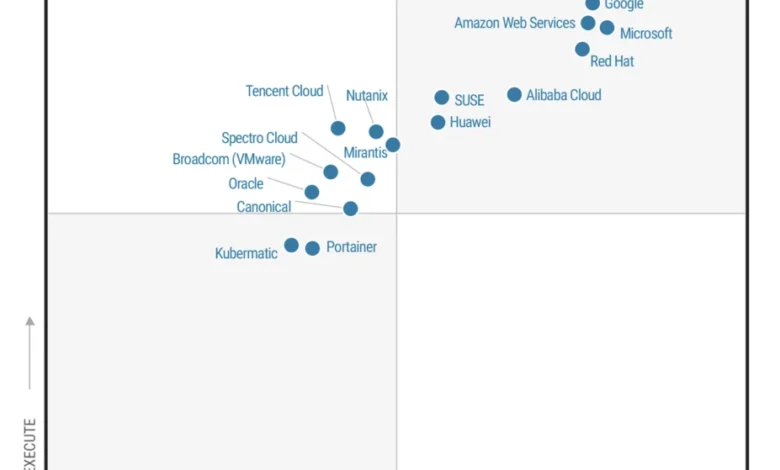
Microsoft has officially been named a Leader in the 2026 Gartner Magic Quadrant for Container Management, achieving the furthest positioning to the right for Completeness of Vision. This recognition underscores the company’s strategic pivot toward providing a unified, scalable, and AI-ready ecosystem for enterprise-grade container orchestration. As global organizations grapple with the increasing complexity of deploying applications across cloud, edge, and hybrid environments, Microsoft’s container portfolio—anchored by Azure Kubernetes Service (AKS), Azure Container Apps, Azure Arc, and Azure Kubernetes Fleet Manager—has emerged as a focal point for digital infrastructure modernization.
The designation arrives at a pivotal juncture in the evolution of cloud-native computing. A decade ago, the primary objective of Kubernetes was the democratization of distributed systems, focusing on reliability and the abstraction of infrastructure requirements. Today, however, the landscape has been fundamentally reshaped by the integration of Artificial Intelligence. Modern enterprise requirements now dictate that applications and AI models must function in close proximity to data, users, and stringent sovereign regulatory boundaries, necessitating a platform that maintains a consistent operating model regardless of the underlying physical deployment.
A Chronology of Container Evolution and Microsoft’s Strategic Shift
The journey of container management began with the open-source movement in the mid-2010s. Microsoft’s involvement began early, with the company identifying that Kubernetes provided a critical layer of abstraction for software developers. Over the past ten years, the strategy transitioned from mere support for containerized applications to building an expansive, cohesive ecosystem.
In 2020, Microsoft began aggressively expanding its hybrid capabilities through the introduction of Azure Arc, which allowed customers to extend Azure management to any infrastructure. By 2023, the focus shifted toward AI-centric orchestration, with the introduction of specialized tooling for GPU scheduling and model lifecycles within AKS. By 2025, the complexity of managing sprawling multi-cluster environments led to the formalization of the Azure Kubernetes Fleet Manager, designed to automate and unify policies across massive, distributed container fleets. This steady progression of features demonstrates a long-term commitment to neutralizing the operational overhead typically associated with massive container estates.
Supporting Data and Technical Architecture
The technical strategy behind Microsoft’s leadership position relies on two distinct architectural models designed to accommodate the varied needs of modern AI workloads.
The first model is optimized for persistent, high-volume AI services. In this configuration, platform teams manage a stable serving layer, GPU scheduling, and the compliance boundary. To facilitate this, Microsoft has integrated the AI toolchain operator within AKS, providing automated model deployment and GPU provisioning. Notably, AKS holds the Cloud Native Computing Foundation (CNCF) AI Conformance certification, which ensures that the ecosystem remains compatible with the broader open-source landscape.
The second model prioritizes elasticity and rapid scaling for agent-based applications. In this scenario, inference is invoked only when necessary, and capacity is released immediately upon completion. Azure Container Apps serves as the backbone for this model, utilizing serverless GPUs and hardware-isolated sandboxes. This approach allows developers to run sophisticated AI agents without requiring a deep understanding of Kubernetes orchestration, effectively lowering the barrier to entry for AI-driven development.
Market data suggests that organizations are increasingly seeking this duality. According to industry surveys, more than 70% of enterprises currently managing containerized workloads report that they require both persistent infrastructure for model training and elastic, ephemeral capacity for real-time inference. Microsoft’s ability to allow these two models to coexist within the same security and identity framework—using the same container images and network controls—is a primary driver of its current market standing.
The Role of Open Source and Collaborative Innovation
A critical factor in Microsoft’s recognition is its ongoing commitment to the open-source community. Unlike proprietary "forks" that can lead to vendor lock-in, Microsoft has maintained strict alignment with upstream Kubernetes. As of the 2026 reporting period, Microsoft remains the second-largest contributor to CNCF projects overall and the leading contributor among cloud providers for the third consecutive year.

This commitment is not merely altruistic; it is a fundamental business strategy. By ensuring that the API remains consistent regardless of whether a workload is running on Azure, on-premises, or in a third-party cloud, Microsoft preserves the portability of customer applications. This ecosystem compatibility is essential for enterprises that are increasingly adopting multi-cloud or hybrid strategies to satisfy sovereignty requirements or to avoid over-reliance on a single service provider.
Addressing Operational Complexity and Future Automation
As the number of clusters within an enterprise grows, the "human factor" becomes a significant bottleneck. Many organizations find that their cluster counts are increasing at a rate that outpaces the growth of their engineering teams. To address this, Microsoft has introduced automated operational layers, most notably AKS Automatic, which applies internal best practices derived from years of managing massive-scale Kubernetes deployments at Microsoft.
Looking forward, the industry is shifting toward "agentic operations." The introduction of the Azure SRE (Site Reliability Engineering) Agent represents a significant step in this direction. These tools aim to move beyond traditional alert monitoring, enabling systems to perform automated diagnosis and remediation. While this technology does not replace the human operator, it serves to eliminate routine investigative tasks that often consume the majority of an engineering team’s time.
Brian Sutliffe, Vice President of Engineering at CallRevu, noted that the platform’s impact on operational efficiency is tangible. "Azure Kubernetes Service gives us the control and cost efficiency we need," Sutliffe stated. "We can scale GPU resources based on call volume and test new models without touching production," highlighting the practical benefits of the platform’s elasticity and separation of concerns.
Broader Impact and Industry Implications
The Gartner recognition for 2026 highlights a shifting consensus: container management is no longer just about orchestration—it is about lifecycle management, security, and AI integration. The implications for the broader tech sector are substantial. Vendors who fail to bridge the gap between AI infrastructure and traditional container management will likely see their market share diminish as enterprises demand more integrated, "smarter" platforms.
The challenge for the next five years will be the further reduction of "surface area" complexity. As platforms absorb more functionality, the risk of "feature creep" increases. Microsoft’s stated objective is to continue abstracting these requirements into the platform, essentially making the underlying complexity invisible to the developer.
This, however, requires a high level of judgment from the platform teams responsible for these deployments. The tools provided by Azure, including Arc and Fleet Manager, are designed to prevent the coordination failures that often plague large-scale deployments, such as configuration drift and uneven policy application across disparate geographic regions.
Ultimately, the 2026 Gartner Magic Quadrant for Container Management serves as a benchmark for where the industry stands. For Microsoft, the challenge will be to maintain this leadership as AI, edge computing, and sovereign cloud requirements continue to evolve at an unprecedented pace. The company’s focus on maintaining parity with open-source standards while simultaneously providing proprietary, high-level automation appears to be a winning formula for the current market landscape.
As the industry moves toward 2027 and beyond, the success of these container management strategies will be measured by the ability of organizations to deploy complex AI applications across global estates without the need for constant, manual intervention. Microsoft’s current position suggests it is well-prepared to lead this transition, provided it can continue to simplify the operational experience for its growing customer base.
Related posts: