Beyond the Hype: Deconstructing AI Hot Takes and Real-World Developer Workflows in Modern Software Engineering

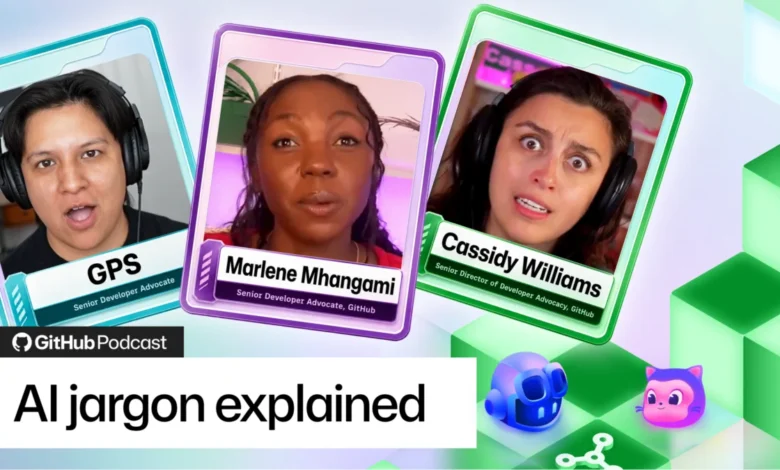
The rapid evolution of artificial intelligence in software development has transformed how engineers write, review, and maintain code, while simultaneously generating a deluge of polarized opinions across the technology sector. In the latest episode of the GitHub Podcast, industry experts dove past the superficial engagement of viral social media declarations to examine the underlying realities of AI-assisted programming. Rather than accepting sweeping generalizations about tools like the Model Context Protocol (MCP), Retrieval-Augmented Generation (RAG), and model fine-tuning, engineering teams are increasingly finding that the true value lies in rigorous critical analysis and practical implementation.
The discourse surrounding AI in software engineering has evolved significantly over the past several years. Following the widespread public introduction of large language models in late 2022, the initial industry reaction oscillated between existential dread regarding job displacement and unbounded optimism about autonomous software creation. By 2024 and 2025, the conversation matured as organizations moved from pilot projects to core infrastructure integration. Industry surveys from platforms like GitHub and Stack Overflow indicate that over 80% of professional developers utilize AI coding assistants in some capacity. However, this ubiquity has not quieted the debate; instead, it has shifted the friction points from whether AI should be used to how it alters code ownership, code quality, and engineering workflows.
To understand the current state of software development, industry analysts suggest looking past confident one-sentence proclamations—commonly known as "hot takes"—and examining the operational conditions that validate or invalidate them.
Code Review and Ownership in the Era of Automation
One of the most pervasive debates centers on the necessity of reviewing machine-generated code. A common provocative claim asserts that developers no longer need to read AI-generated code. In professional software engineering, however, this approach is fundamentally misaligned with accountability and compliance standards.
Engineers remain legally and professionally responsible for the systems they deploy to production. Nevertheless, treating every line of generated code with identical scrutiny is inefficient. A production-grade authentication refactor demands rigorous line-by-line inspection of permissions, error handling, and security vulnerabilities. Conversely, a low-risk CSS adjustment or routine boilerplate generation requires a different risk assessment framework.
Engineering leads emphasize that AI shifts the distribution of effort rather than eliminating the work entirely. Developers often spend time upfront mapping dependencies, outlining edge cases, and establishing execution plans before an AI agent writes a single line. This proactive engagement ensures that by the time code is generated, the developer already understands its intended architecture and potential failure modes. The critical skill in modern development is not writing every character manually, but rather exercising precise risk assessment to determine where human oversight is most crucial.
Evolving Hiring Criteria and Developer Fluency
As generative tools become standard components of the modern integrated development environment (IDE), hiring managers have altered how they evaluate technical candidates. A prevailing worry among job seekers is that companies will automatically disqualify applicants who do not rely heavily on AI tools.
Industry hiring trends present a more nuanced picture. While organizations building AI-centric products naturally look for fluency in AI-assisted workflows, the overarching priority for engineering leadership is demonstrable technical judgment. Interviewers increasingly probe candidates on their decision-making processes: when do they choose to code manually versus using automation? How do they audit generated code for maintainability and performance? How do they handle security edge cases introduced by automated suggestions?
Total dependence on AI tools is viewed with as much skepticism as total refusal to use them. The ideal candidate exhibits a balanced methodology—leveraging automation for acceleration while maintaining a firm grasp of the underlying fundamentals. This dual competency is rapidly becoming a baseline requirement of the modern software engineering craft.
Infrastructure Standards: MCP, Skills, and RAG
Technical debates frequently frame emerging architectural standards as mutually exclusive zero-sum games. A prominent example is the false dichotomy suggesting that agent "skills" have rendered the Model Context Protocol (MCP) obsolete, or that Retrieval-Augmented Generation (RAG) is a dead technology.

System architects point out that these technologies serve distinct, complementary functions within an AI-augmented pipeline:
- Model Context Protocol (MCP): Provides a standardized interface enabling agents to securely connect to external tools, databases, and enterprise systems. It establishes predictable protocols for structured interactions.
- Agent Skills: Function as packaged domain expertise, often written in human-readable formats like Markdown, outlining team-specific workflows, project conventions, and operational best practices.
- Retrieval-Augmented Generation (RAG): Grounds AI responses by fetching relevant external data—such as internal documentation, historical support tickets, and specific codebase contexts—outside the model’s static training parameters. This reduces token waste and minimizes hallucinations.
Rather than competing, these elements operate in concert within modern engineering architectures. An AI agent might utilize MCP to interface with a deployment pipeline, follow specific project instructions outlined in its skills configuration, and leverage RAG to query internal code documentation simultaneously.
The Maintainability Pressure Test
Another controversial viewpoint argues that if an organization needs to fine-tune a large language model specifically to understand its proprietary codebase, the underlying code is inherently poorly written.
While valid enterprise use cases for fine-tuning exist—such as adapting models to proprietary programming languages or highly specialized domain logic—industry data suggests that modern foundation models are extensively trained on standard design patterns, frameworks, and architectures. If an off-the-shelf model struggles to comprehend a corporate codebase, human team members onboarding to the project will likely experience similar friction.
Consequently, the integration of AI tools serves as an objective pressure test for code maintainability. Practices that make a codebase comprehensible to an automated agent—such as consistent naming conventions, clear structural abstractions, comprehensive tests, and up-to-date documentation—are the exact same practices that simplify human code review, debugging, and long-term maintenance. Codebases that make their intent obvious are disproportionately rewarded by AI-assisted development environments.
Practical Experimentation in the Open Source Community
Rather than engaging in circular theoretical debates, many engineering communities are turning their focus toward practical implementation, building real-world projects to test the boundaries of AI integration.
Projects like Pollinations AI explore economic and operational models by allowing contributors to earn digital credits—referred to as "pollen"—by resolving issues, contributing models, and completing development quests within a generative platform. Such initiatives raise critical questions regarding incentives, quality control, scalability, and the future of open-source participation when automated tools lower the barrier to entry.
Similarly, hardware-software hybrid projects like Avian Visitors demonstrate the convergence of physical computing and generative media. By integrating microphones, Raspberry Pi units, e-ink displays, and AI-generated imagery to visualize local wildlife activity, developers create tangible benchmarks that expose genuine technical tradeoffs, providing the developer community with actionable reference points rather than abstract opinions.
Broader Implications and Future Outlook
The ongoing maturation of AI in software engineering highlights a fundamental truth about technological transitions: the most valuable insights emerge from practical execution rather than ideological posturing.
As software ecosystems continue to adapt, industry analysts recommend a pragmatic approach. Developers are encouraged to maintain rigorous code review standards to retain ownership of their outputs, build technical fluency that balances automation with foundational knowledge, and utilize architectural standards like MCP and RAG where they demonstrably improve system reliability. Ultimately, treating code readability as a universal metric for both human and machine comprehension ensures that the integration of artificial intelligence elevates the overall quality of software engineering practices worldwide.