Navigating the Noise: Deconstructing Modern AI Hot Takes and Real-World Developer Workflows

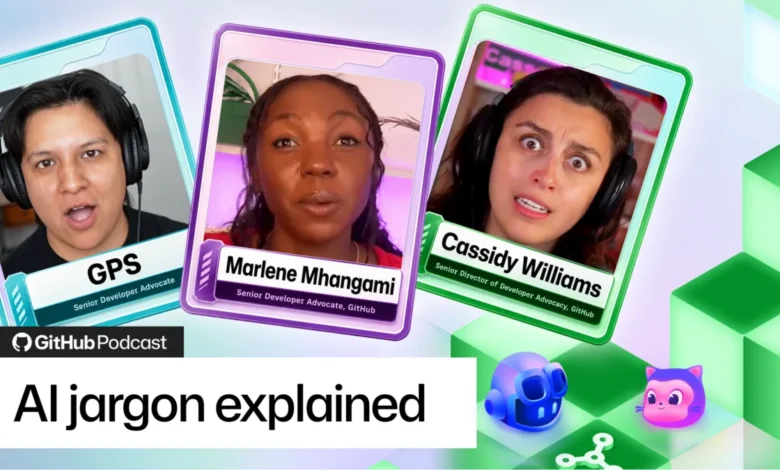
The rapid evolution of artificial intelligence in software engineering has generated an unprecedented volume of polarized commentary, driving online engagement while frequently obscuring technical realities. In the fast-paced landscape of modern development, provocative declarations—commonly referred to as "hot takes"—frequently reduce complex architectural shifts into definitive, one-sentence soundbites. While these assertions dominate social media discussions and developer forums, industry experts emphasize that the true value lies not in reacting to these statements, but in systematically deconstructing their underlying assumptions, contextual limitations, and practical implications for enterprise codebases.
This phenomenon was a primary focus of a recent discussion on the GitHub Podcast, hosted by developer advocates examining how software professionals navigate shifting paradigms. Rather than accepting polarizing claims at face value, engineering teams are increasingly urged to look past the rhetoric and evaluate how tools like the Model Context Protocol (MCP), Retrieval-Augmented Generation (RAG), and generative coding assistants actually function within production environments.
The Evolution of AI Discourse and Developer Sentiment
As artificial intelligence integration accelerates across global enterprise environments, the dichotomy between techno-optimism and skepticism has sharpened. Industry analysts note that the software development lifecycle (SDLC) is undergoing its most significant structural transformation since the advent of cloud computing. Surveys from major developer ecosystems indicate that over 70% of professional engineers utilize AI-assisted coding tools regularly, yet consensus regarding code ownership, architectural standards, and hiring criteria remains elusive.
Historically, major technological shifts—such as the transition from monolithic architectures to microservices or the widespread adoption of containerization—have been accompanied by speculative discourse. In the current era of generative AI, this cycle has accelerated due to the immediate accessibility of large language models (LLMs). The GitHub Podcast series seeks to counter superficial internet debates by grounding these discussions in the pragmatic realities of day-to-day software engineering.
Deconstructing Five Common AI Hot Takes
To move beyond generalized speculation, engineering leaders often examine specific recurring claims within the developer community. A granular review of these prevalent hot takes reveals a nuanced technical reality far removed from social media generalizations.
1. "You do not need to read AI-generated code"
The assertion that developers can bypass code review when utilizing generative tools directly conflicts with fundamental software governance and security standards. Regardless of the author—human or machine—engineers retain ultimate responsibility for the production environment.
However, operational pragmatism dictates that review depth must scale proportionally with risk. A high-stakes production authentication refactor requires rigorous inspection of permissions, error handling, performance metrics, and security vulnerabilities. Conversely, a minor CSS styling experiment or boilerplate scaffolding warrants a lighter touch. Furthermore, deep technical fluency often begins before code generation occurs; mapping dependencies, outlining edge cases, and establishing execution boundaries ensure that developers maintain architectural command over the final output. AI shifts where cognitive effort is applied, but it does not eliminate the necessity of critical oversight.
2. "Companies will not hire you if you do not use AI"
Employment market dynamics reflect a more complex reality than absolute ultimatums. While hiring managers increasingly evaluate candidates on their familiarity with modern developer tooling, absolute mandates regarding specific workflows are rare.
Rather than assessing rigid tool adherence, modern technical interviews increasingly prioritize professional judgment. Engineering organizations look for candidates who can articulate clear boundaries: knowing when to leverage automated assistance for velocity, when to execute tasks manually for precision, and how to rigorously audit generated artifacts. Total technological dependence can indicate a lack of foundational comprehension, just as total refusal can signal a reluctance to adapt. Adaptability and technical discernment have thus become core components of contemporary software craftsmanship.
3. "Skills killed MCP"
A recurring misconception in systems architecture suggests that proprietary or framework-specific "skills" have rendered the Model Context Protocol (MCP) obsolete. Industry architects clarify that these technologies address entirely distinct layers of the software stack.

The Model Context Protocol establishes a standardized interface enabling AI agents to securely connect to external tools, databases, and contextual environments. Conversely, "skills" function as encapsulated packages of domain-specific expertise, guiding agents on team workflows, project-specific rules, and best practices. Because skills are frequently authored in accessible formats like Markdown, they offer human-readable governance alongside machine execution. Rather than competing, MCP provides the technical connectivity, while skills supply the contextual direction necessary for effective execution.
4. "RAG is dead"
Claims regarding the obsolescence of Retrieval-Augmented Generation (RAG) typically stem from shifts in marketing cycles rather than technical reality. As newer agentic frameworks emerge, foundational techniques are occasionally mischaracterized as outdated.
In practice, RAG remains a critical architectural pattern for grounding LLM outputs in verified, external knowledge bases, such as internal code repositories, technical documentation, and enterprise historical data. Without reliable retrieval mechanisms, models are forced to rely entirely on parametric memory or execute exhaustive searches, leading to token waste, latency, and hallucinations. Combining RAG with agents, MCP, and structured skills allows engineering teams to construct highly accurate, context-aware development pipelines.
5. "If you need to fine-tune a model for your codebase, your code is bad"
While fine-tuning models remains a legitimate enterprise strategy for domain-specific languages or legacy systems, modern base models exhibit advanced comprehension of standard architectural patterns, naming conventions, and popular frameworks. Consequently, if a state-of-the-art model struggles to interpret a codebase, human onboarding is likely suffering from the exact same structural deficiencies.
AI integration has effectively become an automated pressure test for code maintainability. Consistent structures, clean abstractions, readable tests, and up-to-date documentation not only simplify agentic understanding but directly improve the long-term sustainability of software for human engineers debugging systems months or years later.
Real-World Implementation and Open Source Experimentation
Moving past theoretical debates requires tangible experimentation within the open-source community. Projects are actively exploring how generative AI redefines contribution models, system design, and developer workflows.
For instance, platforms like Pollinations AI experiment with generative ecosystems where contributors earn digital credits—referred to as "pollen"—by resolving technical issues, contributing proprietary models, and completing development quests. These initiatives raise critical questions regarding incentive structures, quality control, and the scalability of open-source maintenance when barriers to participation are lowered.
Simultaneously, embedded hardware projects such as Avian Visitors demonstrate the intersection of physical computing and generative media. By combining Raspberry Pi microcontrollers, ambient microphones, and e-ink displays to transform wildlife audio logs into dynamic wall art, developers bridge the gap between physical sensors, structured documentation, and automated asset generation. These case studies provide empirical evidence, exposing architectural tradeoffs and establishing benchmarks for future engineering practices.
Broader Implications for the Software Industry
The ongoing discourse surrounding artificial intelligence in software engineering highlights a broader truth: technological transitions demand critical evaluation rather than dogmatic adherence. As tools continue to evolve, the distinction between productive adaptation and superficial trend-following remains paramount.
Industry analysts project that over the next several years, engineering organizations that successfully institutionalize systematic code review, maintain high standards of code maintainability, and thoughtfully integrate standards like MCP and RAG will outperform those paralyzed by ideological debates. The overarching consensus from the developer community emphasizes active participation—building real systems, documenting outcomes, and contributing to shared knowledge.
As highlighted in ongoing technical series, including the GitHub Podcast, the ultimate measure of AI fluency is not the volume of opinions expressed online, but the stability, security, and clarity of the software delivered to production environments.