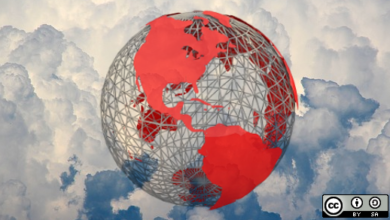
Opensource.com Signals Major Transition Toward Community-Led Future and Strategic Rebranding


Opensource.com, a premier platform for the open-source community for over a decade, has officially announced a significant shift in its operational model, signaling a move away from its long-standing commercial roots toward a more community-centric identity. The announcement, delivered through a cryptic yet purposeful update on the site, addresses a period of relative silence from the publication and outlines a vision that aligns the project’s digital architecture with its philosophical foundations. By framing its current commercial top-level domain (TLD) as a "bug" to be resolved, the organization has set a one-month countdown for a transformation that could redefine how open-source advocacy and journalism are managed in a post-corporate sponsorship era.
The Evolution of a Digital Hub
Since its inception, Opensource.com has served as a central repository for stories regarding the creation, adoption, and sharing of open-source solutions. For 12 years, the site has been a primary vehicle for promoting "the open source way," a philosophy that extends the principles of open-source software—transparency, collaboration, and community—into fields as diverse as education, government, and business management. However, the platform has historically been supported by a commercial entity, a relationship that provided the necessary infrastructure and funding but also created a symbolic disconnect between the site’s ".com" suffix and its mission to serve a non-commercial, global community.
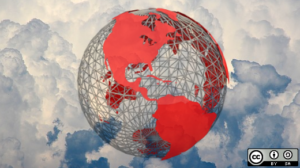
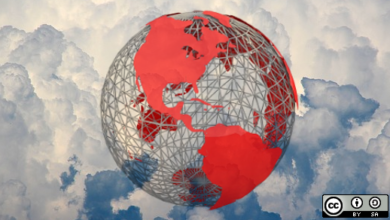
The recent announcement highlights this tension by revisiting the history of the internet itself. The internet, defined as a portmanteau of "interconnected network," was originally a bifurcated system consisting of military and academic branches. As the network expanded to include the general public, the need for a standardized system of identification became paramount. This led to the creation of the Domain Name System (DNS) and the establishment of top-level domains (TLDs). These designations—such as .com for commercial, .org for non-profit, and .edu for educational institutions—were designed to provide users with immediate context regarding the nature of the entity they were interacting with online.
The Semantic Significance of Top-Level Domains
The upcoming changes to Opensource.com appear to be centered on this semantic distinction. For years, the ".com" designation has identified the site as a commercial property, despite its content being largely driven by community contributors and focused on non-proprietary values. In the lexicon of software development, a "bug" is an error or flaw in a system that produces an incorrect or unexpected result. By characterizing the site’s current domain as a bug, the leadership at Opensource.com is acknowledging that the commercial branding no longer reflects the reality of the community that sustains it.

Open source is fundamentally a network of people rather than just a collection of repositories or servers. Whether these individuals gather in physical spaces like conferences and local meetups or digital spaces like Mattermost, IRC, or GitHub, the core value lies in the human connection. The announcement emphasizes that while the platform has enjoyed commercial support for over a decade, the contributors and readers who constitute the "Opensource.com community" are individuals, not commercial entities. Resolving this "bug" implies a transition to a domain or a governance structure that more accurately represents the non-profit, collaborative nature of the open-source movement.
Chronology of the Transition and Recent Silence
The transition comes after a period of noticeable inactivity on the platform, which industry observers have linked to broader shifts within the tech sector. To understand the current state of Opensource.com, it is necessary to look at the timeline of its development:
- 2010: Opensource.com is launched as a Red Hat-supported publication to champion open-source philosophy beyond just software code.
- 2010–2022: The site grows into a major industry resource, publishing thousands of articles from diverse contributors, including developers, CEOs, and educators.
- Early 2023: Changes in corporate strategy and restructuring within the tech industry lead to a reduction in active editorial output on the site.
- Mid-2023: The community notices a "quiet period" where new content becomes infrequent, leading to speculation about the site’s future.
- Current Month: The "Something New" announcement is published, acknowledging the silence and promising a resolution within 30 days.
This chronology suggests that the "new project" mentioned in the announcement is the result of months of planning aimed at ensuring the long-term sustainability of the platform. The move appears designed to decouple the publication’s identity from its commercial sponsor, potentially moving it toward a foundation-led model or a truly independent community-run entity.
Supporting Data: The Growth of Open Source Networks
The significance of this transition is underscored by the sheer scale of the open-source ecosystem. According to the 2023 "State of the Octoverse" report by GitHub, open-source contributions have reached an all-time high, with millions of developers collaborating across borders. Furthermore, data from the Linux Foundation indicates that open-source software now constitutes between 70% and 90% of any given modern software solution.
As open source becomes the bedrock of global infrastructure, the platforms that document and advocate for these technologies face increased pressure to remain neutral and community-focused. The shift from a ".com" to a more community-aligned structure reflects a broader trend in the industry where critical resources are being moved under the stewardship of non-profit foundations (such as the Apache Software Foundation or the Eclipse Foundation) to prevent corporate interests from exerting undue influence over community assets.

Broader Impact and Industry Implications
The transition of Opensource.com is likely to have several major implications for the tech industry and the open-source community at large. First, it addresses the issue of "digital preservation." Over the past 12 years, Opensource.com has archived a massive amount of historical data regarding the evolution of software. Moving this archive to a community-led or non-profit framework ensures that this knowledge remains accessible and is not subject to the shifting priorities of a single commercial parent company.
Second, the move may set a precedent for other corporate-sponsored community hubs. In an era of economic volatility, many tech companies are re-evaluating their community out-reach programs. The "Opensource.com model" of transitioning to an independent entity could serve as a blueprint for how to responsibly hand over corporate-funded platforms to the communities that built them.
While official statements from the site’s current sponsors have been limited, the reaction from the community has been one of cautious optimism. Long-time contributors have expressed a desire for a governance model that allows for more direct community input into editorial directions. If the "bug" being resolved includes the implementation of a democratic or meritocratic editorial process, it could revitalize the site’s engagement levels.
Future Outlook: Resolving the "Bug"
As the one-month deadline approaches, the tech world is watching closely to see what form the "new project" will take. The resolution of the ".com" bug likely points toward a rebranding to a ".org" or ".dev" domain, accompanied by a new governance charter. This would align the site’s digital identity with the reality of its content—a network of interconnected people sharing knowledge for the common good.
In conclusion, the announcement from Opensource.com marks the end of one era and the beginning of another. By acknowledging the limitations of its commercial origins and prioritizing the human network that defines open source, the platform is positioning itself to remain a relevant and trusted voice for the next generation of technologists. The "quiet" of the past few months appears not to have been a sign of decline, but rather the silence of a community hard at work on a fundamental structural upgrade. The forthcoming reveal will likely demonstrate that in the world of open source, the most important network is not made of wires and servers, but of the people who believe in the power of open collaboration.
Related posts: