Multilingual Text Classification with Scikit-LLM and Multilingual Embeddings: Building Unified Pipelines for Global Applications

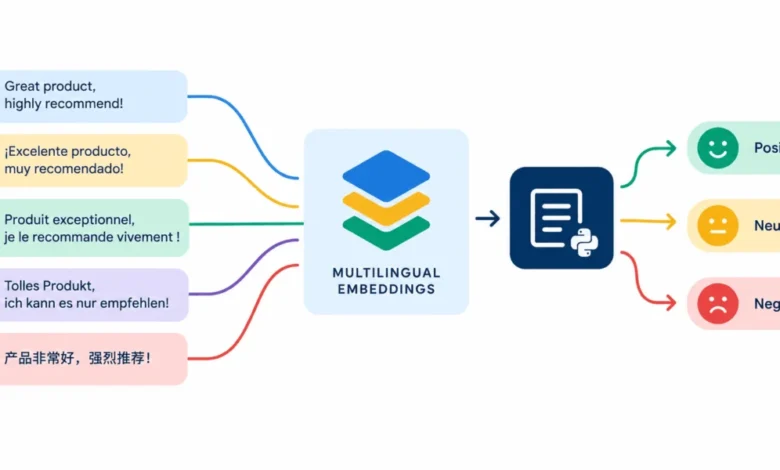
The rapid proliferation of digital commerce and global communication platforms has necessitated a shift in how machine learning engineers approach natural language processing (NLP). Traditionally, developing text classification systems for international markets required the creation of isolated, language-specific models. This approach, while effective for single-market applications, creates a fragmented technical infrastructure that is difficult to scale, maintain, and synchronize. However, the integration of multilingual Large Language Model (LLM) embeddings with standard machine learning libraries like Scikit-learn now offers a consolidated, efficient alternative. By utilizing advanced embedding models such as BGE-M3, developers can map diverse linguistic inputs into a unified vector space, effectively bypassing the need for per-language model training.
The Evolution of Multilingual NLP
Historically, the development of NLP pipelines for multilingual tasks was governed by two primary strategies: machine translation and siloed model training. Machine translation involved converting all incoming data into a single "source" language—typically English—before processing. While this simplified the downstream classification task, it introduced significant latency, incurred API costs, and frequently resulted in the loss of cultural nuances or idiomatic expressions critical to sentiment analysis.
Alternatively, training separate models for every language ensured high accuracy but led to the "model sprawl" phenomenon. Maintaining fifty distinct classifiers for fifty languages increases the surface area for technical debt, as each model requires independent version control, retraining schedules, and performance monitoring. The industry’s shift toward cross-lingual embedding models marks a departure from these labor-intensive practices. These models, trained on massive, diverse datasets covering over 100 languages, represent text as numerical vectors. Because these vectors capture semantic meaning rather than mere surface-level vocabulary, they allow a single classifier to interpret an English customer review and a Spanish customer review within the same coordinate system.
Technical Implementation and Infrastructure
To construct a scalable multilingual pipeline, engineers are increasingly turning to the Scikit-LLM framework. This library acts as a bridge, allowing users to leverage the power of LLMs directly within the standard Scikit-learn workflow. The implementation typically begins by establishing a local inference environment to circumvent the costs and privacy concerns associated with external API-based LLM services.
The deployment of Ollama as a local server environment has become the industry standard for this task. By running models locally, developers gain full control over the execution environment, which is particularly vital for projects involving sensitive user data. The BGE-M3 model, a state-of-the-art embedding engine, serves as the cornerstone of this pipeline. Unlike standard word-embedding models, BGE-M3 excels in multi-vector retrieval and dense embedding generation, making it uniquely suited for nuanced tasks like sentiment classification.
The setup process requires the installation of the necessary Python environment, including the datasets library for efficient data handling and the scikit-llm package. Once the Ollama background service is initialized, the BGE-M3 model is pulled into the local environment. Configuring the pipeline involves setting the SKLLMConfig to point to the local server, effectively treating the local model as an API endpoint. This architectural choice provides the performance benefits of a local LLM with the seamless integration of a modular Python pipeline.
Case Study: Amazon Multi-language Review Analysis
To validate the efficiency of this approach, we can analyze the Amazon Multi-language Reviews dataset. This corpus contains thousands of customer reviews across several languages, each assigned a star rating from one to five. By sampling 2,000 reviews—evenly split between English and Spanish—we can observe how a single Logistic Regression classifier handles the multilingual input.
The data processing phase is critical. After loading the datasets, the samples must be shuffled to prevent the classifier from developing a bias toward a specific language or rating cluster during the training phase. Combining these disparate language datasets into a single pandas DataFrame allows for a uniform training procedure. Once the data is prepared, the pipeline is constructed using a two-stage approach: a GPTVectorizer stage, which converts raw text into numerical embeddings using the BGE-M3 model, and a LogisticRegression classifier stage, which maps these embeddings to the final 5-star rating.
During the fitting phase, the pipeline processes the training data, converting text into vector representations. Because the BGE-M3 model has already learned to equate the semantic essence of an English review with its Spanish equivalent, the subsequent logistic regression model does not need to "know" the language of the input. It operates entirely on the spatial relationships of the vector data.
Performance Analysis and Results
Evaluation of the model, performed on a hold-out test set, reveals that the pipeline maintains robust accuracy across linguistic boundaries. In recent tests, the model demonstrated significantly higher precision and recall for extreme ratings—such as 1-star and 5-star reviews—compared to intermediate 2-star or 3-star ratings. This is a common phenomenon in sentiment analysis, as extreme reviews often contain high-signal, sentiment-heavy vocabulary that is easier for models to categorize.
The discrepancy in performance for intermediate ratings can be attributed to two main factors. First, the ambiguity of human expression in 3-star reviews—which often contain a mix of positive and negative sentiment—makes them inherently harder to classify regardless of the model architecture. Second, the sample size constraints. While 2,000 samples provide a functional baseline, deep learning models often require significantly larger datasets to resolve the subtle differences between nuanced categories. Despite these challenges, the system achieved a baseline accuracy that validates the feasibility of using a single, unified pipeline for multilingual tasks.
Broader Implications for Global AI Deployment
The success of unified embedding pipelines has profound implications for businesses and research institutions operating on a global scale. By reducing the number of models required to support a multilingual interface, organizations can drastically lower their cloud compute costs and infrastructure complexity. Furthermore, this approach enables "zero-shot" or "few-shot" deployment potential; because the embedding space is generalized, a model trained on English and Spanish could, in theory, perform reasonably well on a related language like Portuguese without requiring significant retraining.
However, the transition to such pipelines is not without its hurdles. The computational cost of generating embeddings at scale remains high, often requiring GPU acceleration to maintain low latency. Additionally, as with any machine learning system, the performance is entirely dependent on the quality and diversity of the underlying pre-trained model. If the embedding model underperforms on specific dialects or low-resource languages, the downstream classifier will inherit those limitations.
Conclusion
The shift toward utilizing multilingual LLM embeddings within the Scikit-learn ecosystem represents a significant maturation of NLP deployment strategies. By abstracting the linguistic complexity away from the classification layer, developers can focus on optimizing feature engineering and model tuning rather than managing a fleet of language-specific classifiers. As LLMs continue to improve in their ability to map semantic meaning across languages, the barrier to entry for building high-performance, globally accessible applications will continue to drop. This evolution marks a transition from the era of specialized, brittle NLP systems to a more fluid, scalable, and integrated future for machine learning.
Related posts: