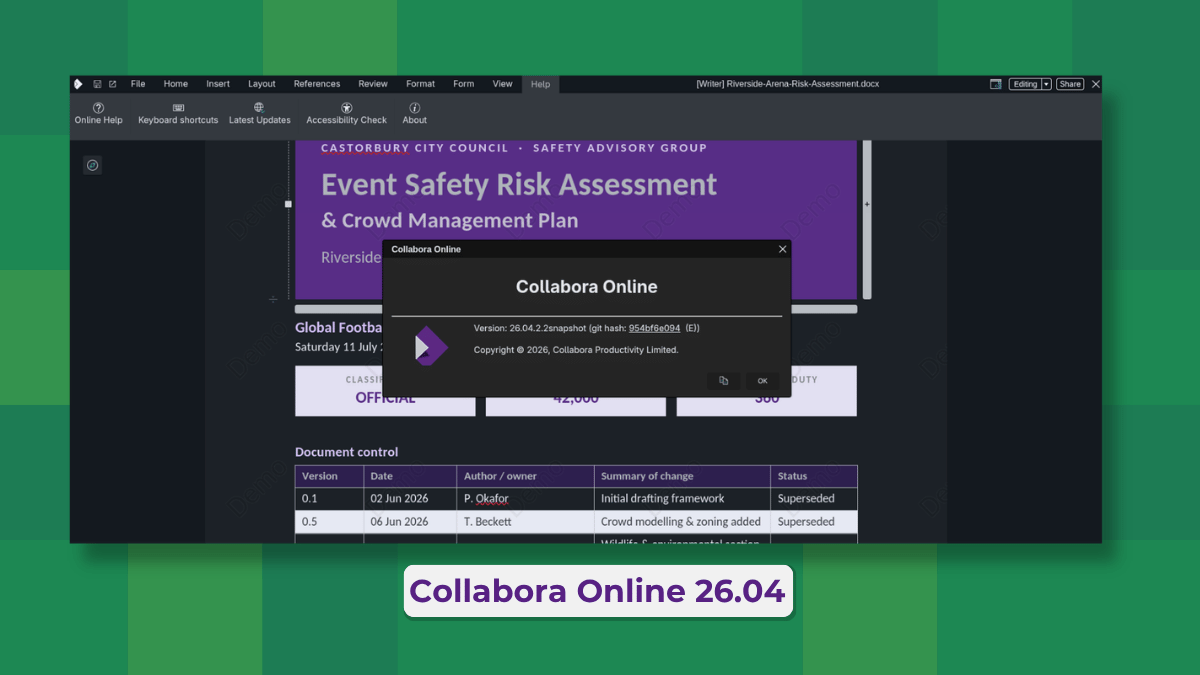
Collabora Online 26.04 Marks a Decade of Innovation in Open Source Productivity and Sovereign Document Management

Collabora Productivity has officially released Collabora Online 26.04, a significant milestone that coincides with the tenth anniversary of the platform’s development. This major version update reinforces the company’s position as a leading provider of open-source office solutions, offering a viable, self-hostable alternative to proprietary giants such as Microsoft 365 and Google Workspace. By prioritizing data sovereignty and architectural control, Collabora Online has become a cornerstone for organizations that require collaborative document editing without compromising the privacy of their infrastructure or the integrity of their sensitive data.
The 26.04 release represents the culmination of a decade of engineering efforts aimed at bridging the gap between desktop-class office features and the accessibility of the modern web browser. Built upon the robust foundation of LibreOffice technology, Collabora Online 26.04 introduces a suite of advanced features, including integrated artificial intelligence assistance, enhanced collaborative tools in spreadsheets, and sophisticated document comparison capabilities. These updates are designed to meet the evolving needs of public sector entities, educational institutions, and global enterprises that are increasingly wary of the vendor lock-in associated with "Software as a Service" (SaaS) models.
A Decade of Evolution: The Chronology of Collabora Online
The journey to Collabora Online 26.04 began roughly ten years ago, driven by a growing demand for a cloud-based office suite that adhered to open standards. While the LibreOffice project provided a powerful desktop application, the transition to a web-based environment required a fundamental reimagining of how documents are rendered and edited.
In 2014, Collabora began the intensive work of developing what would become the "LibreOffice Online" engine. Unlike other web-based editors that often rewrite the core logic in JavaScript—leading to formatting inconsistencies when moving between web and desktop—Collabora opted for a unique "tiled rendering" approach. This method involves running the actual LibreOffice core on a server and sending graphical tiles to the browser. This ensures 100% document fidelity, meaning a document looks exactly the same in the browser as it does in the desktop application.
By 2016, the first production-ready versions of Collabora Online began to gain traction, particularly through integrations with file-sharing platforms like Nextcloud and ownCloud. Over the following years, the platform saw steady adoption across Europe and North America. In 2020, the shift toward remote work accelerated the development of collaborative features, leading to the introduction of the "CODE" (Collabora Online Development Edition) releases, which allowed the community to test features before they reached the enterprise-grade Online version. The current 26.04 release marks the maturity of this development cycle, blending high-speed performance with enterprise stability.
Artificial Intelligence with a Focus on Privacy
The most prominent addition to the 26.04 release is the integration of AI-powered assistance across the primary applications: Writer, Calc, and Impress. However, unlike many competing platforms that mandate the use of a specific cloud-based AI provider, Collabora has implemented a "vendor-neutral" approach.
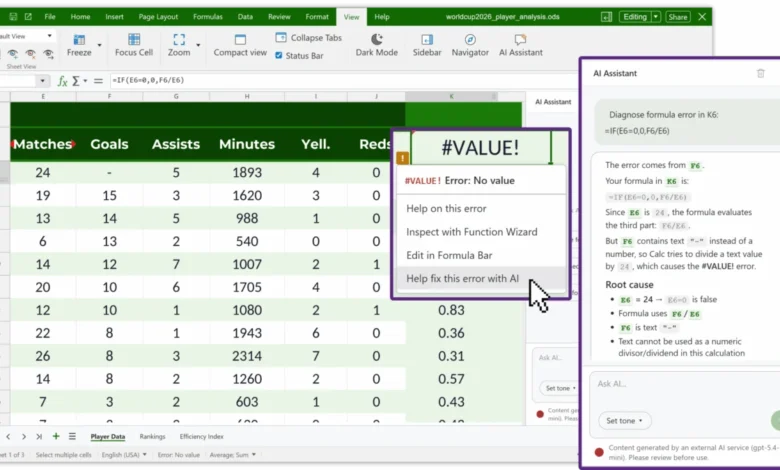
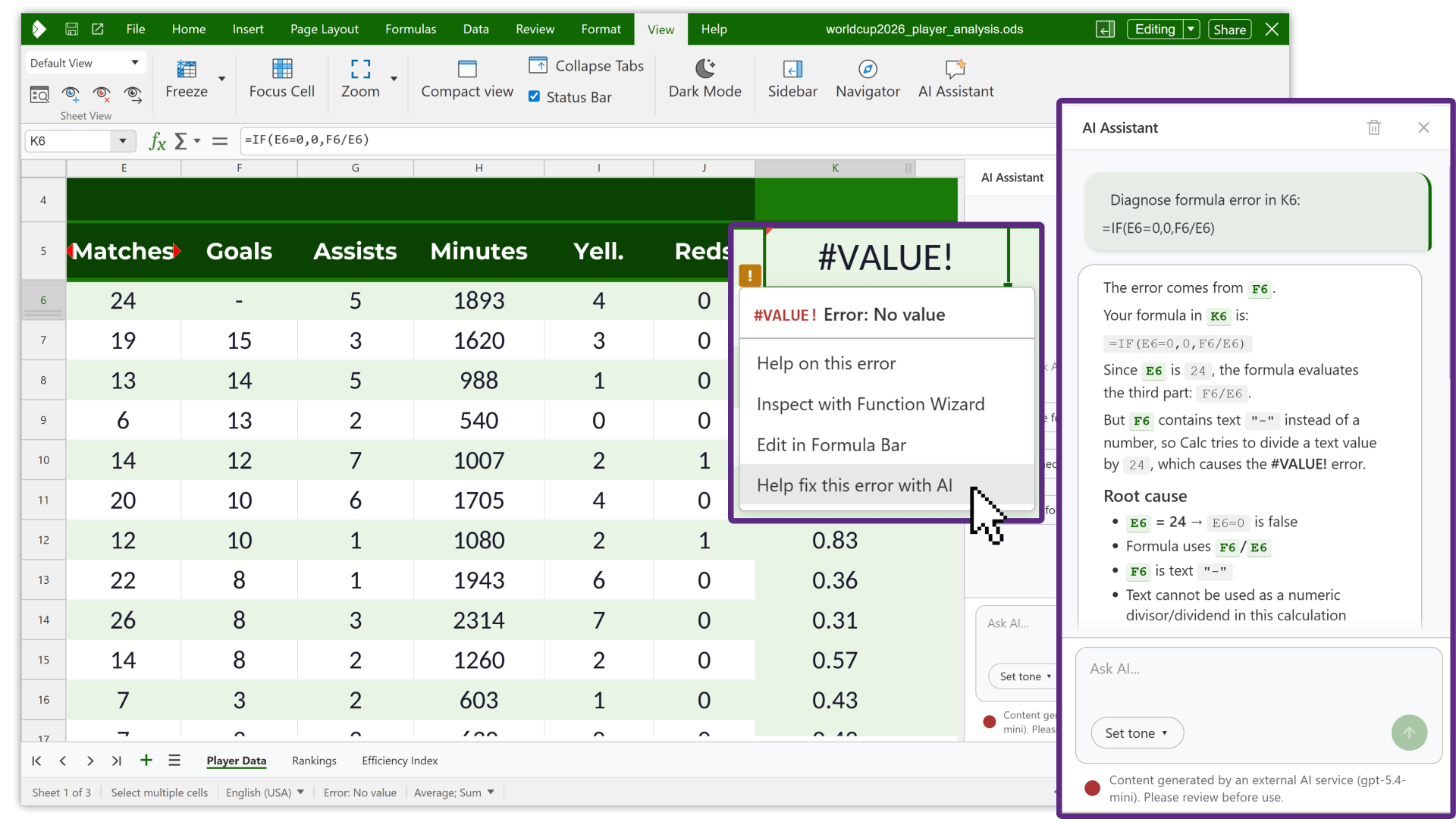
In Writer, the AI assistant can be utilized to draft initial passages, summarize long documents, or rewrite existing text to adjust the tone and clarity. In Calc, the AI assists users in troubleshooting complex formula errors and analyzing spreadsheet data patterns. In Impress, the tool can condense lengthy reports into concise, slide-ready bullet points, significantly reducing the time required for presentation preparation.

Crucially, these AI features are strictly opt-in. Organizations must explicitly enable the AI module, and they retain full control over which Large Language Model (LLM) is used. Organizations can choose to connect to commercial APIs from trusted providers or, more significantly, deploy their own self-hosted AI models on local infrastructure. This ensures that sensitive document content never leaves the organization’s controlled environment to train third-party models—a critical requirement for legal, medical, and governmental sectors.
Enhancements to Core Productivity Applications
Beyond AI, Collabora Online 26.04 introduces several functional improvements aimed at enhancing the daily workflow of professional users.
Advanced Data Management in Calc
The spreadsheet application, Calc, has received updates that prioritize multi-user collaboration. One of the most requested features, "Per-User Sheet Views," has been implemented. This allows multiple users to work on the same shared spreadsheet simultaneously while applying their own individual filters and sorting parameters. In previous versions, if one user filtered a column, the view would change for everyone; now, users can manipulate data independently without disrupting their colleagues’ workflows. Additionally, Calc now supports calculated values within pivot tables and includes a variety of new functions to support complex data science and financial modeling tasks.
Sophisticated Document Review in Writer
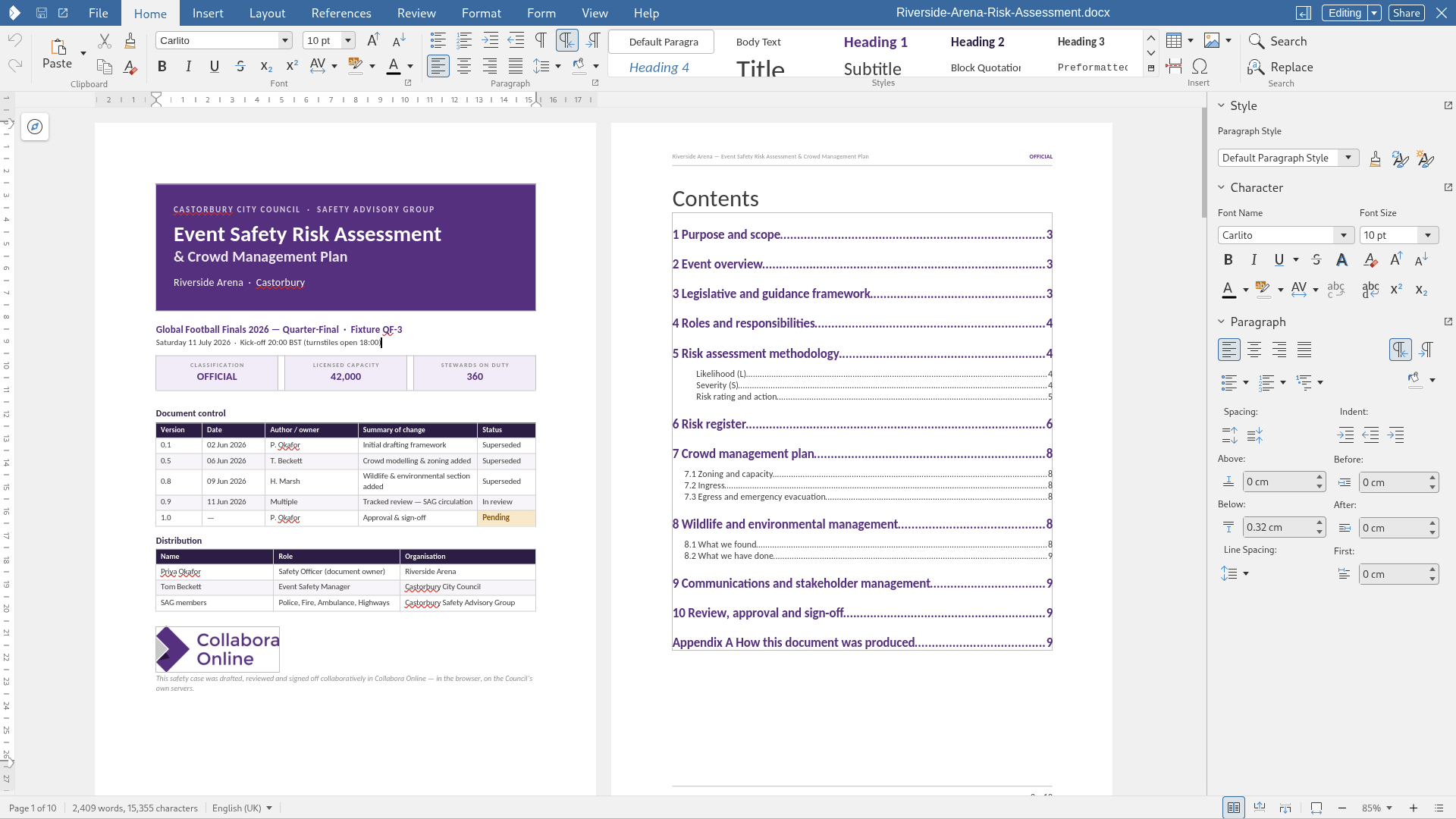
The document comparison engine in Writer has undergone a comprehensive rework. Users can now compare a current draft against an earlier version stored on the server or a file located on their local machine. The system provides a detailed highlight of all changes, attributing edits to specific users and providing timestamps. This feature is complemented by the BITV 2.0 accreditation, which confirms the suite’s adherence to high standards of digital accessibility, ensuring that the software remains usable for individuals with disabilities.
Interactive Presentations in Impress
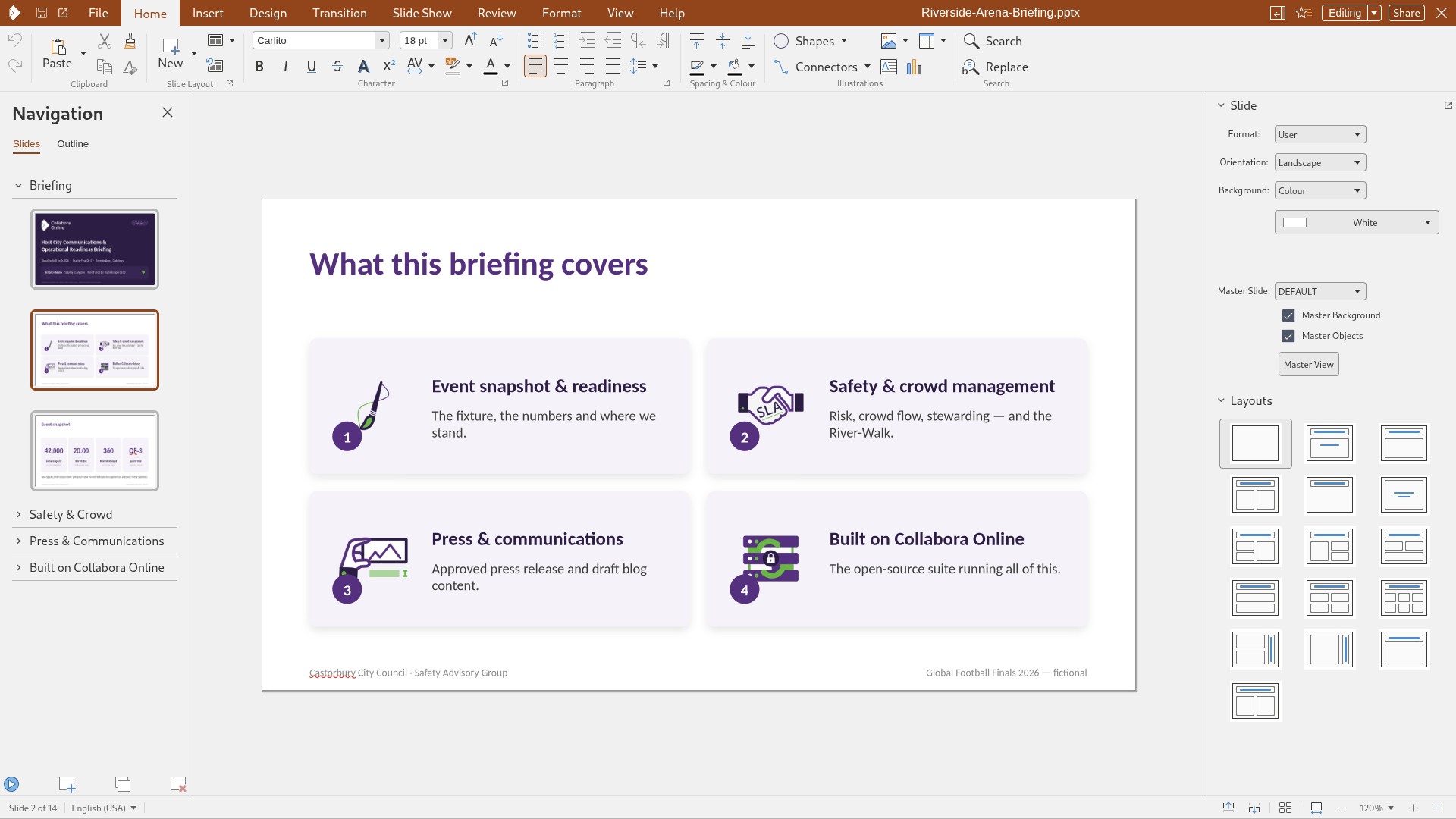
Impress has introduced "Follow-Me Slideshows," a feature designed to streamline remote presentations. When a presenter navigates through a slide deck, the audience’s view automatically synchronizes with the presenter’s screen. However, the system also allows individual audience members to pause the synchronization to review a previous slide at their own pace before clicking a "rejoin" button to return to the live view.
Strategic Implications and Official Responses
The release of version 26.04 is viewed by industry analysts as a strategic move to capture the growing "digital sovereignty" market. As geopolitical tensions and data privacy regulations like GDPR become more stringent, organizations are seeking alternatives that allow them to keep data within their own borders.
Michael Meeks, CEO of Collabora Productivity, emphasized the balance between innovation and security in his statement regarding the release. Meeks noted that the highly customizable and tightly controlled AI assistance enables users to safely accelerate their document-related tasks. He further highlighted that the new editing and review features, alongside improved accessibility and document interoperability, are designed to make the everyday user experience more intuitive and flexible.
The structure of Collabora’s offerings remains consistent with its commitment to the open-source ecosystem. The company continues to provide four distinct versions:
- CODE (Collabora Online Development Edition): A free, self-hosted version for home users and early adopters.
- Collabora Online: The flagship enterprise solution, which includes a paid Service Level Agreement (SLA), signed security updates, and long-term maintenance.
- Collabora Office: The desktop version of the suite.
- Collabora Office Classic: A specialized version for legacy desktop environments.
Market Context and Data Sovereignty Analysis
The growth of Collabora Online reflects a broader trend in the global IT landscape. According to recent market data, the demand for "sovereign cloud" solutions is expected to grow significantly over the next five years. Governments in the European Union, in particular, have been vocal about the need to reduce reliance on non-European software providers to protect the privacy of their citizens’ data.
Collabora’s architectural choice—keeping the document logic on the server—provides a unique security advantage. Because only graphical tiles are sent to the client’s browser, the actual document data never resides in the browser’s cache or local storage. This "zero-leak" architecture is a primary reason why Collabora Online is often the preferred choice for high-security environments, such as defense departments and central banks.
Furthermore, the interoperability of Collabora Online 26.04 with Microsoft Office formats (DOCX, XLSX, PPTX) remains a top priority. By utilizing the LibreOffice core, Collabora ensures that complex formatting, such as nested tables, tracked changes, and mathematical formulas, remains intact when documents are shared across different platforms. This interoperability is essential for organizations that operate in hybrid environments where some departments may still use proprietary software.
Future Outlook
As Collabora Online enters its second decade, the focus is likely to shift toward further integration with emerging technologies and deepening the ecosystem of "Digital Workplace" integrations. The success of version 26.04 serves as a testament to the viability of the open-source business model, where community-driven development is refined into an enterprise-grade product that provides a genuine alternative to the status quo.
For the enterprise sector, the 26.04 update is not merely a software refresh but a statement of intent. It demonstrates that the open-source community can keep pace with the rapid advancements in AI and collaborative technology while maintaining a steadfast commitment to the principles of transparency, security, and user control. As organizations continue to evaluate their long-term digital strategies, the availability of a mature, feature-rich, and sovereign office suite like Collabora Online 26.04 will likely play a pivotal role in the transition toward a more diverse and resilient software ecosystem.
Related posts: