Building Autonomous Migration Pipelines with AWS Transform Custom and Model Context Protocol


Automating legacy code migration has historically been one of the most resource-intensive challenges in enterprise software engineering, often requiring months of manual refactoring and fragmented coordination across disconnected teams. With the integration of the Model Context Protocol (MCP) into AWS Transform Custom, organizations are now transitioning toward autonomous migration pipelines that bridge the gap between high-level business requirements and production-ready code. This architectural evolution allows developers to move from a Jira user story to a validated pull request with minimal manual intervention, effectively codifying organizational best practices directly into the migration workflow.
The Evolution of Code Transformation
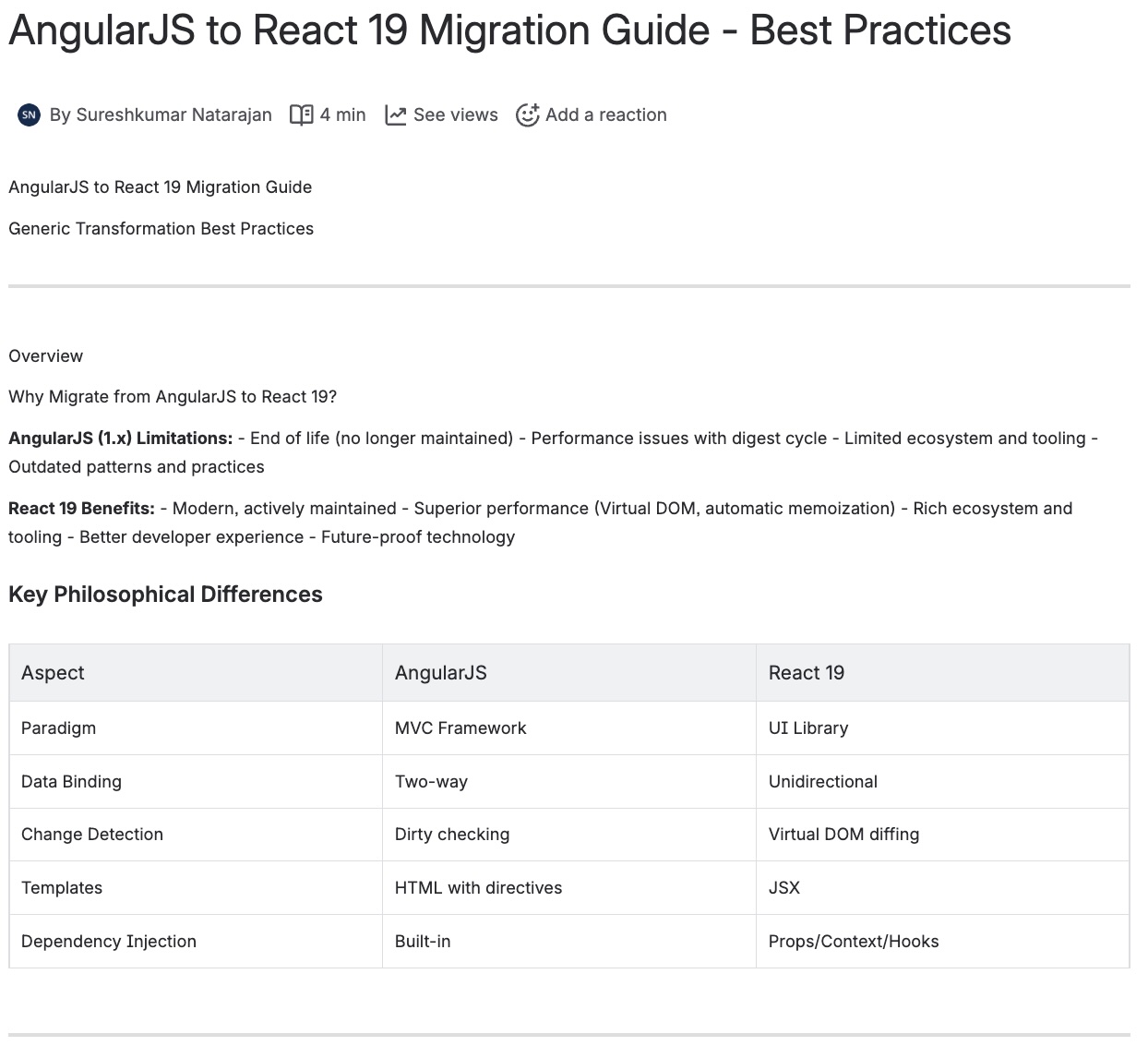
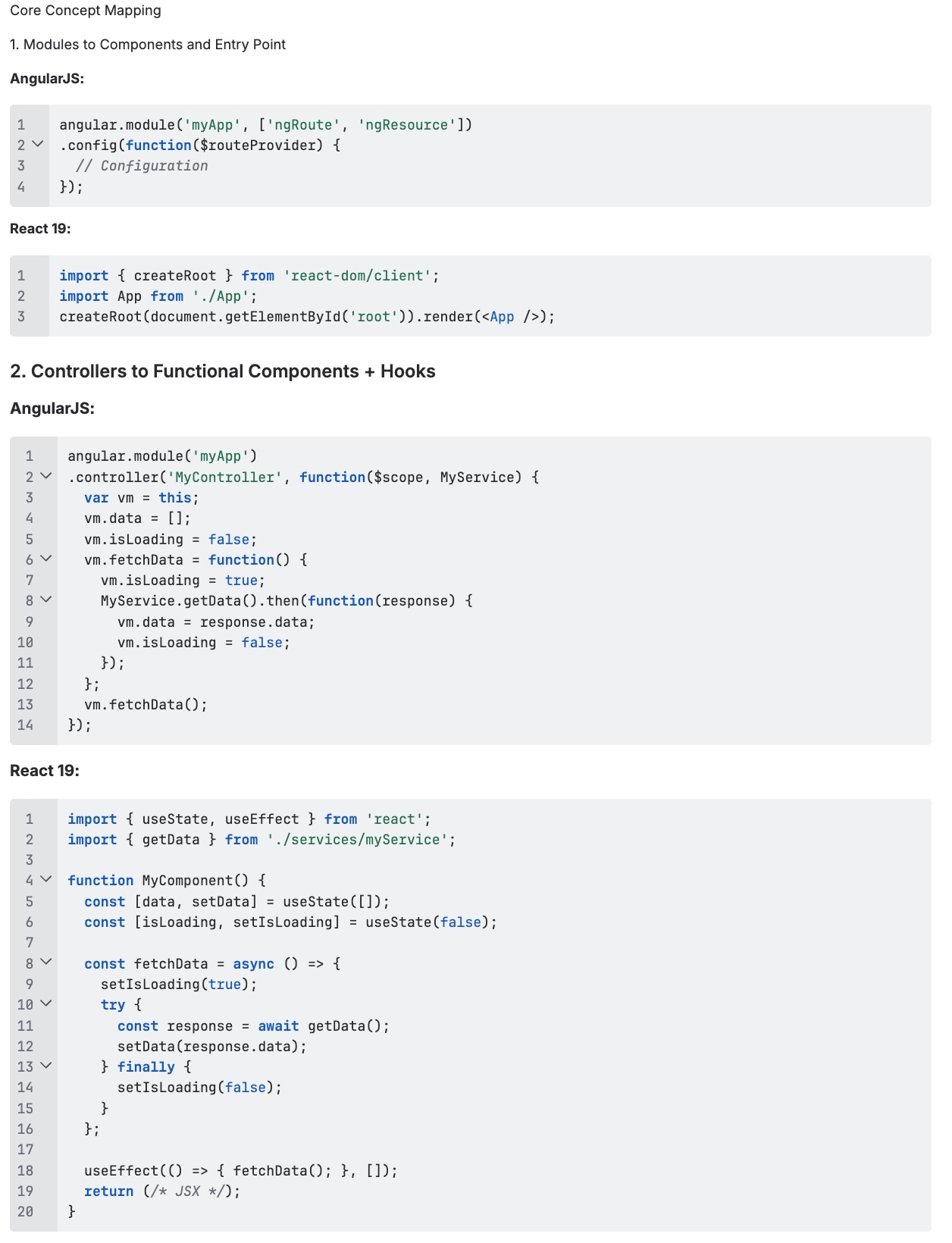
For years, code transformation tools functioned as isolated utilities, executing static refactoring patterns without awareness of the broader development ecosystem. While these tools could successfully swap syntax—such as converting AngularJS directives to React components—they often failed to account for organizational constraints, such as specific testing standards or project management requirements.
The introduction of the Model Context Protocol (MCP) marks a significant shift in this paradigm. By providing a standardized interface for AI agents to interact with third-party systems like Jira, GitHub, and Playwright, MCP allows AWS Transform Custom to function as an orchestrator rather than just a transformer. This capability addresses the "vacuum problem," where code is refactored according to general best practices but fails to align with internal architectural mandates or quality benchmarks.
Architecture of an Autonomous Pipeline
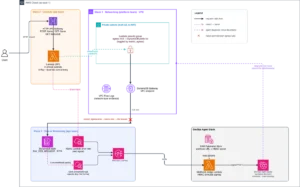
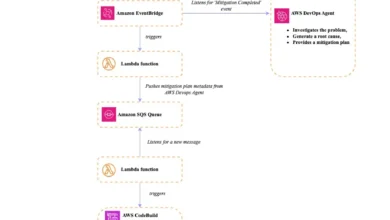
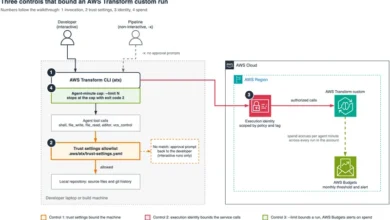
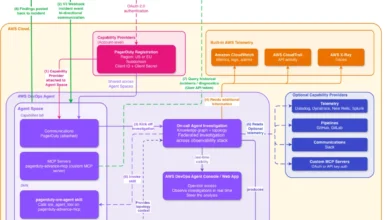
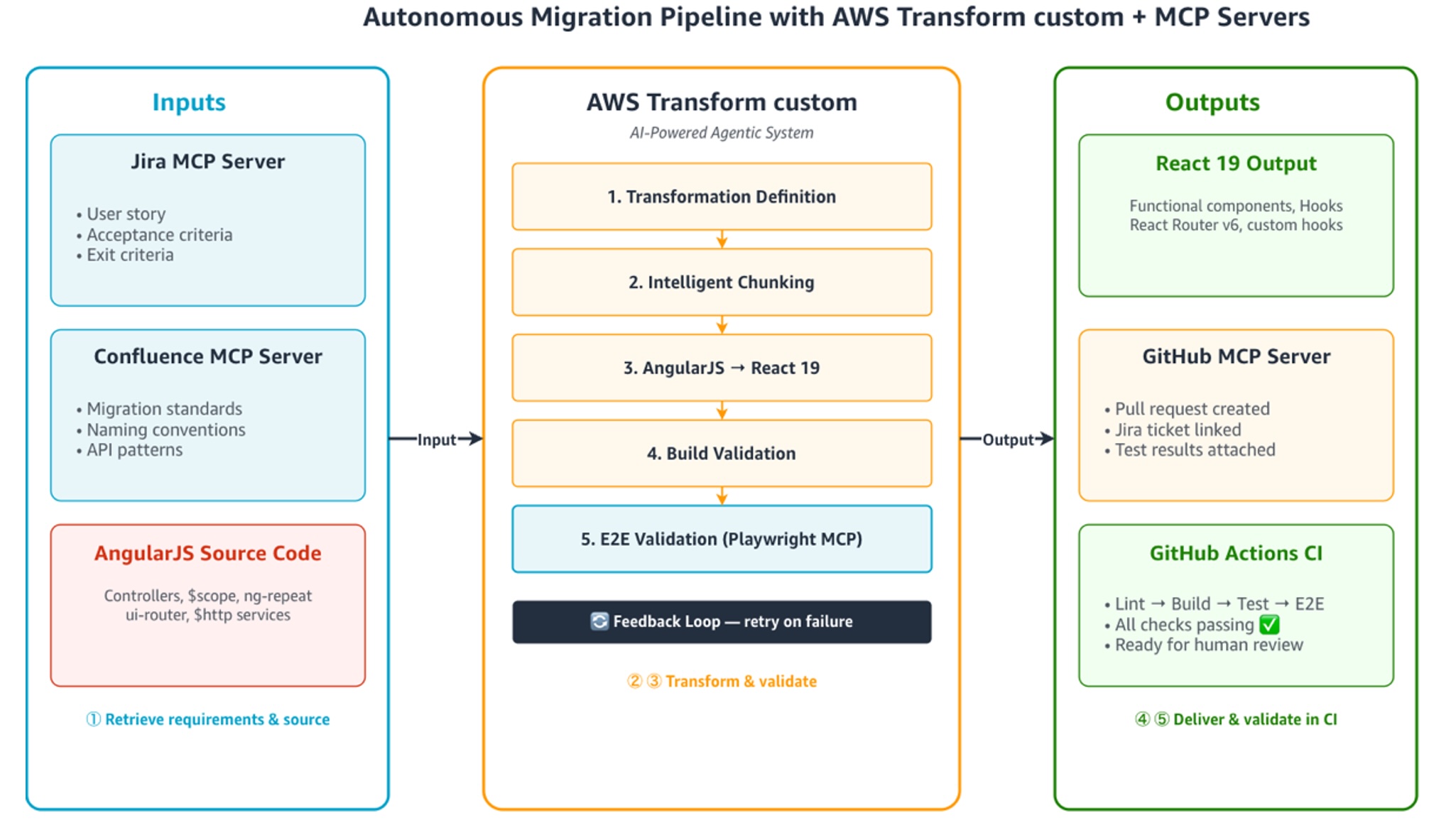
The modern migration pipeline relies on a multi-layered architecture that synchronizes planning, execution, and verification. At the core of this system is the AWS Transform Custom engine, which leverages configuration files to interface with MCP servers.
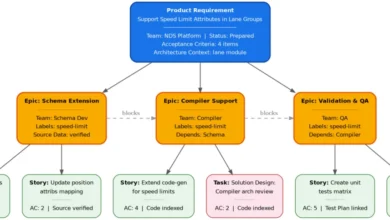
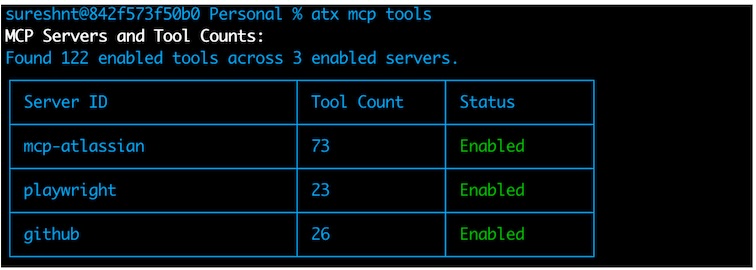
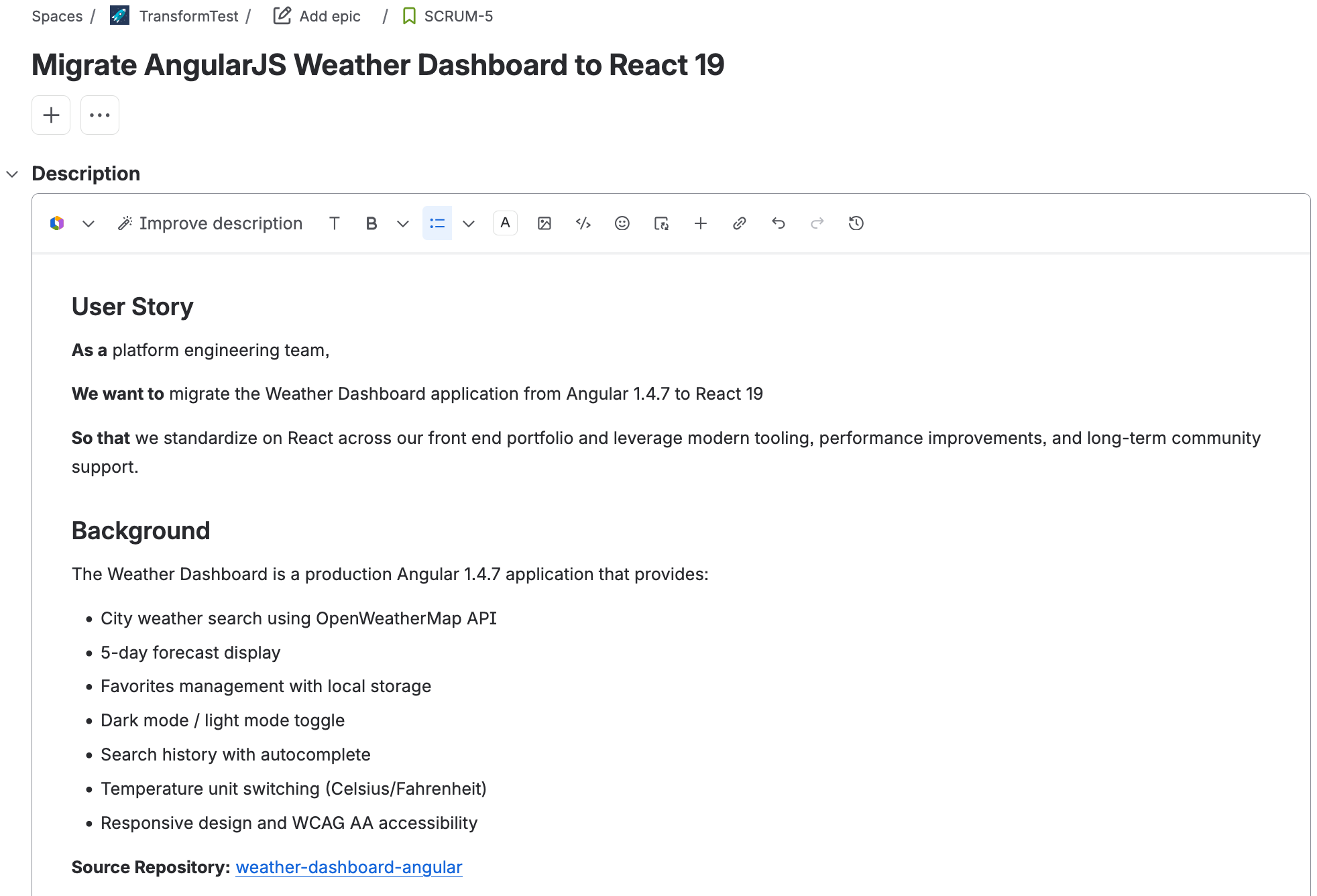
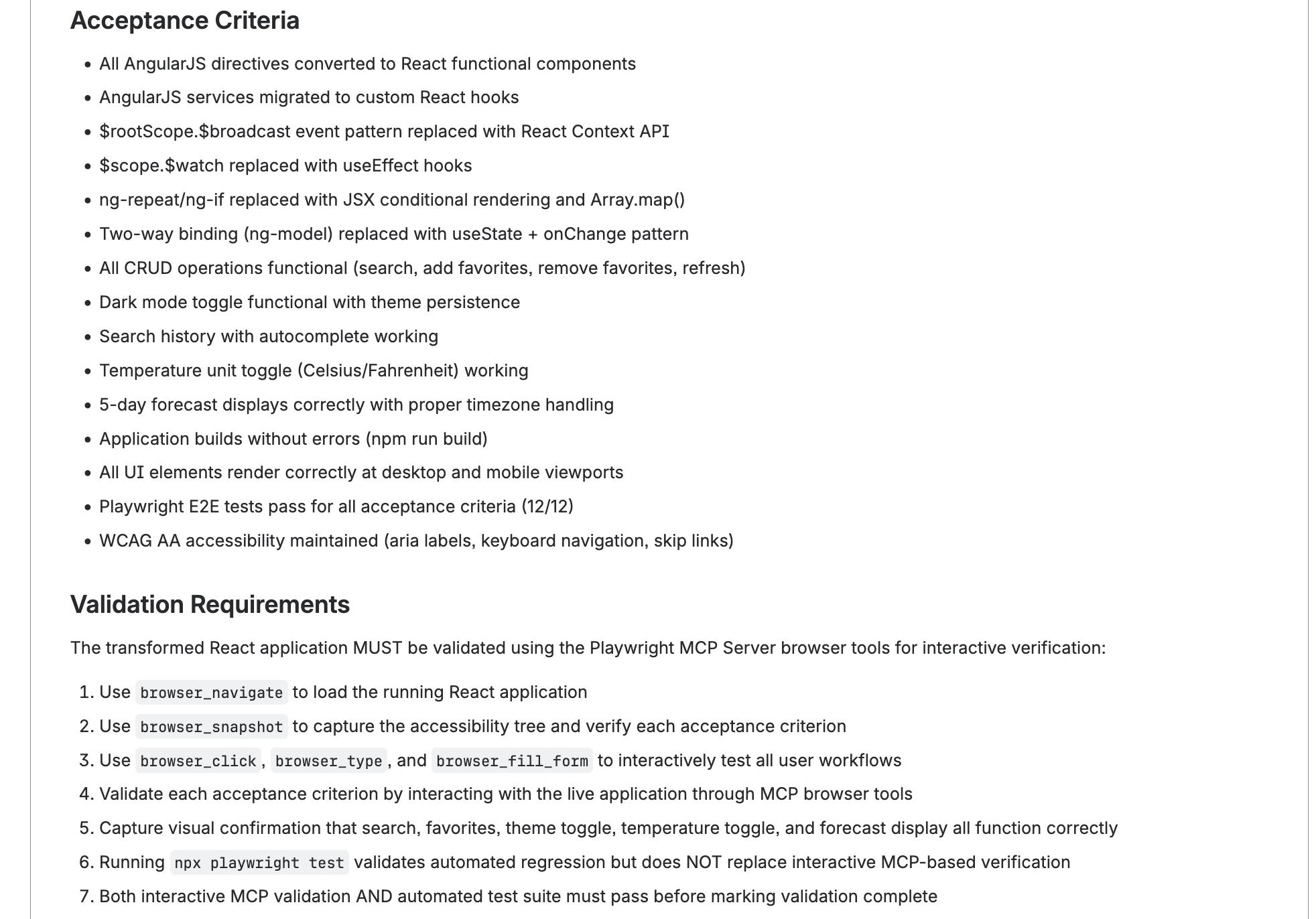
The typical flow begins with the extraction of requirements from Atlassian Jira and Confluence. By accessing user stories and technical documentation through MCP, the agent gains an understanding of the specific migration scope—such as the transition from AngularJS 1.4.7 to React 19. Following the transformation of the codebase, the pipeline initiates a build process, followed by automated verification via a Playwright MCP server. The final step involves the generation of a pull request via the GitHub MCP server, ensuring that all changes are documented and ready for human peer review.
Chronology of an Enterprise Migration
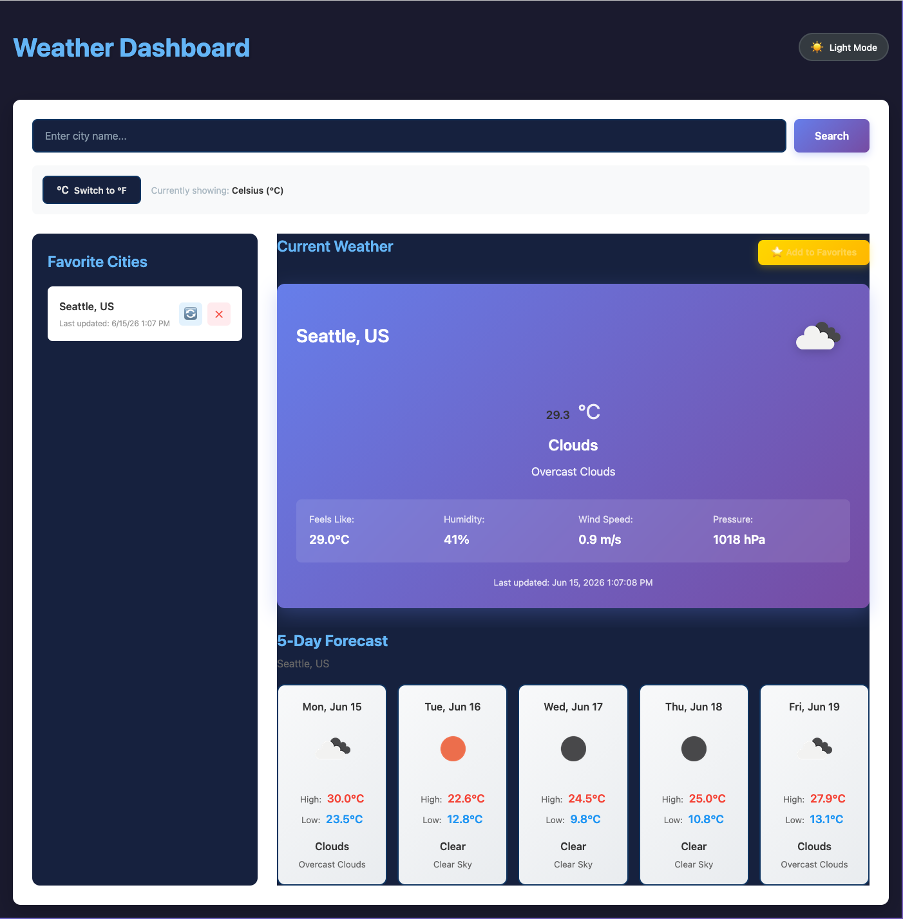
In a real-world scenario, such as the migration of a Weather Dashboard application, the process follows a strict, time-bound sequence designed to minimize regression risk.
- Initialization and Context Gathering: The pipeline parses the
mcp.jsonconfiguration file, authenticating with Jira and Confluence. The agent performs a "read-only" scan of the target repository, cross-referencing existing patterns against organizational standards stored in Confluence. - Transformation Phase: The agent executes specific mappings. For example, AngularJS
$scopeand controller logic are systematically migrated to ReactuseStatehooks, while event broadcasting is replaced with the React Context API. - Build and Test Execution: The system triggers a local build. A critical component here is the deployment of a Docker-hosted Playwright environment. By utilizing
host.docker.internal, the pipeline maintains a secure, high-speed connection between the build environment and the headless browser. - Validation and Feedback Loop: The Playwright MCP server performs a series of end-to-end tests, verifying everything from accessibility (ARIA labels) to interactive functionality, such as unit toggle switches and dark mode transitions.
- PR Submission: Upon successful validation, the pipeline creates a Git pull request. This PR includes a summary of the transformation, links to the original Jira ticket, and the results of the CI/CD checks, effectively automating the administrative burden of code submission.
Quantitative Impact and Efficiency Metrics
Evidence from early implementations of this automated pipeline suggests substantial gains in developer productivity. In traditional migrations, developers spend an estimated 40% of their time on manual tasks, including setting up development environments, writing boilerplate boilerplate, and documenting changes. Automated pipelines can reduce this overhead by approximately 60-70%.
For instance, the migration of a complex service injection pattern from AngularJS to a custom React hook can take a human developer several hours of manual coding and iterative debugging. An automated agent, informed by MCP, can execute this pattern across a codebase in minutes, ensuring consistency. Furthermore, because the pipeline enforces strict adherence to testing standards (such as 12/12 passing Playwright tests), the rate of "returned" pull requests—those rejected during peer review due to minor functional regressions—drops significantly.
Technical Deep Dive: The Role of Docker and Playwright
A frequent point of failure in automated migration is the "environment mismatch," where code functions locally but fails in CI. By using a Docker container to host the Playwright MCP server, the architecture ensures that the testing environment is consistent regardless of the developer’s local machine configuration.
The Playwright MCP server acts as an bridge, translating natural language intent—such as "verify that the temperature toggle works"—into precise browser interactions. Because the container is configured with --add-host=host.docker.internal:host-gateway, it can interact with the locally served React application with the same reliability as a remote staging environment. This integration is essential for modern frontend frameworks, where state management and asynchronous rendering require interactive verification rather than simple unit testing.
Implications for Enterprise Development
The broader implications for the software industry are profound. By moving toward autonomous pipelines, companies can accelerate the decommissioning of legacy systems that are often left running simply because the cost of migration is perceived as prohibitive.
Furthermore, this modular approach—enabled by the open nature of the Model Context Protocol—allows for high extensibility. As organizations shift their toolchains, they can replace individual components of the pipeline without re-engineering the entire system. For example, replacing GitHub with GitLab or swapping Jira for Linear requires only a change in the MCP server configuration, not a rewrite of the core transformation logic.
Official Guidance and Security Considerations
Security remains a primary concern for any tool with access to production code and project management systems. Developers must ensure that API tokens for Jira, Confluence, and GitHub are handled via secure environment variables rather than hardcoded configuration files.
AWS recommends that organizations adopt a "trust-but-verify" approach. Even with an autonomous pipeline, the final gate—the human peer review of the pull request—remains a critical step. The automation serves to provide the reviewer with a "clean" starting point, where the code is already compliant with organizational standards and has been pre-validated against functional tests.
Conclusion: The Future of Modernization
The integration of AWS Transform Custom with MCP servers represents a maturation of the DevOps lifecycle. By codifying institutional knowledge into an automated agent, teams can achieve a level of consistency and speed that was previously unattainable.
As the Model Context Protocol continues to gain adoption, we can expect to see a burgeoning ecosystem of MCP servers that further expand the capabilities of migration pipelines. Whether it is integrating SonarQube for automated security scanning or Slack for real-time migration status updates, the architecture described here provides a scalable blueprint for any organization looking to modernize its legacy footprint. The transition from AngularJS to React 19 is merely the beginning; the real value lies in the creation of a repeatable, reliable process that frees engineering talent to focus on innovation rather than technical debt.
For those looking to adopt these practices, the focus should be on building a robust library of transformation patterns and ensuring that testing suites are comprehensive. By investing in the foundation of the pipeline today, organizations can significantly shorten the migration lifecycle and ensure that their technical infrastructure remains agile and performant for years to come.