Android XR Ecosystem Expands with Stable Jetpack Tooling and the Launch of XREAL AURA Hardware

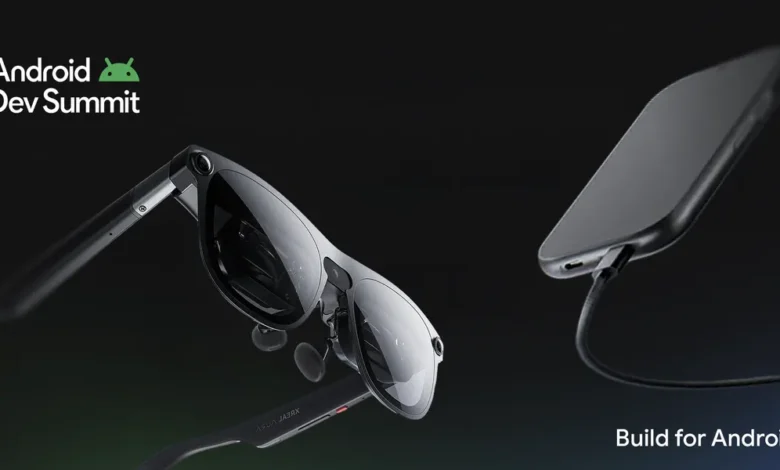
The landscape of extended reality (XR) development reached a significant inflection point this week during the Android Developer Summit, as Google officially transitioned its core Jetpack XR libraries to stable status and introduced the XREAL AURA, the first wired XR glasses powered by the Android XR platform. This convergence of production-grade software architecture and accessible, lightweight hardware marks a decisive shift in Google’s strategy to transition XR from a niche experimental field into a mainstream mobile computing vertical. By leveraging the existing Android foundation, the company aims to ensure that millions of existing applications can function within spatial environments from their first day of deployment, lowering the barrier to entry for developers and consumers alike.
The Evolution of the Android XR Platform
For years, the development of spatial computing was siloed within proprietary, often expensive, or bulky hardware ecosystems. The introduction of the Android XR platform represents an attempt to unify these experiences under a singular, standardized framework. The transition of Jetpack XR libraries—specifically SceneCore, ARCore for Jetpack XR, and the XR Runtime—to stable versions provides developers with the long-term API consistency required for commercial-grade application deployment.
This stability is critical for the industry. Previously, developers often faced "break-fix" cycles as experimental APIs shifted in response to hardware iterations. With the current release, the Android XR framework now offers a predictable environment for managing 3D content, environment perception, and session management. Furthermore, the stabilization of Android XR emulators within Android Studio allows developers to iterate on spatial layouts and user interfaces without the immediate requirement of purchasing high-end headsets, effectively democratizing the development process for small-to-mid-sized teams.
Hardware Milestone: The XREAL AURA
The debut of the XREAL AURA serves as the hardware flagship for this software maturation. Weighing under 95 grams, the device is designed to bridge the gap between traditional mobile phones and fully immersive virtual reality headsets. The AURA operates via a portable compute puck, a design choice that offloads battery weight and thermal output from the user’s face to a pocket-sized unit. This ergonomic focus is a strategic response to market data suggesting that user adoption of XR hardware is heavily tethered to comfort and duration of wear.
The device’s compatibility with the Android ecosystem means that standard mobile applications are not just compatible, but can be augmented with spatial interactions. This "glanceable" experience—where digital content is overlaid on the physical world without consuming the entire field of view—is expected to be the primary use case for the current generation of wired glasses. By providing a low-friction entry point, the XREAL AURA seeks to solve the "content gap" that has historically plagued new XR platforms.
Chronology of Development
The current launch is the culmination of a multi-year development cycle aimed at integrating XR into the broader Android software stack:
- Initial Prototyping (2022-2023): Google began exploring the integration of ARCore with broader mobile frameworks, focusing on geospatial positioning and surface detection.
- Developer Preview Phase (Early 2024): The initial release of the Jetpack XR SDK allowed early adopters to test basic spatial layouts and environment anchoring.
- Integration with 3D Engines (Mid 2024): Google expanded its focus to include Unity, Godot, and Unreal Engine, recognizing that high-fidelity 3D content is essential for immersive success.
- The Android Developer Summit (Late 2024): The stabilization of the full platform stack and the public unveiling of the XREAL AURA hardware partnership.
Technical Infrastructure and Engine Support
A major component of this release is the Android XR Engine Hub, a centralized resource for integrating spatial computing into existing game and simulation pipelines. By providing pre-configured OpenXR extensions and optimized project settings for Unity, Godot, and Unreal Engine, Google is minimizing the technical overhead previously associated with porting mobile titles to spatial interfaces.
Data from early testing suggests that the use of Spatial Entities and Cloud Anchors can drastically reduce the latency between user input and physical-world response. For instance, in collaborative scenarios—such as the "Jigsaw Night" application demonstrated by Contract XR—the platform allows multiple users to synchronize 3D assets across different devices. This synchronization is handled via the ARCore Geospatial APIs, which leverage the same visual positioning services used in Google Maps to anchor digital objects to specific, real-world coordinates with centimeter-level precision.
The Role of On-Device AI and Multimodal Interaction
Beyond visual immersion, the platform is emphasizing audio-first and multimodal interaction. The integration of the ML Kit Gen AI Text-to-Speech API, combined with the capabilities of on-device Gemini Nano, enables developers to build hands-free, conversational interfaces.
This is a deliberate design pivot toward "intelligent eyewear." The guidance provided to developers now emphasizes the use of "Earcons"—distinctive, non-verbal audio cues—to navigate users through augmented environments. This multimodal approach recognizes that in many real-world scenarios, a user’s eyes may be occupied, or a display might be too intrusive, making audio the primary medium for information delivery. By moving these AI processes on-device, Google is addressing both latency and privacy concerns, as data does not necessarily need to be offloaded to a cloud server to facilitate basic interaction.
Broader Economic and Industrial Implications
The professionalization of the Android XR platform has significant implications for the software development industry. Currently, the market for XR applications is fragmented; however, by utilizing a shared Android foundation, developers can potentially tap into a broader audience that already uses Android-powered mobile devices.
Analysts note that the "wired glasses" form factor occupies a strategic middle ground. It is more sophisticated than a smartphone but significantly more approachable than standalone, bulky headsets like the Apple Vision Pro or Meta Quest series. If the XREAL AURA and subsequent Android XR devices can achieve consistent performance across the existing Android app catalog, it could force a paradigm shift in how enterprise and consumer software is designed.
Furthermore, the stabilization of these tools provides a level of certainty that is essential for enterprise adoption. Companies looking to integrate AR into industrial workflows—such as field repairs, remote assistance, or interactive training—can now build on a stable, long-term support (LTS) version of the platform. This reduces the risk of "platform rot," where software becomes obsolete as the underlying hardware or SDKs shift.
Future Outlook
The path forward for Android XR relies on the balance between hardware distribution and developer adoption. With the technical foundation now in place, the focus shifts to the ecosystem’s growth. The availability of the Android XR Engine Hub and the stability of Jetpack XR mean that the primary hurdle is no longer the capability of the tools, but the creativity of the developers utilizing them.
Google’s strategy of "meeting users where they are" is a departure from the "walled garden" approach of competitors. By allowing developers to embed Unity or Godot content directly within native Jetpack Compose applications, the platform enables hybrid experiences—where a 2D utility app can seamlessly transition into a 3D immersive environment. As more manufacturers integrate the Android XR platform into their hardware, the volume of available spatial content is projected to scale significantly.
For developers seeking to begin this transition, the recommended roadmap involves three distinct steps: establishing a presence in the Android XR emulator to test 2D-to-3D transitions, implementing the stable Jetpack XR libraries to manage spatial scene graphs, and exploring the integration of ARCore Geospatial APIs for real-world environmental awareness. As the hardware landscape matures, those who have optimized their pipelines for the Android XR ecosystem will be best positioned to lead in the next iteration of mobile computing. The transition from theoretical spatial computing to a stable, developer-ready reality is no longer a future prospect—it is the current operational standard.