Amazon S3 Storage and Advanced Workloads Arrive on Vercel Marketplace and v0 to Streamline Cloud Development

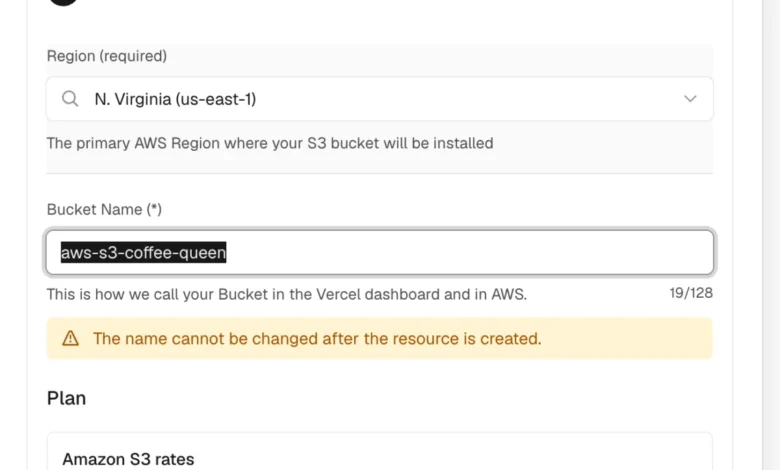
Cloud architecture and web development are experiencing a significant convergence as Vercel and Amazon Web Services (AWS) deepen their integration ecosystem. Developers building modern web applications and artificial intelligence solutions on Vercel can now provision Amazon Simple Storage Service (Amazon S3) resources directly through the Vercel Marketplace and v0. This strategic expansion brings the enterprise-grade durability, high scalability, and robust performance of AWS S3 directly into Vercel’s streamlined provisioning workflow.
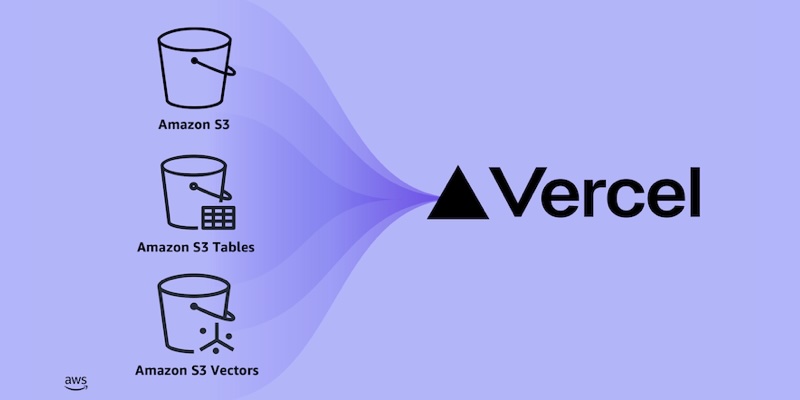
Announced for general availability, the native integration covers Amazon S3 general-purpose storage alongside specialized tiers like Amazon S3 Tables and Amazon S3 Vectors. By addressing three distinct operational workloads—everyday object storage, high-performance analytics, and AI-driven vector search—the partnership aims to eliminate traditional friction points in cloud infrastructure management, enabling engineering teams to deploy sophisticated applications faster and with greater security.
Main Facts and Core Integration Mechanics
Historically, provisioning cloud storage required developers to step outside their primary development environments, log into the AWS Management Console, and meticulously configure security policies, access control lists, and credentials. The new integration bypasses this administrative overhead by embedding resource provisioning directly into the Vercel dashboard and the v0 generative UI environment.
When a developer creates an S3 bucket, S3 Table, or S3 Vector bucket via Vercel, the platform automates the underlying configuration. Using the Vercel CLI, developers can instantly link projects and pull environment variables such as AWS_REGION, AWS_ROLE_ARN, AWS_RESOURCE_ARN, and corresponding bucket names into their local or production environments.
Security has been implemented via a zero-static-keys architecture. At runtime, the awsCredentialsProvider function from @vercel/functions/oidc exchanges a short-lived OpenID Connect (OIDC) token with the AWS Security Token Service (AWS STS). This generates temporary, highly scoped credentials tailored specifically to the requested resource, ensuring that long-lived AWS secret keys are never exposed or stored within application codebases.
Background Context and Evolution of the Vercel-AWS Ecosystem
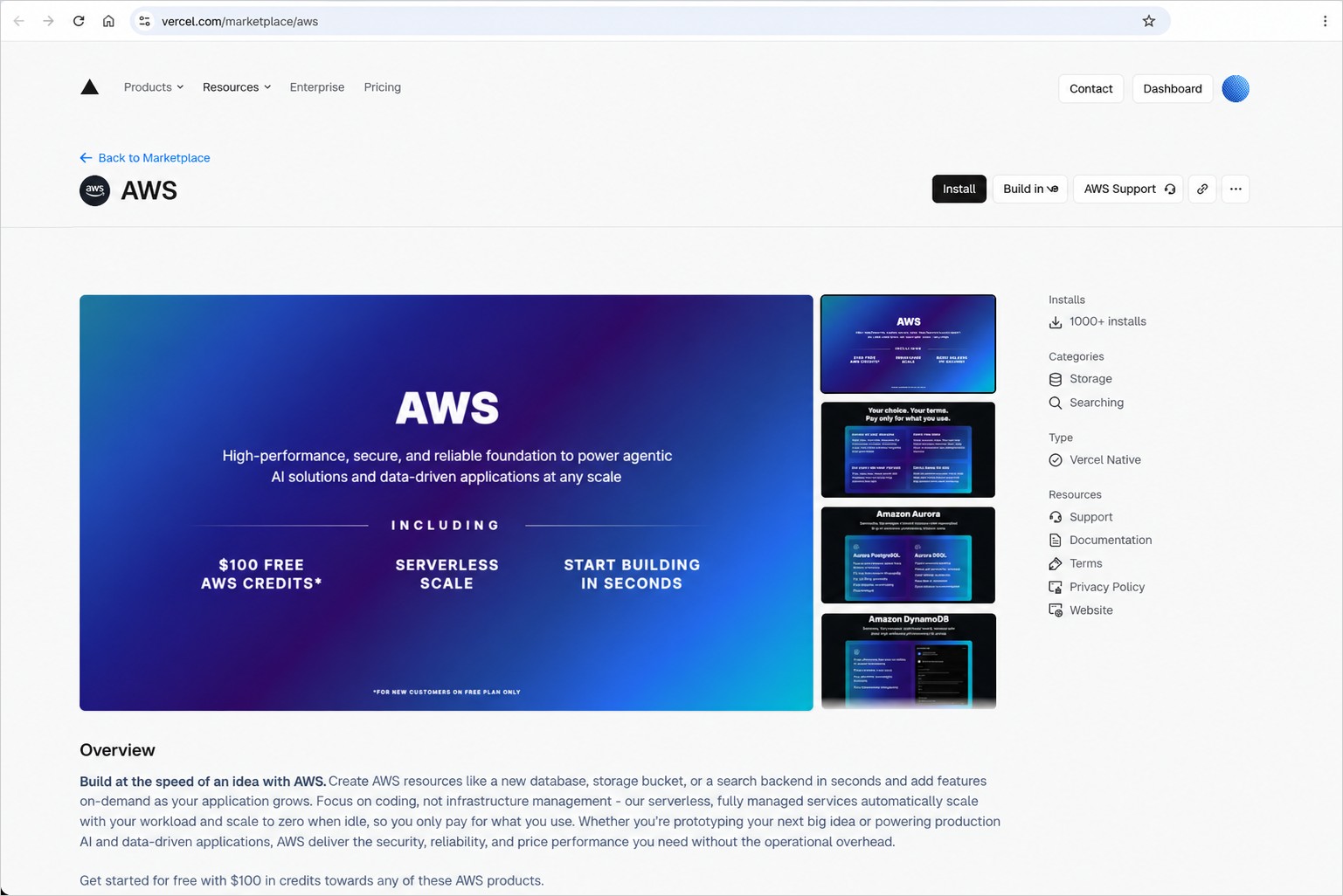
This latest release builds upon a growing foundation of collaboration between Vercel and AWS. Over recent years, Vercel has steadily expanded its marketplace to include native integrations for several prominent AWS data services, including Amazon Aurora, Amazon DynamoDB, and Amazon OpenSearch Serverless.
The addition of Amazon S3 completes a comprehensive application stack accessible entirely from within Vercel. Engineering teams can now manage their entire data lifecycle—from relational databases and NoSQL document stores to unstructured object storage, open data tables, and vector embeddings—under a single AWS account with consolidated billing.

Industry analysts note that this trend reflects a broader shift toward developer-centric infrastructure. As front-end frameworks like Next.js power increasingly complex full-stack applications, the demand for zero-friction backend integrations has accelerated. Cloud providers and hosting platforms are increasingly incentivized to abstract away boilerplate configuration, allowing developers to focus strictly on business logic and user experience.
Detailed Breakdown of Supported Workloads
The native integration supports three primary storage paradigms, each tailored to specific modern development requirements:
-
Object Storage for General Applications: Standard S3 general-purpose buckets enable traditional file management use cases, such as media uploads, document repositories, and static asset delivery. Using standard AWS SDK clients alongside Vercel’s OIDC credentials provider, developers can implement file upload and retrieval routes in Next.js with minimal boilerplate code.
-
Analytics via S3 Tables: Designed specifically for modern data lakes and analytical workloads, Amazon S3 Tables offer fully managed Apache Iceberg tables featuring automated maintenance and compaction. Because these tables scale performance automatically as data volumes increase, developers can execute complex analytical queries directly within serverless functions. For instance, using lightweight engines like DuckDB within a Vercel Function, developers can query multi-gigabyte datasets stored in S3 Tables without provisioning dedicated data warehouse infrastructure.
-
Vector Search for Artificial Intelligence: As generative AI applications and Retrieval-Augmented Generation (RAG) architectures proliferate, efficient vector storage has become paramount. Amazon S3 Vectors provide purpose-built, cost-optimized vector storage natively integrated into S3. This allows developers to perform semantic searches and power AI agents without deploying a separate, dedicated vector database. Developers generate embeddings using their preferred machine learning models and query the S3 Vector index directly via updated AWS SDK clients.
Streamlining Development with v0 by Vercel
A unique dimension of the new offering is its integration with v0, Vercel’s generative interface tool. Developers can use natural language prompts to describe the functionality they want to build, and v0 will automatically provision the appropriate S3 resource, configure the connection, and generate functional code.
For example, prompting v0 to build "a photo gallery where users upload images using AWS" automatically provisions a general-purpose S3 bucket. Requesting "a support bot that answers questions from my PDFs" deploys Amazon S3 Vectors, while asking for "an analytics dashboard for clickstream data" provisions S3 Tables. This capability drastically reduces the barrier to entry for complex application features, translating conversational requirements into fully wired cloud architectures.
Account Management, Pricing, and Availability
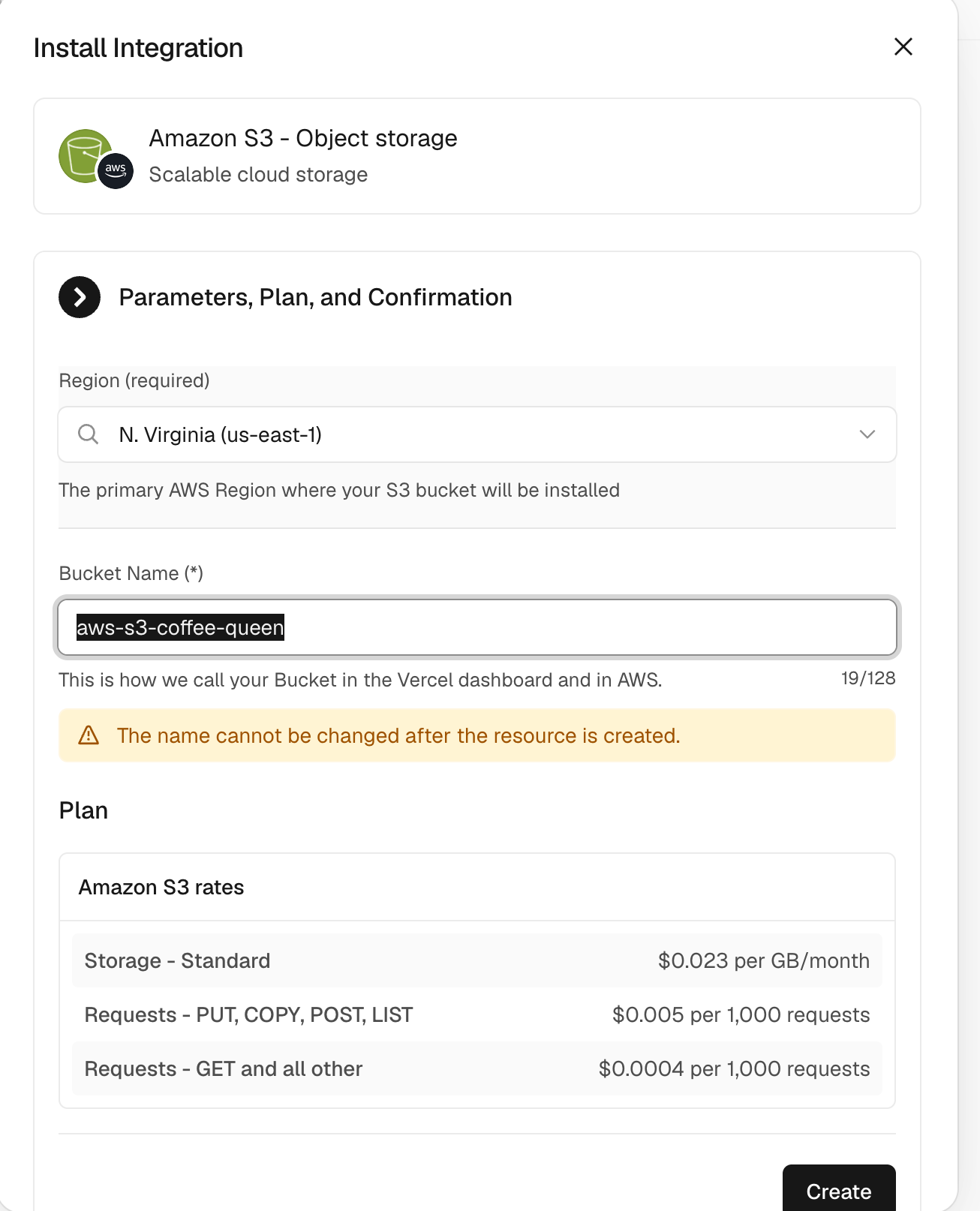
Vercel provides flexible options for account linking. Developers can either establish a new AWS account directly through the Vercel integration—which includes an introductory incentive of $100 in AWS credits valid for six months—or link an existing AWS enterprise account. When linking an existing account, Vercel manages new buckets created explicitly through its platform, preserving the organization’s existing billing structures and compliance frameworks.
The integration itself incurs no additional software licensing fees from Vercel; users simply pay standard Amazon S3 consumption pricing for the storage and data transfer resources they utilize. The feature is available immediately across all commercial AWS regions supported by Vercel, accessible via the Vercel Marketplace and the v0 platform.
Broader Implications for the Cloud Industry
The launch of native S3 support on Vercel underscores the diminishing boundaries between frontend hosting platforms and hyperscale cloud infrastructure. By bridging the gap between developer-friendly deployment environments and enterprise-grade cloud storage, Vercel and AWS are setting a new benchmark for platform engineering.
Industry observers suggest that this integration will significantly accelerate prototyping and deployment velocities for startups and enterprise teams alike. By eliminating administrative overhead, reducing security vulnerabilities associated with static credentials, and unifying billing across the stack, developers are empowered to build scalable, AI-ready applications with unprecedented operational efficiency.