RustRover 2026.3 Is Out: JetBrains Air, Clearer Debugger Views, and Agents That Debug With You

The release of RustRover 2026.3 marks a significant milestone in the evolution of integrated development environments (IDEs) for the Rust programming language, signaling a strategic shift toward agent-assisted software engineering. As developers increasingly grapple with the complexities of memory safety, intricate type systems, and the performance demands inherent in Rust, JetBrains has responded by integrating AI orchestration and advanced diagnostic capabilities directly into the core workflow. This release introduces JetBrains Air, an open framework designed to bridge the gap between local development environments and the burgeoning ecosystem of AI coding agents.
The Integration of AI Orchestration: JetBrains Air
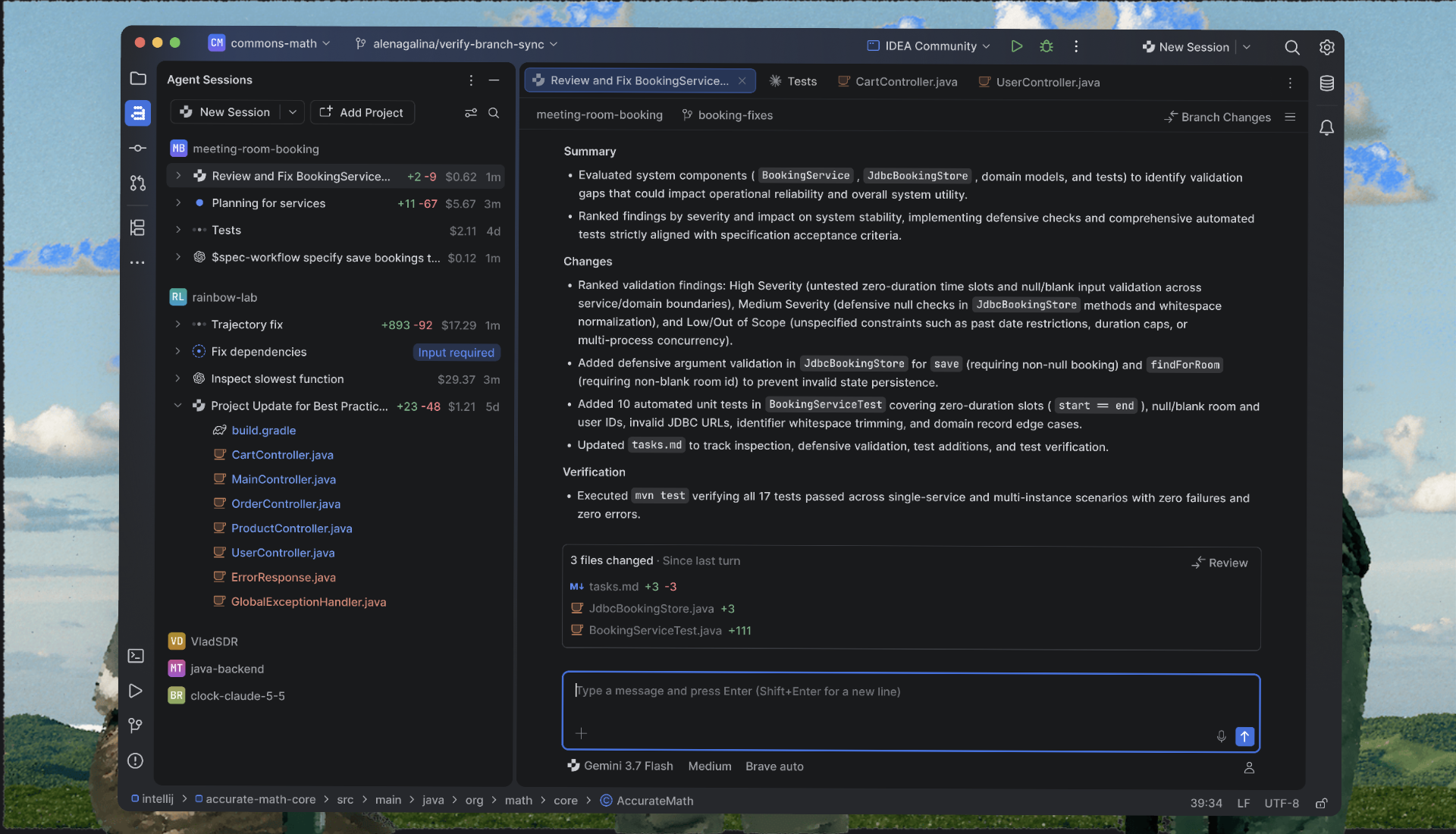
The cornerstone of the 2026.3 release is the introduction of JetBrains Air. As software development transitions from manual code entry to agentic workflows, developers have faced a fragmented experience, often struggling to maintain context between IDEs and third-party AI assistants. JetBrains Air solves this by providing a unified layer that allows developers to host and review the work of various agents—such as Claude, Codex, Gemini, GitHub Copilot, and Junie—directly within the RustRover interface.

Crucially, this system operates on a bring-your-own-key model. By allowing users to utilize their existing subscriptions and API keys, JetBrains avoids the "walled garden" approach, positioning RustRover as an agnostic hub for AI-driven development. Furthermore, the inclusion of Junie Lite, a free-to-use agent, lowers the barrier to entry for developers exploring local-first AI models through integrations with Ollama and LM Studio. This architecture allows for a more granular feedback loop; developers can now anchor notes to specific lines within a code diff generated by an AI, ensuring that agents have the precise context required for iterative refinement.
Advancing Debugging Through Agentic Capability
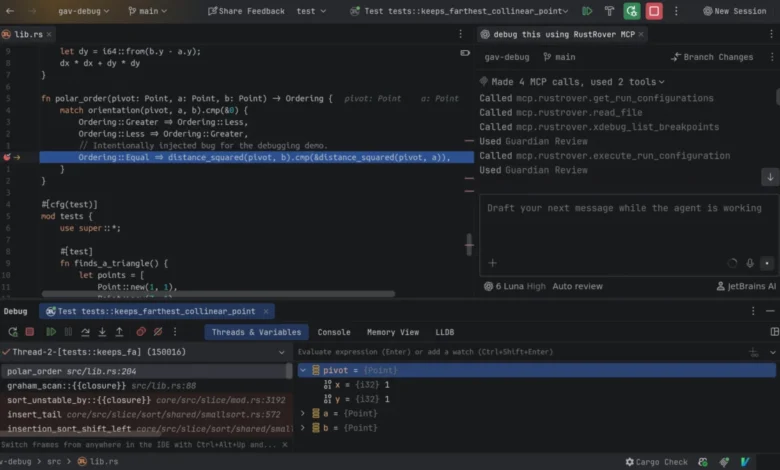
Perhaps the most technical advancement in this release is the empowerment of AI agents to interact with the runtime debugger. Historically, debugging has been a manual, labor-intensive process requiring the developer to step through lines of code, inspect memory, and evaluate expressions manually. RustRover 2026.3 introduces a dedicated debugger MCP (Model Context Protocol) server.
By enabling the rustrover-debugger skill, developers can now instruct an AI agent to perform complex diagnostic tasks. Instead of the developer needing to manually set breakpoints or parse call stacks to identify the source of a runtime error, they can describe the issue in natural language. The agent then leverages the debugger’s capabilities to collect runtime evidence, effectively turning the debugger into a collaborative tool. This is particularly transformative for tracking down non-deterministic bugs or state-related issues that do not appear during static analysis. This capability represents a fundamental shift in the relationship between the developer and the toolchain, moving from passive observation to active, agent-driven problem resolution.

Improving Cognitive Load: Debugger Readability
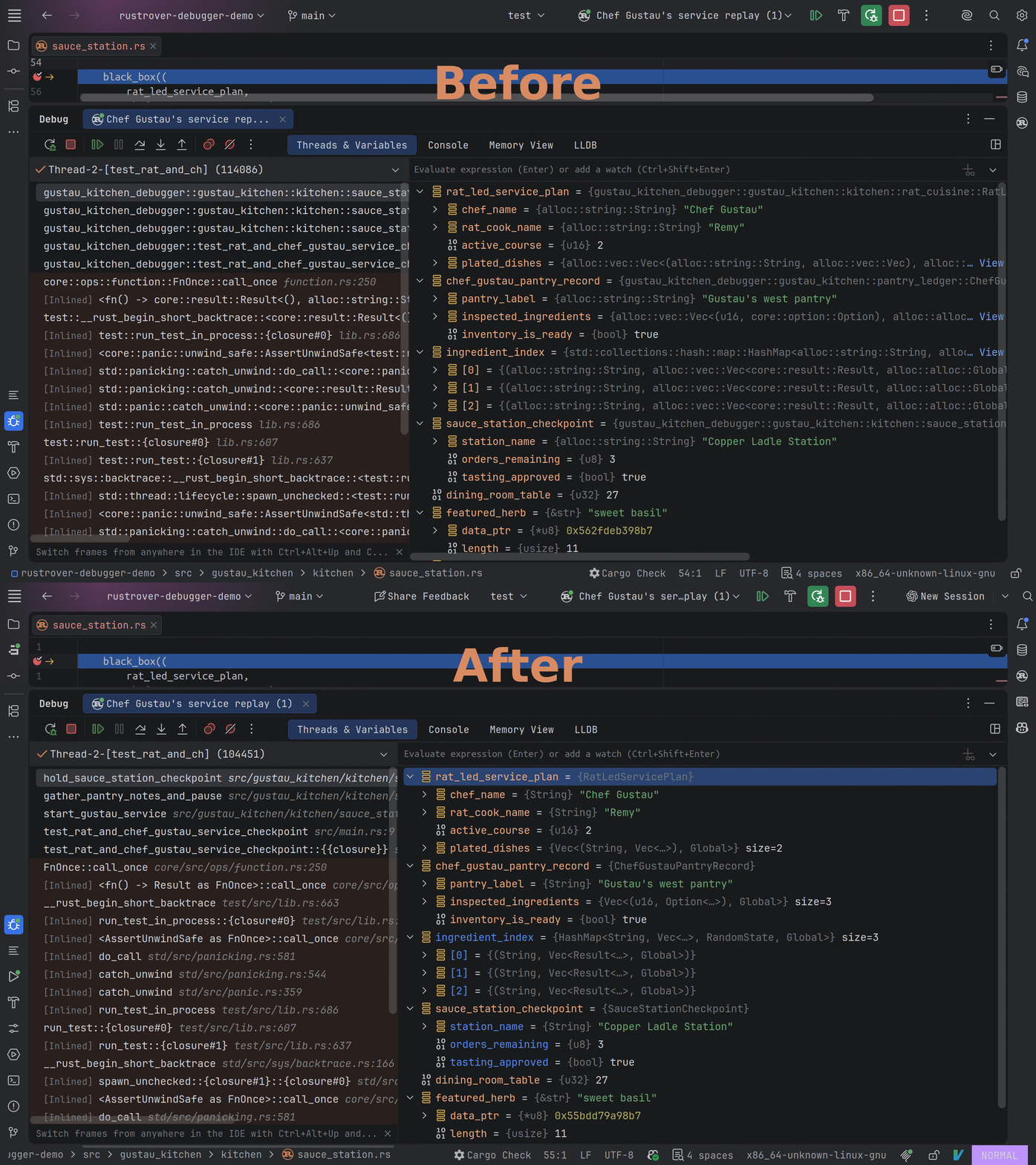
Beyond AI integration, JetBrains has focused on the ergonomics of the debugging process. Rust, known for its powerful type system, often produces verbose, fully qualified type names that can clutter the workspace. In large-scale systems, where a single variable might have a deeply nested, generic-heavy type definition, this clutter can obscure critical data.
In version 2026.3, RustRover implements an intelligent shortening mechanism for type names within the Variables and Watches panels, as well as symbol names within the Frames view. By default, these views now provide a cleaner, more concise representation of the program state, allowing developers to scan information more efficiently. While this feature is enabled out-of-the-box, the IDE retains the flexibility to revert to full, qualified names via the settings menu, acknowledging that there are edge cases where the full type signature is necessary for debugging complex traits or lifetime-bound structures.
Bridging Profiling and Implementation
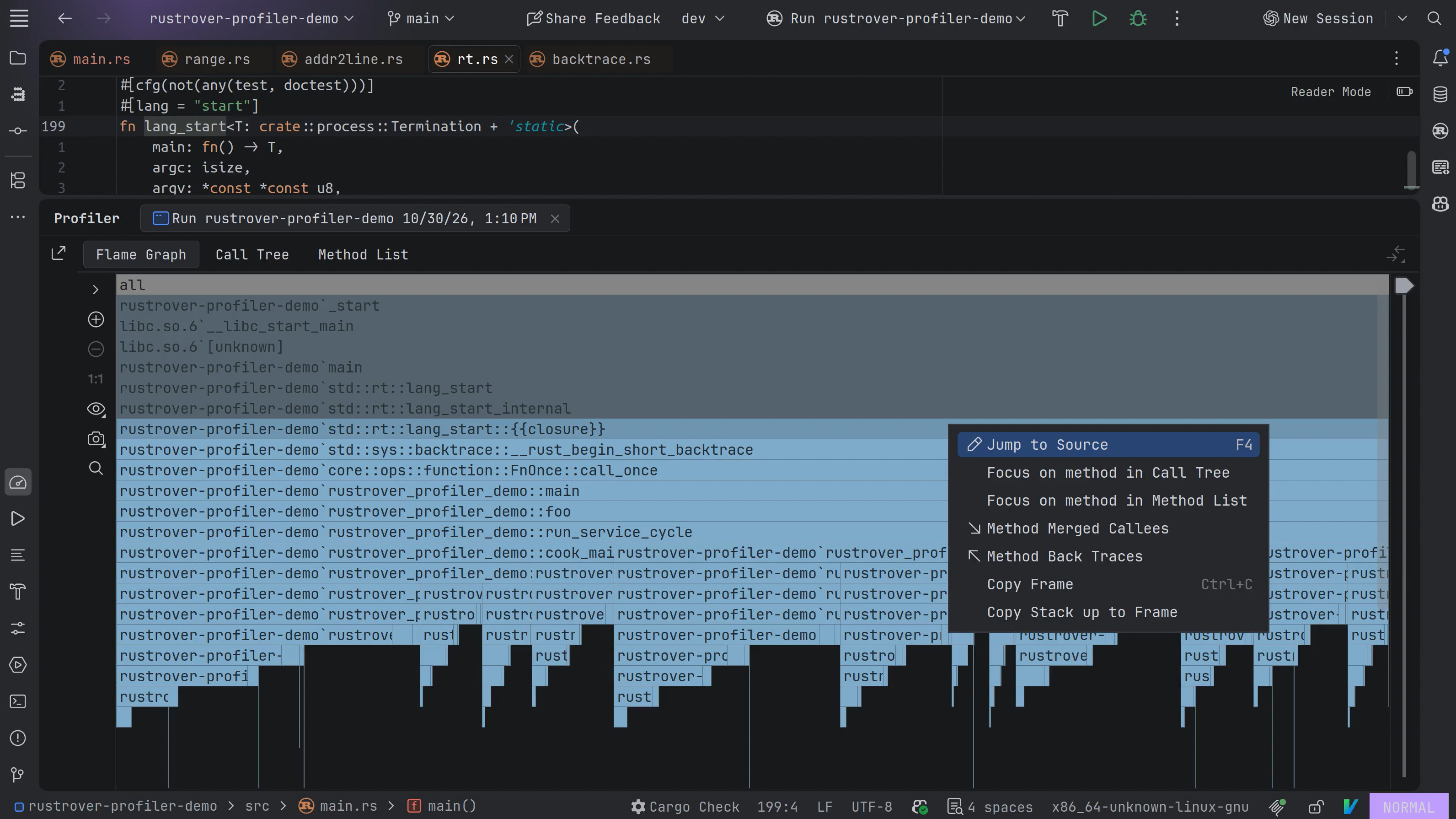
Performance profiling is a critical aspect of Rust development, yet bridging the gap between a high-level performance bottleneck and the underlying source code has traditionally been a point of friction. In previous iterations, profiler outputs often struggled to map directly back to the source, resulting in "declaration not found" errors or mangled function names.
The 2026.3 update significantly improves the "Jump to Source" functionality. Whether the user is operating under a Linux environment using the perf tool or utilizing DTrace on macOS, the IDE now provides a direct, reliable link from the profiler’s hot-spot analysis to the exact line of code. This improvement is expected to reduce the time-to-fix for performance regressions, as developers can transition from identifying a latency spike to modifying the responsible function with minimal cognitive overhead.
Remote Development and Infrastructure Reliability
As remote development becomes the industry standard, RustRover 2026.3 has enhanced its SSH-based remote workflow. The IDE now utilizes native OpenSSH, providing broader compatibility with enterprise-grade authentication protocols. This includes support for certificate-based authentication, hardware security tokens like YubiKey, and complex ProxyJump configurations. This ensures that the developer experience remains consistent, regardless of whether the code is being compiled on a local machine or a high-performance remote server cluster.
Furthermore, the release introduces a more robust system for error and UI freeze reporting. By automatically collecting and analyzing performance data, JetBrains intends to shorten the lifecycle of bug fixes. The company has emphasized that this data collection is strictly technical—excluding sensitive user information such as file paths or usernames—and provides an opt-out mechanism for privacy-conscious organizations.
Broader Implications for the Rust Ecosystem
The release of RustRover 2026.3 reflects a broader trend in the software industry: the commoditization of AI-assisted coding. By standardizing the interface through which agents interact with the IDE, JetBrains is setting a precedent that may influence how other IDE vendors handle AI integration.
From an economic and operational standpoint, the move toward agent-based debugging is likely to lower the threshold for developers to work within highly complex, asynchronous, or multi-threaded codebases. Rust’s strict compiler, while highly beneficial for safety, can be intimidating for newcomers and time-consuming for experts. By offloading the "grunt work" of state inspection and runtime tracing to agents, developers can focus their expertise on architecture and logic, rather than the mechanics of debugging.
The integration of local model support—via Ollama and LM Studio—also addresses concerns regarding data privacy and latency. By enabling developers to keep their code and debugging sessions local while still benefiting from advanced AI reasoning, JetBrains is catering to the stringent security requirements of enterprise software development, particularly in sectors like finance, aerospace, and critical infrastructure where cloud-based AI exposure is often prohibited.
Conclusion and Outlook
RustRover 2026.3 is not merely an incremental update; it is a strategic alignment of the IDE with the next phase of software development. By focusing on agent interoperability, runtime diagnostic tools, and improved developer ergonomics, JetBrains has fortified its position as a key player in the Rust ecosystem.
As the industry continues to iterate on the Model Context Protocol and agentic workflows, the ability of an IDE to act as a secure, efficient host for these tools will become a primary differentiator. For current users, the update offers immediate utility in the form of cleaner debugging views and deeper profiling integration. For the wider community, it serves as a roadmap for how modern development environments will look in the coming years: a place where the developer acts less as a lone coder and more as an architect directing a team of specialized AI agents. The ongoing refinement of these tools—and the community feedback following this release—will be pivotal in shaping the future of high-performance systems programming.