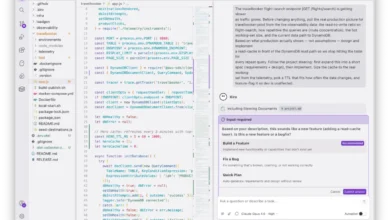
Mirelo AI Transforms Creative Development by Integrating Generative Audio Directly into the Kiro IDE

For decades, the final frontier of software and game development has been the "last mile" of creative polish: sound design. While visual assets, shaders, and physics engines have seen massive innovation within integrated development environments (IDEs), audio production has remained stubbornly siloed. Developers building games, mobile applications, or interactive multimedia often find themselves trapped in a fragmented workflow—leaving their primary workspace to scour stock libraries, manually trim clips, and struggle with synchronization. Mirelo AI, a Europe-based generative AI laboratory, has now fundamentally altered this paradigm by launching its advanced audio generation capabilities directly within Kiro, the agentic development environment powered by AWS.
This integration represents a significant shift in how developers interact with generative models. By utilizing the Model Context Protocol (MCP), an open standard that facilitates communication between AI assistants and external tools, Mirelo has bridged the gap between complex sound engineering and rapid application prototyping. The result is a seamless experience where developers can generate production-ready audio assets—ranging from simple user-interface clicks to complex, synced cinematic soundscapes—using only natural language prompts, all without ever leaving their code editor.
The Problem: The Last Mile of Creative Development
The necessity for this integration stems from a recurring bottleneck in the development lifecycle. In modern production environments, visual assets are often created or refined in real-time. A developer can adjust a texture or tweak a lighting shader and immediately see the results within their editor. However, audio remains the outlier. When a developer identifies a need for sound, the workflow effectively halts. The developer must exit the IDE, navigate to a browser, search through vast and often uncurated stock libraries, download files, and then return to the IDE to perform manual editing and synchronization.
Industry data suggests that this "context switching" is not merely an inconvenience; it is a productivity drain that leads to lower-quality output. Developers, often lacking specialized sound design training, frequently settle for placeholder audio or, in many cases, ship products with no audio at all to avoid the friction of the production process. For teams working with generative video, the challenge is even more acute. While AI models can now produce high-fidelity video in seconds, the resulting clips are inherently silent, requiring a second, manual production phase that often takes longer than the generation of the video itself.
Chronology of a Technical Breakthrough
The path to integrating Mirelo’s capabilities into the Kiro ecosystem was a deliberate exercise in architectural efficiency. Mirelo had already established a robust API to power its standalone Studio product, but the company faced the classic challenge of distribution: how to make powerful generative tools accessible without forcing developers to write cumbersome integration code.
The adoption of the Model Context Protocol provided the solution. By wrapping their existing API as an MCP server, Mirelo effectively created a standardized interface that any compatible AI assistant could query. The development process, facilitated by Mirelo’s AWS Enterprise Support team, unfolded over a rapid two-week period.
- Phase 1: Architectural Alignment (Days 1–3): Engineers evaluated the existing Mirelo API against the requirements of the Kiro "powers" marketplace. The team determined that a hosted, remote MCP server would be the most efficient route, eliminating the need for local installations or complex API key management for the end user.
- Phase 2: Proof of Concept (Days 4–7): The AWS Enterprise Support team assisted in building a demonstration power, showcasing how the AI agent could autonomously determine when to utilize the sound generation tools based on user prompts.
- Phase 3: Integration and Refinement (Days 8–14): Mirelo finalized the "plugin.json" and "mcp.json" configurations. This phase focused on creating "Agent Skills"—structured instructions that guide the AI in distinguishing between one-shot sound effects and complex, multi-layered audio sequences.
- Phase 4: Marketplace Launch: Following a rigorous review process, the Mirelo power was integrated into the Kiro marketplace, making it available for immediate deployment by developers worldwide.
Technical Efficiency: Direct API vs. Agentic Power
The difference between manual API usage and the new Kiro power is substantial. Previously, a developer attempting to automate sound design via the Mirelo API would have to manage a complex sequence of tasks: submitting a job, polling for status updates, handling error states, and managing the resulting files. This manual approach requires the developer to act as their own infrastructure engineer, managing API keys, backoff logic, and asynchronous polling loops.
By contrast, the Kiro power abstracts these complexities. When a developer asks for "a soft, satisfying click for this submit button," the Kiro agent performs the following actions automatically:
- Intent Recognition: The agent parses the prompt and identifies that audio generation is required.
- Preflight Estimation: For larger tasks, the agent calls a preflight tool to estimate compute requirements and credit usage.
- Asynchronous Management: The agent manages the job lifecycle, polling the Mirelo server and handling retries if necessary.
- Integration: The agent delivers the finished, high-quality audio file directly into the project’s asset folder.
This shift moves the developer from a role of "infrastructure manager" to "creative director," where the focus is on the desired output rather than the mechanics of the request.
Broader Implications for the AI Ecosystem
The implications of this integration extend beyond mere convenience. For AI model companies, this model suggests a new blueprint for distribution. Historically, AI services have relied on documentation-heavy SDKs or web-based portals to capture users. This approach, however, forces developers to move away from their core work to engage with the tool.
The Kiro power model, by contrast, meets the developer at the point of intent. By bundling an MCP server with specific Agent Skills, developers can discover tools within the environment they already use. Furthermore, the design of Kiro powers ensures optimal resource usage. Unlike traditional MCP setups that register all tool definitions upon startup—consuming significant token context—Kiro powers load dynamically. Tools remain dormant until specific keywords are detected, ensuring that the AI agent’s performance remains optimized and that the context window is not unnecessarily crowded.
Future Outlook and Industry Reaction
Industry observers note that this development signals a maturation in the "agentic" software space. As IDEs evolve from simple text editors into collaborative AI-powered environments, the ability to pull in third-party creative services on demand will become a competitive necessity.
"The integration of Mirelo into Kiro is a textbook example of how the Model Context Protocol can transform the developer experience," notes a source familiar with the marketplace architecture. "It moves the conversation from ‘How do I integrate this API?’ to ‘How can I leverage this capability to improve my product?’"
For Mirelo, the goal remains clear: to ensure that sound design is no longer an afterthought. By lowering the barrier to entry, the company hopes to see a surge in the quality of audio within the indie gaming and application development sectors. As more developers adopt this workflow, the "silent" project may soon become a relic of the past, replaced by dynamic, sound-rich experiences created with the simplicity of a natural language prompt.
As the Kiro marketplace continues to expand, it is likely that other creative AI services—such as texture generation, shader optimization, or even automated documentation—will follow the Mirelo model, further cementing the IDE as the central hub for the entire creative and technical development lifecycle.
Related posts: