As organizations scale their machine learning initiatives, the "data plumbing" phase—the often-overlooked process of preparing, cleaning, and formatting data for consumption—frequently consumes up to 80% of an engineer’s time. Central to this challenge is the serialization of configuration objects, feature sets, and metadata that do not natively map to the constraints of JavaScript Object Notation (JSON). Standard Python libraries, while efficient for basic data types like integers, strings, and dictionaries, falter when confronted with domain-specific objects such as datetime, pathlib.Path, set, or Enum. This limitation creates a persistent friction point in pipeline development, often leading to unhandled exceptions, data loss, or systemic failures during model deployment.
The Evolution of Serialization Challenges
The history of serialization in Python reflects the language’s transition from a scripting utility to a backbone of artificial intelligence development. Early iterations of ML pipelines relied heavily on pickle, a Python-specific serialization format that, while powerful, introduced severe security risks due to arbitrary code execution vulnerabilities. Consequently, the industry shifted toward JSON—a language-agnostic, human-readable, and inherently safer standard.
However, the rigidity of JSON creates a "impedance mismatch" with Python’s dynamic type system. When an engineer attempts to export a configuration object containing a datetime object or a set of features, the native json.dumps() method raises a TypeError. This is not merely a syntax error; it is a signal that the underlying serialization architecture lacks the semantic context required for complex data. As machine learning models become more sophisticated, requiring increasingly complex hyperparameter configurations and multi-modal feature inputs, the need for a standardized, robust serialization layer has become an industry-wide priority.
Engineering a Custom Encoder: The First Line of Defense
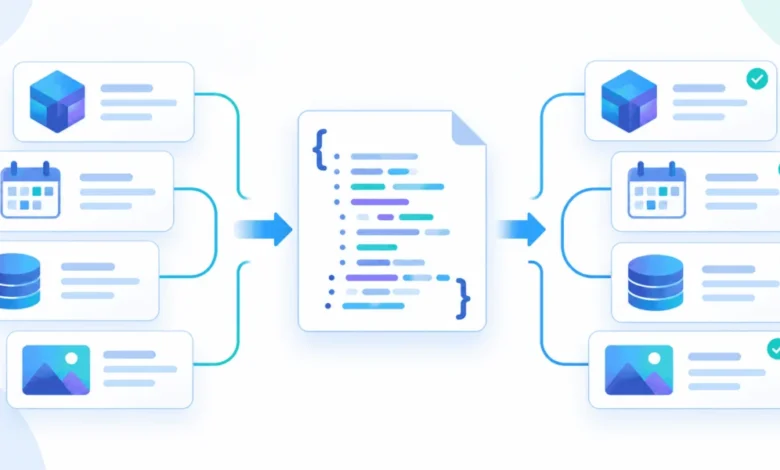
To bridge the gap between Python objects and JSON, developers must extend the standard library’s capabilities by subclassing json.JSONEncoder. This approach provides a hook into the serialization process, allowing the developer to intercept unsupported types and transform them into serializable representations.
The most effective pattern involves creating a schema-aware encoder that preserves type information. By attaching a metadata tag—such as __type__—to the serialized output, the pipeline ensures that the information is not just stored, but recoverable. For instance, when serializing a set, the encoder should convert it into a list while explicitly marking the original type in the JSON structure. This ensures that the deserializer, discussed in the following section, possesses the necessary metadata to reconstruct the original Python object with precision.
The implementation of such an encoder serves as a standardized contract between different components of an ML system. By centralizing this logic, organizations prevent the proliferation of "ad-hoc" serialization scripts, which are notoriously prone to errors and difficult to maintain as the system evolves.
Implementing a Resilient Decoder: Handling Data Ingestion
The inverse process, deserialization, is equally prone to failure. When reading configuration files or state logs, the application must be prepared to handle data that may have been corrupted, malformed, or generated by an outdated version of the pipeline. The object_hook parameter in json.loads() provides an elegant solution, enabling the execution of a transformation function on every dictionary encountered during the parsing process.
A production-ready decoder must be inherently defensive. It should implement comprehensive exception handling to address scenarios where a value might fail to cast back to its intended type. For example, if a datetime string has been mangled, a robust decoder will catch the ValueError, log the incident for audit purposes, and provide a fallback value rather than allowing the entire pipeline to crash. This resilience is a cornerstone of "graceful degradation," a design philosophy that ensures critical services remain operational even when individual data packets are compromised.
Managing Schema Migrations and System Evolution
Perhaps the most significant challenge in maintaining ML pipelines is the "schema drift" associated with evolving model requirements. As research teams introduce new features, update hyperparameters, or deprecate legacy metrics, static configuration files become obsolete. A robust serialization pipeline must therefore include an integrated migration layer.
Industry-standard practices suggest the use of factory functions or validation wrappers that process the dictionary returned by the decoder before passing it to the application. This layer acts as a gateway, enforcing schema compliance by:
- Backfilling Defaults: Injecting values for newly introduced parameters when loading legacy configurations.
- Dropping Deprecated Fields: Sanitizing the object to ensure downstream code is not exposed to obsolete data structures.
- Type Enforcement: Ensuring that critical fields maintain the expected data types after the reconstruction phase.
By treating the configuration as a versioned artifact rather than a static snapshot, engineering teams can maintain backward compatibility, allowing models trained months or even years prior to be re-run with modern infrastructure without requiring manual intervention.
Implications for Enterprise Infrastructure
The implementation of these patterns has profound implications for the operational efficiency of machine learning teams. By reducing the frequency of runtime errors during data ingestion, organizations can significantly shorten the feedback loop in model development. Furthermore, the standardization of serialization protocols facilitates better observability; if every component of a distributed system follows the same encoding/decoding contract, debugging across microservice boundaries becomes a significantly more transparent process.
From a security perspective, these robust patterns also allow for tighter validation. A system that explicitly understands the expected types of its configuration data is inherently more resistant to injection attacks or malformed data inputs that might otherwise exploit underlying logic.
Conclusion: Moving Toward Standardized Data Plumbing
The journey toward building a robust JSON serialization pipeline is ultimately an exercise in reducing technical debt. While the initial investment in defining custom encoders, decoders, and validation layers may seem substantial, the long-term payoff is a more reliable, maintainable, and scalable machine learning infrastructure.
By moving beyond the limitations of standard library defaults, developers create systems that are capable of self-correction and graceful recovery. In an era where machine learning is moving out of the laboratory and into the core of business-critical operations, these "data plumbing" techniques are no longer optional. They are the bedrock upon which reliable artificial intelligence is built. As the industry continues to mature, the focus will increasingly shift from model architecture to the robustness of the surrounding data ecosystem, ensuring that the pipelines of today can handle the complexities of tomorrow’s intelligent systems.